

Duck Decoy Collectibles : Duck Decoy 1980 Price List
average value
-
low
-high
-Found 20 out of 33,508 items matching '1980'
Sold on eBay February 9th, 2025
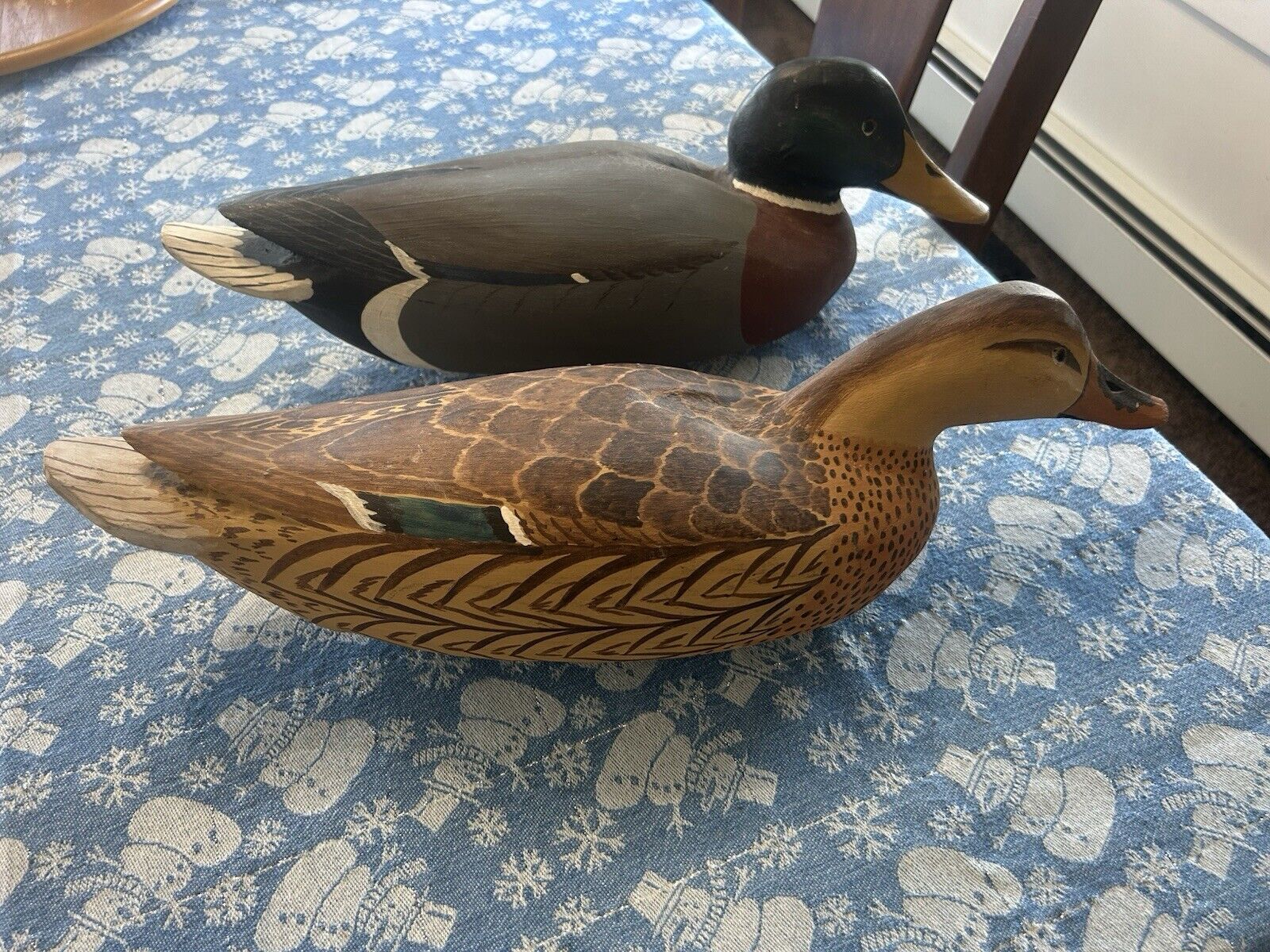
Vintage Grayson Chesser VA Mallard Decoy Pair
Vintage Grayson Chesser VA Mallard Decoy Pair. Very very nice condition. Signed and dated 1980. Nice old feeding pair of decoys from Grayson (Condition: Pre-Owned)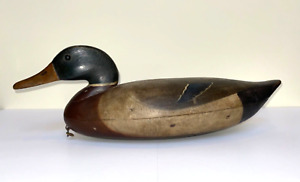
Sold on eBay January 23rd, 2024
Antique Mallard Decoy by John Blair, Sr. Circa 1870
eBay In 2005 Appraised by renown antique Decoy expert, Henry A. Fleckenstein Jr (see copy of appraisal in reference photos) Fleckenstein’s remarks: “Mallard decoy by John Blair Sr. Of Philadelphia, Pa. and Elkton Maryland, circa 1870. Blair’s “classic style”. Professionally restored paint, possibly by Bob White of Tullytown, Pa. Strucurally excellent, branded “J.H. Powel”.17 1/2 inches long approx.6 inches wide.Marked on bottom: J H PowelInformation about Henry A. Fleckenstein, Jr.:Among his accomplishments were the books he wrote: Decoys of the Mid-Atlantic Region, 1979; American Factory Decoys, 1980; Shorebird Decoys, 1980; New Jersey Decoys, 1983; and Southern Decoys, 1983. He also illustrated Ward Brothers Decoys and Pioneer Decoy Carvers. He was a contributing author to Chesapeake Bay Decoy Carvers and the Men Who Made Them. In addition to his books, he has written numerous auction catalogues, provided photography and illustrations to numerous sporting publications Henry was participant at the Easton Waterfowl Festival from its beginning and was one of the first elected to the Water Fowl Festival Hall of Fame where he was acknowledged for his expertise and knowledge of decoys as well as his commitment to promoting appreciation of this true American art form. (Condition: Pre-Owned)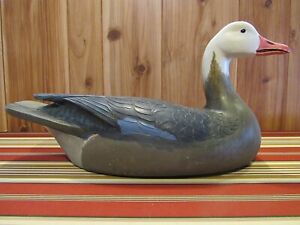
Sold on eBay March 11th, 2024
Blue Goose Decoy Vintage Old Original Working Paint Carved By Danny Lee Heuer
Blue Goose Decoy Vintage Old Original Working Paint Carved By Danny Lee Heuer.This decoy is from my (deceased) 96 year old fathers estate and duck decoy collection Measuring approximately, 21" in length by 11" high and 8" wide, a full size working decoy, approximately 45 years old.This Blue Goose Decoy is a true vintage piece, made in the United States circa 1980's. It features a partial hollow body from plugs and is carved out of White High Groud Cedar. The paint is original and has been preserved well over the years. This vintage item is a perfect addition to anyone's collection. The carver Danny Lee Heuer, is known for his intricate and lifelike carvings. This Blue Goose Decoy is a perfect example of his craftsmanship. Surprise that someone special in your life with a gift that never stops giving!The Poster as show, "The Decoys of Danny Lee Heuer" comes with this decoy at no cost. The Poster displays just a small example of the many decoys he has carved in his career. FREE SHIPPING WITHIN THE USA!Guaranteed to be as stated or full refund if returned within 30 days of purchase.Thanks for taking the time to look and check out my other items in my eBay store, HeuerArt.Good Luck and purchase with confidence! (Condition: Brand New)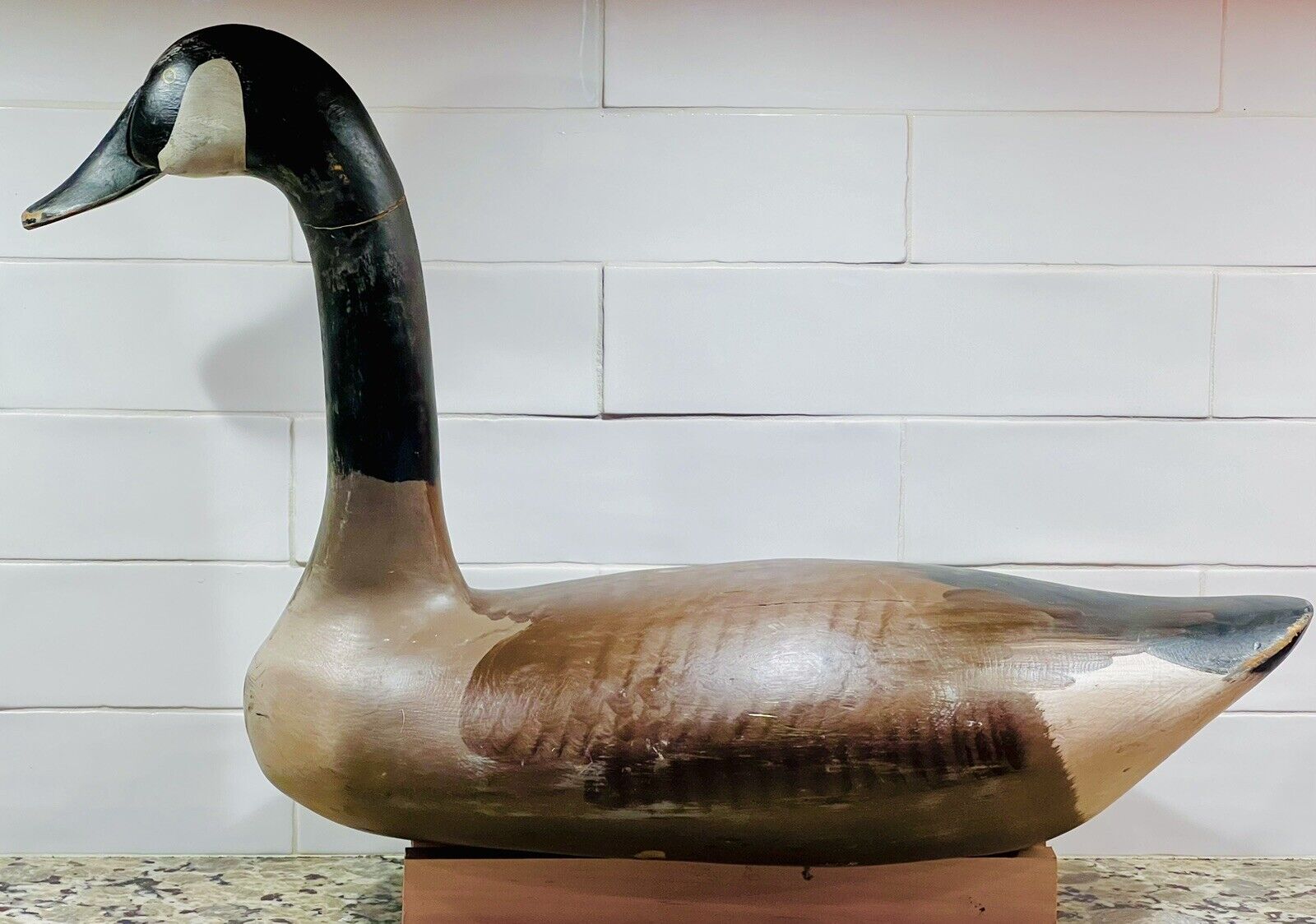
Sold on eBay March 31st, 2025
Attributed to Madison Mitchell (1901-93) Canada Goose Decoy, Havre de Grace, MD
Attributed to Madison Mitchell (1901-93) Canada Goose Decoy, Havre de Grace, MDPlease examine all 12 photos before buying. If you have questions please email me through the eBay app. If you wish to avoid shipping charges, you can pick this up in the Atlanta area.Condition: Very Good Condition vintage working decoy Canada Goose attributed to Madison Mitchell, or perhaps in the style of. Two letters ‘MM’ stamped into the bottom. Hand carved and painted. Handmade seven inch lead keel. Solid wood. The goose head is pegged to the neck. Painted eyes. Carved bill. The paint job is excellent with feathering at the tail and a gracefully painted head. A metal ring secured with a barb will attach to any stringer. Unusually long neck. Pre 1980 Mitchell began carving in 1924, when business at his family-owned funeral home was slow, and carved until his eye sight went bad in the 1980s. Along the way to becoming “the dean of Havre de Grace decoy makers,” Mitchell helped teach carvers of future generations, many of which he hired to work at his shop.This is a beautiful old decoy. There are shrinkage cracks along the bottom, another horizontal crack under the neck in the chest, and a crack halfway around the neck where the head is pegged. The neck is solid and secure, as it was pegged into the neck with glue. There are scraps, bumps, lacerations, and age marks as is normal and customary for a working decoy. There is a prior price tag on the bottom. Provenance: I have collected and sold duck decoys for 45 years. I purchased this decoy from an experienced collector who retired from the Northeast to Atlanta. He had not identified the maker. Upon listing this another eBay collector suggested that Madison Mitchell was the maker. After additional research, I concurred Maker: Attributed Madison Mitchell (unsigned)Mark: Stamped MM on the bottom (could be initials of the rig owner)Region: Havre de Grace, MD Item: Life-size Canada GooseType: Working decoyMaterials: Solid wood, lead keelWeight: 7 pounds, 11.5 inchesLength: 23 inchesHeight: 16 inchesWidth: 8.5 inchesLead keel: 7 inches. x 1 inch x .75 inchStringer metal ring: 1 inch diameterWe are ship all items in bubble wrap inside a corrugated box. You are buying the Canada Goose decoy photographed in this listing; as is. I ship to eBay-verified addresses only. Please use the eBay message system for all communications. You will pay postage, which is estimated in this listing, unless the item is marked, “Free Shipping”. The shipping estimate was generated by the eBay shipping calculator plus special handling to insure the safety of your item. (Condition: Pre-Owned)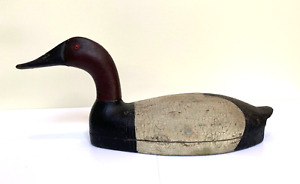
Sold on eBay February 29th, 2024
Antique Canvasback by Tobin Meldrum circa 1900
CANVASBACK DRAKE by TOBIN MELDRUM circa 1900In 2005, was Appraised by renown Decoy Expert, Henry, A. Kleckenstein, Jr., his opinion, ( a copy of remarks in reference decoy made by Tobin Meldrum of Fairhaven, Michigan, circa1920, In old working paint, structurally fine condition”On underside of decoy label Drake Tobin Meldrum, Fairhaven, Michigan, ca: 1900. See: “Decoys of the Mississippi Flyway”,Haid. “Amercan Bird Decoy” Johnsgaard. Illustrated: “American Decoys” Colio, page:23Head neck turns, size approx. 16 1/2 inches long and 5 1/2 wide Information on Henry A. Fleckenstein, Jr.:Among his accomplishments were the books he wrote: Decoys of the Mid-Atlantic Region, 1979; American Factory Decoys, 1980; Shorebird Decoys, 1980; New Jersey Decoys, 1983; and Southern Decoys, 1983. He also illustrated Ward Brothers Decoys and Pioneer Decoy Carvers. He was a contributing author to Chesapeake Bay Decoy Carvers and the Men Who Made Them. In addition to his books, he has written numerous auction catalogues, provided photography and illustrations to numerous sporting publications Henry was participant at the Easton Waterfowl Festival from its beginning and was one of the first elected to the Water Fowl Festival Hall of Fame where he was acknowledged for his expertise and knowledge of decoys as well as his commitment to promoting appreciation of this true American art form. (Condition: Pre-Owned)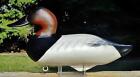
Sold on eBay September 22nd, 2024
MINT RARE BULL CANVASBACK ~SIGNED c1965 CHARLIE JOINER Wood Duck Decoy MARYLAND
MINT, RIGGED & RARE SEMI-ALERT 100% ORIG. CHARLIE 'SPEED' JOINER "SIGNED & CITY & STATE" BOTTOM INSIGNIA ~c1965 AMAZING DRAKE CANVASBACK GUNNING DECOY ~TAUGHT BY MADISON MITCHELL & WARD BROTHERS ~AWESOME "SOLID CEDAR" & SUPERB CARVING, STYLE, FORM & RELIEF CARVED BILL ~ORIG RIGGING: LEAD BALLAST WEIGHT, RING & STAPLE LINE-TIE ~SCARCE 59-YEAR OLD BIRD is STUNNING & PERFECT with NO CHIPS, DENTS, CRACKS & NOT EVEN A PAINT SMUDGE ~AWESOME MELLOW & AGED DRY PATINA ~HEAD & ALL RIGGING is TIGHT AS THE DAY DECOY WAS MADE ~OUTSTANDING "WARD STYLE" STIPPLED, DAUBED & SWIRLED 3-DIMENSIONAL FEATHER PAINT TO ENTIRE HEAD DETAIL ON BACK, ALL WING DETAIL and MITCHELL CLEAN & CONCISE ON THE BREAST, BOTTOM & BILL ~PERFECT PAINTED EYES & ALL NAILS TO ATTACH HEAD ARE INVISIBLE ~HEAD & RIGGING AS TIGHT AS IF MADE YESTERDAY ~PERFECT CONFLUENCE OF "MADISON MITCHELL & WARD BROS." STYLE, FORM & PAINT ~LIFE-SIZED & VERY HEFTY & STURDY 3-LB. DECOY A MUST FOR ANY COLLECTION OF THE BEST HIGH END EAST COAST DECOYS! MINT RARE BULL CANVASBACK ~SIGNED c1965 CHARLIE JOINER Wood Duck Decoy MARYLAND MINT RARE BULL CANVASBACK ~SIGNED c1965 CHARLIE JOINER Wood Duck Decoy MARYLAND Click images to enlarge Description (below photo): From 1941 to 1945 Charlie Served in the U. S. Navy’s Construction Battalion or “SEABEES” Building Airstrips on Islands in the Pacific Theatre of War from New Guinea to the Philippines, which was Vital to Victory in the Pacific. UPPER CHESAPEAKE BAY CARVING LEGEND..... CHARLIE "SPEED" JOINER Birth Name:.... Charles William "Charlie" Joiner Jr. (born): July 19, 1921 (died): March 13, 2015 (Age 93) of Chestertown, Maryland (below photo): Chestertown, Havre de Grace, Crisfield and the Upper Chesapeake Bay! Charlie Joiner Lived in Chestertown, Maryland; a Short Drive to 3 of His Best Friends: Northeast to "Madison Mitchell" in Havre de Grace; and South to Mentors' "Steve & Lem Ward" in Crisfield, Maryland! (MAP SHOWN ABOVE): This MAP SHOWS WHERE CHARLIE "SPEED" JOINER, MADISON MITCHELL, the WARD BROTHERS and OTHERS ....... SPENT their ENTIRE LIVES MAKING DECOYS, HUNTING and ESTABLISHING the AREA as ONE of the COUNTRY'S MOST IMPORTANT WATERFOWLING AREAS for CARVING WOODEN BIRDS & GUNNING WILD ONES! (below photo): ..HISTORIC 1983 PHOTO of CHARLIE JOINER with 2 of the MOST IMPORTANT FRIENDS & MENTORS in his CARVING CAREER & LIFE; (left to right): .."Charlie Joiner" and "Madison Mitchell" Standing; "Lem Ward" in Front. Lem Ward Passed Away a Year Later in 1984! ? This is the Last Photo of the 3 of them Together! ? ______ (Below Photos): This AMAZING "VERY SCARCE" & "MINT", Outstanding c1965 "Signed Charlie Joiner" & Hand-Written Hometown, "Chestertown, M. D." ........... Solid-Cedar, Fully-Rigged, "Semi-Alert Posed", DRAKE CANVASBACK Decoy Up for Auction!! Madison Mitchell's "Havre de Grace" Round Body Form .. -with- ..Lem & Steve Ward's Thick Stippled & Feathery Paint Detailing!! ______ (Below Photos): ..SUPERB STIPPLED, DAUBED & SWIRLED "WARD BROTHERS" INSPIRED FEATHER PAINT TO HEAD, BACK & WINGS ...... and CLEAN & CONCISE "MADISON MITCHELL" DRAKE PAINT on the BREAST, BOTTOM & TAIL!!! "WARD BROS." STYLED RED-BROWN & BLACK FEATHER BLENDING to HEAD -and- GRAY BACK FEATHERING; BLACK, GRAY & WHITE WING SECONDARY & PRIMARY FEATHERS -and- GORGEOUS, CLEAN & PRECISE "MITCHELL" STYLED WHITE & BLACK SPECULUMS and SOLID BLACK BREAST & TAIL!! (Below Photos): The Bottom of this Drake Canvasback Shows Madison Mitchell's Typical "Style" of Rigging that Includes: .... Perfectly Tight & Like-New, Lead Ballast Weight and "Staple & Ring" Line-Tie!! NOTE: The Picture Below is of the Signature & Written Home Town on the Bottom of this Canvasback up for auction. NOTE: The "SIGNED NUMBER 129" on this DRAKE, that is the Collection Number Assigned By the Collector ........ Unfortunately I Do Not Have the #129 Hen Rig-Mater: (Below Photos): Also, Charlie Joiner's Trade-Marked Signature, Spelled City and State ...... all Done with a Black, Permanent Sharpie Like All His Signatures!! _____ \ (Below Photos): The HEAD of this RARE & MINT "PREENING" DRAKE CANVASBACK from SEVERAL ANGLES and to SEE the AWESOME RELIEF-CARVED "MITCHELL" MODELED HEAD that is PAINTED USING the "WARD BROS." STYLED RIPPLED PAINT to the ENTIRE HEAD & NECK!! RARE, 100% ORIGINAL & AMAZING EXAMPLE of One of his SEMI-ALERT POSES, A VERY MUSCULAR BULL-NECKED, CANVASBACK ...... STUNNING FORM & MAGNIFICENT, PRECISELY PAINTED with "STUNNING VERY FINE DETAIL-PAINT" ....... SPECTACULAR CARVING; ESPECIALLY the KNIFE-CARVED HEAD with a LIFE-LIKE BILL & PERFECTLY CONTOURED ........ A PERFECT UNDULATED BODY, VERY LIKELY MADE in MADISON MITCHELL'S SHOP ....... and the HEAD & ALL of the RIGGING ARE AS "TIGHT-LIKE NEW" on this MINT CONDITION DECOY!! (photos below): Just Look at the Stunning Detailed Carving and Paint From Top & Bottom Angles and From Different Directions!! INCREDIBLE INCISED HEAD/ BILL SEPARATION with PERFECT VERY LONG "CANVASBACK" BILL and "RIPPLED" FEATHERY PAINT to FACE ........ and YOU CAN SEE "ALMOST EVERY SINGLE PAINT BRUSH MARK" on this ENTIRE DECOY!!! ALSO NOTE the INCREDIBLE & PRECISELY PAINTED RED "CANVASBACK" EYES & VERY SHARPLY-TURNED, "FAR-REACHING" HEAD POSTURE ?........ The VERY LONG PREENING HEAD & NECK is a .... HUGE: 8" LONG & EXTENDS ALL of the WAY BACK from the BREAST to the SPECULUM & SECONDARY WING FEATHERS!!! (photos below): Below Are Diagonal Photos from "Rear Direction" & "Head-First" Angles: Below are the Series of Pictures From the Right: Below are the Series of Pictures From the Left: ______ (Below Photos): This MINT & RARE "SEMI-ALERT" DRAKE CANVASBACK up for auction!! (Below Photos): This MINT & SCARCE "SEMI-ALERT" DRAKE CANVASBACK up for auction!! 16-1/4" long. ..x..5-1/4" wide ..x.. 8" tall ? Weighs a Very Strong & Hefty: .... 3-lb. EXACTLY _ THAT is FANTASTIC & MAKES for a PERFECT SIZED & WEIGHTED CHARLIE JOINER ~ADULT "BULL-NECKED" DRAKE CANVASBACK!! That Makes for an Awesome Pair Gunning Decoy that are From the Same Man's Hands that Madison Mitchell Considered One of His Closet Friends .......... Along with 2 of His Other Closest Life-Long Friends Lem & Steve Ward .......... So Charlie Made this Decoys Using the Best paint & Construction Methods from Both of Them ............ And it led to the Enormous Ability & Out-of-the-Box, Creativity of Charlie!! ______________________________ The "Very Scarce", "Mint & Amazing Condition", 100% Original, "Semi-Alert, Bull-Necked" Charlie Joiner Drake Canvasback Solid Cedar Wood Duck Decoy: "MINT & STUNNING", 100% ORIGINAL; "SIGNED & WRITTEN CITY & STATE"; "WARD BROS. & MADISON MITCHELL MODELED"; SOLID-CEDAR; c1965 CHARLIE "SPEED" JOINER; ABSOLUTELY INCREDIBLE PATINA & STUNNING PAINT; "59-YEAR OLD"; "SEMI-ALERT" BULL-NECKED, DRAKE CANVASBACK; WOOD DUCK DECOY; CHESTERTOWN, MARYLAND; SUSQUEHANNA FLATS (Eastern Upper Chesapeake Bay) This AMAZINGLY SIZE-SIZED, 16-1/4" X 3-lb. DRAKE CANVASBACK GUNNING DECOY was CARVED LIFE-SIZED and ROUND BODIED, INCLUDING the ROUND-GUNNING BIRD BOTTOM!! ? This Life-Size and Round Bodied Style of His Decoys are His Most Sought After Work!! ? STUNNING ORIGINAL PAINT and CARVING on this VINTAGE GUNNING DECOY with AN INCREDIBLE, PERFECT PATINA!! EXCELLENT FORM & GREAT STYLE on ONE of His VINTAGE DRAKE CANVASBACK GUNNING DECOYS as this DECOY was MADE WHEN WOODEN DECOYS WERE STILL SOMEWHAT BEING USED for HUNTING!! AWESOME "SOLID CEDAR" DECOY & AWESOME CARVING, STYLE & FORM with a MARVELOUS & PERFECTLY AMAZING "CANVASBACK" BILL!! ? AWESOME STIPPLED, DAUBED, SWIRLED & STRAIGHT-LINE, BRUSH-STROKES of a CONFLUENCE of MITCHELL & WARD BROS. PAINT ..-and-.. VERY "MAJESTIC" BEAUTIFUL LIFE-LIKE HEAD & NECK "SEMI-ALERT", DECOY that is MINT from the "TAIL TIP to the BILL TIP"!! A). SUPERB STIPPLED, RIPPLED & SWIRLED FEATHER PAINT to HEAD, BACK & WINGS and CLEAN & CONCISE on the BREAST, BOTTOM, TAIL & BILL!! B). BLACK & RED-BROWN STIPPLED & SWIRLED FEATHERING to ENTIRE HEAD ..........GRAY STIPPLING to the BACK BACK .......... BLACK, GRAY & WHITE SECONDARY & PRIMARY WING FEATHERING that GOES ALMOST ALL of the WAY to the UPSWEPT TAIL TIP ......... NICELY ARCED BLACK & WHITE SPECULUMS!! C). .AMAZING CLEAN-LINED, SOLID BLACK BLACK BILL, BREAST & TAIL PAINT with SNOW WHITE SIDES & BOTTOM with SNOW WHITE BACK with FAN-BRUSHED GRAY FEATHERING MUCH LIKE a MADISON MITCHELL DECOY BUT FANCIER!! Vintage Hunting Decoy & His Very Best, Working Bird Style with His Nice, Very Long, Yet Stout, Amazingly Contoured Body Style and Form that Weighs Very Respectable & Hefty 3-lbs. of Solid Cedar!! ORIGINAL RIGGING is also MINT & TIGHT LIKE NEW -and- 100% ORIGINAL: ? NAILED-ON, CAST LEAD BALLAST WEIGHT -and- "ZINC-COATED" STEEL "STAPLE & RING" LINE-TIE!! ? The HEAD/BODY SEAM & ALL RIGGING SEAMS are as SUPER TIGHT and PRISTINE as the DAY this DECOY Was MADE!! ? ? This HARD-TO-FIND, SOMEWHAT OLDER, DRAKE CANVASBACK SHOWS INCREDIBLY ....... "NOT A SINGLE" PAINT SMUDGE, CHIP, DENT or EVEN a HAND PRINT or BUMP ..... It WAS CERTAINLY BABIED in the EAST COAST COLLECTION it CAME FROM!!! Even the "WOOD STOCK HE USED" for this Drake Canvasback is "ABSOLUTELY PERFECT" ......... It is "NO.1 GRADE WOOD" that Was Used for this Amazing Decoy!! EVEN the WEIGHT & LINE-TIE are AWESOME with ONLY a VERY TINY RUB to EACH WHICH is QUITE TYPICAL & OUTSTANDING on its OWN!! This DRAKE CANVASBACK Has an INCREDIBLE & VERY APPEALING, VERY DRY, MELLOW-AGED PATINA! ALTHOUGH PROLIFIC, PHENOMENAL CANVASBACKS LIKE this DECOY are ALWAYS a RARE & SURPRISING FIND!! ? ? __________________________________________ OVER the YEARS, CHARLIE JOINER'S CLIENTELE INCLUDED ...... "ADMIRALS", "POLITICIANS" and "MILLIONAIRES", YET OBVIOUSLY his TYPICAL BUYER was a REGULAR HUNTER Looking for QUALITY DECOYS at a Fair Price. But Nevertheless, CHARLIE JOINER'S Decoys Found their Way into Some Notable Rigs, INCLUDING: "MEMBERS of the DuPONT FAMILY" CHARLIE JOINER also SOLD Decoys to "MAINE SENATOR ED MUSKIE", "BASEBALL LEGEND TED WILLIAMS" -and- "PHILADELPHIA PHILLIES OWNER BOB CARPENTER" and MANY other NOTABLE CUSTOMERS. (Below Photos): One of Charlie's Customers was the Great "Ted Williams" ........ Ted Williams was 20-Years Old in this Hunting Photo Taken in 1939!! ____________________________________________ When People Finally Realized "Charlie Joiner" as One of the Best Decoy Painter's from the Upper Bay He Began Being Recognized By Magazines and Newspaper: It was Roy Walsh’s 1960 book "Gunning the Chesapeake", featuring a photo of "Charlie Joiner at Work" ...... with a Glowing Description of his Birds, that Brought “SPEED” his First Taste of National Fame, along with Hundreds of Orders ....... But it was Just the Beginning of his Legendary Status as One of the Best!! ANOTHER SOURCE of FAME & RECOGNITION for CHARLIE JOINER HAPPENED WHEN ........... To Encourage & Promote Leisure Travel in the 1940's and 1950's, Several Automakers Published Colorful Periodicals for the Drivers of their Cars. And "Charlie Joiner" was Featured in 2 of these, including a 1964 Issue of "Ford Times and a Mid-1960's Issue of "Chevrolet Friends Magazine". “The Magazine had a Back Page Feature where People Around the Country could Write-in about their Hobby";.. CHARLIE ONCE RECALLED: ..“Well, one of my Neighbors Insisted that I do it, and Although I Didn't Want to, She took the Pictures & Sent Them in and Sure Enough they Ran it. You Wouldn't Believe the Mail I Started Getting. People from as Far Away as California, Arizona and Montana, and then Every State Back to the East Started to Write Me Letters Asking about my Decoys.” ____________________________________________ This is a Perfectly Symmetrically Carved & Painted Vintage Charlie Joiner Drake Canvasback Solid-Cedar, Lathe-Formed (Likely in Mitchell's Shop) Wooden Gunning Decoy! The ONLY TIME that this Decoy "EVER SAW WATER" was Was When Charlie Joiner in a Vat to "TUNE IT" By Adjusting Where the Ballast was Nailed On so It Would Swim with Perfection in a Hunting Rig!!! STRUCTURALLY PERFECT HEAD & NECK with ALL NAILS PERFECTLY INTACT & INVISIBLE and TIGHT AS IF MADE YESTERDAY WITHOUT a TYPICAL NECK CHECK or NAIL POP that YOU QUITE TYPICALLY FIND on UPPER BAY DECOYS as they are INHERENT to the CONSTRUCTION METHOD!!!?? ? All Nails to Attach the Head Were So Perfectly Countersunk and Topped and Sanded with Filler You Can't Even Tell Where One of the Nails Is Even Located!!! __________________________ ? (Below Photos): CHARLIE JOINER DIVER DECOYS! ~ Included in the Photos of his FULL-SIZE DECOYS are his MARVELOUS MINIATURES!!! The 1st Photo is of a Pair of Joiner's Canvasbacks, Similar in Style & Form to this Amazing and Rare Preening Canvasbacks up for auction: (Below Photos): CHARLIE JOINER PUDDLE DUCK DECOYS, Included in the Photos of his FULL-SIZE DECOYS are his SUPERB MINIATURES!!! ______________ (Below Photo): Charlie Joiner Shown Throwing Out Decoys on the Chester River for the Last Time ...... This was the Cover Photo for the 1987 Havre de Grace Festival's Program Where Charlie Joiner was Duly Honored!! (Below Photos): As a TRIBUTE to CHARLIE'S CELEBRATED CAREER, He was CHOSEN as HONORARY CHAIRMAN for the 1987 HAVRE de GRACE DECOY FESTIVAL!! BELOW are PICTURES of CHARLIE JOINER at the 1987 FESTIVAL!! SHOWN HERE with a Display of his FULL-SIZE DECOYS, MINIATURES -and- One of CHARLIE SIGNING a DECOY for a YOUNG ADMIRER!! ________ "MINT & VERY SCARCE", 100% ORIGINAL; "SIGNED & WRITTEN CITY & STATE"; "FULLY-RIGGED"; SOLID-CEDAR; c1965 CHARLIE "SPEED" JOINER; ABSOLUTELY INCREDIBLE PATINA & STUNNING PAINT; "59+ YEAR OLD"; "BULL-NECKED" DRAKE CANVASBACK; WOOD DUCK DECOY;? ? Very Nice, Very Old Dry Paint with a Beautiful, Clean and Crisp Patina!! ? AWESOME LATHE TURNED DECOYS that WERE THEN FINISHED with KNIVES, HAND TOOLS & SANDPAPER and MADE with PERFECTION!! These Awesome Decoys were Made to Swim & Perform with Perfect Realism!! Plus .... Their Large Size & Buoyant, But Realistic Swimming Weight, Depth & Design Made them Visible from Huge Distances, and their Heavy Weight Kept them Riding Perfectly & So Well Weighted they Were Hard to Flip & Righted Themselves Immediately Even in the Roughest of Water!! ? ? GREAT THICK, 100% ORIGINAL PAINT on this AWESOME, OLD GUNNING DECOY with GREAT PATINA!! ? SUPERB FORM & TRULY ONE OF HIS VERY BEST, MEDIUM-NECKED, SEMI-ALERT, BULL-NECKED CANVASBACK GUNNING DECOYS!! ? All ORIGINAL & You Could HUNT OVER This 59-YEAR OLD DECOY TODAY and LOSE NO PERFORMANCE from the DAY THAT IT WAS MADE!! DON'T MISS OUT on this Truly Great Upper Chesapeake Bay Gunning Bird with a Distinct Eastern Shore, Ward Brothers Influence & Style of Paint!! ? IF YOU are a FAN of GREAT GUNNING DECOYS that DID EXACTLY what they WERE MADE TO DO, This is a GREAT DECOY to add to YOUR COLLECTION!! Awesome Semi-Alert Head & Neck Flows Perfectly Into the "Neck Seat" on the Top of the Breast "Flawlessly" with Absolutely No Loss of Flow!! The Awesomely Carved Bill on this Desirable and Scarce Canvasback has Crisply Carved Bill/Head Separation and the Body was Made with a Perfectly Rounded Breast that Begin with an Undulating Form that Rises and Widens Near the Rear and then Tapers Down and Up to the Upswept Tail! ? The Dimensions & Weight are Perfect & Typical for Solid-Bodied, Solid-Cedar, "Charlie Joiner" Large Diving Duck!! This Drake Canvasback Clearly Shows That It Came from Climate Controlled, Direct Light-Free Collection or Collections It Has Been Kept in Over the Many Decades and Over One Half of a Century That It Has Been Carefully Cared For In!! ? If You Like Important Decoys from the one of the Most Famous Decoy Carvers Chesapeake Bay Carvers Ever, that Are in Outstanding, 100% Original, Never Gunned-Over Condition ....... THIS IS A GREAT DECOY FOR "ANY" COLLECTION!! _______ That Makes for a Superb Gunning Decoy that Has Clearly Been in the Protection of Climate and Light Controlled Collections Since It Left Charlie Joiner's Workshop!! Like Everyone, Charlie Joiner Got Better & Better Over Time; But He Usually followed the Same Patterns, Style, Form, Paint, Rigging, Weight and Size From any Given Time Period, Even on the Various Species they All Usually Share the Same Attributes if From the Same Period of His Carving Career! He Did this SO MUCH SO THAT the DIMENSIONS & WEIGHT of the SPECIES of CHARLIE JOINER'S DECOYS are Usually CLOSE to the SAME! __________ RARE:.. CHARLIE JOINER'S DECOYS are SOME of the NICEST BALANCED, SYMMETRICALLY CRAFTED and OUTSTANDING CARVED and PAINTED ROUGH-WATER DECOYS MADE on the EAST COAST in the 20th CENTURY! A Perfect Specimen of a Beautiful Species, "King of Ducks" Diving Duck Hunting Block Made by one of The Best Gunning Decoy Carvers & Painters to Ever Call the Upper Bay Home!! This DECOY is PAINTED in It's FULL WINTER COLOR SCHEME and How We Usually See CANVASBACKS During the LATER PART of the HUNTING SEASON in MICHIGAN ...... But During MILD WINTER'S Like this YEAR a Great Many STAY HERE as LONG as They Can GET to FOOD & the Water is STILL OPEN!! This DECOY Has the NICEST BILL & HEAD CARVING -and- BODY SHAPE & FORM -and- Some of the Most Extraordinary Work You Will See on One of His Finest Decoys!! EXCEPTIONAL PATINA to the BEAUTIFUL, OLD DRY 100% ORIGINAL OIL PAINT!! If You Like "RARE" Vintage Decoys from FAMOUS MASTER CARVERS and Are in "MINT CONDITION" ........ THIS is a VERY VALUABLE DECOY to ADD to Your COLLECTION!! ______________________________________ DON'T MISS OUT ON THIS OUTSTANDING & SCARCE DECOY: IN THE NEXT FEW WEEKS I AM PUTTING ON EBAY MORE LAWRENCE BETHEL FISH DECOYS, A MINT SIGNED CHARLIE JOINER CANVASBACK, A PAIR OF THE ONLY KNOWN PROTOTYPES MADE OF THE VERY FIRST PRE-PRODUCTION FIBRE DECOYS EVER MADE, A NEAR MINT 1927 HEDDON GIANT VAMPIRE FISHING LURE IN RARE SHAD, A PAIR of LATE PHASE DODGE MALLARDS, EXQUISITE AND RARE PAIR OF "SPECIAL ORDER" MALLARDS, A RARE PAIR OF RALPH MALAPAGE GREEN-WINGED TEAL, A VERY RARE c1893 100% ORIGINAL TRANSITION PERIOD MASON DRAKE BUFFLEHEAD, A MINT RALPH MALPAGE CANADA GOOSE GUNNING DECOY, A MINT c1905 HEDDON ARTISTIC MINNOW, A VERY RARE PADCO OF MISSISSIPPI GOLDENEYES, A YELLOW WITH RED EYE BLUSH MOONLIGHT SINGLE-HOOK PIKAROON, A NIB CREEK CHUB MULLET COLOR STRIPER PIKIE IN CORRECT BOX, A PAIR of INCREDIBLE CHALLENGE GRADE MASON BLUE-WINGED TEAL, A NICE PAIR OF MASON GLASS EYE BLUEBILLS, AN AWESOME ERNIE NEUMANN SUCKER FISH DECOY, A RARE DOUBLE SPECIAL CREEK CHUB BEETLE FISHING LURE, A VERY NICE ERNIE NEUMANN SUCKER, A RARE 12-1/2" CHET SAWYER MINNESOTA FISH DECOY, A NEAR MINT OSCAR PETERSON PERCH FISH DECOY, A MINT PAIR OF WRAGG & BURRELL WIGEON, AN OUTRAGEOUSLY HARD TO FIND PAIR OF CHARLIE POZZINI BLUEBILLS, A CHET SAWYER 13" CHET SAWYER FISH DECOYS, A VERY BIG & BULL-NECKED EARLY FERDINAND BACH DRAKE CANVASBACK FROM HIS PERSONAL RIG AND MORE!! ? Shipping Includes Insurance! I Don't Believe in Making a Profit on Shipping, You Pay What I Pay. If it's Less Than You Paid I Refund the Difference, If More I'll Pay For It. I COMBINE SHIPPING. I am also loading over 150 Duck Decoys, 150 Fish Decoys, 70 Scarce Fishing Lures, etc. so keep checking back. __ This "STUNNING & SCARCE "SPEED" JOINER DECOY up for auction..... ITEM DESCRIPTION: This 55+ Year Old "Drake Canvasback" was Carved and Painted by Charles "Charlie" or "Speed" Joiner (born: July 19, 1921 - died: March 13, 2015) of Chestertown, Maryland. Chestertown is a town in Kent County, Maryland, United States. The population was 5,252 as of the 2010 census and it is the county seat of Kent County. Founded in 1706, Chestertown rose in stature when it was named one of the English colony of Maryland's six Royal Ports of Entry. The shipping boom that followed this designation made the town at the navigable head of the Chester River wealthy. In the mid-eighteenth century, Chestertown trailed only Annapolis and was considered Maryland's second leading port. A burgeoning merchant class infused riches into the town, reflected in the many brick mansions and townhouses that sprang up along the waterfront. Another area in which Chestertown is second only to Annapolis is in its number of existing eighteenth century homes. As of the 1790 census, Chestertown was the geographical center of population of the United States. Chestertown was incorporated in 1805, and was named for the Chester River. (Below Photo): Charlie Painting a Canvasback Using His Typical Clam-Shells as his Palettes, a Trick of the Trade he Picked Up from Lem & Steve Ward ....... He Said the Paint Color was Easy to See When it Dried, So it Was Easy to Mix Some More Up When You Got Back to that Color! Charles William Joiner was born on July 19, 1921 to Charles and Lena Luike Joiner. Charlie, as he was known, was born and raised in Betterton, Maryland, a waterfront community overlooking the confluence of the Sassafras, Elk and Susquehanna Rivers. It was here that Charlie Joiner developed an early love for the outdoors and the bounty of the land and water around him. Originally established as a fishing village in the mid-1700’s, by the turn of the 20th century, Betterton had exploded into a prime summertime resort and a favorite destination for mid-Atlantic urbanites looking for respite from the heat. “We had about 300 people in the winter", Charlie Joiner once recalled of Betterton in the 1920's and 1930's. "But probably 3,000 during the summertime. People came from everywhere", Charlie added. He vividly remembered the hotels and restaurants, concession stands, beer gardens and movie theaters, the dance halls, bingo parlors and bowling alleys. By the 1940's, however, with vast improvements in transportation providing easier access to ocean beaches and Betterton’s heyday was over. Charlie Joiner inherited several things from his father: a love of and respect for the outdoors, the profession he would master over the next 40 years and the nickname he would have until the day he passed away. “Everyone called him Speed,” Charlie once said of his father. “I never knew what it meant or where he got it, but when I came along, they started calling me Speed too. He was ‘Big Speed’ and I was ‘Little Speed’”. Growing up, Joiner loved to fish and when he was about 12, he started to hunt small game in the woods and fields near home. Around 1937, at the age of 16, Charlie Joiner and some childhood friends turned their interests to waterfowl and began gunning for marsh ducks. Unable to afford wooden decoys, Charlie and his friends fashioned their own from old gallon-sized antifreeze cans. “Back then, every fall, everybody would get Prestone put in their radiators.” Joiner explained, “and the garage chucked ‘em out on a pile and we’d go pick out 12 or 15 of ‘em. We’d take ‘em home, solder up the holes they punched in them, paint ’em flat black and tie a string around ‘em. They worked just as well as the best decoy ever made.” Charlie Joiner was first exposed to wooden decoys as a boy in the 1930’s, finding derelicts from the Upper Bay. “I used to walk along the shoreline in Betterton and find decoys. Betterton is directly across from the Susquehanna Flats and with that northeast wind they'd come. They had rigs of 400 birds, and if a string broke and one drifted off, they'd never miss it. You could always count on finding at least two or three every time, but sometimes I’d find as many as five or six, some of ‘em good, some of ‘em not so good. They were mostly canvasbacks, what we call river ducks or bay ducks.” These decoys were put to good use on the nearby Sassafras River. Charlie Joiner attended the local elementary school and graduated from Chestertown High in 1938 (Betterton was too small to have its own secondary school). While in high school he worked a bit as a sign painter, the first display of his artistic talents. As well as making signs for hotels and restaurants, he also painted the ornate names on the backs of boats at the local harbor. One time a boat was launched before he finished, forcing Charlie to hang over the back and paint the name upside down. Joiner’s first full-time job was working for airplane manufacturer Glenn L. Martin in the paint shop. In the days before aircraft cables and tubing were color-coded, he would paint the cables by hand, different colors denoting fuel lines, oxygen lines, fluid lines, and so on. It only took him a few months (and endless miles of cable) to decide this wasn't the job for him. Charlie Joiner’s father worked as an engineer for the local electric company. Knowing of an opening, he suggested Charlie apply for it. The result was a decades-long career. “Twenty-five cents an hour, that was my starting salary,” he recalled. In 1941 the federal government started building a camp at Aberdeen Proving Ground, just across the bay and not far from Havre de Grace. “They were hiring and offering three times as much money,” Joiner said. “I had enough experience as a lineman, so I took a job there.” Originally, he took a boat between Betterton and Aberdeen, but in the winter months the boat didn't run and it was hours to go around, so he decided to move and got a room in nearby Havre de Grace. “On weekends, I came home to see my parents and go goose hunting with friends,” he said. “We had about 75 silhouette goose decoys, cut them out of plywood. I was boarding with the Springer Family in Havre de Grace, so I took the goose decoys up there to paint them in the evenings when I would have time. But I had never done anything like that in my life. So Mr. Springer said, 'Well, go see Mr. Mitchell right down the alley here. He makes decoys and can probably help you.” And in January 1942, Charlie Joiner did just that and walked to Madison Mitchell's house. “I was scared to death,” Joiner recalled of that first meeting, “because I didn't know how he would take it. I introduced myself and told him of my plight. First I asked him how much he'd charge to paint ‘em himself, and I can’t remember for sure, but it seems to me it was something like 50 cents apiece, and well, that was out of the question, definitely out of the question. So we both kind of laughed, and he sent me uptown to the hardware store to get a quart of white paint and about a pint of black. The rest of what I’d need, he said he had plenty of it there. So he got me upstairs - he had a table that was just the right height for painting - and he got his brushes out, mixed up the paint and he painted two. Then he got up and said, ‘There you are, it’s all yours, now sit down and paint the rest of ‘em’. They might not have looked like his, but they did the job.” At the time, Madison Mitchell already had a talented group of assistants working for him in his decoy shop, and Charlie vividly recalled each man’s role in the assembly-line operation: “Ed Sampson made heads, he made a great head. Eddie Mauldin did the body work downstairs, spoke-shaving bodies and running bodies on the machine. And there was a guy named Smitty, a local house painter, who did a lot of priming.” Joiner was in awe of Mitchell and his decoy making operation, and the two developed a lifelong friendship. “I started going back over to help him on the weekends and in the evenings,” he recalled. “During my time there I went through it all, from running the machine, spoke-shaving, sanding bodies, whittling heads.” Many early Mitchell decoys have Joiner’s fingerprints on them, yet he wasn't doing it for the money. “Throughout the whole time, I never took a dime from him. Never took a nickel,” he said. He was so much of a dear friend it was out of the question. (Below Photo):.. Charlie Joiner and One of the Closest Friends He Had Over his Entire Lifetime, Madison Mitchell! The Two are Chatting it up with Jimmy Pierce and Charlie Bryan: Madison Mitchell was a kind man and a patient teacher to willing disciples, but he was exacting when it came to his decoys and he could be stern and demanding when it came to quality control. Joiner recounts the day he knew his work began to rival that of his instructor. “We were doing a lot of work for a stretch there and I was taking heads home with me by the bushel basket at night to work on. When I’d get ‘em done, I’d bring ‘em back to the shop and every time I took ‘em back, Madison would check ‘em out and pick ‘em apart. He would say I either cut too much out of here, or I hadn't cut enough out of there, but he would say don't worry about it; I can straighten it up with the sander.’ Well, after this had gone on several times, I took a basket of heads back to the shop that I had been working on, and when I went through the shop, I picked up one of the heads that Michell had done. Charlie took it upstairs and asked, ‘how’s that?.’ And Madison looked at it and started picking it apart, and when he got done I said, ‘Well, that's one that you did,” he remembered, smiling. “And when he looked away I'm sure he was grinning to himself.” If Mitchell couldn't tell his own heads from somebody else, Joiner figured he must be doing okay. Only a few years after Charlie Joiner went to work at Aberdeen, Uncle Sam called upon him again, this time to join the United States Navy. “Until I was 20 years old, I was never any further from home that I couldn't look back and see smoke coming out of my chimney,” Charlie joked, “but when the war came, I went from Betterton to New Guinea and the Philippines. I joined the Navy and saw the world.” Indeed he did, spending the next several years in the Navy’s Construction Battalion or “SEABEES” building airstrips on islands in the Pacific. Joiner returned home in 1945, but was on active duty for another year. In 1946, he settled in Aberdeen, working once more at the military installation there. But he could see that they were going to be closing the camp down and didn't want to be out of a job, so he accepted a position with Delaware Power & Light in Wilmington, a job he held for seven years. During this time he moved his family back to Betterton, building a home there in 1950. With the post-war boom came development and traffic, and the commute from Betterton to Wilmington grew each year, so he took a job with Chestertown Power & Light in 1953. He lived in Betterton until 1963, when he built a house in Chestertown. Throughout the 1940's and 1950's, Charlie Joiner and Madison Mitchell enjoyed a special relationship, growing closer and closer through hunting trips, decoy and waterfowl shows and frequent visits to their respective shops. Madison Mitchell appreciated the genuine interest Charlie Joiner showed in his trade as well as the many hours of free labor he gave in exchange for his tutelage. Mitchell fondly returned those favors when Joiner returned from the war. “When I got home, one of the first things I wanted to do was go see Madison. He told me to go look upstairs in the back room of his shop, that there was something up there for me. There was a whole rig of decoys, near a hundred.” Most of the birds were patched up “cripples”, damaged birds with imperfections that Mitchell had refurbished and set aside for him. Joiner quickly put them to good use. “We never exchanged money for anything.” Joiner said, but then recalled one time when they did. “The band-saw I have out in my shop, I did buy that off of him. Back in 1949, Madison had bought it at a used tool place down in Baltimore, and after he got it home, he didn't like it. It’s a left-hand saw instead of a right-hand saw. He was gonna’ get rid of it and I said how much you want for it, and he said, ‘a hundred bucks.’ I paid him right then and there, before he could change his mind.” During those early years in the 1940's & 1950's while working for Madison Mitchell, Charlie Joiner crafted the first decoys that were all his own, the first true “Joiner” decoys. It only took a few more years to realize he could turn his talent and love for the art of decoy making into something more, a way to make a little extra money for his family and to help finance his hunting expenses. The first decoys that Joiner made from start to finish, a small rig of canvasbacks for his own use and two dozen black ducks that he traded for a shotgun, were made in Mitchell’s shop right after World War II, a time when demand for gunning decoys in the Chesapeake Bay region was growing. This demand, combined with his own interest in making decoys, the desire for a little extra income and encouragement from Mitchell, was the catalyst for the launch of his own decoy business in 1950. “When I first met Mr. Mitchell he was charging $1.25 for blackheads, $1.35 for canvasbacks, $1.55 for mallards and $1.65 for pintails. He got that extra dime ‘cause it took more wood for the pintail ….big deal.” he laughed. “By about 1950, Madison was getting $35 a dozen, so I thought, heck, I can get that too. I kept the price the same for 15 years, until about 1965” Charlie added. (Below Photo): A Pair of CHARLIE JOINER'S Very Effective & Realistic Canvasback Decoys Doing their Job Sitting in a Flock of Unsuspecting Wild Canvasbacks Surrounding Them ........ Almost Exact Duplicates of this Awesome Drake Canvasback up for auction: Charlie Joiner's early patterns were copied from Madison Mitchell’s, which he reworked slightly. In addition to making new decoys, by the early 1950’s Joiner built up quite a business repairing, refurbishing and repainting decoys for area gunners and clubs. It wasn't uncommon for several rigs of several hundred decoys each to be dropped off after hunting season, and for that reason his well-recognized paint patterns are found on hundreds of decoys by other Chesapeake Bay makers today. In the 1940’s, Joiner was making canvasbacks, redheads and blackheads (bluebills) and a few black ducks. “I always said I made 10,000 canvasbacks, redheads and blackheads before I made my first mallard. Nobody fooled with anything else at the time, as there wasn't the need. Early on, since I was making gunning decoys, collectors weren’t after ‘em then, so I only made species that was hunted around here” he said. By the 1950’s he branched out into other species on a special order basis, turning out Canada geese, black ducks, mallards, a few goldeneyes, and a handful of baldpate wigeon and a swan. By the 1960’s, he increased his repertoire, adding blue and green-winged teal, pintails, wood ducks and brant. In later years, he tried his hand at other members of the waterfowl family, offering collectors the opportunity to add his red-breasted mergansers, ring-necks and cinnamon teal decoys to their shelves. (Below Photo): Charlie Joiner and 2 of his Other Closest Forever Life-Time Friends, Lem and Steve Ward .... Charlie Spent Days and Weeks with the Ward's Over the Many Years Learning Everything He Could and Sharing His Thoughts & Ideas with Them as Well! It Showed in Charlie's Work and Ironically a Little of Charlie Joiner Maybe Even Rubbed Off on the Brothers as Well!! Ever the perfectionist and always eager to learn more about his chosen craft, Charlie Joiner decided to pay a visit to the Ward Brothers, whose own fame was quickly eclipsing their quaint hometown of Crisfield, Maryland. “I first went down to see the Wards in the late ‘50s, around ‘58. I went up to the house first and Lem’s daughter Ida was there. She said that Lem was lying down as it was after lunch, but Steve’s out in the shop so go out there and make yourself known. So I went in and Steve was there and he was sanding miniatures and I could see they were blackheads. Steve asked me how I was doing and what my name was, but he must not have really heard me, because I was sitting there talking to him and I said that those blackheads had a really good shape to ‘em", and he told Charlie, 'You must know something about ducks if you can tell what it is before it’s even painted’ and he said ‘What’d you say your name was?’ And Charlie told him and Steve Ward as they said ‘Well I’ll be’ I was surprised, but he had heard of me. And he said ‘Let me go get Lem’ and I said, ‘No, Ida said Lem's layin’ down, he’s not feeling well so I can come back later,’ and he said, ‘No need, that's fine, just wait here, I’ll go get him.’ And when Lem came out, Charlie was tickled to death. After that Charlie and the Ward brothers became very close friends and visited each other often after that. Charlie said that the Ward brothers even stayed at Charlie and his wife Janet's house when the brothers attended the first Havre de Grace Waterfowl show. Always one with a quick wit, Charlie said that years after that, he had a guy make up a sign that read, 'Lem Ward Slept Here', and that he was going to hang it over the bed that he slept in. (Below Photo): ..Charlie and the Ward Brothers Became Very Close Life-Long Friends and Visited Each Others Shop and Home as Often as They Could! They Were So Close that Lem & Steve Spent the Night at Charlie and his Wife Janet's House One Night & Years Later Charlie Jokingly had Someone Make a Sign that Read "Lem Ward Slept Here" to Presumably Hang Over that Bed!! Charlie Joiner learned a tremendous amount watching the Ward brothers in their shop, but the lessons, seldom imparted formally, came largely from studying their technique and later emulating it back in his own shop. “They were very open to you, but I don’t remember really questioning them much about what they did or how they did it.” he recalled. “But I could take something they'd painted and look at it with a magnifying glass and I could tell you what they did first, and what they did next, and that's really where I learned to copy from them” he once said. Shortly thereafter, Joiner began experimenting with flat bottom birds carved and painted in the Ward style. For the next 50 years, Charlie Joiner moved seamlessly between the influences of the Madison Mitchell and Ward brothers' styles, occasionally combining and blending them to amazing artistic effect. Charlie Joiner carved well into his eighties, and still mixed his paint in clam-shells, something he picked up from the Ward brothers. “Up in Havre de Grace, we used to mix it up in cans”, he remembered, “but you can mix it better this way. You can see it better and because it leaves some of the color when it dries, you can go back to the same colors you use again and again more easily. And they're disposable. When it gets too bad, you just chuck’em.” When Charlie once reflected on his talents as a decoy painter he said, “The Wards told me to just keep at it, process of elimination, trial and error.” So when it is all said and done, it isn't any wonder that Joiner would come to embody skill, art and craftsmanship in wood. As Charlie's surname indicated, an English fore-bearer also made his trade in woodworking, so one could argue that the ability was very much in Charlie's blood. No surprise then that he used time-honored methods to craft his decoys. After cutting out the profiles on a saw, he used a draw-knife, spoke shave, wood rasp and whittling knife to evoke the birds waiting in the blocks. He used a belt sander to shape and smooth the wood. Madison Mitchell helped pioneer its use; realizing how much time and effort could be saved he developed the model for the belt system that most makers still use today. Madison Mitchell took a group of cut out heads home with him during lunch one day, Joiner recalled, and came back with them all finished. Even Bob McGaw was impressed, he remembered. (Below Photo): .. Charlie Whittling One of His Outstanding Heads that He Learned How to Make By Running His Early Efforts by Madison Mitchell to Get His Thoughts on His Progress! The look of Charlie Joiner’s round-bottomed Havre de Grace style decoys changed little over the last six decades that he carved, but he always was experimenting, making subtle improvements to both carving and paint. His earliest decoys, made on Mitchell’s patterns and in Mitchell’s shop, are nearly from his mentor’s. Some of his early 1950's canvasbacks, which feature bills with “Roman” style noses reminiscent of Jim Currier’s decoys, also exhibit a stylized waviness to the back father painting. Charlie's later decoys feature bills of slightly varying widths, models with painted and glass eyes, more heads in sleeping or preening positions, slightly varying shades of base coat, back feathering in various patterns and they were unique but accurate, adaptations of the Ward brothers’ style paint patterns, But almost exclusively done on Upper Bay body patterns. He also, on a rare occasion, he carved unrigged decorative decoys with flat bottoms to set on a shelf. Painting is where Charlie Joiner’s skills as a decoy maker really shined and his painting is considered exquisite by many collectors. His gunning birds utilized 2 coats of the same color primer as the species, just in case the decoy was dinged or chipped during use. He was first taught to paint under Madison Mitchell and later on after his visits to the Ward Brothers, Charlie studiously watched the techniques and styles of their painting and copied it back at his shop. He would also examine their work using a magnifying glass to better understand their process and see what order of method and technique they employed. Charlie took the techniques and styles of Mitchell and the Ward Brothers, arguably the best decoy painters on the Chesapeake Bay, and combined those styles together with his own embellishments to help create his own unique artistic painting method. He utilized a distinctive trademark curvature in primary wing feathering to the body’s contour that is immediately recognizable. (Below Photo): A Beautiful Pair of Charlie Joiner Preening Canvasbacks, Gorgeous and Similar the 2nd Pair Shown Below!! (Below Photo): Another Pair of Joiner Preening Canvasbacks ...... The Same as this Decoy up for auction But with Turned Heads: “Back in the 50's, some of my customers would buy 10 or 12 dozen decoys at a time,” Charlie once recalled. “To me, that was a big deal. For a few years there, I was making 1,200 to 1,500 decoys a year. The only things I had to buy were white pine for the heads, nails and the paint. The wood for the bodies was free since I had access to old cedar poles at the power company. Cedar was the best - it would last a long time. White pine is good too, but it was getting harder and harder to find when I got started” he said. Much later in his career, many of Joiner’s decoys were carved from basswood, but he still made gunning decoys from white pine on occasion. “If I know someone’s going to use them for hunting, I’ll use pine. It holds up better, works better on the water”, he said at the time. (Below Photo): A Pair of Amazing Charlie Joiner Miniature Balsa Canvasbacks that Charlie Carved that He Modeled After Flat-Bottomed Full-Size Ward Brother Decoys Using their Carving and Paint Style as Well!! While Charlie's nickname "Speed" had nothing to do with his quickness with a paintbrush, Joiner was about as speedy as they came. Having been timed with a stopwatch more than once, he could paint a canvasback drake, from start to finish, in seven minutes flat. The hen, which would require a little more blending, took him about 10 minutes. His famous duck head signature on the bottom of his decoys, was the final touch for a Joiner decoy, and was something he developed around 1970, and as a trademark and it was a work of art in itself. Like his mentor Madison Mitchell, Charlie Joiner was willing to sign decoys at shows or wherever as he greatly appreciated his fans. And over the years many collectors brought him his earlier gunning models for this final embellishment, his duck head signature on the bottom. For years Joiner poured his own lead weights using a cast iron mold based on Mitchell’s. Like many Upper Bay makers at the time, he bought his nails from Mitchell, who ordered them in bulk for his own shop and distributed them to others. Most area makers use steel rings and staples, often galvanized or zinc coated, but Charlie usually always used copper. “I’d get my staples at the power company,” he recalls, “steel staples coated with copper. I made my own rings most of the time, from tinned copper wire that I soldered together.” Joiner’s flat-bottomed work is in a league of its own. Having learned the style from Lem and Steve Ward, many believe Charlie’s best pieces rival and even surpass those of his Crisfield mentors. Over the years, he had made most of the species native to the Chesapeake Bay, in both full-sized versions and several styles of miniatures. He began making miniatures, each roughly 8" long, in the 1950's, using balsa from decommissioned liberty ships. Originally, these included canvasbacks, redheads, bluebills, pintails and mallards, and later he added wigeon, black ducks, wood ducks, goldeneye, teal, geese, swan and brant to his mix. Joiner also made Havre de Grace style minis (roughly 5" long) during that time, most mounted on walnut bases, some complete with tiny weights, rings and staples. Miniature canvasbacks, redheads, bluebills and a few mallards and swans are known in this style. (Below Photo): Charlie Joiner's Swans are Few and Far Between, But they are as Graceful and Beautiful as Anything He Made & with "Ward-Brother" Inspired Feather Painting!! In the 1950's Joiner experimented with refrigerator cork, eventually turning out a few hundred decoys. He made two different styles of black ducks, three slightly different styles of geese and three swan decoys for his own rig. All told, he only worked with cork for a few years. “It was a dirty mess,” Charlie recalled, “My cork decoys are out of print now, I don't fool with that anymore.” (Below Photo): Charlie Joiner Used Cork for a Brief Period of Time But Found it Messy, And He was Known to Have Made a Couple Hundred Cork Ducks or Geese in Total! (Below Photo): A Pair of Charlie Joiner Cast Iron, Sink-Box, Canvasbacks that he Painted that Were Sold by the Orvis Company in the Mid-1980's!! Other Joiner rarities include gunning doves, crows, an albino canvasback, flying miniature swans and geese, a mini sink-box rig complete with tiny decoys, cast iron canvasback wing ducks, high-head canvasbacks and even once converted a wooden decoy into a mechanical one driven by a small electric motor with a propeller drive. Occasionally, collectors run across Charlie Joiner canvasbacks made from imperfect blocks, with heavy knots or creosote in them, that he sold as "Seconds". He usually set these aside and kept them for his own use, but occasionally hunters asked to buy them. So Joiner branded them with a large number “2” on the bottom and sold them with no guarantee, but for only $2.50, half his normal price at the time. (Below Photo):. Charlie Joiner Sold His Decoys that Had Imperfections or Other Defects as Seconds. He Branded them with a "2" and Sold them for Half the Price of a Regular Decoy!! In the spirit of those first silhouette goose decoys that brought Charlie to Mitchell’s shop back in early 1942, Joiner continued to turn them out on occasion over the years, mainly for hunters but also for collectors. What these two-dimensional plywood birds lack in depth, they more than make up for in Joiner’s expressive paint. Over the years, Charlie shied away from the business end of decoy making, preferring instead to focus his time and energy on mastering his craft. For nearly 40 years, friend and fellow decoy maker Bob Coleman served as his sole distributor. Later, decoy maker Dave Walker managed his sales. “First of all, I wouldn't have the nerve enough to charge the people what these guys pay me,” Joiner said at the time, “I figure, let them do it.” In the 1980's, some of Joiner’s decoys were sold through the Orvis Company. Remarkably, Joiner’s operation was a one-man show for more than 65 years. One early customer, Dick Woollens, helped spoke-shave bodies in trade for decoys back in the 1950's. And Nelson Crew and Nelson Boone, two local friends, helped him repair and refurbish rigs of birds by helping him prime and putty decoys before painting, but that was the extent. “So that means any mistakes are mine,” he said at the time with a chuckle. “I’m downsized now,” Joiner said later in life, reflecting on his recently slimmed-down operations. “I used to maintain a much larger shop, much more space.” Yet he still turned out a number of beautiful, well-made decoys that quickly found their way into the hands of eager collectors. (Below Photo): A Pair of Decorative Charlie Joiner Canvasbacks with Ward Brother Inspired Flat Bottoms as Well as Lem & Steve Ward Inspired Paint Jobs!! During the 1940's and 1950's, Joiner engaged in every type of waterfowl gunning practiced on the bay. Although when bushwhacking was waning on the Susquehanna Flats in the late 1940's, he was able to experience this unique form of hunting with Madison Mitchell. He vividly recalled the first time Harry Jobes took him and Mitchell body booting in the 1950's. “It didn't grab me,” Charlie chuckled, remembering the freezing water, incoming tide and general discomfort. “Jobes said, ‘We’ll have to try this again sometime’, and Charlie said, ‘No thank you. I know easier ways than this to kill ducks,” he laughed. He added, “I only went a couple times and that cured me.” Thinking back to the 1930's, Joiner remembered his first gun. “I cut my teeth on an old L.C. Smith double barrel, side by side. I never shot an automatic until I was in the service,” he said, referring to the M-1 carbine he used while in the Navy. “When I came home, I decided I’d like to have an automatic shotgun for duck hunting, but it was impossible to buy one", he said. So one day Charlie was talking about this over at Mitchell’s shop one night and Madison said he knew someone, an older fellow in Havre de Grace, who had one, a Remington Model 11, for sale. So Madison Mitchell sent Charlie up there to meet the guy and he bought it. It was $75, a lot of money back then. That same gun is now on display in the Havre de Grace Decoy Museum. Charlie Joiner’s earliest goose decoys date from around 1950, and they were made for his own rig and the rig he shared with longtime gunning partners Robert Gears and Joe Ollife. They hunted on a huge estate near Betterton that was the property of Lamont DuPont Copeland, who frequently joined them. Although Joiner never guided professionally, he often invited Madison Mitchell on duck and goose hunts throughout the 1950's. (Below Photo): Charlie Joiner Hunted Geese Near his Hometown of Betterton and Often Invited Madison Mitchell Along for these Outings and they Often Hunted Ducks Together!! Joiner & Madison were So Close, that When Charlie Joiner Gave up Duck Hunting in 1960, Madison Mitchell Essentially Quit Duck Hunting as Well!! Madison Mitchell enjoyed gunning with Charlie Joiner so much, and planned so many of his outings with him, that when Charlie quit hunting in December 1960, Mitchell, for all practical purposes, did too. “1960 was the last year I gunned,” Charlie said, “I just lost the desire to do it. What really put the icing on the cake and made me quit was, I had shot a goose and crippled it. There was skim ice on the water; a boat would push through it okay, but the goose, it wouldn't hold him. And as I pushed along through the ice to get to him, I got to thinking to myself, as many times as that poor bird’s beat its way back from here to Canada, to come here and die a death like that for my sport, well, I quit right then and there. Life is just as precious to that bird as it is to me, and believe me, I’ve seen people killed too”, Charlie trailed off, remembering his wartime experiences. “I told that story one time to Lem Ward when he was visiting and he said, ‘that reminds me of a poem by Truman Reitmeyer called “Remorse” (see below). "After he recited it to me, I copied it down. One of my friends said he’s got copies of it made for me. For years, I gave them out to everyone who came to visit me in the shop", said Charlie. Although he’s told the story a thousand times, the conviction in his voice today is as powerful as it must have been nearly five decades ago. (Below Photo):.. Once Charlie Told Lem Ward about Wounding a Crippled Goose & Why He Quit Hunting & Ward Told Him of the Poem Shown Below. Charlie Handed it Out to Visitors to His Shop After That! After Charlie Joiner quit waterfowl hunting in 1960, he took up trap and skeet shooting and later, sporting clays. “I figure I'm not hurting anything or anybody.” he laughed at the time. “I still enjoy eating wild game and even though I don't hunt, my friends still bring me rabbits and duck. I love duck and quail. I was raised on wild duck"' he said. Over the years Joiner’s clientele included admirals, politicians and millionaires, but his typical customers were regular blue collar, working class hunters looking for quality decoys at a fair price. But nevertheless his decoys found their way into some notable rigs, including members of the DuPont family. He also sold birds to Maine senator Ed Muskie, baseball legend Ted Williams and Philadelphia Phillies owner Bob Carpenter. His customers also include names familiar to those in the decoy community: “Gunning the Chesapeake” author Roy Walsh, “The Outlaw Gunner” author Harry Walsh, Easton Waterfowl Festival founder Donald Disney Allen, and Eddie Robinson, whose large “ER” brand shows up on a number of Upper Bay birds. Joiner supplied, repaired and repainted Robinson's huge Chester River rig for many years. It was Roy Walsh’s 1960 book, featuring a photo of Joiner at work and a glowing description of his birds, that brought “Speed” his first taste of national fame, along with hundreds of orders, but it was just the beginning. To encourage and promote leisure travel in the 1940s and 1950s, several automakers published colorful periodicals for the drivers of their cars. Joiner was featured in two of these, including a 1964 issue of Ford Times and a mid-60s issue of Chevrolet Friends magazine. “They had a feature on the back page where people around the country could write-in about their hobby,” he remembers. “Well, one of my neighbors insisted that I do it, and although I didn't want to, she took the pictures and sent them in and sure enough they ran it. You wouldn't believe the mail I started getting. People from as far away as California, Arizona and Montana, and from every state back to the East started to write me letters asking about my decoys.” Pioneer collector Bill Mackey was also a regular visitor to Joiner’s shop on his collecting trips through the area, and the brief mention of Charlie and his decoys in his 1965 book, “American Bird Decoy”, kept the orders rolling in. And orders for Charlie's decoys didn't stop for over 40 years. (Below Photo):.. Charlie Joiner Loved to Experiment, and Below You'll See Carving and Painting Variations that He Wanted to See What they Would Look Like! Many people have wondered how many decoys Charlie Joiner made since he crafted his first metal can decoys in the early 1940's. Joiner kept records only sporadically, but once stated emphatically that he’d “made at least 40,000 ducks” over the years. And he added, “I’ve been making decoys for 66 years,” and joked that it’s “long enough to be better at it.” He smiled shyly and reluctantly when was once told that there are many who believe when it comes to Upper Bay decoys, due to his skill with a paint brush, there simply are none better. Even today, over 8 years since his passing, demand for Charlie Joiner’s work has continued to grow exponentially year after year his decoys and are continually stunning auction observers as they seem to go higher and higher with each and every auction. Charlie Joiner enjoyed the nature right outside his door, quiet moments with his wife Janet (3/4/29 -to- 5/18/2018), regular visits from children and grandchildren, and extolled the same enthusiasm on regular visits from fellow decoy makers, aspiring young carvers and decoy collecting enthusiasts alike. Later in life, he often insisted, “I’m as happy as a clam in high tide”. When he reflected on the influence he received from both the top and bottom of the Chesapeake Bay - from Havre de Grace to Crisfield - Joiner noted, “I got a little bit of both and brought it back here. It’s a good combination between the two.” In the spirit of tutelage that Mitchell and the Ward brothers instilled in him, in addition to having secured his own legacy as one of the Chesapeake Bay’s master decoy makers, Joiner helped more than a dozen carvers spanning three generations in their own quests. Some of those men have already achieved greatness, and in turn, many have gone on to teach and influence others. Charlie Joiner had his share of ups and downs over the years, including a few health scares that many would not have endured. For three months in 2001 he was in a coma. His late wife Janet, who was by his side during that difficult period, called Charlie a “miracle man.” And while wives are known to gush over the men in their lives, her words were echoed again and again by everyone who knew him: “He’s such a good man, there’s nothing he wouldn’t do for a friend.” Most would agree that this decent, soft-spoken, humble man is also the most talented decoy maker of his generation. Long an advocate for waterfowl conservation and preservation of the Chesapeake Bay, Joiner understood the need to preserve the region’s history and culture as well. In support of those ideals, he donated hundreds of decoys to the Havre de Grace Decoy Museum, Ducks Unlimited and other nonprofit organizations. His contributions helped raise over $100,000 in support of the Havre de Grace Decoy Museum, where a selection of his carving is on permanent display. Charlie was viewed as a giving man and he often encouraged and helped rising carvers such as Bill Joiner, Charlie Bryan, Bill Schauber, Dave Blackiston and Dave Walker with their decoy making and especially their painting techniques. Charlie also donated hundreds of decoys and time and effort in causes such as Ducks Unlimited and the Havre de Grace Decoy Museum. (Below Photo):.. Charlie Using a Razor Sharp Draw-Knife that Allows a Carver to "Rip" Large Scathes of Wood with One, Precise Angled Cut!! Years ago, in honor of his fellow servicemen and the aircraft that used the runways that his SEABEE team helped build, Charlie Joiner crafted a huge, incredibly detailed model of a B-17 that really flew. The aircraft was a testament not only to his skill as a builder and painter, but also his mechanical and engineering prowess. Several local and national museums were vying for that plane at the time. On one particular visit to the World War II Memorial in Washington DC, it was an emotional pilgrimage; as Charlie was surrounded by his family and fellow service members, they were able to honor their brothers in arms who never came home. Several years later, and well into his eighties, and looking at least a decade younger at the time, Charlie Joiner still vividly remembered his past. Yet he reflected that few friends able to relate to those experiences were still around. At the time he said, “I look around and I see I'm the only one left. I guess God has a plan for me”. Whatever else that plan included, he still continued to enjoy the warmth of family and the respect of friends. He also intended to continue making his incredible decoys, furthering his legacy as a living legend of the Chesapeake Bay. The great Charlie Joiner led an incredible and long life that was both fulfilling and enriching, and while he passed away at the age of 93 on March 13, 2015, he will long be remembered for being a great family man, self-less individual and one of the best decoy carvers to ever call the Chesapeake Bay region home. The form and detail of this Drake Canvasback on ebay is pure Charlie Joiner with a perfect and slightly upswept tail, magnificently contoured body and wonderfully flowing neck, head and bill. This 55+ year Drake canvasback hunting decoy has great Have de Grace Madison Mitchell lines, Ward Brothers Inspired Paint and all of the character of his greatest gunning blocks. This extraordinary Drake Canvasback decoy was obviously never used and and it is such incredible condition that it couldn't have been taken any better care of in the collection it came from and where it has been temperamentally babied over the last 55+ years or so in the fine East Coast collection of great decoys it came from. But I am absolutely sure that if this decoy was used today, this awesome "weight, swim tuned" decoy would perform as well as if it was made yesterday, and as well as Charlie Joiner's decoys were made and crafted, it would swim with the reality of a real bird on the water; even to this very day you could gun over this Canvasback and it would dramatically out-perform any wooden decoys guy's still use on occasion from any era any certainly considerably better than any factory made decoy currently on the market! But like all of Joiner's work, it was so well made it is Impressive Mint 100% original structural and aesthetic condition. It retains all of the thick and perfectly applied original coat of paint to the entire decoy including the rigging, which has tiny but typical rubbing to only the weight and line-tie. And per the normal, the overall condition of this decoy is spectacular and it is 100% Original everything on this entire decoy. The Head and Neck are Perfect and as tight as the day this decoy was made, and every single nail holding the head on to the body is perfectly intact and the paint and countersunk nail hole filler is so secure and original even if you look very closely you would never be able to tell where any of the nails are located, which is actually quite rare and a huge plus for any of the decoys from this area where the stress of picking them up by the neck usually caused at the very minimum a nail to push up the filler a tad. To further describe the great structural condition of this decoy is the awesome condition of the head of this Canvasback as it has a perfect form and shape which give it the statuesque form it has. This Superb Drake Canvasback is Mint and in such perfect condition that even though its roughly 40+ years old, it looks outstanding. A very neat aspect of this decoy are the small knife marks where Charlie Joiner cut out the jowls, head/bill separation and neck. It in its own way personalizes this decoy and you can see actual knife marks that show Charlie's deliberate and incredible carving technique. It's almost like a carving signature in addition to his actual signature on the bottom. When the decoy makers from the region, and exactly like Charlie Joiner, attached the heads to the body with large spike finishing nails hammered into pre-drilled starter holes, they then used a nail punch to drive the nails into the recessed hole, filled the hole with white lead or another filler or putty, sanded it smooth and then painted the decoy. While the vast majority of never used or lightly gunned over decoys never show a nail pop where the nail pushed up and either just raised the white lead up a bit or kicked it out entirely, those that are more heavily used quite often will show some raised white lead or even an entire nail pop. But this Drake Canvasback was rarely even picked up and admired as it doesn't even have a hint of a finger or hand mark and its neck and head are perfect, as is the entire decoy including to the bottom weight and line-tie staple. The superbly inserted head and neck nails are so perfectly intact you can only guess where the nails are probably located. This is awesome and the main reason that this decoy's head is as tight and intact as if it just left Joiner's shop the day before. Charlie Joiner's decoys were made for punishment and almost never even showed signs of failing the challenge of the most brutal conditions expected of a rugged, well made decoy, made by a renowned, historic and quite famous gunning decoy carver and painter. This Drake Canvasback not only shows the quality of Joiner's craftsmanship, but also the care the owner gave this decoy in what was an indoor, temperature controlled environment his decoys were prominently displayed in. The absence of fading to the paint also shows that this decoy was well cared for and that it was added to the collection that is totally free of direct sunlight on the items in the collection and this Drake Canvasback. This decoy is in just "Outstanding" condition, the head and all rigging are as tightly attached as the day this decoy was made. The paint is stunning and has very tiny but typical rubs on the weight bottoms and line-ties from a shelf, which if anything adds to the aura of this decoy. You just don't often come across Charlie Joiner decoys this old and in this extraordinarily perfect condition as they are quite scarce, which isn't necessarily because they are considered a very uncommon species, its an issue of availability and demand of decoys in this condition. Whether as a working decoy or bought for a collection, canvasbacks and other ducks were sought after with much more enthusiasm, and the most important species to have in a collection of Charlie's or from all of the Susquehanna Flats carvers as well was certainly the "King of Ducks", a Canvasback, and a Rare Mint Specimen to Boot. While the seasoned collector has a variety of form, construction and paint clues that help identify a Charlie Joiner decoy, it's always nice to come across ones that are signed and/or dated, or even personalized as it adds a nice human touch of additional authentici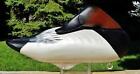
Sold on eBay August 12th, 2024
MINT ~RARE PREENER ~SIGNED c1980 CHARLIE JOINER "DRAKE" Wood Duck Decoy MARYLAND
MINT, PRISTINE & RARE "PREENING" 100% ORIG. CHARLIE 'SPEED' JOINER "SIGNED & CITY & STATE" BOTTOM INSIGNIA ~c1980 AMAZING DRAKE CANVASBACK GUNNING DECOY with the HEN MATE also on ebay ~AWESOME "SOLID CEDAR" & SUPERB CARVING, STYLE, FORM & RELIEF CARVED BILL ~ORIG RIGGING: LEAD BALLAST WEIGHT, RING & STAPLE LINE-TIE ~SCARCE 44-YEAR OLD BIRD is STUNNING & PERFECT with NO CHIPS, DENTS, CRACKS & AN ORIGINAL AGE LINE FROM DAY IT WAS MADE ~AWESOME MELLOW & AGED DRY PATINA ~HEAD & ALL RIGGING is TIGHT AS THE DAY DECOY WAS MADE ~OUTSTANDING "WARD STYLE" STIPPLED, DAUBED & SWIRLED 3-DIMENSIONAL FEATHER PAINT TO ENTIRE HEAD DETAIL ON BACK, ALL WING DETAIL and MITCHELL CLEAN & CONCISE ON THE BREAST, BOTTOM & BILL ~PERFECT PAINTED EYES & ALL NAILS TO ATTACH HEAD ARE INVISIBLE ~HEAD & RIGGING AS TIGHT AS IF MADE YESTERDAY ~PERFECT CONFLUENCE OF MADISON MITCHELL & WARD BROS. STYLE, FORM & PAINT ~LIFE-SIZED & HEFTY 3-LB. DECOY A MUST FOR ANY HIGH END COLLECTION OF THE BEST EAST COAST DECOYS! MINT ~RARE PREENER ~SIGNED c1980 CHARLIE JOINER "DRAKE" Wood Duck Decoy MARYLAND MINT ~RARE PREENER ~SIGNED c1980 CHARLIE JOINER "DRAKE" Wood Duck Decoy MARYLAND Click images to enlarge Description (below photo): From 1941 to 1945 Charlie Served in the U. S. Navy’s Construction Battalion or “SEABEES” Building Airstrips on Islands in the Pacific Theatre of War from New Guinea to the Philippines. UPPER CHESAPEAKE BAY CARVING LEGEND..... CHARLIE "SPEED" JOINER Birth Name:.... Charles William "Charlie" Joiner Jr. (born): July 19, 1921 (died): March 13, 2015 (Age 93) of Chestertown, Maryland (below photo): Chestertown, Havre de Grace, Crisfield and the Upper Chesapeake Bay! Charlie Joiner Lived in Chestertown, Maryland; a Short Drive to 3 of His Best Friends: Madison Mitchell in Havre de Grace; and Mentors' Steve and Lem Ward in Crisfield, Maryland! (MAP SHOWN ABOVE): This MAP SHOWS WHERE CHARLIE "SPEED" JOINER, MADISON MITCHELL, the WARD BROTHERS and OTHERS ....... They SPENT their ENTIRE LIVES MAKING DECOYS, HUNTING and ESTABLISHING the AREA as ONE of the COUNTRY'S MOST IMPORTANT WATERFOWLING AREAS for CARVING WOODEN BIRDS & GUNNING WILD ONES! (below photo): ..HISTORIC 1983 PHOTO of CHARLIE JOINER with 2 of the MOST IMPORTANT FRIENDS & MENTORS in his CARVING CAREER & LIFE; (left to right): Charlie Joiner and "Madison Mitchell" Standing; "Lem Ward" in Front. Lem Ward Passed Away a Year Later in 1984! ? This is the Last Photo of the 3 of them Together! ? ______ (Below Photos): This AMAZING "VERY SCARCE" & "MINT", Outstanding c1980 "SIGNED & Hand-Written Hometown", Charlie 'Speed' Joiner ........... Solid-Cedar, Fully-Rigged, PREENING POSED DRAKE CANVASBACK Decoy Up for Auction!! Madison Mitchell's "Havre de Grace" Round Body Form -with- Lem & Steve Ward's Thick Stippled & Feathery Paint Detailing!! ______ (Below Photos): ..SUPERB STIPPLED, DAUBED & SWIRLED "WARD BROTHERS" INSPIRED FEATHER PAINT TO HEAD, BACK & WINGS ...... and CLEAN & CONCISE "MADISON MITCHELL" DRAKE PAINT on the BREAST, BOTTOM & TAIL!!! "WARD BROS." STYLED RED-BROWN & BLACK FEATHER BLENDING to HEAD -and- GRAY BACK FEATHERING; BLACK, GRAY & WHITE WING SECONDARY & PRIMARY FEATHERS -and- GORGEOUS, CLEAN & PRECISE "MITCHELL" STYLED WHITE & BLACK SPECULUMS and SOLID BLACK BREAST & TAIL!! (Below Photos): The Bottom of this Drake Canvasback Shows Madison Mitchell's Typical "Style" of Rigging that Includes: .... Perfectly Tight & Like-New, Lead Ballast Weight and "Staple & Ring" Line-Tie!! NOTE: The Picture Below is of the Signature & Written Home Town on the Bottom of this Canvasback up for auction. NOTE: The "SIGNED NUMBER 129" on this DRAKE, that is the Collection Number Assigned By the Collector ........ It is Important to See on the Decoy Below Which is the SIGNED 129" Used on the Hen Mate also on ebay with the Matching Collector's Number: NOTE: The "SIGNED NUMBER 129", Which is Prominently on the HEN CARVING & RIG-MATE also up for auction: (Below Photos): Also, Charlie Joiner's Trade-Marked Signature, Spelled City and State ...... all Done with a Black, Permanent Sharpie Like All His Signatures!! _____ \ (Below Photos): The HEAD of this RARE & MINT "PREENING" DRAKE CANVASBACK from SEVERAL ANGLES and to SEE the AWESOME RELIEF-CARVED "MITCHELL" MODELED HEAD that is PAINTED USING the "WARD BROS." STYLED RIPPLED PAINT to the ENTIRE HEAD & NECK!! INCREDIBLE INCISED HEAD/ BILL SEPARATION with PERFECT VERY LONG "CANVASBACK" BILL and "RIPPLED" FEATHERY PAINT to FACE ........ and YOU CAN SEE "EVERY SINGLE PAINT BRUSH MARK" on this ENTIRE DECOY!!! ALSO NOTE the INCREDIBLE & PRECISELY PAINTED RED "CANVASBACK" EYES & VERY SHARPLY-TURNED, "FAR-REACHING" HEAD POSTURE ?........ The VERY LONG PREENING HEAD & NECK is a .... HUGE: 8" LONG & EXTENDS ALL of the WAY BACK from the BREAST to the SPECULUM & SECONDARY WING FEATHERS!!! ? ______ (photo below): RARE, 100% ORIGINAL & AMAZING EXAMPLE of One of his RARE POSES, a GRACEFUL YET MUSCULAR-NECKED "PREENING CANVASBACK DUCK" ...... STUNNING FORM & MAGNIFICENT, PRECISELY PAINTED with "STUNNING VERY FINE DETAIL-PAINT" ....... SPECTACULAR CARVING; ESPECIALLY the LONG-REACHING NECK & HEAD and PERFECTLY SYMMETRICAL CONTOURED BODY ....... and the HEAD & ALL of the RIGGING ARE AS "TIGHT-LIKE NEW" on this MINT CONDITION DECOY!! (photos below): Just Look at the Stunning Detailed Carving and Paint From Top & Bottom Angles and From Different Directions!! PLUS: This DRAKE is in an IMPOSING POSE with its "MUSCULAR NECK" that is "STRAINING" & DETERMINED to PREEN ALMOST BACK to HIS WING TIPS! NOTE: This First Group of Photos are From the Upper Left and Angled Downward: NOTE: This 2nd Group of Photos are From the Upper Right and Angled Downward: ________ (Below Photos): This MINT & RARE "PREENING" DRAKE CANVASBACK SHOWN with the EQUALLY MAJESTIC MINT & EVEN RARER HEN that is also on ebay!! They MAKE a REMARKABLE & STUNNING PAIR as THEY WERE "CARVED TOGETHER at the EXACT SAME TIME and as a MATED PAIR" ........ with the EXACT SAME & COMPLIMENTING "REACHING HEAD & NECK" POSITIONS .......... POSSIBLY EVEN a SPECIAL ORDER as THEY ARE that INCREDIBLE!!! THEY ALSO "COMPLIMENT EACH OTHER" in a SPECTACULAR WAY as: "This PAIR are BOTH REACHING to the SAME TAIL PART" ............ SO THAT: "REGARDLESS of HOW YOU DISPLAY THEM; THEY LOOK AMAZING"!! THEY ALSO LOOK "SPECTACULAR TOGETHER" BECAUSE they HAVE the IDENTICAL SIZE & WEIGHT: ? This DRAKE CANVASBACK & the HEN BOTH MEASURE: 13-3/4" long. ..x..66" wide ..x.. 7-1/4" tall ? Each Weighs a Very Strong & Solid: .... 3-lb. Each _ THAT is FANTASTIC & Makes for a PERFECT PAIR of Carving & Rig-Mates at the Exact Same Time!! That Makes for an Awesome Pair of Very Unique Gunning Decoys that are From the Same Man's Hands & Made at the Same Time .......... as Both are Extraordinary Examples of His Enormous Ability & Out-of-the-Box, Creativity!! ______________________________ The "Very Rare", "Mint & Amazing Condition", 100% Original, "Very Scarce Preening-Posed" Charlie Joiner Drake Canvasback Solid Cedar Wood Duck Decoy: "MINT & STUNNING", 100% ORIGINAL; "SIGNED & WRITTEN CITY & STATE"; "WARD BROS. & MADISON MITCHELL MODELED"; SOLID-CEDAR; c1980 CHARLIE "SPEED" JOINER; ABSOLUTELY INCREDIBLE PATINA & STUNNING PAINT; "44-YEAR OLD"; "SCARCE PREENING-POSED" DRAKE CANVASBACK; WOOD DUCK DECOY; CHESTERTOWN, MARYLAND; SUSQUEHANNA FLATS (Eastern Upper Chesapeake Bay) This AMAZING "PREENING" DRAKE CANVASBACK GUNNING DECOY was CARVED LIFE-SIZED and ROUND BODIED & BOTTOMED!! ? This Life-Size and Round Bodied Style of His Decoys are His Most Sought After Work!! ? STUNNING ORIGINAL PAINT and CARVING on this VINTAGE GUNNING DECOY with AN INCREDIBLE, PERFECT PATINA!! EXCELLENT FORM & RARE STYLE on ONE of His VINTAGE DRAKE CANVASBACK GUNNING DECOYS as this DECOY was MADE WHEN WOODEN DECOYS WERE STILL SOMEWHAT BEING USED for HUNTING!! AWESOME "SOLID CEDAR" DECOY & AWESOME CARVING, STYLE & FORM with a MARVELOUS & PERFECTLY AMAZING "CANVASBACK" BILL!! ? AWESOME STIPPLED, DAUBED, SWIRLED & STRAIGHT-LINE, BRUSH-STROKES of a CONFLUENCE of MITCHELL & WARD BROS. PAINT -and- VERY FAR-REACHING HEAD & NECK PREENING POSED , REACHING BACK to its FAR "LEFT" WAY DOWN the BACK TOWARD the TAIL!! A). SUPERB STIPPLED, RIPPLED & SWIRLED FEATHER PAINT to HEAD, BACK & WINGS and CLEAN & CONCISE on the BREAST, BOTTOM, TAIL & BILL!! B). BLACK & RED-BROWN STIPPLED & SWIRLED FEATHERING to ENTIRE HEAD ..........GRAY STIPPLING to the BACK BACK .......... BLACK, GRAY & WHITE SECONDARY & PRIMARY WING FEATHERING that GOES ALMOST ALL of the WAY to the UPSWEPT TAIL TIP ......... NICELY ARCED BLACK & WHITE SPECULUMS!! C). EXTRAORDINARY CLEAN-LINED, SOLID BLACK BLACK BILL, BREAST & TAIL PAINT with SNOW WHITE SIDES & BOTTOM with SNOW WHITE BACK with FAN-BRUSHED GRAY FEATHERING MUCH LIKE a MADISON MITCHELL DECOY BUT FANCIER!! Vintage Hunting Decoy & His Very Best, Working Bird Style with His Nice, Very Long, Yet Stout, Amazingly Contoured Body Style and Form!! ORIGINAL RIGGING is also MINT & TIGHT LIKE NEW -and- 100% ORIGINAL: ? NAILED-ON, CAST LEAD BALLAST WEIGHT -and- "ZINC-COATED" STEEL "STAPLE & RING" LINE-TIE!! ? The HEAD/BODY SEAM & ALL RIGGING SEAMS are as SUPER TIGHT and PRISTINE as the DAY this DECOY Was MADE!! ? ? This HARD-TO-FIND, SOMEWHAT OLDER, DRAKE CANVASBACK SHOWS INCREDIBLY ....... "NOT A SINGLE" PAINT SMUDGE, CHIP, DENT or EVEN a PAINT BRUSH HAIR in the PAINT ..... It WAS CERTAINLY BABIED in the EAST COAST COLLECTION it CAME FROM!!! Even the "WOOD STOCK HE USED" for this Drake Canvasback and the Hen also on ebay is "ABSOLUTELY PERFECT" ......... It is "NO.1 GRADE WOOD" that Was Used for this Amazing Pair of Decoys!! EVEN the WEIGHT & LINE-TIE are AWESOME with ONLY a VERY TINY RUB to EACH WHICH is QUITE TYPICAL & OUTSTANDING on its OWN!! This DRAKE CANVASBACK Has an INCREDIBLE & VERY APPEALING, VERY DRY, MELLOW-AGED PATINA! ALTHOUGH PROLIFIC, PHENOMENAL and NOT OFTEN SEEN PREENING CANVASBACKS LIKE this DECOY are ALWAYS a RARE & SURPRISING FIND!! ? ? __________________________________________ OVER the YEARS, CHARLIE JOINER'S CLIENTELE INCLUDED ...... "ADMIRALS", "POLITICIANS" and "MILLIONAIRES", YET OBVIOUSLY his TYPICAL BUYER was a REGULAR HUNTER Looking for QUALITY DECOYS at a Fair Price. But Nevertheless, CHARLIE JOINER'S Decoys Found their Way into Some Notable Rigs, INCLUDING: "MEMBERS of the DuPONT FAMILY" CHARLIE JOINER also SOLD Decoys to "MAINE SENATOR ED MUSKIE", "BASEBALL LEGEND TED WILLIAMS" -and- "PHILADELPHIA PHILLIES OWNER BOB CARPENTER" and MANY other NOTABLE CUSTOMERS. ____________________________________________ It was Roy Walsh’s 1960 book "Gunning the Chesapeake", featuring a photo of "Charlie Joiner at Work" ...... with a Glowing Description of his Birds, that Brought “SPEED” his First Taste of National Fame, along with Hundreds of Orders ....... But it was Just the Beginning of his Legendary Status as One of the Best!! ANOTHER SOURCE of FAME & RECOGNITION for CHARLIE JOINER HAPPENED WHEN ........... To Encourage & Promote Leisure Travel in the 1940s and 1950s, Several Automakers Published Colorful Periodicals for the Drivers of their Cars. And "Charlie Joiner" was Featured in 2 of these, including a 1964 Issue of "Ford Times and a Mid-1960's Issue of "Chevrolet Friends Magazine". “The Magazine had a Back Page Feature where People Around the Country could Write-in about their Hobby"; Charlie once Remembered: “Well, one of my Neighbors Insisted that I do it, and Although I Didn't Want to, She took the Pictures & Sent Them in and Sure Enough they Ran it. You Wouldn't Believe the Mail I Started Getting. People from as Far Away as California, Arizona and Montana, and then Every State Back to the East Started to Write Me Letters Asking about my Decoys.” ____________________________________________ This is a Perfectly Symmetrically Carved & Painted Vintage Charlie Joiner Drake Canvasback Solid-Cedar, Lathe-Formed (Likely in Mitchell's Shop) Wooden Gunning Decoy! The ONLY TIME that this Decoy "EVER SAW WATER" was Was When Charlie Joiner in a Vat to "TUNE IT" By Adjusting Where the Ballast was Nailed On so It Would Swim with Perfection in a Hunting Rig!!! STRUCTURALLY PERFECT HEAD & NECK with ALL NAILS PERFECTLY INTACT and TIGHT AS IF MADE YESTERDAY WITHOUT a TYPICAL NECK CHECK or NAIL POP that YOU QUITE TYPICALLY FIND on UPPER BAY DECOYS as they are INHERENT to the CONSTRUCTION METHOD!!!?? ? All Nails to Attach the Head Were So Perfectly Countersunk and Topped and Sanded with Filler You Can't Even Tell Where One of the Nails Is Even Located!!! __________________________ ? (Below Photos): CHARLIE JOINER DIVER DECOYS! ~ Included in the Photos of his FULL-SIZE DECOYS are his MARVELOUS MINIATURES!!! The 1st Photo is of a Pair of Joiner's Canvasbacks, Similar in Style & Form to this Amazing and Rare Preening Canvasbacks up for auction: (Below Photos): CHARLIE JOINER PUDDLE DUCK DECOYS, Included in the Photos of his FULL-SIZE DECOYS are his SUPERB MINIATURES!!! ______________ (Below Photo): Charlie Joiner Shown Throwing Out Decoys on the Chester River for the Last Time ...... This was the Cover Photo for the 1987 Havre de Grace Festival's Program Where Charlie Joiner was Duly Honored!! (Below Photos): As a TRIBUTE to CHARLIE'S CELEBRATED CAREER, He was CHOSEN as HONORARY CHAIRMAN for the 1987 HAVRE de GRACE DECOY FESTIVAL!! BELOW are PICTURES of CHARLIE JOINER at the 1987 FESTIVAL!! SHOWN HERE with a Display of his FULL-SIZE DECOYS, MINIATURES -and- One of CHARLIE SIGNING a DECOY for a YOUNG ADMIRER!! ________ "MINT & VERY RARE", 100% ORIGINAL; "SIGNED & WRITTEN CITY & STATE"; "FULLY-RIGGED"; SOLID-CEDAR; c1980 CHARLIE "SPEED" JOINER; ABSOLUTELY INCREDIBLE PATINA & STUNNING PAINT; "44-YEAR OLD"; "RARE PREENING-POSED" DRAKE CANVASBACK; WOOD DUCK DECOY;? ? Very Nice, Very Old Dry Paint with a Beautiful, Clean and Crisp Patina!! ? AWESOME LATHE TURNED DECOYS that WERE THEN FINISHED with KNIVES, HAND TOOLS & SANDPAPER and MADE with PERFECTION!! These Awesome Decoys were Made to Swim & Perform with Perfect Realism!! Plus .... Their Large Size & Buoyant, But Realistic Swimming Weight, Depth & Design Made them Visible from Huge Distances, and their Heavy Weight Kept them Riding Perfectly & So Well Weighted they Were Hard to Flip & Righted Themselves Immediately Even in the Roughest of Water!! ? ? GREAT THICK, 100% ORIGINAL PAINT on this AWESOME, OLD GUNNING DECOY with GREAT PATINA!! ? SUPERB FORM & TRULY ONE OF HIS VERY BEST, LONG-NECKED, BACK-REACHING, PREENING CANVASBACK GUNNING DECOYS!! ? All ORIGINAL & You Could HUNT OVER This 44-YEAR OLD DECOY TODAY and LOSE NO PERFORMANCE from the DAY THAT IT WAS MADE!! DON'T MISS OUT on this Truly Great Upper Chesapeake Bay Gunning Bird with a Distinct Eastern Shore, Ward Brothers Influence & Style of Paint!! ? IF YOU are a FAN of GREAT GUNNING DECOYS that DID EXACTLY what they WERE MADE TO DO, This is a GREAT DECOY to add to YOUR COLLECTION!! Awesome Rear-Aimed, Straight Head & Neck Flows Perfectly From the Top of the Breast "Flawlessly" with Absolutely No Loss of Flow!! The Awesomely Carved Bills on these Desirable and Scarce Canvasbacks have Crisply Carved Bill/Head Separation and the Bodies Were Made with a Perfectly Rounded Breasts that Begin with an Undulating Form that Rises and Widens Near the Rear and then Tapers Down and Up to the Upswept Tail! ? The Dimensions & Weight are Perfect & Typical for Solid-Bodied, Solid-Cedar, "Charlie Joiner" Large Diving Duck!! This Drake Canvasback Clearly Shows That It Came from Climate Controlled, Direct Light-Free Collection or Collections It Has Been Kept in Over the Many Decades and Almost Half of a Century That It Has Been Carefully Cared For In!! ? If You Like Important Decoys from the one of the Most Famous Decoy Carvers Chesapeake Bay Carvers Ever, that Are in Outstanding, 100% Original, Never Gunned-Over Condition ....... THIS IS A GREAT DECOY FOR "ANY" COLLECTION!! _______ The STUNNING HEN RIG-MATE to this DRAKE is ALSO on EBAY if you are LOOKING for a STUPENDOUS 100% ORIGINAL, MINT CONDITION & VERY SCARCE PAIR of VINTAGE GUNNING MATES This Stunning Drake Preening Canvasback and the Hen also on ebay both Measure Exactly: 13-3/4" long x 6" wide x 7-1/4" tall -and- Both weigh a Very Hefty: 3-lb. each That is FANTASTIC & Makes for a "PERFECT PAIR" of CARVING and RIG-MATES that Were MADE at the EXACT SAME TIME!!! ? ? That Makes for an Awesome & Exceedingly Rare Pair of Very Unique Gunning Decoys that are From the Same "World Renowned" Carver and Made at the Exact Same Time!! That Makes for a Superb pair that Have Been Together Since They Were Made and Clearly in the Protection of Climate and Light Controlled Collections Since they Left Charlie Joiner's Workshop!! Like Everyone, Charlie Joiner Got Better & Better Over Time; But He Usually followed the Same Patterns, Style, Form, Paint, Rigging, Weight and Size From any Given Time Period, Even on the Various Species they All Usually Share the Same Attributes if From the Same Period of His Carving Career! He Did this SO MUCH SO THAT the DIMENSIONS & WEIGHT of the SPECIES of CHARLIE JOINER'S DECOYS are Usually CLOSE to the SAME! __________ RARE: CHARLIE JOINER'S DECOYS are SOME of the NICEST BALANCED, SYMMETRICALLY CRAFTED and OUTSTANDING CARVED and PAINTED ROUGH-WATER DECOYS MADE on the EAST COAST in the 20th CENTURY! A Perfect Specimen of a Beautiful Species, "King of Ducks" Diving Duck Hunting Block Made by one of The Best Gunning Decoy Carvers & Painters to Ever Call the Upper Bay Home!! This DECOY is PAINTED in It's FULL WINTER COLOR SCHEME and How We Usually See CANVASBACKS During the LATER PART of the HUNTING SEASON in MICHIGAN ...... But During MILD WINTER'S Like this YEAR a Great Many STAY HERE as LONG as They Can GET to FOOD & the Water is STILL OPEN!! This DECOY Has the NICEST BILL & HEAD CARVING -and- BODY SHAPE & FORM -and- Some of the Most Extraordinary Work You Will See on One of His Finest Decoys!! EXCEPTIONAL PATINA to the BEAUTIFUL, OLD DRY 100% ORIGINAL OIL PAINT!! If You Like "RARE" & "UNIQUELY POSED" Decoys from FAMOUS MASTER CARVERS and Are in "MINT CONDITION" ........ THIS is a VERY VALUABLE DECOY to ADD to Your COLLECTION!! ______________________________________ DON'T MISS OUT ON THIS OUTSTANDING & SCARCE DECOY: This Drake Canvasback and the Hen also on ebay Show That they Came from the Climate Controlled, Direct Light-Free Collection they Have Been Kept in for the Many Decades & Almost Half a Century that they Have Been Carefully Cared For In!! ? _______________________________________ IN THE NEXT FEW WEEKS I AM PUTTING ON EBAY MORE LAWRENCE BETHEL FISH DECOYS, A PAIR of MINT SIGNED CHARLIE JOINER CANVASBACKS, A PAIR OF THE ONLY KNOWN PROTOTYPES MADE OF THE VERY FIRST PRE-PRODUCTION FIBRE DECOYS EVER MADE, A NEAR MINT 1927 HEDDON GIANT VAMPIRE FISHING LURE IN RARE SHAD, A PAIR of LATE PHASE DODGE MALLARDS, EXQUISITE AND RARE PAIR OF "SPECIAL ORDER" MALLARDS, A RARE PAIR OF RALPH MALAPAGE GREEN-WINGED TEAL, A VERY RARE c1893 100% ORIGINAL TRANSITION PERIOD MASON DRAKE BUFFLEHEAD, A MINT RALPH MALPAGE CANADA GOOSE GUNNING DECOY, A MINT c1905 HEDDON ARTISTIC MINNOW, A VERY RARE PADCO OF MISSISSIPPI GOLDENEYES, A YELLOW WITH RED EYE BLUSH MOONLIGHT SINGLE-HOOK PIKAROON, A NIB CREEK CHUB MULLET COLOR STRIPER PIKIE IN CORRECT BOX, A PAIR of INCREDIBLE CHALLENGE GRADE MASON BLUE-WINGED TEAL, A NICE PAIR OF MASON GLASS EYE BLUEBILLS, AN AWESOME ERNIE NEUMANN SUCKER FISH DECOY, A RARE DOUBLE SPECIAL CREEK CHUB BEETLE FISHING LURE, A VERY NICE ERNIE NEUMANN SUCKER, A RARE 12-1/2" CHET SAWYER MINNESOTA FISH DECOY, A NEAR MINT OSCAR PETERSON PERCH FISH DECOY, A MINT PAIR OF WRAGG & BURRELL WIGEON, AN OUTRAGEOUSLY HARD TO FIND PAIR OF CHARLIE POZZINI BLUEBILLS, A CHET SAWYER 13" CHET SAWYER FISH DECOYS, A VERY BIG & BULL-NECKED EARLY FERDINAND BACH DRAKE CANVASBACK FROM HIS PERSONAL RIG AND MORE!! ? Shipping Includes Insurance! I Don't Believe in Making a Profit on Shipping, You Pay What I Pay. If it's Less Than You Paid I Refund the Difference, If More I'll Pay For It. I COMBINE SHIPPING. I am also loading over 150 Duck Decoys, 150 Fish Decoys, 70 Scarce Fishing Lures, etc. so keep checking back. __ This "STUNNING & SCARCE "SPEED" JOINER DECOY up for auction..... ITEM DESCRIPTION: This 44-Year Old "Drake Canvasback" was Carved and Painted by Charles "Charlie" or "Speed" Joiner (born: July 19, 1921 - died: March 13, 2015) of Chestertown, Maryland. Chestertown is a town in Kent County, Maryland, United States. The population was 5,252 as of the 2010 census and it is the county seat of Kent County. Founded in 1706, Chestertown rose in stature when it was named one of the English colony of Maryland's six Royal Ports of Entry. The shipping boom that followed this designation made the town at the navigable head of the Chester River wealthy. In the mid-eighteenth century, Chestertown trailed only Annapolis and was considered Maryland's second leading port. A burgeoning merchant class infused riches into the town, reflected in the many brick mansions and townhouses that sprang up along the waterfront. Another area in which Chestertown is second only to Annapolis is in its number of existing eighteenth century homes. As of the 1790 census, Chestertown was the geographical center of population of the United States. Chestertown was incorporated in 1805, and was named for the Chester River. (Below Photo): Charlie Painting a Canvasback Using His Typical Clam-shells as his Palettes, a Trick of the Trade he Picked Up from Lem & Steve Ward ....... He Said the Paint Color was Easy to See When it Dried, So it Was Easy to Mix Some More Up When You Got Back to that Color! Charles William Joiner was born on July 19, 1921 to Charles and Lena Luike Joiner. Charlie, as he was known, was born and raised in Betterton, Maryland, a waterfront community overlooking the confluence of the Sassafras, Elk and Susquehanna Rivers. It was here that Charlie Joiner developed an early love for the outdoors and the bounty of the land and water around him. Originally established as a fishing village in the mid-1700’s, by the turn of the 20th century, Betterton had exploded into a prime summertime resort and a favorite destination for mid-Atlantic urbanites looking for respite from the heat. “We had about 300 people in the winter", Charlie Joiner once recalled of Betterton in the 1920's and 1930's. "But probably 3,000 during the summertime. People came from everywhere", Charlie added. He vividly remembered the hotels and restaurants, concession stands, beer gardens and movie theaters, the dance halls, bingo parlors and bowling alleys. By the 1940's, however, with vast improvements in transportation providing easier access to ocean beaches and Betterton’s heyday was over. Charlie Joiner inherited several things from his father: a love of and respect for the outdoors, the profession he would master over the next 40 years and the nickname he would have until the day he passed away. “Everyone called him Speed,” Charlie once said of his father. “I never knew what it meant or where he got it, but when I came along, they started calling me Speed too. He was ‘Big Speed’ and I was ‘Little Speed’”. Growing up, Joiner loved to fish and when he was about 12, he started to hunt small game in the woods and fields near home. Around 1937 he and some childhood friends turned their interests to waterfowl and began gunning for marsh ducks. Unable to afford wooden decoys, Charlie and his friends fashioned their own from old gallon-sized antifreeze cans. “Back then, every fall, everybody would get Prestone put in their radiators.” Joiner explained, “and the garage chucked ‘em out on a pile and we’d go pick out 12 or 15 of ‘em. We’d take ‘em home, solder up the holes they punched in them, paint ’em flat black and tie a string around ‘em. They worked just as well as the best decoy ever made.” Charlie Joiner was first exposed to wooden decoys as a boy in the 1930’s, finding derelicts from the Upper Bay. “I used to walk along the shoreline in Betterton and find decoys. Betterton is directly across from the Susquehanna Flats and with that northeast wind they'd come. They had rigs of 400 birds, and if a string broke and one drifted off, they'd never miss it. You could always count on finding at least two or three every time, but sometimes I’d find as many as five or six, some of ‘em good, some of ‘em not so good. They were mostly canvasbacks, what we call river ducks or bay ducks.” These decoys were put to good use on the nearby Sassafras River. Charlie Joiner attended the local elementary school and graduated from Chestertown High in 1938 (Betterton was too small to have its own secondary school). While in high school he worked a bit as a sign painter, the first display of his artistic talents. As well as making signs for hotels and restaurants, he also painted the ornate names on the backs of boats at the local harbor. One time a boat was launched before he finished, forcing Charlie to hang over the back and paint the name upside down. Joiner’s first full-time job was working for airplane manufacturer Glenn L. Martin in the paint shop. In the days before aircraft cables and tubing were color-coded, he would paint the cables by hand, different colors denoting fuel lines, oxygen lines, fluid lines, and so on. It only took him a few months (and endless miles of cable) to decide this wasn't the job for him. Charlie Joiner’s father worked as an engineer for the local electric company. Knowing of an opening, he suggested Charlie apply for it. The result was a decades-long career. “Twenty-five cents an hour, that was my starting salary,” he recalled. In 1941 the federal government started building a camp at Aberdeen Proving Ground, just across the bay and not far from Havre de Grace. “They were hiring and offering three times as much money,” Joiner said. “I had enough experience as a lineman, so I took a job there.” Originally, he took a boat between Betterton and Aberdeen, but in the winter months the boat didn't run and it was hours to go around, so he decided to move and got a room in nearby Havre de Grace. “On weekends, I came home to see my parents and go goose hunting with friends,” he said. “We had about 75 silhouette goose decoys, cut them out of plywood. I was boarding with the Springer Family in Havre de Grace, so I took the goose decoys up there to paint them in the evenings when I would have time. But I had never done anything like that in my life. So Mr. Springer said, 'Well, go see Mr. Mitchell right down the alley here. He makes decoys and can probably help you.” And in January 1942, Charlie Joiner did just that and walked to Madison Mitchell's house. “I was scared to death,” Joiner recalled of that first meeting, “because I didn't know how he would take it. I introduced myself and told him of my plight. First I asked him how much Head charge to paint ‘em himself, and I can’t remember for sure, but it seems to me it was something like 50 cents apiece, and well, that was out of the question, definitely out of the question. So we both kind of laughed, and he sent me uptown to the hardware store to get a quart of white paint and about a pint of black. The rest of what I’d need, he said he had plenty of it there. So he got me upstairs - he had a table that was just the right height for painting - and he got his brushes out, mixed up the paint and he painted two. Then he got up and said, ‘There you are, it’s all yours, now sit down and paint the rest of ‘em’. They might not have looked like his, but they did the job.” At the time, Madison Mitchell already had a talented group of assistants working for him in his decoy shop, and Charlie vividly recalled each man’s role in the assembly-line operation: “Ed Sampson made heads, he made a great head. Eddie Mauldin did the body work downstairs, spoke-shaving bodies and running bodies on the machine. And there was a guy named Smitty, a local house painter, who did a lot of priming.” Joiner was in awe of Mitchell and his decoy making operation, and the two developed a lifelong friendship. “I started going back over to help him on the weekends and in the evenings,” he recalled. “During my time there I went through it all, from running the machine, spoke-shaving, sanding bodies, whittling heads.” Many early Mitchell decoys have Joiner’s fingerprints on them, yet he wasn't doing it for the money. “Throughout the whole time, I never took a dime from him. Never took a nickel,” he said. He was so much of a dear friend it was out of the question. (Below Photo): Charlie Joiner and One of the Closest Friends He Had Over his Entire Lifetime, Madison Mitchell! The Two are Chatting it up with Jimmy Pierce and Charlie Bryan: Madison Mitchell was a kind man and a patient teacher to willing disciples, but he was exacting when it came to his decoys and he could be stern and demanding when it came to quality control. Joiner recounts the day he knew his work began to rival that of his instructor. “We were doing a lot of work for a stretch there and I was taking heads home with me by the bushel basket at night to work on. When I’d get ‘em done, I’d bring ‘em back to the shop and every time I took ‘em back, Madison would check ‘em out and pick ‘em apart. He would say I either cut too much out of here, or I hadn't cut enough out of there, but he would say don't worry about it; I can straighten it up with the sander.’ Well, after this had gone on several times, I took a basket of heads back to the shop that I had been working on, and when I went through the shop, I picked up one of the heads that Michell had done. Charlie took it upstairs and asked, ‘how’s that?.’ And Madison looked at it and started picking it apart, and when he got done I said, ‘Well, that's one that you did,” he remembered, smiling. “And when he looked away I'm sure he was grinning to himself.” If Mitchell couldn't tell his own heads from somebody else, Joiner figured he must be doing okay. Only a few years after Charlie Joiner went to work at Aberdeen, Uncle Sam called upon him again, this time to join the United States Navy. “Until I was 20 years old, I was never any further from home that I couldn't look back and see smoke coming out of my chimney,” Charlie joked, “but when the war came, I went from Betterton to New Guinea and the Philippines. I joined the Navy and saw the world.” Indeed he did, spending the next several years in the Navy’s Construction Battalion or “SEABEES” building airstrips on islands in the Pacific. Joiner returned home in 1945 but was on active duty for another year. In 1946, he settled in Aberdeen, working once more at the military installation there. But he could see that they were going to be closing the camp down and didn't want to be out of a job, so he accepted a position with Delaware Power & Light in Wilmington, a job he held for seven years. During this time he moved his family back to Betterton, building a home there in 1950. With the post-war boom came development and traffic, and the commute from Betterton to Wilmington grew each year, so he took a job with Chestertown Power & Light in 1953. He lived in Betterton until 1963, when he built a house in Chestertown. Throughout the 1940's and 1950's, Charlie Joiner and Madison Mitchell enjoyed a special relationship, growing closer and closer through hunting trips, decoy and waterfowl shows and frequent visits to their respective shops. Madison Mitchell appreciated the genuine interest Charlie Joiner showed in his trade as well as the many hours of free labor he gave in exchange for his tutelage. Mitchell fondly returned those favors when Joiner returned from the war. “When I got home, one of the first things I wanted to do was go see Madison. He told me to go look upstairs in the back room of his shop, that there was something up there for me. There was a whole rig of decoys, near a hundred.” Most of the birds were patched up “cripples”, damaged birds with imperfections that Mitchell had refurbished and set aside for him. Joiner quickly put them to good use. “We never exchanged money for anything.” Joiner said, but then recalled one time when they did. “The band-saw I have out in my shop, I did buy that off of him. Back in 1949, Madison had bought it at a used tool place down in Baltimore, and after he got it home, he didn't like it. It’s a left-hand saw instead of a right-hand saw. He was gonna’ get rid of it and I said how much you want for it, and he said, ‘a hundred bucks.’ I paid him right then and there, before he could change his mind.” During those early years in the 1940's & 1950's while working for Madison Mitchell, Charlie Joiner crafted the first decoys that were all his own, the first true “Joiner” decoys. It only took a few more years to realize he could turn his talent and love for the art of decoy making into something more, a way to make a little extra money for his family and to help finance his hunting expenses. The first decoys that Joiner made from start to finish, a small rig of canvasbacks for his own use and two dozen black ducks that he traded for a shotgun, were made in Mitchell’s shop right after World War II, a time when demand for gunning decoys in the Chesapeake Bay region was growing. This demand, combined with his own interest in making decoys, the desire for a little extra income and encouragement from Mitchell, was the catalyst for the launch of his own decoy business in 1950. “When I first met Mr. Mitchell he was charging $1.25 for blackheads, $1.35 for canvasbacks, $1.55 for mallards and $1.65 for pintails. He got that extra dime ‘cause it took more wood for the pintail ….big deal.” he laughed. “By about 1950, Madison was getting $35 a dozen, so I thought, heck, I can get that too. I kept the price the same for 15 years, until about 1965” Charlie added. (Below Photo): A Pair of CHARLIE JOINER'S Very Effective & Realistic Canvasback Decoys Doing their Job Sitting in a Flock of Unsuspecting Wild Canvasbacks Surrounding Them: Charlie Joiner's early patterns were copied from Madison Mitchell’s, which he reworked slightly. In addition to making new decoys, by the early 1950’s Joiner built up quite a business repairing, refurbishing and repainting decoys for area gunners and clubs. It wasn't uncommon for several rigs of several hundred decoys each to be dropped off after hunting season, and for that reason his well-recognized paint patterns are found on hundreds of decoys by other Chesapeake Bay makers today. In the 1940’s, Joiner was making canvasbacks, redheads and blackheads (bluebills) and a few black ducks. “I always said I made 10,000 canvasbacks, redheads and blackheads before I made my first mallard. Nobody fooled with anything else at the time, as there wasn't the need. Early on, since I was making gunning decoys, collectors weren’t after ‘em then, so I only made species that was hunted around here” he said. By the 1950’s he branched out into other species on a special order basis, turning out Canada geese, black ducks, mallards, a few goldeneyes, and a handful of baldpate wigeon and a swan. By the 1960’s, he increased his repertoire, adding blue and green-winged teal, pintails, wood ducks and brant. In later years, he tried his hand at other members of the waterfowl family, offering collectors the opportunity to add his red-breasted mergansers, ring-necks and cinnamon teal decoys to their shelves. (Below Photo): Charlie Joiner and 2 of his Other Closest Forever Life-Time Friends, Lem and Steve Ward .... Charlie Spent Days and Weeks with the Ward's Over the Many Years Learning Everything He Could and Sharing His Thoughts & Ideas with Them as Well! It Showed in Charlie's Work and Ironically a Little of Charlie Joiner Maybe Even Rubbed Off on the Brothers as Well!! Ever the perfectionist and always eager to learn more about his chosen craft, Charlie Joiner decided to pay a visit to the Ward Brothers, whose own fame was quickly eclipsing their quaint hometown of Crisfield, Maryland. “I first went down to see the Wards in the late ‘50s, around ‘58. I went up to the house first and Lem’s daughter Ida was there. She said that Lem was lying down as it was after lunch, but Steve’s out in the shop so go out there and make yourself known. So I went in and Steve was there and he was sanding miniatures and I could see they were blackheads. Steve asked me how I was doing and what my name was, but he must not have really heard me, because I was sitting there talking to him and I said that those blackheads had a really good shape to ‘em", and he told Charlie, 'You must know something about ducks if you can tell what it is before it’s even painted’ and he said ‘What’d you say your name was?’ And Charlie told him and Steve Ward as they said ‘Well I’ll be’ I was surprised, but he had heard of me. And he said ‘Let me go get Lem’ and I said, ‘No, Ida said Lem's layin’ down, he’s not feeling well so I can come back later,’ and he said, ‘No need, that's fine, just wait here, I’ll go get him.’ And when Lem came out, Charlie was tickled to death. After that Charlie and the Ward brothers became very close friends and visited each other often after that. Charlie said that the Ward brothers even stayed at Charlie and his wife Janet's house when the brothers attended the first Havre de Grace Waterfowl shows. Always one with a quick wit, Charlie said that years after that, he had a guy make up a sign that read, 'Lem Ward Slept Here', and that he was going to hang it over the bed that he slept in. (Below Photo): Charlie and the Ward Brothers Became Very Close Life-Long Friends and Visited Each Others Shop and Home as Often as They Could! They Were So Close that Lem & Steve Spent the Night at Charlie and his Wife Janet's House One Night & Years Later Charlie Jokingly had Someone Make a Sign that Read "Lem Ward Slept Here" to Presumably Hang Over that Bed!! Charlie Joiner learned a tremendous amount watching the Ward brothers in their shop, but the lessons, seldom imparted formally, came largely from studying their technique and later emulating it back in his own shop. “They were very open to you, but I don’t remember really questioning them much about what they did or how they did it.” he recalled. “But I could take something they'd painted and look at it with a magnifying glass and I could tell you what they did first, and what they did next, and that's really where I learned to copy from them” he once said. Shortly thereafter, Joiner began experimenting with flat bottom birds carved and painted in the Ward style. For the next 50 years, Charlie Joiner moved seamlessly between the influences of the Madison Mitchell and Ward brothers' styles, occasionally combining and blending them to amazing artistic effect. Charlie Joiner carved well into his eighties, and still mixed his paint in clam-shells, something he picked up from the Ward brothers. “Up in Havre de Grace, we used to mix it up in cans”, he remembered, “but you can mix it better this way. You can see it better and because it leaves some of the color when it dries, you can go back to the same colors you use again and again more easily. And they're disposable. When it gets too bad, you just chuck’em.” When Charlie once reflected on his talents as a decoy painter he said, “The Wards told me to just keep at it, process of elimination, trial and error.” So when it is all said and done, it isn't any wonder that Joiner would come to embody skill, art and craftsmanship in wood. As Charlie's surname indicated, an English fore-bearer also made his trade in woodworking, so one could argue that the ability was very much in Charlie's blood. No surprise then that he used time-honored methods to craft his decoys. After cutting out the profiles on a saw, he used a draw-knife, spoke shave, wood rasp and whittling knife to evoke the birds waiting in the blocks. He used a belt sander to shape and smooth the wood. Madison Mitchell helped pioneer its use; realizing how much time and effort could be saved he developed the model for the belt system that most makers still use today. Madison Mitchell took a group of cut out heads home with him during lunch one day, Joiner recalled, and came back with them all finished. Even Bob McGaw was impressed, he remembered. (Below Photo): Charlie Whittling One of His Outstanding Heads that He Learned How to Make By Running His Early Efforts by Madison Mitchell to Get His Thoughts on His Progress! The look of Charlie Joiner’s round-bottomed Havre de Grace style decoys changed little over the last six decades that he carved, but he always was experimenting, making subtle improvements to both carving and paint. His earliest decoys, made on Mitchell’s patterns and in Mitchell’s shop, are nearly from his mentor’s. Some of his early 1950's canvasbacks, which feature bills with “Roman” style noses reminiscent of Jim Currier’s decoys, also exhibit a stylized waviness to the back father painting. Charlie's later decoys feature bills of slightly varying widths, models with painted and glass eyes, more heads in sleeping or preening positions, slightly varying shades of base coat, back feathering in various patterns and they were unique but accurate, adaptations of the Ward brothers’ style paint patterns, But almost exclusively done on Upper Bay body patterns. He also, on a rare occasion, he carved unrigged decorative decoys with flat bottoms to set on a shelf. Painting is where Charlie Joiner’s skills as a decoy maker really shined and his painting is considered exquisite by many collectors. His gunning birds utilized 2 coats of the same color primer as the species, just in case the decoy was dinged or chipped during use. He was first taught to paint under Madison Mitchell and later on after his visits to the Ward Brothers, Charlie studiously watched the techniques and styles of their painting and copied it back at his shop. He would also examine their work using a magnifying glass to better understand their process and see what order of method and technique they employed. Charlie took the techniques and styles of Mitchell and the Ward Brothers, arguably the best decoy painters on the Chesapeake Bay, and combined those styles together with his own embellishments to help create his own unique artistic painting method. He utilized a distinctive trademark curvature in primary wing feathering to the body’s contour that is immediately recognizable. (Below Photo): Another Pair of Charlie Joiner Preening Canvasbacks, Gorgeous But Not Quite Up To Par to This Stunning Pair up for auction!! The Pair Shown also Have Heads that Reach Back in the Same Direction and Pattern, But Complement Each Other and Present Themselves in a Very Cool Way with the Differentiation “Back in the 50's, some of my customers would buy 10 or 12 dozen decoys at a time,” Charlie once recalled. “To me, that was a big deal. For a few years there, I was making 1,200 to 1,500 decoys a year. The only things I had to buy were white pine for the heads, nails and the paint. The wood for the bodies was free since I had access to old cedar poles at the power company. Cedar was the best - it would last a long time. White pine is good too, but it was getting harder and harder to find when I got started” he said. Much later in his career, many of Joiner’s decoys were carved from basswood, but he still made gunning decoys from white pine. “If I know someone’s going to use them for hunting, I’ll use pine. It holds up better, works better on the water”, he said at the time. (Below Photo): A Pair of Amazing Charlie Joiner Miniature Balsa Canvasbacks that Charlie Carved that He Modeled After Flat-Bottomed Full-Size Ward Brother Decoys Using their Carving and Paint Style as Well!! While Charlie's nickname "Speed" had nothing to do with his quickness with a paintbrush, Joiner was about as speedy as they came. Having been timed with a stopwatch more than once, he could paint a canvasback drake, from start to finish, in seven minutes flat. The hen, which would require a little more blending, took him about 10 minutes. His famous duck head signature on the bottom of his decoys, was the final touch for a Joiner decoy, and was something he developed around 1970, and as a trademark and it was a work of art in itself. And over the years many collectors brought him his earlier gunning models for this final embellishment, his duck head signature on the bottom. For years Joiner poured his own lead weights using a cast iron mold based on Mitchell’s. Like many Upper Bay makers at the time, he bought his nails from Mitchell, who ordered them in bulk for his own shop and distributed them to others. Most area makers use steel rings and staples, often galvanized or zinc coated, but Charlie usually always used copper. “I’d get my staples at the power company,” he recalls, “steel staples coated with copper. I made my own rings most of the time, from tinned copper wire that I soldered together.” Joiner’s flat-bottomed work is in a league of its own. Having learned the style from Lem and Steve Ward, many believe Charlie’s best pieces rival and even surpass those of his Crisfield mentors. Over the years, he had made most of the species native to the Chesapeake Bay, in both full-sized versions and several styles of miniatures. He began making miniatures, each roughly 8" long, in the 1950's, using balsa from decommissioned liberty ships. Originally, these included canvasbacks, redheads, bluebills, pintails and mallards, and later he added wigeon, black ducks, wood ducks, goldeneye, teal, geese, swan and brant to his mix. Joiner also made Havre de Grace style minis (roughly 5" long) during that time, most mounted on walnut bases, some complete with tiny weights, rings and staples. Miniature canvasbacks, redheads, bluebills and a few mallards and swans are known in this style. (Below Photo): Charlie Joiner's Swans are Few and Far Between, But they are as Graceful and Beautiful as Anything He Made!! In the 1950's Joiner experimented with refrigerator cork, eventually turning out a few hundred decoys. He made two different styles of black ducks, three slightly different styles of geese and three swan decoys for his own rig. All told, he only worked with cork for a few years. “It was a dirty mess,” Charlie recalled, “My cork decoys are out of print now, I don't fool with that anymore.” (Below Photo): Charlie Joiner Used Cork for a Brief Period of Time But Found it Messy, And He was Known to Have Made a Couple Hundred Cork Ducks or Geese in Total! (Below Photo): A Pair of Charlie Joiner Cast Iron, Sink-Box, Canvasbacks that he Painted that Were Sold by the Orvis Company in the Mid-1980's!! Other Joiner rarities include gunning doves, crows, an albino canvasback, flying miniature swans and geese, a mini sink-box rig complete with tiny decoys, cast iron canvasback wing ducks, high-head canvasbacks and even once converted a wooden decoy into a mechanical one driven by a small electric motor with a propeller drive. Occasionally, collectors run across Charlie Joiner canvasbacks made from imperfect blocks, with heavy knots or creosote in them, that he sold as "Seconds". He usually set these aside and kept them for his own use, but occasionally hunters asked to buy them. So Joiner branded them with a large number “2” on the bottom and sold them with no guarantee, but for only $2.50, half his normal price at the time. (Below Photo): Charlie Joiner Sold His Decoys that Had Imperfections or Other Defects as Seconds. He Branded them with a "2" and Sold them for Half the Price of a Regular Decoy!! In the spirit of those first silhouette goose decoys that brought Charlie to Mitchell’s shop back in early 1942, Joiner continued to turn them out on occasion over the years, mainly for hunters but also for collectors. What these two-dimensional plywood birds lack in depth, they more than make up for in Joiner’s expressive paint. Over the years, Charlie shied away from the business end of decoy making, preferring instead to focus his time and energy on mastering his craft. For nearly 40 years, friend and fellow decoy maker Bob Coleman served as his sole distributor. Later, decoy maker Dave Walker managed his sales. “First of all, I wouldn't have the nerve enough to charge the people what these guys pay me,” Joiner said at the time, “I figure, let them do it.” In the 1980's, some of Joiner’s decoys were sold through the Orvis Company. Remarkably, Joiner’s operation was a one-man show for more than 65 years. One early customer, Dick Woollens, helped spoke-shave bodies in trade for decoys back in the 1950's. And Nelson Crew and Nelson Boone, two local friends, helped him repair and refurbish rigs of birds by helping him prime and putty decoys before painting, but that was the extent. “So that means any mistakes are mine,” he said at the time with a chuckle. “I’m downsized now,” Joiner said later in life, reflecting on his recently slimmed-down operations. “I used to maintain a much larger shop, much more space.” Yet he still turned out a number of beautiful, well-made decoys that quickly found their way into the hands of eager collectors. (Below Photo): A Pair of Decorative Charlie Joiner Canvasbacks with Ward Brother Inspired Flat Bottoms as Well as Lem & Steve Ward Inspired Paint Jobs!! During the 1940's and 1950's, Joiner engaged in every type of waterfowl gunning practiced on the bay. Although when bushwhacking was waning on the Susquehanna Flats in the late 1940's, he was able to experience this unique form of hunting with Madison Mitchell. He vividly recalled the first time Harry Jobes took him and Mitchell body booting in the 1950's. “It didn't grab me,” Charlie chuckled, remembering the freezing water, incoming tide and general discomfort. “Jobes said, ‘We’ll have to try this again sometime’, and Charlie said, ‘No thank you. I know easier ways than this to kill ducks,” he laughed. He added, “I only went a couple times and that cured me.” Thinking back to the 1930's, Joiner remembered his first gun. “I cut my teeth on an old L.C. Smith double barrel, side by side. I never shot an automatic until I was in the service,” he said, referring to the M-1 carbine he used while in the Navy. “When I came home, I decided I’d like to have an automatic shotgun for duck hunting, but it was impossible to buy one", he said. So one day Charlie was talking about this over at Mitchell’s shop one night and Madison said he knew someone, an older fellow in Havre de Grace, who had one, a Remington Model 11, for sale. So Madison Mitchell sent Charlie up there to meet the guy and he bought it. It was $75, a lot of money back then. That same gun is now on display in the Havre de Grace Decoy Museum. Charlie Joiner’s earliest goose decoys date from around 1950, and they were made for his own rig and the rig he shared with longtime gunning partners Robert Gears and Joe Ollife. They hunted on a huge estate near Betterton that was the property of Lamont DuPont Copeland, who frequently joined them. Although Joiner never guided professionally, he often invited Madison Mitchell on duck and goose hunts throughout the 1950's. (Below Photo): Charlie Joiner Hunted Geese Near his Hometown of Betterton and Often Invited Madison Mitchell Along for these Outings and they Often Hunted Ducks Together!! Joiner & Madison were So Close, that When Charlie Joiner Gave up Duck Hunting in 1960, Madison Mitchell Essentially Quit Duck Hunting as Well!! Madison Mitchell enjoyed gunning with Charlie Joiner so much, and planned so many of his outings with him, that when Charlie quit hunting in December 1960, Mitchell, for all practical purposes, did too. “1960 was the last year I gunned,” Charlie said, “I just lost the desire to do it. What really put the icing on the cake and made me quit was, I had shot a goose and crippled it. There was skim ice on the water; a boat would push through it okay, but the goose, it wouldn't hold him. And as I pushed along through the ice to get to him, I got to thinking to myself, as many times as that poor bird’s beat its way back from here to Canada, to come here and die a death like that for my sport, well, I quit right then and there. Life is just as precious to that bird as it is to me, and believe me, I’ve seen people killed too”, Charlie trailed off, remembering his wartime experiences. “I told that story one time to Lem Ward when he was visiting and he said, ‘that reminds me of a poem by Truman Reitmeyer called “Remorse” (see below). "After he recited it to me, I copied it down. One of my friends said he’s got copies of it made for me. For years, I gave them out to everyone who came to visit me in the shop", said Charlie. Although he’s told the story a thousand times, the conviction in his voice today is as powerful as it must have been nearly five decades ago. (Below Photo): Once Charlie Told Lem Ward about Wounding a Crippled Goose & Why He Quit Hunting & Ward Told Him of the Poem Shown Below. Charlie Handed it Out to Visitors to His Shop After That! After Charlie Joiner quit waterfowl hunting in 1960, he took up trap and skeet shooting and later, sporting clays. “I figure I'm not hurting anything or anybody.” he laughed at the time. “I still enjoy eating wild game and even though I don't hunt, my friends still bring me rabbits and duck. I love duck and quail. I was raised on wild duck"' he said. Over the years Joiner’s clientele included admirals, politicians and millionaires, but his typical customers were regular blue collar, working class hunters looking for quality decoys at a fair price. But nevertheless his decoys found their way into some notable rigs, including members of the DuPont family. He also sold birds to Maine senator Ed Muskie, baseball legend Ted Williams and Philadelphia Phillies owner Bob Carpenter. His customers also include names familiar to those in the decoy community: “Gunning the Chesapeake” author Roy Walsh, “The Outlaw Gunner” author Harry Walsh, Easton Waterfowl Festival founder Donald Disney Allen, and Eddie Robinson, whose large “ER” brand shows up on a number of Upper Bay birds. Joiner supplied, repaired and repainted Robinson's huge Chester River rig for many years. It was Roy Walsh’s 1960 book, featuring a photo of Joiner at work and a glowing description of his birds, that brought “Speed” his first taste of national fame, along with hundreds of orders, but it was just the beginning. To encourage and promote leisure travel in the 1940s and 1950s, several automakers published colorful periodicals for the drivers of their cars. Joiner was featured in two of these, including a 1964 issue of Ford Times and a mid-60s issue of Chevrolet Friends magazine. “They had a feature on the back page where people around the country could write-in about their hobby,” he remembers. “Well, one of my neighbors insisted that I do it, and although I didn't want to, she took the pictures and sent them in and sure enough they ran it. You wouldn't believe the mail I started getting. People from as far away as California, Arizona and Montana, and from every state back to the East started to write me letters asking about my decoys.” Pioneer collector Bill Mackey was also a regular visitor to Joiner’s shop on his collecting trips through the area, and the brief mention of Charlie and his decoys in his 1965 book, “American Bird Decoy”, kept the orders rolling in. And orders for Charlie's decoys didn't stop for over 40 years. (Below Photo): Charlie Joiner Loved to Experiment, and Below You'll See Carving and Painting Variations that He Wanted to See What they Would Look Like! Many people have wondered how many decoys Charlie Joiner made since he crafted his first metal can decoys in the early 1940's. Joiner kept records only sporadically, but once stated emphatically that he’d “made at least 40,000 ducks” over the years. And he added, “I’ve been making decoys for 66 years,” and joked that it’s “long enough to be better at it.” He smiled shyly and reluctantly when was once told that there are many who believe when it comes to Upper Bay decoys, due to his skill with a paint brush, there simply are none better. Even today, over 8 years since his passing, demand for Charlie Joiner’s work has continue to grow exponentially year after year his decoys and are continually stunning auction observers as they seem to go higher and higher with each and every auction. He enjoyed the nature right outside his door, quiet moments with his wife Janet (3/4/29 -to- 5/18/2018), regular visits from children and grandchildren, and extolled the same enthusiasm on regular visits from fellow decoy makers, aspiring young carvers and decoy collecting enthusiasts alike. Later in life, he often insisted, “I’m as happy as a clam in high tide”. When he reflected on the influence he received from both the top and bottom of the Chesapeake Bay - from Havre de Grace to Crisfield - Joiner noted, “I got a little bit of both and brought it back here. It’s a good combination between the two.” In the spirit of tutelage that Mitchell and the Ward brothers instilled in him, in addition to having secured his own legacy as one of the Chesapeake Bay’s master decoy makers, Joiner helped more than a dozen carvers spanning three generations in their own quests. Some of those men have already achieved greatness, and in turn, many have gone on to teach and influence others. Charlie Joiner had his share of ups and downs over the years, including a few health scares that many would not have endured. For three months in 2001 he was in a coma. His late wife Janet, who was by his side during that difficult period, called Charlie a “miracle man.” And while wives are known to gush over the men in their lives, her words were echoed again and again by everyone who knew him: “He’s such a good man, there’s nothing he wouldn’t do for a friend.” Most would agree that this decent, soft-spoken, humble man is also the most talented decoy maker of his generation. Long an advocate for waterfowl conservation and preservation of the Chesapeake Bay, Joiner understood the need to preserve the region’s history and culture as well. In support of those ideals, he donated hundreds of decoys to the Havre de Grace Decoy Museum, Ducks Unlimited and other nonprofit organizations. His contributions helped raise over $100,000 in support of the Havre de Grace Decoy Museum, where a selection of his carving is on permanent display. Charlie was viewed as a giving man and he often encouraged and helped rising carvers such as Bill Joiner, Charlie Bryan, Bill Schauber, Dave Blackiston and Dave Walker with their decoy making and especially their painting techniques. Charlie also donated hundreds of decoys and time and effort in causes such as Ducks Unlimited and the Havre de Grace Decoy Museum. (Below Photo): Charlie Using a Razor Sharp Draw-Knife that Allows a Carver to "Rip" Large Scathes of Wood with One, Precise Angled Cut!! Years ago, in honor of his fellow servicemen and the aircraft that used the runways that his SEABEE team helped build, Charlie Joiner crafted a huge, incredibly detailed model of a B-17 that really flew. The aircraft was a testament not only to his skill as a builder and painter, but also his mechanical and engineering prowess. Several local and national museums were vying for that plane at the time. On one particular visit to the World War II Memorial in Washington DC, it was an emotional pilgrimage; as Charlie was surrounded by his family and fellow service members, they were able to honor their brothers in arms who never came home. Several years later, and well into his eighties, and looking at least a decade younger at the time, Charlie Joiner still vividly remembered his past. Yet he reflected that few friends able to relate to those experiences were still around. At the time he said, “I look around and I see I'm the only one left. I guess God has a plan for me”. Whatever else that plan included, he still continued to enjoy the warmth of family and the respect of friends. He also intended to continue making his incredible decoys, furthering his legacy as a living legend of the Chesapeake Bay. The great Charlie Joiner led an incredible and long life that was both fulfilling and enriching, and while he passed away at the age of 93 on March 13, 2015, he will long be remembered for being a great family man, self-less individual and one of the best decoy carvers to ever call the Chesapeake Bay region home. The form and detail of this Drake Canvasback and the Hen Carving-Mate also on ebay are pure Charlie Joiner with perfect slightly upswept tails, magnificently contoured bodies and wonderfully flowing necks, heads and bills. This 44-year old pair of hunting decoys have great Have de Grace Madison Mitchell lines, Ward Brothers Inspired Paint and all of the character of his greatest gunning blocks. This extraordinary Drake Canvasback decoy was obviously never used and and it is such incredible condition that it couldn't have been taken any better care of in the collection it came from and where it and its Hen mate have been temperamentally babied over the last 44 years or so in the fine East Coast collection of great decoys they came from. But I am absolutely sure that if this decoy was used today, this awesome decoy would perform as well as if it was made yesterday, and as well as Charlie Joiner's decoys were made and crafted, it would swim with the reality of a real bird on the water; even to this very day you could gun over this Canvasback and it would dramatically out-perform any wooden decoys guy's still use on occasion from any era any certainly considerably better than any factory made decoy currently on the market! But like all of Joiner's work, it was so well made it is Impressive Mint 100% original structural and aesthetic condition. It retains all of the thick and perfectly applied original coat of paint to the entire decoy including the rigging, which has tiny but typical rubbing to the weight and line-tie. And per the normal, the overall condition of this decoy is spectacular and it is 100% Original everything on this entire decoy. The Head and Neck are Perfect and as tight as the day this decoy was made, and every single nail holding the head on to the body is perfectly intact and the paint and countersunk nail hole filler is so secure and original even if you look very closely you would never be able to tell where any of the nails are located, which is actually quite rare and a huge plus for any of the decoys from this area where the stress of picking them up by the neck usually caused at the very minimum a nail to push up the filler a tad. To further describe the great structural condition of this decoy is the awesome condition of the head of this Canvasback as it has a perfect form and shape which give it the statuesque form it has. This Superb Drake Canvasback is Mint and in such perfect condition that even though its roughly 40+ years old, it looks outstanding. When the decoy makers from the region, and exactly like Charlie Joiner, attached the heads to the body with large spike finishing nails hammered into pre-drilled starter holes, they then used a nail punch to drive the nails into the recessed hole, filled the hole with white lead or another filler or putty, sanded it smooth and then painted the decoy. While the vast majority of never used or lightly gunned over decoys never show a nail pop where the nail pushed up and either just raised the white lead up a bit or kicked it out entirely, those that are more heavily used quite often will show some raised white lead or even an entire nail pop. But this Drake Canvasback was rarely even picked up and admired as it doesn't even have a hint of a finger or hand mark and its neck and head are perfect, as is the entire decoy. The superbly inserted head and neck nails are so perfectly intact you can only guess where the nails are probably located. This is awesome and the main reason that this decoy's head is as tight and intact as if it just left Joiner's shop the day before. Charlie Joiner's decoys were made for punishment and almost never even showed signs of failing the challenge of the most brutal conditions expected of a rugged, well made decoy, made by a renowned, historic and quite famous gunning decoy carver and painter. This Drake Canvasback not only shows the quality of Joiner's craftsmanship, but also the care the owner gave this decoy in what was an indoor, temperature controlled environment his decoys were prominently displayed in. The absence of fading to the paint also shows that this decoy was well cared for and that it was added to the collection that is totally free of direct sunlight on the items in the collection and this Drake Canvasback and its Hen Carving-Mate as well. This decoy is in just "Outstanding" condition, the head and all rigging are as tightly attached as the day this decoy was made. The paint is stunning on both decoys and they have only small rubs on the weight bottoms and line-ties from a shelf and the drake has a very hard-to-see and original tight surface age line from a knot while being made, which if anything adds to the aura of this decoy. You just don't often come across Charlie Joiner decoys this old and in this extraordinarily perfect condition as they are quite scarce, which isn't necessarily because they are considered a very uncommon species, its an issue of availability and demand of preening models. Whether as a w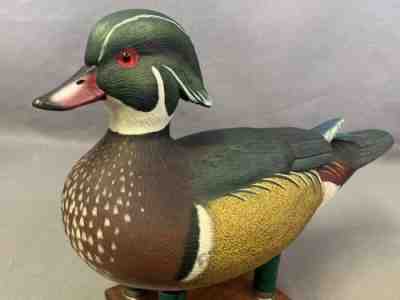
Sold on eBay Nov 07, 2022
RARE Early Ben Heinemann Wood Duck Decoy Signed Dated 1980 Rockport IL DU Dinner
Find many great new & used options and get the best deals for RARE Early Ben Heinemann Wood Duck Decoy Signed Dated 1980 Rockport IL DU Dinner at the best online prices at eBay! Free shipping for many products!
Sold on eBay August 12th, 2024
MINT VERY RARE PREENER SIGNED 1980 CHARLIE JOINER "HEN" Wood Duck Decoy MARYLAND
MINT, PRISTINE & RARE "PREENING" 100% ORIG. CHARLIE 'SPEED' JOINER "SIGNED & CITY & STATE" BOTTOM INSIGNIA ~c1980 AMAZING HEN CANVASBACK GUNNING DECOY with the DRAKE MATE also on ebay ~AWESOME "SOLID CEDAR" & SUPERB CARVING, STYLE, FORM & RELIEF CARVED BILL ~ORIG RIGGING: LEAD BALLAST WEIGHT, RING & STAPLE LINE-TIE ~SCARCE 44-YEAR OLD BIRD is STUNNING & PERFECT with NO CHIPS, DENTS, CRACKS & AN ORIGINAL AGE LINE FROM DAY IT WAS MADE ~AWESOME MELLOW & AGED DRY PATINA ~HEAD & ALL RIGGING is TIGHT AS THE DAY DECOY WAS MADE ~OUTSTANDING "WARD STYLE" STIPPLED, DAUBED & SWIRLED 3-DIMENSIONAL FEATHER PAINT TO ENTIRE HEAD DETAIL ON BACK, ALL WING DETAIL and MITCHELL CLEAN & CONCISE ON THE BREAST, BOTTOM & BILL ~PERFECT PAINTED EYES & ALL NAILS TO ATTACH HEAD ARE INVISIBLE ~HEAD & RIGGING AS TIGHT AS IF MADE YESTERDAY ~PERFECT CONFLUENCE OF MADISON MITCHELL & WARD BROS. STYLE, FORM & PAINT ~LIFE-SIZED & HEFTY 3-LB. DECOY A MUST FOR ANY HIGH END COLLECTION OF THE BEST EAST COAST DECOYS! MINT VERY RARE PREENER SIGNED 1980 CHARLIE JOINER "HEN" Wood Duck Decoy MARYLAND MINT VERY RARE PREENER SIGNED 1980 CHARLIE JOINER "HEN" Wood Duck Decoy MARYLAND Click images to enlarge Description (below photo): From 1941 to 1945 Charlie Served in the U. S. Navy’s Construction Battalion or “SEABEES” Building Airstrips on Islands in the Pacific Theatre of War from New Guinea to the Philippines. UPPER CHESAPEAKE BAY CARVING LEGEND..... CHARLIE "SPEED" JOINER Birth Name:.... Charles William "Charlie" Joiner Jr. (born): July 19, 1921 (died): March 13, 2015 (Age 93) of Chestertown, Maryland (below photo): Chestertown, Havre de Grace, Crisfield and the Upper Chesapeake Bay! Charlie Joiner Lived in Chestertown, Maryland; a Short Drive to 3 of His Best Friends: Madison Mitchell in Havre de Grace; and Mentors' Steve and Lem Ward in Crisfield, Maryland! (MAP SHOWN ABOVE): This MAP SHOWS WHERE CHARLIE "SPEED" JOINER, MADISON MITCHELL, the WARD BROTHERS and OTHERS ....... They SPENT their ENTIRE LIVES MAKING DECOYS, HUNTING and ESTABLISHING the AREA as ONE of the COUNTRY'S MOST IMPORTANT WATERFOWLING AREAS for CARVING WOODEN BIRDS & GUNNING WILD ONES! (below photo): ..HISTORIC 1983 PHOTO of CHARLIE JOINER with 2 of the MOST IMPORTANT FRIENDS & MENTORS in his CARVING CAREER & LIFE; (left to right): Charlie Joiner and "Madison Mitchell" Standing; "Lem Ward" in Front. Lem Ward Passed Away a Year Later in 1984! ? This is the Last Photo of the 3 of them Together! ? ______ (Below Photos): This AMAZING "VERY SCARCE" & "MINT", Outstanding c1980 "SIGNED & Hand-Written Hometown", Charlie 'Speed' Joiner ........... Solid-Cedar, Fully-Rigged, PREENING POSED HEN CANVASBACK Decoy Up for Auction!! Madison Mitchell's "Havre de Grace" Round Body Form .. -with-.. Lem & Steve Ward's Thick Stippled & Feathery Paint Detailing!! ______ (Below Photos): ..SUPERB STIPPLED, DAUBED & SWIRLED "WARD BROTHERS" INSPIRED FEATHER PAINT TO HEAD, BACK & WINGS ...... and CLEAN & CONCISE "MADISON MITCHELL" HEN PAINT on the BREAST, BOTTOM & TAIL!!! "WARD BROS." STYLED INFINITE SHADES & HUES of BROWN, BEIGE, WHITE & BLACK FEATHER BLENDING to HEAD -and- HEAVY WARM GRAY BACK FEATHERING; BLACK, GRAY & TINGES of DARK BROWN and WHITE WING SECONDARY & PRIMARY FEATHERS -and- GORGEOUS, CLEAN & PRECISE "MITCHELL" STYLED GRAY & BLACK SPECULUMS and SOLID FEATHERED DARK BROWN TAIL and DARK BROWN BREAST with WARD LIKE BLENDED-IN HUES of LIGHTER, BROWNS, TANS & A GOLDEN YELLOW!! (Below Photos): The Bottom of this Hen Canvasback Shows Madison Mitchell's Typical "Style" of Rigging that Includes: .... Perfectly Tight & Like-New, Lead Ballast Weight and "Staple & Ring" Line-Tie!! NOTE: The Picture Below is of the Signature & Written Home Town on the Bottom of this Canvasback up for auction. NOTE: The "SIGNED NUMBER 129" on this HEN, that is the Collection Number Assigned By the Collector ........ It is Important to See on the Decoy Below Which is the SIGNED "129" Used on the Drake Mate also on ebay with the Matching Collector's Number: NOTE: The "SIGNED NUMBER 129", Which is Prominently on the DRAKE CARVING & RIG-MATE also up for auction: (Below Photos): Also, Charlie Joiner's Trade-Marked Signature, Spelled City and State ...... all Done with a Black, Permanent Sharpie Like All His Signatures!! _____ \ (Below Photos): The HEAD of this RARE & MINT "PREENING" HEN CANVASBACK from SEVERAL ANGLES and to SEE the AWESOME RELIEF-CARVED "MITCHELL" MODELED HEAD that is PAINTED USING the "WARD BROS." STYLED RIPPLED PAINT to the ENTIRE HEAD & NECK!! INCREDIBLE INCISED HEAD/ BILL SEPARATION with PERFECT VERY LONG "CANVASBACK" BILL and "RIPPLED" FEATHERY PAINT to FACE ........ and YOU CAN SEE "EVERY SINGLE PAINT BRUSH MARK" on this ENTIRE DECOY!!! ALSO NOTE the INCREDIBLE & PRECISELY PAINTED BROWN "HEN CANVASBACK" EYES & VERY SHARPLY-TURNED, "FAR-REACHING" HEAD POSTURE ?........ The VERY LONG PREENING HEAD & NECK is a .... HUGE: 8" LONG & EXTENDS ALL of the WAY BACK from the BREAST to the SPECULUM & SECONDARY WING FEATHERS!!! ______ (photo below): RARE, 100% ORIGINAL & AMAZING EXAMPLE of One of his RARE POSES, a GRACEFUL YET MUSCULAR-NECKED "PREENING CANVASBACK DUCK" ...... STUNNING FORM & MAGNIFICENT, PRECISELY PAINTED with "STUNNING VERY FINE DETAIL-PAINT" ....... SPECTACULAR CARVING; ESPECIALLY the LONG-REACHING NECK & HEAD and PERFECTLY SYMMETRICAL CONTOURED BODY ....... and the HEAD & ALL of the RIGGING ARE AS "TIGHT-LIKE NEW" on this MINT CONDITION DECOY!! (photos below): Just Look at the Stunning Detailed Carving and Paint From Top & Bottom Angles and From Different Directions!! PLUS: This HEN is in an IMPOSING POSE with its "MUSCULAR NECK" that is "STRAINING" & DETERMINED to PREEN ALMOST BACK to HER WING TIPS! NOTE: This First Group of Photos are From the Upper Left and Angled Downward: NOTE: This 2nd Group of Photos are From the Upper Right and Angled Downward: ________ (Below Photos): This MINT & VERY RARE "PREENING" HEN CANVASBACK SHOWN with the EQUALLY MAJESTIC MINT & ALSO RARE DRAKE that is also on ebay!! They MAKE a REMARKABLE & STUNNING PAIR as THEY WERE "CARVED TOGETHER at the EXACT SAME TIME and as a MATED PAIR" ........ with the EXACT SAME & COMPLIMENTING "REACHING HEAD & NECK" POSITIONS .......... POSSIBLY EVEN a SPECIAL ORDER as THEY ARE that INCREDIBLE!!! THEY ALSO "COMPLIMENT EACH OTHER" in a SPECTACULAR WAY as: "This PAIR are BOTH REACHING to the SAME TAIL PART" ............ SO THAT: "REGARDLESS of HOW YOU DISPLAY THEM; THEY LOOK AMAZING"!! THEY ALSO LOOK "SPECTACULAR TOGETHER" BECAUSE they HAVE the IDENTICAL SIZE & WEIGHT: ? This DRAKE CANVASBACK & the HEN BOTH MEASURE: 13-3/4" long. ..x..66" wide ..x.. 7-1/4" tall ? Each Weighs a Very Strong & Solid: .... 3-lb. Each _ THAT is FANTASTIC & Makes for a PERFECT PAIR of Carving & Rig-Mates at the Exact Same Time!! That Makes for an Awesome Pair of Very Unique Gunning Decoys that are From the Same Man's Hands & Made at the Same Time .......... as Both are Extraordinary Examples of His Enormous Ability & Out-of-the-Box, Creativity!! ______________________________ The "Very Rare", "Mint & Amazing Condition", 100% Original, "Very Scarce Preening-Posed" Charlie Joiner "Hen" Canvasback Solid Cedar Wood Duck Decoy: "MINT & STUNNING", 100% ORIGINAL; "SIGNED & WRITTEN CITY & STATE"; "WARD BROS. & MADISON MITCHELL MODELED"; SOLID-CEDAR; c1980 CHARLIE "SPEED" JOINER; ABSOLUTELY INCREDIBLE PATINA & STUNNING PAINT; "44-YEAR OLD"; "SCARCE PREENING-POSED" HEN CANVASBACK; WOOD DUCK DECOY; CHESTERTOWN, MARYLAND; SUSQUEHANNA FLATS (Eastern Upper Chesapeake Bay) This AMAZING "PREENING" HEN CANVASBACK GUNNING DECOY was CARVED LIFE-SIZED and ROUND BODIED & BOTTOMED!! ? This Life-Size and Round Bodied Style of His Decoys are His Most Sought After Work!! ? STUNNING ORIGINAL PAINT and CARVING on this VINTAGE GUNNING DECOY with AN INCREDIBLE, PERFECT PATINA!! EXCELLENT FORM & RARE STYLE on ONE of His VINTAGE HEN CANVASBACK GUNNING DECOYS as this DECOY was MADE WHEN WOODEN DECOYS WERE STILL SOMEWHAT BEING USED for HUNTING!! AWESOME "SOLID CEDAR" DECOY & AWESOME CARVING, STYLE & FORM with a MARVELOUS & PERFECTLY AMAZING "CANVASBACK" BILL!! ? AWESOME STIPPLED, DAUBED, SWIRLED & STRAIGHT-LINE, BRUSH-STROKES of a CONFLUENCE of MITCHELL & WARD BROS. PAINT -and- VERY FAR-REACHING HEAD & NECK PREENING POSED , REACHING BACK to its FAR "LEFT" WAY DOWN the BACK TOWARD the TAIL!! A). SUPERB STIPPLED, RIPPLED & SWIRLED FEATHER PAINT to HEAD, NECK, BREAST, BACK & WINGS and CLEAN & CONCISE on the LOWER BREAST, BOTTOM, TAIL & BILL!! B). MANY SHADES & HUES of DARK BROWN, BEIGE, GOLD-TAN and BLACK & WHITE STIPPLED & SWIRLED FEATHERING to ENTIRE HEAD .......... WARM GRAY STIPPLING to the BACK BACK .......... TINTS of DARK BROWN, TAN, BLACK, GRAY & WHITE SECONDARY & PRIMARY WING FEATHERING that GOES ALMOST ALL of the WAY to the UPSWEPT TAIL TIP ......... NICELY ARCED BLACK & GRAY SPECULUMS!! C). EXTRAORDINARY CLEAN-LINED, SOLID BLACK BLACK BILL, BOTTOM of the BREAST & TAIL PAINT with SOLID GRAY LOWER SIDES & BOTTOM with LIGHT GRAY BACK with HEAVY, FAN-BRUSHED GRAY FEATHERING MUCH LIKE a MADISON MITCHELL DECOY BUT FANCIER!! Vintage Hunting Decoy & His Very Best, Working Bird Style with His Nice, Very Long, Yet Stout, Amazingly Contoured Body Style and Form!! ORIGINAL RIGGING is also MINT & TIGHT LIKE New -and- 100% ORIGINAL: ? NAILED-ON, CAST LEAD BALLAST WEIGHT -and- "ZINC-COATED" STEEL "STAPLE & RING" LINE-TIE!! ? The HEAD/BODY SEAM & ALL RIGGING SEAMS are as SUPER TIGHT and PRISTINE as the DAY this DECOY Was MADE!! ? ? This HARD-TO-FIND, SOMEWHAT OLDER, HEN CANVASBACK SHOWS INCREDIBLY ....... "NOT A SINGLE" PAINT SMUDGE, CHIP, DENT or EVEN a PAINT BRUSH HAIR in the PAINT ..... It WAS CERTAINLY BABIED in the EAST COAST COLLECTION it CAME FROM!!! Even the "WOOD STOCK HE USED" for this Hen Canvasback and the Drake also on ebay is "ABSOLUTELY PERFECT" ......... It is "NO.1 GRADE WOOD" that Was Used for this Amazing Pair of Decoys!! EVEN the WEIGHT & LINE-TIE are AWESOME with ONLY a VERY TINY RUB to EACH WHICH is QUITE TYPICAL & OUTSTANDING on its OWN!! This HEN CANVASBACK Has an INCREDIBLE & VERY APPEALING, VERY DRY, MELLOW-AGED PATINA! ALTHOUGH PROLIFIC, PHENOMENAL and NOT OFTEN SEEN PREENING CANVASBACKS LIKE this DECOY are ALWAYS a RARE & SURPRISING FIND!! ? ? __________________________________________ OVER the YEARS, CHARLIE JOINER'S CLIENTELE INCLUDED ...... "ADMIRALS", "POLITICIANS" and "MILLIONAIRES", YET OBVIOUSLY his TYPICAL BUYER was a REGULAR HUNTER Looking for QUALITY DECOYS at a Fair Price. But Nevertheless, CHARLIE JOINER'S Decoys Found their Way into Some Notable Rigs, INCLUDING: "MEMBERS of the DuPONT FAMILY" CHARLIE JOINER also SOLD Decoys to "MAINE SENATOR ED MUSKIE", "BASEBALL LEGEND TED WILLIAMS" -and- "PHILADELPHIA PHILLIES OWNER BOB CARPENTER" and MANY other NOTABLE CUSTOMERS. ____________________________________________ It was Roy Walsh’s 1960 book "Gunning the Chesapeake", featuring a photo of "Charlie Joiner at Work" ...... with a Glowing Description of his Birds, that Brought “SPEED” his First Taste of National Fame, along with Hundreds of Orders ....... But it was Just the Beginning of his Legendary Status as One of the Best!! ANOTHER SOURCE of FAME & RECOGNITION for CHARLIE JOINER HAPPENED WHEN ......... To Encourage & Promote Leisure Travel in the 1940s and 1950s, Several Automakers Published Colorful Periodicals for the Drivers of their Cars. And "Charlie Joiner" was Featured in 2 of these, including a 1964 Issue of "Ford Times and a Mid-1960's Issue of "Chevrolet Friends Magazine". “The Magazine had a Back Page Feature where People Around the Country could Write-in about their Hobby"; Charlie once Remembered: “Well, one of my Neighbors Insisted that I do it, and Although I Didn't Want to, She took the Pictures & Sent Them in and Sure Enough they Ran it. You Wouldn't Believe the Mail I Started Getting. People from as Far Away as California, Arizona and Montana, and then Every State Back to the East Started to Write Me Letters Asking about my Decoys.” ____________________________________________ This is a Perfectly Symmetrically Carved & Painted Vintage Charlie Joiner Hen Canvasback Solid-Cedar, Lathe-Formed (Likely in Mitchell's Shop) Wooden Gunning Decoy! The ONLY TIME that this Decoy "EVER SAW WATER" was Was When Charlie Joiner in a Vat to "TUNE IT" By Adjusting Where the Ballast was Nailed On so It Would Swim with Perfection in a Hunting Rig!!! STRUCTURALLY PERFECT HEAD & NECK with ALL NAILS PERFECTLY INTACT and TIGHT AS IF MADE YESTERDAY WITHOUT a TYPICAL NECK CHECK or NAIL POP that YOU QUITE TYPICALLY FIND on UPPER BAY DECOYS as they are INHERENT to the CONSTRUCTION METHOD!!!?? ? All Nails to Attach the Head Were So Perfectly Countersunk and Topped and Sanded with Filler You Can't Even Tell Where One of the Nails Is Even Located!!! __________________________ ? (Below Photos): CHARLIE JOINER DIVER DECOYS! ~ Included in the Photos of his FULL-SIZE DECOYS are his MARVELOUS MINIATURES!!! The 1st Photo is of a Pair of Joiner's Canvasbacks, Similar in Style & Form to this Amazing and Rare Preening Canvasbacks up for auction: (Below Photos): CHARLIE JOINER PUDDLE DUCK DECOYS, Included in the Photos of his FULL-SIZE DECOYS are his SUPERB MINIATURES!!! ______________ (Below Photo): Charlie Joiner Shown Throwing Out Decoys on the Chester River for the Last Time ...... This was the Cover Photo for the 1987 Havre de Grace Festival's Program Where Charlie Joiner was Duly Honored!! (Below Photos): As a TRIBUTE to CHARLIE'S CELEBRATED CAREER, He was CHOSEN as HONORARY CHAIRMAN for the 1987 HAVRE de GRACE DECOY FESTIVAL!! BELOW are PICTURES of CHARLIE JOINER at the 1987 FESTIVAL!! SHOWN HERE with a Display of his FULL-SIZE DECOYS, MINIATURES -and- One of CHARLIE SIGNING a DECOY for a YOUNG ADMIRER!! ________ "MINT & VERY RARE", 100% ORIGINAL; "SIGNED & WRITTEN CITY & STATE"; "FULLY-RIGGED"; SOLID-CEDAR; c1980 CHARLIE "SPEED" JOINER; ABSOLUTELY INCREDIBLE PATINA & STUNNING PAINT; "44-YEAR OLD"; "RARE PREENING-POSED" HEN CANVASBACK; WOOD DUCK DECOY;? ? Very Nice, Very Old Dry Paint with a Beautiful, Clean and Crisp Patina!! ? AWESOME LATHE TURNED DECOYS that WERE THEN FINISHED with KNIVES, HAND TOOLS & SANDPAPER and MADE with PERFECTION!! These Awesome Decoys were Made to Swim & Perform with Perfect Realism!! Plus .... Their Large Size & Buoyant, But Realistic Swimming Weight, Depth & Design Made them Visible from Huge Distances, and their Heavy Weight Kept them Riding Perfectly & So Well Weighted they Were Hard to Flip & Righted Themselves Immediately Even in the Roughest of Water!! ? ? GREAT THICK, 100% ORIGINAL PAINT on this AWESOME, OLD GUNNING DECOY with GREAT PATINA!! ? SUPERB FORM & TRULY ONE OF HIS VERY BEST, LONG-NECKED, BACK-REACHING, PREENING CANVASBACK GUNNING DECOYS!! ? All ORIGINAL & You Could HUNT OVER This 44-YEAR OLD DECOY TODAY and LOSE NO PERFORMANCE from the DAY THAT IT WAS MADE!! DON'T MISS OUT on this Truly Great Upper Chesapeake Bay Gunning Bird with a Distinct Eastern Shore, Ward Brothers Influence & Style of Paint!! ? IF YOU are a FAN of GREAT GUNNING DECOYS that DID EXACTLY what they WERE MADE TO DO, This is a GREAT DECOY to add to YOUR COLLECTION!! Awesome Rear-Aimed, Straight Head & Neck Flows Perfectly From the Top of the Breast "Flawlessly" with Absolutely No Loss of Flow!! The Awesomely Carved Bills on these Desirable and Scarce Canvasbacks have Crisply Carved Bill/Head Separation and the Bodies Were Made with a Perfectly Rounded Breasts that Begin with an Undulating Form that Rises and Widens Near the Rear and then Tapers Down and Up to the Upswept Tail! ? The Dimensions & Weight are Perfect & Typical for Solid-Bodied, Solid-Cedar, "Charlie Joiner" Large Diving Duck!! This Hen Canvasback Clearly Shows That It Came from Climate Controlled, Direct Light-Free Collection or Collections It Has Been Kept in Over the Many Decades and Almost Half of a Century That It Has Been Carefully Cared For In!! ? If You Like Important Decoys from the one of the Most Famous Decoy Carvers Chesapeake Bay Carvers Ever, that Are in Outstanding, 100% Original, Never Gunned-Over Condition ....... THIS IS A GREAT DECOY FOR "ANY" COLLECTION!! _______ The STUNNING DRAKE RIG-MATE to this HEN is ALSO on EBAY if you are LOOKING for a STUPENDOUS 100% ORIGINAL, MINT CONDITION & VERY SCARCE PAIR of VINTAGE GUNNING MATES This Stunning Hen Preening Canvasback and the Drake also on ebay both Measure Exactly: 13-3/4" long x 6" wide x 7-1/4" tall -and- Both weigh a Very Hefty: 3-lb. each That is FANTASTIC & Makes for a "PERFECT PAIR" of CARVING and RIG-MATES that Were MADE at the EXACT SAME TIME!!! ? ? That Makes for an Awesome & Exceedingly Rare Pair of Very Unique Gunning Decoys that are From the Same "World Renowned" Carver and Made at the Exact Same Time!! That Makes for a Superb pair that Have Been Together Since They Were Made and Clearly in the Protection of Climate and Light Controlled Collections Since they Left Charlie Joiner's Workshop!! Like Everyone, Charlie Joiner Got Better & Better Over Time; But He Usually followed the Same Patterns, Style, Form, Paint, Rigging, Weight and Size From any Given Time Period, Even on the Various Species they All Usually Share the Same Attributes if From the Same Period of His Carving Career! He Did this SO MUCH SO THAT the DIMENSIONS & WEIGHT of the SPECIES of CHARLIE JOINER'S DECOYS are Usually CLOSE to the SAME! __________ RARE: CHARLIE JOINER'S DECOYS are SOME of the NICEST BALANCED, SYMMETRICALLY CRAFTED and OUTSTANDING CARVED and PAINTED ROUGH-WATER DECOYS MADE on the EAST COAST in the 20th CENTURY! A Perfect Specimen of a Beautiful Species, "King of Ducks" Diving Duck Hunting Block Made by one of The Best Gunning Decoy Carvers & Painters to Ever Call the Upper Bay Home!! This DECOY is PAINTED in It's FULL WINTER COLOR SCHEME and How We Usually See CANVASBACKS During the LATER PART of the HUNTING SEASON in MICHIGAN ...... But During MILD WINTER'S Like this YEAR a Great Many STAY HERE as LONG as They Can GET to FOOD & the Water is STILL OPEN!! This DECOY Has the NICEST BILL & HEAD CARVING -and- BODY SHAPE & FORM -and- Some of the Most Extraordinary Work You Will See on One of His Finest Decoys!! EXCEPTIONAL PATINA to the BEAUTIFUL, OLD DRY 100% ORIGINAL OIL PAINT!! If You Like "RARE" & "UNIQUELY POSED" Decoys from FAMOUS MASTER CARVERS and Are in "MINT CONDITION" ........ THIS is a VERY VALUABLE DECOY to ADD to Your COLLECTION!! ______________________________________ DON'T MISS OUT ON THIS OUTSTANDING & SCARCE DECOY: This Hen Canvasback and the Drake also on ebay Show That they Came from the Climate Controlled, Direct Light-Free Collection they Have Been Kept in for the Many Decades & Almost Half a Century that they Have Been Carefully Cared For In!! ? _______________________________________ IN THE NEXT FEW WEEKS I AM PUTTING ON EBAY MORE LAWRENCE BETHEL FISH DECOYS, A PAIR of MINT SIGNED CHARLIE JOINER CANVASBACKS, A PAIR OF THE ONLY KNOWN PROTOTYPES MADE OF THE VERY FIRST PRE-PRODUCTION FIBRE DECOYS EVER MADE, A NEAR MINT 1927 HEDDON GIANT VAMPIRE FISHING LURE IN RARE SHAD, A PAIR of LATE PHASE DODGE MALLARDS, EXQUISITE AND RARE PAIR OF "SPECIAL ORDER" MALLARDS, A RARE PAIR OF RALPH MALAPAGE GREEN-WINGED TEAL, A VERY RARE c1893 100% ORIGINAL TRANSITION PERIOD MASON DRAKE BUFFLEHEAD, A MINT RALPH MALPAGE CANADA GOOSE GUNNING DECOY, A MINT c1905 HEDDON ARTISTIC MINNOW, A VERY RARE PADCO OF MISSISSIPPI GOLDENEYES, A YELLOW WITH RED EYE BLUSH MOONLIGHT SINGLE-HOOK PIKAROON, A NIB CREEK CHUB MULLET COLOR STRIPER PIKIE IN CORRECT BOX, A PAIR of INCREDIBLE CHALLENGE GRADE MASON BLUE-WINGED TEAL, A NICE PAIR OF MASON GLASS EYE BLUEBILLS, AN AWESOME ERNIE NEUMANN SUCKER FISH DECOY, A RARE DOUBLE SPECIAL CREEK CHUB BEETLE FISHING LURE, A VERY NICE ERNIE NEUMANN SUCKER, A RARE 12-1/2" CHET SAWYER MINNESOTA FISH DECOY, A NEAR MINT OSCAR PETERSON PERCH FISH DECOY, A MINT PAIR OF WRAGG & BURRELL WIGEON, AN OUTRAGEOUSLY HARD TO FIND PAIR OF CHARLIE POZZINI BLUEBILLS, A CHET SAWYER 13" CHET SAWYER FISH DECOYS, A VERY BIG & BULL-NECKED EARLY FERDINAND BACH DRAKE CANVASBACK FROM HIS PERSONAL RIG AND MORE!! ? Shipping Includes Insurance! I Don't Believe in Making a Profit on Shipping, You Pay What I Pay. If it's Less Than You Paid I Refund the Difference, If More I'll Pay For It. I COMBINE SHIPPING. I am also loading over 150 Duck Decoys, 150 Fish Decoys, 70 Scarce Fishing Lures, etc. so keep checking back. __ This "STUNNING & SCARCE "SPEED" JOINER DECOY up for auction..... ITEM DESCRIPTION: This 44-Year Old "Hen Canvasback" was Carved and Painted by Charles "Charlie" or "Speed" Joiner (born: July 19, 1921 - died: March 13, 2015) of Chestertown, Maryland. Chestertown is a town in Kent County, Maryland, United States. The population was 5,252 as of the 2010 census and it is the county seat of Kent County. Founded in 1706, Chestertown rose in stature when it was named one of the English colony of Maryland's six Royal Ports of Entry. The shipping boom that followed this designation made the town at the navigable head of the Chester River wealthy. In the mid-eighteenth century, Chestertown trailed only Annapolis and was considered Maryland's second leading port. A burgeoning merchant class infused riches into the town, reflected in the many brick mansions and townhouses that sprang up along the waterfront. Another area in which Chestertown is second only to Annapolis is in its number of existing eighteenth century homes. As of the 1790 census, Chestertown was the geographical center of population of the United States. Chestertown was incorporated in 1805, and was named for the Chester River. (Below Photo): Charlie Painting a Canvasback Using His Typical Clam-shells as his Palettes, a Trick of the Trade he Picked Up from Lem & Steve Ward ....... He Said the Paint Color was Easy to See When it Dried, So it Was Easy to Mix Some More Up When You Got Back to that Color! Charles William Joiner was born on July 19, 1921 to Charles and Lena Luike Joiner. Charlie, as he was known, was born and raised in Betterton, Maryland, a waterfront community overlooking the confluence of the Sassafras, Elk and Susquehanna Rivers. It was here that Charlie Joiner developed an early love for the outdoors and the bounty of the land and water around him. Originally established as a fishing village in the mid-1700’s, by the turn of the 20th century, Betterton had exploded into a prime summertime resort and a favorite destination for mid-Atlantic urbanites looking for respite from the heat. “We had about 300 people in the winter", Charlie Joiner once recalled of Betterton in the 1920's and 1930's. "But probably 3,000 during the summertime. People came from everywhere", Charlie added. He vividly remembered the hotels and restaurants, concession stands, beer gardens and movie theaters, the dance halls, bingo parlors and bowling alleys. By the 1940's, however, with vast improvements in transportation providing easier access to ocean beaches and Betterton’s heyday was over. Charlie Joiner inherited several things from his father: a love of and respect for the outdoors, the profession he would master over the next 40 years and the nickname he would have until the day he passed away. “Everyone called him Speed,” Charlie once said of his father. “I never knew what it meant or where he got it, but when I came along, they started calling me Speed too. He was ‘Big Speed’ and I was ‘Little Speed’”. Growing up, Joiner loved to fish and when he was about 12, he started to hunt small game in the woods and fields near home. Around 1937 he and some childhood friends turned their interests to waterfowl and began gunning for marsh ducks. Unable to afford wooden decoys, Charlie and his friends fashioned their own from old gallon-sized antifreeze cans. “Back then, every fall, everybody would get Prestone put in their radiators.” Joiner explained, “and the garage chucked ‘em out on a pile and we’d go pick out 12 or 15 of ‘em. We’d take ‘em home, solder up the holes they punched in them, paint ’em flat black and tie a string around ‘em. They worked just as well as the best decoy ever made.” Charlie Joiner was first exposed to wooden decoys as a boy in the 1930’s, finding derelicts from the Upper Bay. “I used to walk along the shoreline in Betterton and find decoys. Betterton is directly across from the Susquehanna Flats and with that northeast wind they'd come. They had rigs of 400 birds, and if a string broke and one drifted off, they'd never miss it. You could always count on finding at least two or three every time, but sometimes I’d find as many as five or six, some of ‘em good, some of ‘em not so good. They were mostly canvasbacks, what we call river ducks or bay ducks.” These decoys were put to good use on the nearby Sassafras River. Charlie Joiner attended the local elementary school and graduated from Chestertown High in 1938 (Betterton was too small to have its own secondary school). While in high school he worked a bit as a sign painter, the first display of his artistic talents. As well as making signs for hotels and restaurants, he also painted the ornate names on the backs of boats at the local harbor. One time a boat was launched before he finished, forcing Charlie to hang over the back and paint the name upside down. Joiner’s first full-time job was working for airplane manufacturer Glenn L. Martin in the paint shop. In the days before aircraft cables and tubing were color-coded, he would paint the cables by hand, different colors denoting fuel lines, oxygen lines, fluid lines, and so on. It only took him a few months (and endless miles of cable) to decide this wasn't the job for him. Charlie Joiner’s father worked as an engineer for the local electric company. Knowing of an opening, he suggested Charlie apply for it. The result was a decades-long career. “Twenty-five cents an hour, that was my starting salary,” he recalled. In 1941 the federal government started building a camp at Aberdeen Proving Ground, just across the bay and not far from Havre de Grace. “They were hiring and offering three times as much money,” Joiner said. “I had enough experience as a lineman, so I took a job there.” Originally, he took a boat between Betterton and Aberdeen, but in the winter months the boat didn't run and it was hours to go around, so he decided to move and got a room in nearby Havre de Grace. “On weekends, I came home to see my parents and go goose hunting with friends,” he said. “We had about 75 silhouette goose decoys, cut them out of plywood. I was boarding with the Springer Family in Havre de Grace, so I took the goose decoys up there to paint them in the evenings when I would have time. But I had never done anything like that in my life. So Mr. Springer said, 'Well, go see Mr. Mitchell right down the alley here. He makes decoys and can probably help you.” And in January 1942, Charlie Joiner did just that and walked to Madison Mitchell's house. “I was scared to death,” Joiner recalled of that first meeting, “because I didn't know how he would take it. I introduced myself and told him of my plight. First I asked him how much Head charge to paint ‘em himself, and I can’t remember for sure, but it seems to me it was something like 50 cents apiece, and well, that was out of the question, definitely out of the question. So we both kind of laughed, and he sent me uptown to the hardware store to get a quart of white paint and about a pint of black. The rest of what I’d need, he said he had plenty of it there. So he got me upstairs - he had a table that was just the right height for painting - and he got his brushes out, mixed up the paint and he painted two. Then he got up and said, ‘There you are, it’s all yours, now sit down and paint the rest of ‘em’. They might not have looked like his, but they did the job.” At the time, Madison Mitchell already had a talented group of assistants working for him in his decoy shop, and Charlie vividly recalled each man’s role in the assembly-line operation: “Ed Sampson made heads, he made a great head. Eddie Mauldin did the body work downstairs, spoke-shaving bodies and running bodies on the machine. And there was a guy named Smitty, a local house painter, who did a lot of priming.” Joiner was in awe of Mitchell and his decoy making operation, and the two developed a lifelong friendship. “I started going back over to help him on the weekends and in the evenings,” he recalled. “During my time there I went through it all, from running the machine, spoke-shaving, sanding bodies, whittling heads.” Many early Mitchell decoys have Joiner’s fingerprints on them, yet he wasn't doing it for the money. “Throughout the whole time, I never took a dime from him. Never took a nickel,” he said. He was such a dear friend it was out of the question. (Below Photo): Charlie Joiner and One of the Closest Friends He Had Over his Entire Lifetime, Madison Mitchell! The Two are Chatting it up with Jimmy Pierce and Charlie Bryan: Madison Mitchell was a kind man and a patient teacher to willing disciples, but he was exacting when it came to his decoys and he could be stern and demanding when it came to quality control. Joiner recounts the day he knew his work began to rival that of his instructor. “We were doing a lot of work for a stretch there and I was taking heads home with me by the bushel basket at night to work on. When I’d get ‘em done, I’d bring ‘em back to the shop and every time I took ‘em back, Madison would check ‘em out and pick ‘em apart. He would say I either cut too much out of here, or I hadn't cut enough out of there, but he would say don't worry about it; I can straighten it up with the sander.’ Well, after this had gone on several times, I took a basket of heads back to the shop that I had been working on, and when I went through the shop, I picked up one of the heads that Michell had done. Charlie took it upstairs and asked, ‘how’s that?.’ And Madison looked at it and started picking it apart, and when he got done I said, ‘Well, that's one that you did,” he remembered, smiling. “And when he looked away I'm sure he was grinning to himself.” If Mitchell couldn't tell his own heads from somebody else, Joiner figured he must be doing okay. Only a few years after Charlie Joiner went to work at Aberdeen, Uncle Sam called upon him again, this time to join the United States Navy. “Until I was 20 years old, I was never any further from home that I couldn't look back and see smoke coming out of my chimney,” Charlie joked, “but when the war came, I went from Betterton to New Guinea and the Philippines. I joined the Navy and saw the world.” Indeed he did, spending the next several years in the Navy’s Construction Battalion or “SEABEES” building airstrips on islands in the Pacific. Joiner returned home in 1945 but was on active duty for another year. In 1946, he settled in Aberdeen, working once more at the military installation there. But he could see that they were going to be closing the camp down and didn't want to be out of a job, so he accepted a position with Delaware Power & Light in Wilmington, a job he held for seven years. During this time he moved his family back to Betterton, building a home there in 1950. With the post-war boom came development and traffic, and the commute from Betterton to Wilmington grew each year, so he took a job with Chestertown Power & Light in 1953. He lived in Betterton until 1963, when he built a house in Chestertown. Throughout the 1940's and 1950's, Charlie Joiner and Madison Mitchell enjoyed a special relationship, growing closer and closer through hunting trips, carving decoys and waterfowl shows, and frequent visits to their respective homes and shops. Madison Mitchell appreciated the genuine interest Charlie Joiner showed in his trade as well as the many hours of free labor he gave in exchange for his tutelage. Mitchell fondly returned those favors when Joiner returned from the war. “When I got home, one of the first things I wanted to do was go see Madison. He told me to go look upstairs in the back room of his shop, that there was something up there for me. There was a whole rig of decoys, near a hundred.” Most of the birds were patched up “cripples”, damaged birds with imperfections that Mitchell had refurbished and set aside for him. Joiner quickly put them to good use. “We never exchanged money for anything.” Joiner said, but then recalled one time when they did. “The band-saw I have out in my shop, I did buy that off of him. Back in 1949, Madison had bought it at a used tool place down in Baltimore, and after he got it home, he didn't like it. It’s a left-hand saw instead of a right-hand saw. He was gonna’ get rid of it and I said how much you want for it, and he said, ‘a hundred bucks.’ I paid him right then and there, before he could change his mind.” During those early years in the 1940's & 1950's while working for Madison Mitchell, Charlie Joiner crafted the first decoys that were all his own, the first true “Joiner” decoys. He became such an extraordinary carver and painter in a short few years, it only took a few more years to realize he could turn his talent and love for the art of decoy making into something more, a way to make a little extra money for his family and to help finance his hunting expenses. The first decoys that Joiner made from start to finish, a small rig of canvasbacks for his own use and two dozen black ducks that he traded for a shotgun, were made in Mitchell’s shop right after World War II, a time when demand for gunning decoys in the Chesapeake Bay region was growing. This demand, combined with his own interest in making decoys, the desire for a little extra income and encouragement from Mitchell, was the catalyst for the launch of his own decoy business in 1950. “When I first met Mr. Mitchell he was charging $1.25 for blackheads, $1.35 for canvasbacks, $1.55 for mallards and $1.65 for pintails. He got that extra dime ‘cause it took more wood for the pintail ….big deal.” he laughed. “By about 1950, Madison was getting $35 a dozen, so I thought, heck, I can get that too. I kept the price the same for 15 years, until about 1965” Charlie added. (Below Photo): A Pair of CHARLIE JOINER'S Very Effective & Realistic Canvasback Decoys Doing their Job Sitting in a Flock of Unsuspecting Wild Canvasbacks Surrounding Them: Charlie Joiner's early patterns were copied from Madison Mitchell’s, which he reworked slightly. In addition to making new decoys, by the early 1950’s Joiner built up quite a business repairing, refurbishing and repainting decoys for area gunners and clubs. It wasn't uncommon for several rigs of several hundred decoys each to be dropped off after hunting season, and for that reason his well-recognized paint patterns are found on hundreds of decoys by other Chesapeake Bay makers today. In the 1940’s, Joiner was making canvasbacks, redheads and blackheads (bluebills) and a few black ducks. “I always said I made 10,000 canvasbacks, redheads and blackheads before I made my first mallard. Nobody fooled with anything else at the time, as there wasn't the need. Early on, since I was making gunning decoys, collectors weren’t after ‘em then, so I only made species that were hunted around here” he said. By the 1950’s he branched out into other species on a special order basis, turning out Canada geese, black ducks, mallards, a few goldeneyes, and a handful of baldpate wigeon and a swan. By the 1960’s, he increased his repertoire, adding blue and green-winged teal, pintails, wood ducks and brant. In later years, he tried his hand at other members of the waterfowl family, offering collectors the opportunity to add his red-breasted mergansers, ring-necks and cinnamon teal decoys to their shelves. (Below Photo): Charlie Joiner and 2 of his Other Closest Forever Life-Time Friends, Lem and Steve Ward .... Charlie Spent Days and Weeks with the Ward's Over the Many Years Learning Everything He Could and Sharing His Thoughts & Ideas with Them as Well! It Showed in Charlie's Work and Ironically a Little of Charlie Joiner Maybe Even Rubbed Off on the Brothers as Well!! Ever the perfectionist and always eager to learn more about his chosen craft, Charlie Joiner decided to pay a visit to the Ward Brothers, whose own fame was quickly eclipsing their quaint hometown of Crisfield, Maryland. “I first went down to see the Wards in the late ‘50s, around ‘58. I went up to the house first and Lem’s daughter Ida was there. She said that Lem was lying down as it was after lunch, but Steve’s out in the shop so go out there and make yourself known. So I went in and Steve was there and he was sanding miniatures and I could see they were blackheads. Steve asked me how I was doing and what my name was, but he must not have really heard me, because I was sitting there talking to him and I said that those blackheads had a really good shape to ‘em", and he told Charlie, 'You must know something about ducks if you can tell what it is before it’s even painted’ and he said ‘What’d you say your name was?’ And Charlie told him and Steve Ward as they said ‘Well I’ll be’ I was surprised, but he had heard of me. And he said ‘Let me go get Lem’ and I said, ‘No, Ida said Lem's layin’ down, he’s not feeling well so I can come back later,’ and he said, ‘No need, that's fine, just wait here, I’ll go get him.’ And when Lem came out, Charlie was tickled to death. After that Charlie and the Ward brothers became very close friends and visited each other often after that. Charlie said that the Ward brothers even stayed at Charlie and his wife Janet's house when the brothers attended the first Havre de Grace Waterfowl shows. Always one with a quick wit, Charlie said that years after that, he had a guy make up a sign that read, 'Lem Ward Slept Here', and that he was going to hang it over the bed that he slept in. (Below Photo): Charlie and the Ward Brothers Became Very Close Life-Long Friends and Visited Each Others Shop and Home as Often as They Could! They Were So Close that Lem & Steve Spent the Night at Charlie and his Wife Janet's House One Night & Years Later Charlie Jokingly had Someone Make a Sign that Read "Lem Ward Slept Here" to Presumably Hang Over that Bed!! Charlie Joiner learned a tremendous amount watching the Ward brothers in their shop, but the lessons, seldom imparted formally, came largely from studying their technique and later emulating it back in his own shop. “They were very open to you, but I don’t remember really questioning them much about what they did or how they did it.” Charlie recalled. “But I could take something they'd painted and look at it with a magnifying glass and I could tell you what they did first, and what they did next, and that's really where I learned to copy from them” he once said. Shortly thereafter, Joiner began experimenting with flat bottom birds carved and painted in the Ward style. For the next 50 years, Charlie Joiner moved seamlessly between the influences of the Madison Mitchell and Ward brothers' styles, occasionally combining and blending them to amazing artistic effect. Charlie Joiner carved well into his eighties, and still mixed his paint in clam-shells, something he picked up from the Ward brothers. “Up in Havre de Grace, we used to mix it up in cans”, he remembered, “but you can mix it better this way. You can see it better and because it leaves some of the color when it dries, you can go back to the same colors you use again and again more easily. And they're disposable. When it gets too bad, you just chuck’em.” When Charlie once reflected on his talents as a decoy painter he said, “The Wards told me to just keep at it, process of elimination, trial and error.” So when it is all said and done, it isn't any wonder that Joiner would come to embody skill, art and craftsmanship in wood. As Charlie's surname indicated, an English fore-bearer also made his trade in woodworking, so one could argue that the ability was very much in Charlie's blood. No surprise then that he used time-honored methods to craft his decoys. After cutting out the profiles on a saw, he used a draw-knife, spoke shave, wood rasp and whittling knife to evoke the birds waiting in the blocks. He used a belt sander to shape and smooth the wood. Madison Mitchell helped pioneer its use; realizing how much time and effort could be saved he developed the model for the belt system that most makers still use today. Madison Mitchell took a group of cut out heads home with him during lunch one day, Joiner recalled, and came back with them all finished. Even Bob McGaw was impressed, he remembered. (Below Photo): Charlie Whittling One of His Outstanding Heads that He Learned How to Make By Running His Early Efforts by Madison Mitchell to Get His Thoughts on His Progress! The look of Charlie Joiner’s round-bottomed Havre de Grace style decoys changed little over the last six decades that he carved, but he always was experimenting, making subtle improvements to both carving and paint. His earliest decoys, made on Mitchell’s patterns and in Mitchell’s shop, are nearly from his mentor’s. Some of his early 1950's canvasbacks, which feature bills with “Roman” style noses reminiscent of Jim Currier’s decoys, also exhibit a stylized waviness to the back father painting. Charlie's later decoys feature bills of slightly varying widths, models with painted and glass eyes, more heads in sleeping or preening positions, slightly varying shades of base coat, back feathering in various patterns and they were unique but accurate, adaptations of the Ward brothers’ style paint patterns, But almost exclusively done on Upper Bay body patterns. He also, on a rare occasion, he carved unrigged decorative decoys with flat bottoms to set on a shelf. Painting is where Charlie Joiner’s skills as a decoy maker really shined and his painting is considered exquisite by many collectors. His gunning birds utilized 2 coats of the same color primer as the species, just in case the decoy was dinged or chipped during use. He was first taught to paint under Madison Mitchell and later on after his visits to the Ward Brothers, Charlie studiously watched the techniques and styles of their painting and copied it back at his shop. He would also examine their work using a magnifying glass to better understand their process and see what order of method and technique they employed. Charlie took the techniques and styles of Mitchell and the Ward Brothers, arguably the best decoy painters on the Chesapeake Bay, and combined those styles together with his own embellishments to help create his own unique artistic painting method. He utilized a distinctive trademark curvature in primary wing feathering to the body’s contour that is immediately recognizable. (Below Photo): Another Pair of Charlie Joiner Preening Canvasbacks, Gorgeous But Not Quite Up To Par to This Stunning Pair up for auction!! The Pair Shown also Have Heads that Reach Back in the Same Direction and Pattern, But Complement Each Other and Present Themselves in a Very Cool Way with the Differentiation “Back in the 50's, some of my customers would buy 10 or 12 dozen decoys at a time,” Charlie once recalled. “To me, that was a big deal. For a few years there, I was making 1,200 to 1,500 decoys a year. The only things I had to buy were white pine for the heads, nails and the paint. The wood for the bodies was free since I had access to old cedar poles at the power company. Cedar was the best - it would last a long time. White pine is good too, but it was getting harder and harder to find when I got started” he said. Much later in his career, many of Joiner’s decoys were carved from basswood, but he still made gunning decoys from white pine. “If I know someone’s going to use them for hunting, I’ll use pine. It holds up better, works better on the water”, he said at the time. (Below Photo): A Pair of Amazing Charlie Joiner Miniature Balsa Canvasbacks that Charlie Carved that He Modeled After Flat-Bottomed Full-Size Ward Brother Decoys Using their Carving and Paint Style as Well!! While Charlie's nickname "Speed" had nothing to do with his quickness with a paintbrush, Joiner was about as speedy as they came. Having been timed with a stopwatch more than once, he could paint a canvasback drake, from start to finish, in seven minutes flat. The hen, which would require a little more blending, took him about 10 minutes. His famous duck head signature on the bottom of his decoys, was the final touch for a Joiner decoy, and was something he developed around 1970, and as a trademark and it was a work of art in itself. And over the years many collectors brought him his earlier gunning models for this final embellishment, his duck head signature on the bottom. For years Joiner poured his own lead weights using a cast iron mold based on Mitchell’s. Like many Upper Bay makers at the time, he bought his nails from Mitchell, who ordered them in bulk for his own shop and distributed them to others. Most area makers use steel rings and staples, often galvanized or zinc coated, but Charlie usually always used copper. “I’d get my staples at the power company,” he recalls, “steel staples coated with copper. I made my own rings most of the time, from tinned copper wire that I soldered together.” Joiner’s flat-bottomed work is in a league of its own. Having learned the style from Lem and Steve Ward, many believe Charlie’s best pieces rival and even surpass those of his Crisfield mentors. Over the years, he had made most of the species native to the Chesapeake Bay, in both full-sized versions and several styles of miniatures. He began making miniatures, each roughly 8" long, in the 1950's, using balsa from decommissioned liberty ships. Originally, these included canvasbacks, redheads, bluebills, pintails and mallards, and later he added wigeon, black ducks, wood ducks, goldeneye, teal, geese, swan and brant to his mix. Joiner also made Havre de Grace style minis (roughly 5" long) during that time, most mounted on walnut bases, some complete with tiny weights, rings and staples. Miniature canvasbacks, redheads, bluebills and a few mallards and swans are known in this style. (Below Photo): Charlie Joiner's Swans are Few and Far Between, But they are as Graceful and Beautiful as Anything He Made!! In the 1950's Joiner experimented with refrigerator cork, eventually turning out a few hundred decoys. He made two different styles of black ducks, three slightly different styles of geese and three swan decoys for his own rig. All told, he only worked with cork for a few years. “It was a dirty mess,” Charlie recalled, “My cork decoys are out of print now, I don't fool with that anymore.” (Below Photo): Charlie Joiner Used Cork for a Brief Period of Time But Found it Messy, And He was Known to Have Made a Couple Hundred Cork Ducks or Geese in Total! (Below Photo): A Pair of Charlie Joiner Cast Iron, Sink-Box, Canvasbacks that he Painted that Were Sold by the Orvis Company in the Mid-1980's!! Other Charlie Joiner rarities include gunning doves, crows, an albino canvasback, flying miniature swans and geese, a mini sink-box rig complete with tiny decoys, cast iron canvasback wing ducks, high-head canvasbacks and even converted a wooden decoy into a mechanical one with a propeller. Occasionally, collectors run across Charlie Joiner canvasbacks made from imperfect blocks, with heavy knots or creosote in them, that he sold as "Seconds". He usually set these aside and kept them for his own use, but occasionally hunters asked to buy them. So Joiner branded them with a large number “2” on the bottom and sold them with no guarantee, but for only $2.50, half his normal price at the time. (Below Photo): Charlie Joiner Sold His Decoys that Had Imperfections or Other Defects as Seconds. He Branded them with a "2" and Sold them for Half the Price of a Regular Decoy!! In the spirit of those first silhouette goose decoys that brought Charlie to Mitchell’s shop back in early 1942, Joiner continued to turn them out on occasion over the years, mainly for hunters but also for collectors. What these two-dimensional plywood birds lack in depth, they more than make up for in Joiner’s expressive paint. Over the years, Charlie shied away from the business end of decoy making, preferring instead to focus his time and energy on mastering his craft. For nearly 40 years, friend and fellow decoy maker Bob Coleman served as his sole distributor. Later, decoy maker Dave Walker managed his sales. “First of all, I wouldn't have the nerve enough to charge the people what these guys pay me,” Joiner said at the time, “I figure, let them do it.” In the 1980's, some of Joiner’s decoys were sold through the Orvis Company. Remarkably, Joiner’s operation was a one-man show for more than 65 years. One early customer, Dick Woollens, helped spoke-shave bodies in trade for decoys back in the 1950's. And Nelson Crew and Nelson Boone, two local friends, helped him repair and refurbish rigs of birds by helping him prime and putty decoys before painting, but that was the extent. “So that means any mistakes are mine,” he said at the time with a chuckle. “I’m downsized now,” Joiner said later in life, reflecting on his recently slimmed-down operations. “I used to maintain a much larger shop, much more space.” Yet he still turned out a number of beautiful, well-made decoys that quickly found their way into the hands of eager collectors. (Below Photo): A Pair of Decorative Charlie Joiner Canvasbacks with Ward Brother Inspired Flat Bottoms as Well as Lem & Steve Ward Inspired Paint Jobs!! During the 1940's and 1950's, Joiner engaged in every type of waterfowl gunning practiced on the bay. Although when bushwhacking was waning on the Susquehanna Flats in the late 1940's, he was able to experience this unique form of hunting with Madison Mitchell. He vividly recalled the first time Harry Jobes took him and Mitchell body booting in the 1950's. “It didn't grab me,” Charlie chuckled, remembering the freezing water, incoming tide and general discomfort. “Jobes said, ‘We’ll have to try this again sometime’, and Charlie said, ‘No thank you. I know easier ways than this to kill ducks,” he laughed. He added, “I only went a couple times and that cured me.” Thinking back to the 1930's, Joiner remembered his first gun. “I cut my teeth on an old L.C. Smith double barrel, side by side. I never shot an automatic until I was in the service,” he said, referring to the M-1 carbine he used while in the Navy. “When I came home, I decided I’d like to have an automatic shotgun for duck hunting, but it was impossible to buy one", he said. So one day Charlie was talking about this over at Mitchell’s shop one night and Madison said he knew someone, an older fellow in Havre de Grace, who had one, a Remington Model 11, for sale. So Madison Mitchell sent Charlie up there to meet the guy and he bought it. It was $75, a lot of money back then. That same gun is now on display in the Havre de Grace Decoy Museum. Charlie Joiner’s earliest goose decoys date from around 1950, and they were made for his own rig and the rig he shared with longtime gunning partners Robert Gears and Joe Ollife. They hunted on a huge estate near Betterton that was the property of Lamont DuPont Copeland, who frequently joined them. Although Joiner never guided professionally, he often invited Madison Mitchell on duck and goose hunts throughout the 1950's. (Below Photo): Charlie Joiner Hunted Geese Near his Hometown of Betterton and Often Invited Madison Mitchell Along for these Outings and they Often Hunted Ducks Together!! Joiner & Madison were So Close, that When Charlie Joiner Gave up Duck Hunting in 1960, Madison Mitchell Essentially Quit Duck Hunting as Well!! Madison Mitchell enjoyed gunning with Charlie Joiner so much, and planned so many of his outings with him, that when Charlie quit hunting in December 1960, Mitchell, for all practical purposes, did too. “1960 was the last year I gunned,” Charlie said, “I just lost the desire to do it. What really put the icing on the cake and made me quit was, I had shot a goose and crippled it. There was skim ice on the water; a boat would push through it okay, but the goose, it wouldn't hold him. And as I pushed along through the ice to get to him, I got to thinking to myself, as many times as that poor bird’s beat its way back from here to Canada, to come here and die a death like that for my sport, well, I quit right then and there. Life is just as precious to that bird as it is to me, and believe me, I’ve seen people killed too”, Charlie trailed off, remembering his wartime experiences. “I told that story one time to Lem Ward when he was visiting and he said, ‘that reminds me of a poem by Truman Reitmeyer called “Remorse” (see below). "After he recited it to me, I copied it down. One of my friends said he’s got copies of it made for me. For years, I gave them out to everyone who came to visit me in the shop", said Charlie. Although he’s told the story a thousand times, the conviction in his voice today is as powerful as it must have been nearly five decades ago. (Below Photo): Once Charlie Told Lem Ward about Wounding a Crippled Goose & Why He Quit Hunting & Ward Told Him of the Poem Shown Below. Charlie Handed it Out to Visitors to His Shop After That! After Charlie Joiner quit waterfowl hunting in 1960, he took up trap and skeet shooting and later, sporting clays. “I figure I'm not hurting anything or anybody.” he laughed at the time. “I still enjoy eating wild game and even though I don't hunt, my friends still bring me rabbits and duck. I love duck and quail. I was raised on wild duck"' he said. Over the years Joiner’s clientele included admirals, politicians and millionaires, but his typical customers were regular blue collar, working class hunters looking for quality decoys at a fair price. But nevertheless his decoys found their way into some notable rigs, including members of the DuPont family. He also sold birds to Maine senator Ed Muskie, baseball legend Ted Williams and Philadelphia Phillies owner Bob Carpenter. His customers also include names familiar to those in the decoy community: “Gunning the Chesapeake” author Roy Walsh, “The Outlaw Gunner” author Harry Walsh, Easton Waterfowl Festival founder Donald Disney Allen, and Eddie Robinson, whose large “ER” brand shows up on a number of Upper Bay birds. Joiner supplied, repaired and repainted Robinson's huge Chester River rig for many years. It was Roy Walsh’s 1960 book, featuring a photo of Joiner at work and a glowing description of his birds, that brought “Speed” his first taste of national fame, along with hundreds of orders, but it was just the beginning. To encourage and promote leisure travel in the 1940s and 1950s, several automakers published colorful periodicals for the drivers of their cars. Joiner was featured in two of these, including a 1964 issue of Ford Times and a mid-60s issue of Chevrolet Friends magazine. “They had a feature on the back page where people around the country could write-in about their hobby,” he remembers. “Well, one of my neighbors insisted that I do it, and although I didn't want to, she took the pictures and sent them in and sure enough they ran it. You wouldn't believe the mail I started getting. People from as far away as California, Arizona and Montana, and from every state back to the East started to write me letters asking about my decoys.” Pioneer collector Bill Mackey was also a regular visitor to Joiner’s shop on his collecting trips through the area, and the brief mention of Charlie and his decoys in his 1965 book, “American Bird Decoy”, kept the orders rolling in. And orders for Charlie's decoys didn't stop for over 40 years. (Below Photo): Charlie Joiner Loved to Experiment, and Below You'll See Carving and Painting Variations that He Wanted to See What they Would Look Like! Many people have wondered how many decoys Charlie Joiner made since he crafted his first metal can decoys in the early 1940's. Joiner kept records only sporadically, but once stated emphatically that he’d “made at least 40,000 ducks” over the years. And he added, “I’ve been making decoys for 66 years,” and joked that it’s “long enough to be better at it.” He smiled shyly and reluctantly when was once told that there are many who believe when it comes to Upper Bay decoys, due to his skill with a paint brush, there simply are none better. Even today, over 9 years since his passing, demand for Charlie Joiner’s work has continue to grow exponentially year after year his decoys and are continually stunning auction observers as they seem to go higher and higher with each and every auction. He enjoyed the nature right outside his door, quiet moments with his wife Janet (3/4/29 -to- 5/18/2018), regular visits from children and grandchildren, and extolled the same enthusiasm on regular visits from fellow decoy makers, aspiring young carvers and decoy collecting enthusiasts alike. Later in life, he often insisted, “I’m as happy as a clam in high tide”. When he reflected on the influence he received from both the top and bottom of the Chesapeake Bay - from Havre de Grace to Crisfield - Joiner noted, “I got a little bit of both and brought it back here. It’s a good combination between the two.” In the spirit of tutelage that Mitchell and the Ward brothers instilled in him, in addition to having secured his own legacy as one of the Chesapeake Bay’s master decoy makers, Joiner helped more than a dozen carvers spanning three generations in their own quests. Some of those men have already achieved greatness, and in turn, many have gone on to teach and influence others. Charlie Joiner had his share of ups and downs over the years, including a few health scares that many would not have endured. For three months in 2001 he was in a coma. His late wife Janet, who was by his side during that difficult period, called Charlie a “miracle man.” And while wives are known to gush over the men in their lives, her words were echoed again and again by everyone who knew him: “He’s such a good man, there’s nothing he wouldn’t do for a friend.” Most would agree that this decent, soft-spoken, humble man is also the most talented decoy maker of his generation. Long an advocate for waterfowl conservation and preservation of the Chesapeake Bay, Joiner understood the need to preserve the region’s history and culture as well. In support of those ideals, he donated hundreds of decoys to the Havre de Grace Decoy Museum, Ducks Unlimited and other nonprofit organizations. His contributions helped raise over $100,000 in support of the Havre de Grace Decoy Museum, where a selection of his carving is on permanent display. Charlie was viewed as a giving man and he often encouraged and helped rising carvers such as Bill Joiner, Charlie Bryan, Bill Schauber, Dave Blackiston and Dave Walker with their decoy making and especially their painting techniques. Charlie also donated hundreds of decoys and time and effort in causes such as Ducks Unlimited and the Havre de Grace Decoy Museum. (Below Photo): Charlie Using a Razor Sharp Draw-Knife that Allows a Carver to "Rip" Large Scathes of Wood with One, Precise Angled Cut!! Years ago, in honor of his fellow servicemen and the aircraft that used the runways that his SEABEE team helped build, Charlie Joiner crafted a huge, incredibly detailed model of a B-17 that really flew. The aircraft was a testament not only to his skill as a builder and painter, but also his mechanical and engineering prowess. Several local and national museums were vying for that plane at the time. On one particular visit to the World War II Memorial in Washington DC, it was an emotional pilgrimage; as Charlie was surrounded by his family and fellow service members, they were able to honor their brothers in arms who never came home. Several years later, and well into his eighties, and looking at least a decade younger at the time, Charlie Joiner still vividly remembered his past. Yet he reflected that few friends able to relate to those experiences were still around. At the time he said, “I look around and I see I'm the only one left. I guess God has a plan for me”. Whatever else that plan included, he still continued to enjoy the warmth of family and the respect of friends. He also intended to continue making his incredible decoys, furthering his legacy as a living legend of the Chesapeake Bay. The great Charlie Joiner led an incredible and long life that was both fulfilling and enriching, and while he passed away at the age of 93 on March 13, 2015, he will long be remembered for being a great family man, self-less individual and one of the best decoy carvers to ever call the Chesapeake Bay region home. The form and detail of this Hen Canvasback and the Drake Carving-Mate also on ebay are pure Charlie Joiner with perfect slightly upswept tails, magnificently contoured bodies and wonderfully flowing necks, heads and bills. This 44-year old pair of hunting decoys have great Have de Grace Madison Mitchell lines, Ward Brothers Inspired Paint and all of the character of his greatest gunning blocks. This extraordinary Hen Canvasback decoy was obviously never used and and it is such incredible condition that it couldn't have been taken any better care of in the collection it came from and where it and its Drake mate have been temperamentally babied over the last 44 years or so in the fine East Coast collection of great decoys they came from. But I am absolutely sure that if this decoy was used today, this awesome decoy would perform as well as if it was made yesterday, and as well as Charlie Joiner's decoys were made and crafted, it would swim with the reality of a real bird on the water; even to this very day you could gun over this Canvasback and it would dramatically out-perform any wooden decoys guy's still use on occasion from any era any certainly considerably better than any factory made decoy currently on the market! But like all of Joiner's work, it was so well made it is Impressive Mint 100% original structural and aesthetic condition. It retains all of the thick and perfectly applied original coat of paint to the entire decoy including the rigging, which has tiny but typical rubbing to the weight and line-tie. And per the normal, the overall condition of this decoy is spectacular and it is 100% Original everything on this entire decoy. The Head and Neck are Perfect and as tight as the day this decoy was made, and every single nail holding the head on to the body is perfectly intact and the paint and countersunk nail hole filler is so secure and original even if you look very closely you would never be able to tell where any of the nails are located, which is actually quite rare and a huge plus for any of the decoys from this area where the stress of picking them up by the neck usually caused at the very minimum a nail to push up the filler a tad. To further describe the great structural condition of this decoy is the awesome condition of the head of this Canvasback as it has a perfect form and shape which give it the statuesque form it has. This Superb Hen Canvasback is Mint and in such perfect condition that even though its roughly 40+ years old, it looks outstanding. When the decoy makers from the region, and exactly like Charlie Joiner, attached the heads to the body with large spike finishing nails hammered into pre-drilled starter holes, they then used a nail punch to drive the nails into the recessed hole, filled the hole with white lead or another filler or putty, sanded it smooth and then painted the decoy. While the vast majority of never used or lightly gunned over decoys never show a nail pop where the nail pushed up and either just raised the white lead up a bit or kicked it out entirely, those that are more heavily used quite often will show some raised white lead or even an entire nail pop. But this Hen Canvasback was rarely even picked up and admired as it doesn't even have a hint of a finger or hand mark and its neck and head are perfect, as is the entire decoy. The superbly inserted head and neck nails are so perfectly intact you can only guess where the nails are probably located. This is awesome and the main reason that this decoy's head is as tight and intact as if it just left Joiner's shop the day before. Charlie Joiner's decoys were made for punishment and almost never even showed signs of failing the challenge of the most brutal conditions expected of a rugged, well made decoy, made by a renowned, historic and quite famous gunning decoy carver and painter. This Hen Canvasback not only shows the quality of Joiner's craftsmanship, but also the care the owner gave this decoy in what was an indoor, temperature controlled environment his decoys were prominently displayed in. The absence of fading to the paint also shows that this decoy was well cared for and that it was added to the collection that is totally free of direct sunlight on the items in the collection and this Hen Canvasback and its Drake Carving-Mate as well. This decoy is in just "Outstanding" condition, the head and all rigging are as tightly attached as the day this decoy was made. The paint is stunning on both decoys and they have only small rubs on the weight bottoms and line-ties from a shelf and the drake has a very hard-to-see and original tight surface age line from a knot while being made,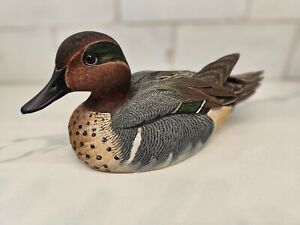
Sold on eBay September 1st, 2023
3 1978 Original Hen Mallard Wooden Duck Decoys Mario Marchi & Richard LeMaster
Bidding on a LOT of 3 vintage wooden duck decoys, 2 hens and 1 mallard. Vintage is 1978-1980. One signed by Mario Marchi of Martinez CA and 1 signed by Dick LeMaster dated August 19th 1978.The LeMaster is from the Pacific Hyway Decoy Painting Contest - Pacific Flyay Decoy COllectors Association 1978.I do not know anything about decoys so if you have aything to share feel free - thank you!These were my father's but my wife says they have to go!MAKE AN OFFER!! NEED TO CLEAN OUT MY GARAGE AND EVERYTHING MUST GO!!!!!COMBINED SHIPPING, LOCAL PICK UP AND PACKAGE DEALS AVAILABLE THIS IS NOT A BUSINESS, JUST TRYING TO CLEAR OUT SPACE. EVERYTHING I HAVE LISTED IS OUR FAMILY BELONGINGS / PERSONAL ITEMS. (Condition: Pre-Owned)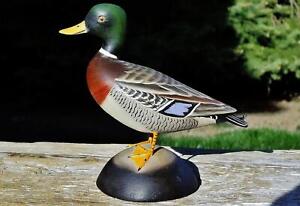
Sold on eBay January 12th, 2024
MINT "ONE-of-KIND" SUPERB ~SIGNED 1957 JAMES LAPHAM MINI MALLARD Wood Duck Decoy
eBay PRISTINE MINT CONDITION 65-YEAR OLD, c1957 JAMES LAPHAM MINIATURE DRAKE MALLARD CARVING ~ A VERY RARE, ONE-OF-A-KIND, MINIATURE WORK OF ART BY ONE OF THE BEST MINIATURE CARVERS OF WILDFOWL IN U.S. HISTORY ~VERY MUCH INFLUENCED BY ELMER CROWELL & HIS SON CLEON CROWELL ~THE HEN CARVING MATE TO THIS DRAKE is ALSO ON EBAY ID YOU ARE INTERESTED IN A "ONE-OF-A-KIND" PAIR, WHICH IN ESSENCE ALL OF LAPHAM'S CARVINGS WERE ~THE CARVING ON THESE 4-1/2" LONG MINIS IS BEYOND EXCEPTIONAL & THE 2-5 COATS OF "WET-ON-WET" & "DRY-ON-DRY" PAINT is LIKELY THE FINEST BLENDED & STRAIGHT LINE PAINT YOU WILL EVER SEE ON A MINIATURE CARVING, BAR NONE ~I HAVE OWNED THESE FOR OVER 20 YEARS & THEY HAVE BEEN TWO ITEMS IN MY VAST COLLECTION that CONSTANTLY CAUGHT MY ADMIRATION IN MY MINIATURES SHOWCASE ~EACH SITS ON A WOODEN, ROCK-SHAPED BASE THAT WAS COPIED FROM THE WORK OF THE GREAT ELMER CROWELL & THIS PAIR ARE SIMPLY AS GOOD AS HIS CARVINGS GET ~DON'T MISS OUT ON A PAIR OF LAPHAM'S FINEST MINIATURE CARVINGS EVER MINT "ONE-of-KIND" SUPERB ~SIGNED 1957 JAMES LAPHAM MINI MALLARD Wood Duck Decoy MINT "ONE-of-KIND" SUPERB ~SIGNED 1957 JAMES LAPHAM MINI MALLARD Wood Duck Decoy Click images to enlarge Description The World Famous Decorative Bird Carver James Lapham ....... - JAMES LAPHAM - DENNISPORT, MASSACHUSETTS BIRTH NAME: "JAMES STANLEY LAPHAM JR." Born: May 6, 1909 Barnstable, Massachusetts ? Died: Sept. 23, 1987 Tuscaloosa, Alabama (Passed Away at the Age of 78) (Pictures Below): James Lapham is Featured Extensively (pages 120-128) of the Book: "Birds in Wood and Paint" ....... which is a "Must" Book for Miniature Collectors: This MINT, "ONE-of-a-KIND" 66+ YEAR-OLD, AMAZING c1957 "DRAKE MALLARD" by JAMES LAPHAM was PRECISELY & INTRICATELY DETAIL CARVED & PAINTED .............. PLUS it is ONE of HIS MOST REALISTICALLY" and EXCEPTIONALLY CARVED & BEAUTIFULLY PAINTED "MINIATURES": (Pictures Below): This VERY RARE; "ONE-of-KIND" PRECISELY PAINTED EVERY SINGLE FEATHER: Superb "Full" Raised-Winged, Drake Mallard with "Metal, Tail Pin-Curls" and is Arguably the Best Mallard He Ever Made ....... MINT, EXTREMELY RARE, 100% ORIGINAL c1957 "DRAKE MALLARD" MINIATURE, FULL-BODIED, DUCK on a CUSTOM MADE CROWELL TAUGHT BASE!! -and- VERY "PRECISE & PERFECT", DELICATELY CARVED-IN, EYES, FEET and EVEN NOSTRILS!! Photos of this "MINT & PRISTINE", RARE FEATHER BLENDED PAINT-SCHEMED, 57-YEAR-OLD, JAMES LAPHAM, "DRAKE MALLARD" -and- YOU CAN SEE the ACTUAL PARTS of EACH INDIVIDUAL FEATHER ......... NOT JUST the FULL FEATHER!! LAPHAM'S BASES: This VERY RARE & MINT, "ONE-OF-A-KIND" DRAKE MALLARD was CARVED with a SINGLE PIECE of SOLID WHITE CEDAR ........... and the BASE is a MID to LATER PERIOD, HALF SPHERICAL CARVED WOODEN ROCK!! *He Copied the Half-Round Rock from ELMER CROWELL, as Lapham's Earlier & Earliest Carvings were Mounted on Small Pieces of Driftwood. This DRAKE MALLARD & the HEN CARVING-MATE also on ebay are "SPECTACULAR & PRISTINE" ............ and THEY WERE, "WERE CARVED TOGETHER" -and- At the 'EXACT SAME TIME"!! This Rare & "One-of-a-Kind" Miniature "Drake Mallard" & HEN also on ebay ~and~ Their "Elmer Crowell" Styled Bases are Each: 4-1/2" Long x 2-1/4" Wide x 4" Tall ? Solid Cedar "MALLARD & BASE" WEIGHS: 1.2 oz. each ____________________________________________________________ JAMES LAPHAM'S Range of Carvings in Terms of Species, Size, Posture, Quality & Paint ........ is Considered By Many to be "SECOND to ONLY ELMER CROWELL"!! ___________________________________________________________ The Perfectly Symmetrically Carved "One-f-a-Kind" Mallard .......... was Carved to Be Life-Like & Very Realistic ........... with Its Beautiful, Stunning Style & Form including the Perfect and Mint Legs & Feet as Tight as the Day it was Made! STUNNING FLAT-MATTE, OIL-BASED, ARTIST PAINT has UNBELIEVABLY GORGEOUS & MINUTE DETAIL: ?Amazing, Very Thick & Multiple Layered Paint to this Entire Mallard "ALL" Flows in the Direction of the Feathers on this Superb Duck ........ Which Gives the Entire "Wood Duck" an Excellent "Life-Like" Feathered Surface ....... with Paint Detail that Gets Down to Every Single Feather, Feather Part & Obviously Every Feather Group ....... and Legs & Feet with Paint that Gets Down to Even the Tiny, Pointed Toe-Nails & Metal Legs!! Perfectly Sculpted High-Neck Flows Perfectly into the Rounded Breast and then Into a Stunning Body ......... Stunning, Hand-Knife Carved Raised Wings all the Way from the Speculums to the Wing Tips ........ Realistically Carved Bill, Eyes & Tail ........ and the Body is Standing at the Perfect Angle for a Large Puddle Duck!! _____________________________________________________________ (Pictures Below): CLOSE-UP PHOTOS of JUST SOME of the INCREDIBLE CARVING & PAINTING DETAIL to this "DRAKE MALLARD"!! OUTSTANDING RAISED WINGS: STUNNING & PRECISELY CARVED "RAISED WINGS" ......... that BEGIN to RAISE & are CUT IN where the SPECULUMS BEGIN; and END with VERY HIGH, RAISED WING-TIPS over the TAIL!! AMAZING & MULTIPLE LAYERED THICK PAINT with a SUPERB, 65-YEAR OLD PATINA: STUNNING THICK PAINT BRUSH MARKS FLOW PERFECTLY -and- "YOU CAN SEE EVERY PAINT BRUSH MARK" ....... that GIVES this DRAKE MALLARD a "PERFECT" FEATHER FLOWING "LIFE-LIKE" SURFACE! ___________________________________________________________ NOTE: This MALLARD has SUPERB, PERFECTLY SYMMETRICAL CARVED in EYES & TINY CARVED IN NOSTRILS -and- The BILL was PRECISELY CARVED & PAINTED to PERFECTION with TINY PAINTED MANDIBLES & NAIL .......... the CLEAN LINE & FEATHER BLENDED, "WET-on-WET" -and- "WET-on-DRY", PAINT TECHNIQUE is MAGNIFICENT and TRULY AMAZING: ____________________________________________________________ (Pictures Below): CLOSE-UP PHOTOS of JUST SOME of the ASTOUNDING, "VERY-DETAILED" ASPECTS of the CARVING & PAINTING'S, VERY "FINE-DETAILS" to this "DRAKE MALLARD"!! SUPERB "CROWELL" LEGS, FEET & BASE : EXACTLY LIKE his FRIEND "ELMER CROWELL" .......... JAMES LAPHAM COPIED ELMER'S THICK, WIRE LEGS that that were GLUED & DRILLED DEEP into the BODY of the BIRD! Also; JUST LIKE his MENTOR, LAPHAM COPIED CROWELL'S, "3" SHARP-ENDED, THIN WIRES SOLDERED to Each LEG that BECAME the FEET'S TOES ........ the LONG END of the WIRE LEGS were then GLUED into DRILLED HOLES in the WOOD "ROCK-SHAPED" BASE ........ Lastly, ORANGE LEGS & TOES were FINELY DETAILED with BLACK PAINT & the FEET'S "WEBBING" was PAINTED on the BASE!!! AMAZING & MULTIPLE LAYERED THICK PAINT to the CROWEL-LIKE ROUNDED-BASE that RESEMBLES a LARGE STONE: (Pictures Below): And SPEAKING ABOUT DETAILING .......... HE CUT, GLUED-IN & INSERTED, 2 (TWO) FEATHER-CURLS in the CENTER of the TAIL .......... AND it WAS DONE with PERFECTION in MIND!! ___________________________________________________________ (photos below): The Bottom of this PRECISELY CARVED, ROUND CEDAR is PERFECTLY FLAT ....... and WONDERFULLY BLEND-PAINTED with ARTIST'S OIL PAINTS JUST LIKE the MALLARD!! James Lapham Personalized the Majority of His Decoys, Including this Middle Period Mallard with the Species, His Own Name and His Hometown: On the Bottom of this "DRAKE MALLARD" in Blue Ball-Point Pen: HAND PRINTED: "MALLARD DRAKE" ? HAND SIGNED: "James Lapham" -and- Dennisport Mass On the Bottom of the "HEN MALLARD" also on ebay in Blue Ball-Point Pen: HAND PRINTED: "MALLARD HEN" ? HAND SIGNED: "James Lapham" -and- Dennisport Mass (photo below): For a Period of Time Lapham Tried (2| Two Bottom Stamps in the Late 1960's & Early 1970's: The FIRST was the OVAL STAMP on the LEFT; -and- The SECOND was 3 STRAIGHT LINES. BUT these STAMPS NOT USED for VERY LONG: AS CUSTOMERS CONVINCED HIM that the INK STAMPS were "LESS PERSONAL" ....... SO HE RETURNED to SIGNING EVERYTHING in PEN LIKE this DRAKE & the HEN also on ebay: ___________________________________________________________ NOTE: This MALLARD has SUPERB, PERFECTLY SYMMETRICAL CARVED in EYES & TINY CARVED IN NOSTRILS -and- The BILL was PRECISELY CARVED & PAINTED to PERFECTION with TINY PAINTED MANDIBLES & NAIL -and- the CLEAN LINE & FEATHER BLENDED, "WET-on-WET" -and- "WET-on-DRY" PAINT is MAGNIFICENT & TRULY AMAZING: REMARKABLE HEAD & BILL: PERFECTLY CARVED-IN EYES with "PUPILS & IRISES, that WERE then PAINTED with PERFECTION & a VERY SMALL "000" BRUSH ........... with BREATH-TAKING "MALLARD GREEN" PAINTED HEAD & WHITE NECK-RING -and- A MARVELOUS, LIFE-LIKE, YELLOW BILL with CARVED-IN, "NOSTRILS" & HEAD/BILL SEPARATION ........... then DELICATELY used BLACK PAINT on the MANDIBLES, NOSTRILS & NAIL on the END!! The HEAD & BREAST of this AMAZING LAPHAM "DRAKE MALLARD" from SEVERAL ANGLES ....... SUPERBLY CARVED in NOSTRILS & EYES with DEEP CARVED IRISES & HIGHER PUPILS ....... and BEAUTIFUL ERECT HEAD FLOWS PERFECTLY into the BREAST ........... the BILL is a PERFECTLY CARVED MALLARD BILL with PERFECT PROPORTIONS to the HEAD & NECK ......... and YOU CAN SEE EVERY PAINT BRUSH MARK where BLENDED "WET-on-WET" & also WHERE CONTRAST PAINTED "WET-on-DRY"!! ____________________________________________________________ This MARVELOUS & IMMACULATE "DRAKE MALLARD" along with the EQUALLY GORGEOUS "HEN MALLARD" MATE also on ebay: _ (Below Photos): This 65-YEAR OLD, MINT & "ONE -of-a-KIND" DRAKE MALLARD ........ SHOWN with the EQUALLY MINT & AMAZING HEN CARVING-MATE that is also on ebay ........ and BOTH WERE CARVED TOGETHER and at the EXACT SAME TIME!! These "MALLARDS" MAKE a REMARKABLE & ELOQUENT PAIR as THEY WERE "CARVED TOGETHER at the EXACT SAME TIME" and as a "MATED PAIR" ....... with COMPLIMENTING "EXACTNESS" to the HEADS, PERFECT BODIES and AWE-INSPIRING RAISED WINGS & PERFECT TAILS ......... THIS PAIR of MALLARDS are as CLOSE to IDENTICAL as is HUMANLY POSSIBLE; INCLUDING the BASES!! THEY ALSO LOOK "SPECTACULAR TOGETHER" BECAUSE they HAVE the IDENTICAL "LONG-BODIED, ALERT-HEADED" SIZE & WEIGHT ......... BOTH are REALISTICALLY CARVED MINIATURES: 4-1/2" Long x 2-1/4" Wide x 4" Tall ? Solid Cedar "MALLARD & BASE" WEIGH: 1.2 oz. Both are Dazzling "Miniatures' & Made of Solid "White Cedar": These MINT, RARE & "ONE-of-a-KIND" PAIR of "JAMES LAPHAM" MALLARDS TOGETHER!! (Below Photos): This IDENTICALLY CARVED PAIR have the EXACT SAME SPECTACULAR FORM, SIZE & STYLE from EVERY SINGLE STAND-POINT!! INCREDIBLE PAINT GETS DOWN to the INDIVIDUAL FEATHER PARTS .......... and "SLEEK ROUNDED HEADS" with AMAZING LONG BODIES on this "STUNNING" DRAKE and the "AMAZING" HEN also on ebay ........ and YOU CAN SEE EVERY SINGLE PAINT BRUSH MARK on BOTH of THESE AWESOME WOODEN BIRD CARVINGS! ___________________________________________________________ This AMAZING "JAMES LAPHAM" DRAKE MALLARD is ONE of his FINEST MINIATURES & the RESEMBLANCE to MANY of ELMER CROWELL'S FINE MINIATURES is NO COINCIDENCE: EXTRAORDINARY; MINT & PRISTINE, "ONLY ONE THAT EXISTS"; JAMES STANLEY LAPHAM, JR. (1909-1987); 4-1/2" MINIATURE "DRAKE MALLARD"; Wood Duck Carving (Dennisport, Massachusetts) WONDERFUL, ALL ORIGINAL PAINT, METAL LEGS & FEET -and- MATCHING "SOLID WHITE CEDAR" BASE!! TRULY EXCEPTIONAL & EXTREMELY FINE DETAIL to the CARVING and the PAINTING!! __________________ Elmer Crowell: The Father of Decorative Bird Carving (born): 1862 - (died): 1952 East Harwich, Massachusetts (Cape Cod) Later, Elmer's Son Cleon (1891-1961), Became an Important Part of the Crowell Bird Carving Operation his Father Pioneered!! (Below Photo): Elmer Crowell & his Son Cleon Crowell Carve in their Shop ...... Friends of James Lapham & Both of which had a Great Influence on Lapham's Fine Carvings!! James Lapham: In the Footsteps of Elmer Crowell Dennisport, Massachusetts (Cape Cod) There is No Doubt that James Lapham's Carving Career was Significantly Influenced by that of Elmer Crowell. Over & Above the Fact that they Lived Very Close in Adjacent Towns on Cape Cod (5 Miles from East Harwich to Dennisport), the Similarities are Quite Evident Even from a Casual Look at the Work of Both Men. Most of Lapham's Later Birds are All Presented with Legs Inserted Crowell-Style into Half-Rounded Black, Gray or Dark Brown Painted Wood-carved, Rock-Shaped Bases and in Poses Very Similar to those Made by Crowell. Indeed, in a 1987 Interview, Lapham told the Magazine Sunday Cape Cod News, "Yes, I Did Learn a Lot from Crowell ...... I Got to Know him When I was Working for the Railway Express and Used to Go There (Crowell's Shop) all the Time to Pick Up Birds for Shipping". __________________ Like Many Bird Carvers, James Lapham Started Out with Waterfowl, But More So than a Great Many Decorative Carvers, he also Began to Carve Upland Birds, Birds of Prey & Others, But Never Got Pigeon-Holed into Making a Similar Pose & Experimented with Miniature Flyers, Preeners and Other Poses. He Also Followed in Crowell's Footsteps by Making Dull-Size, 1/2-Size and Other Shapes and Sizes of Birds! (Below Pictures): Some OTHER JAMES LAPHAM CARVINGS SHOWING his DIVERSE INTEREST in MAKING DIFFERENT SPECIES, POSES, PAINT SCHEMES, SIZES of BIRDS, ETC.: __________________________________________________________ (Below Picture): This MINT, "ONE-of-a-KIND" 66+ YEAR-OLD, AMAZING c1957 "DRAKE MALLARD" by JAMES LAPHAM was PRECISELY & INTRICATELY DETAIL CARVED & PAINTED .............. PLUS it is ONE of HIS MOST REALISTICALLY" and EXCEPTIONALLY CARVED & BEAUTIFULLY PAINTED "MINIATURES": If You Like Very Rare, Vintage Miniature Carvings from Famous Master Carvers that Are Mint, Pristine, 100% Original, One of Their Best Specimens, You Couldn't Do Any Better than this Very Realistic Drake Mallard by James Lapham! Perfectly Life-Like, Slightly Angled-Up Puddle Duck Pose on a Crowell-Style, Wooden "Rock" Base ....... THIS IS A GREAT CARVING FOR "ANY" COLLECTION!! Also, the Collector's Collection this Decoy Came from is Obviously Temperature & Direct Light Controlled and this was Certainly One of the Highlights & Most Revered Decoys of His Entire Collection!! This Immaculate Decoy Doesn't Have a Crack, Chip, Dent, Paint Smudge or Even a Tiny Nick or Scratch & Absolutely Everything is as Tight on this as if Made Yesterday!! _ DON'T MISS OUT ON THIS ONCE IN A BLUE MOON WOODEN MINIATURE from a FRIEND & STUDENT of the MASTER HIMSELF, ELMER CROWELL: ___________________________________________________________ ? IN THE NEXT FEW WEEKS I AM PUTTING ON EBAY MORE LAWRENCE BETHEL FISH DECOYS, A RARE OLDER CARL CHRISTIANSEN WELLEYE AND PERCH, A FRANK MIZERA SILVER WITH BLECK AND WHITE HIGHLIGHT LINED FISH DECOY, A J.R. WELLS HEN BLUEBILL, A MINT NEVER-RIGGED ANIMAL TRAP OF PASCAGOULA MALLARD, A RALPH MALPAGE PAIR OF GREEN-WINGED TEAL, A VERY RARE c1893 100% ORIGINAL TRANSITION PERIOD MASON DRAKE BUFFLEHEAD, A NEAR MINT PAIR OF MASON GLASS EYE PINTAILS, A MINT c1905 HEDDON ARTISTIC MINNOW, A SCARCE RALPH MALPAGE ATLANTIC BRANT, A YELLOW WITH RED EYE BLUSH MOONLIGHT SINGLE-HOOK PIKAROON, A NIB CREEK CHUB MULLET COLOR STRIPER PIKIE IN CORRECT BOX, A MINT AND SUPERB HOLLOW RON KOCH DRAKE WIGEON, A NICE PAIR OF MASON GLASS EYE AND A PAIR OF TACK-EYE BLUEBILLS, AN AWESOME ERNIE NEUMANN SUCKER FISH DECOY, A RARE c1880 ST' CLAIR FLATS DRAKE CANVASBACK, A VERY NICE ERNIE NEUMANN SUCKER, A RARE 12-1/2" CHET SAWYER MINNESOTA FISH DECOY, A NEAR MINT OSCAR PETERSON PERCH FISH DECOY, A MINT PAIR OF WRAGG & BURRELL WIGEON, AN OUTRAGEOUSLY HARD TO FIND PAIR OF CHARLIE POZZINI BLUEBILLS, A WISONSIN HEN CANVASBACK VERY SIMILAR TO GUS MOAK BUT MORE REFINED AND REALISTIC THAT IS UNKNOWN TO ME, A VERY BIG & BULL-NECKED EARLY FERDINAND BACH DRAKE CANVASBACK FROM HIS PERSONAL RIG AND MORE!! ? Shipping Includes Insurance! I Don't Believe in Making a Profit on Shipping, You Pay What I Pay. If it's Less Than You Paid I Refund the Difference, If More I'll Pay For It. I COMBINE SHIPPING. I am also loading over 150 Duck Decoys, 150 Fish Decoys, 70 Scarce Fishing Lures, etc. so keep checking back. __________________________________________________________ This Extraordinary James Lapham Drake Mallard Miniature Carving up for Auction! ITEM DESCRIPTION: This Mint and Outstanding, Hand-Carved and Painted, 65-Year Old, Rare and Exceptionally Carved and Painted, Solid Cedar Miniature "Drake Mallard" Puddle Duck Carving was hand painted and carved by James Stanley Lapham (born: May 6, 1909 - died: Sept. 23, 1987) that was made in or around 1957. James Lapham was formerly of Dennisport or Dennis Port, Massachusetts, an Atlantic Ocean coastal city located on the Nantucket Sound side of Cape Cod and after years of making the seasonal round-trip to Tuscaloosa, in his late years he eventually retired permanently to Alabama. ABOUT THE CARVER: James Lapham has long been identified as being a Massachusetts carver; however, a significant percentage of his colorful diminutive wooden sculptures were actually fashioned in Alabama during the fall and winter seasons. Then each late spring and summer his carvings journeyed north with him to be sold on Cape Cod to supplement the family income. It was a successful cycle repeated for nearly a quarter century. There was something magical in the annual passing of massive numbers of winged travelers. Like the songbirds, waterfowl and other birds he so loved to carve, James Lapham also migrated with the seasons. James Stanley Lapham, Jr. was born on May 6, 1909. He loved to hunt and fish and spent much of his youth exploring the wealth of wildlife in and around his home in Dennisport, Massachusetts. During the 1930's he was employed as a signalman for the New York, New Haven and Hartford Railroad (his death certificate lists him as a retired railroad switchman). Lapham’s connection with the railroad probably led him to his next job; as he worked as a Railway Express driver throughout the 1940's. In the 1950's, he also labored as a general handyman for Arthur Gould’s Shellfish Company in Chatham, Massachusetts, a short 5-mile drive east of his home in Dennisport on the ocean side of Cape Cod, and an even shorter 4 mile drive to Elmer Crowell's home and workshop. One of the biggest changes in the life of James Lapham was a chance meeting with a southern woman. The lady’s name was Dorothy Brooks (1913–2000), and she was from Alabama. James and Dorothy met during a summer vacation she took on the Cape shortly after World War II. They married in 1947, and at first they lived full time on the Cape. The couple made occasional visits to Dorothy’s hometown starting in the mid–1950's; then wintered in Alabama and spent the summer on Cape Cod, and they established a permanent home in Tuscaloosa, Alabama to be closer to her parents in the early 1960's. The Laphams' southern address was 738 Amanda Drive. That is where they spent their (winters), returning to the Cape each year for summer work and to sell bird carvings. The couple’s annual migration continued from the beginning of the 1960's until not long before his death in 1987. (Below Photos): One of Lapham's Hundreds of Patterns and Some of His Superb Shorebird & Waterfowl Carvings: There has been considerable speculation on exactly when James Lapham first began to carve and who might have influenced him, but in fact the answers eventually became apparent as his Birds began to more and more resemble Crowell's work, and his first known dated decoy has 1945 written on the bottom, so we at least now know he definitely carved then, but many are undated so his first carvings were obviously earlier as this 1945 bird was already very evolved. He clearly was greatly influenced by the talented father and son duo of Elmer (1862-1952) and Cleon (1891-1961) Crowell when he served as a delivery driver for the Railway Express in the 1940's. By then Elmer was in his 80's and suffering from rheumatism and no longer carving, but there was a great many of his finished decoys there for Lapham to study, obtain some and follow many of the traits, carving and painting techniques, and features of the Great Elmer Crowell. His son Cleon was in his 50's and fully in charge of the family carving business and also was available to Lapham for years to come after Elmer's passing. "Cleon appears to have handled all customers’ requests after 1933, as Elmer had begun having health issues around that time, but he was still carving as much as he was able and James Lapham was there for that experience as well. Thus, Cleon also began doing more and more of the work from the mid-thirties on, and it is clear that Cleon was assuming more and more of the carving and painting work through the decade of 1930 to 1940 and was doing all the work by 1944. (Pictures Below): James Lapham Also Accumulated Hundreds of Patterns of Which Many He Never Got Around to Use ...... But the Variety of Species & Poses of His Birds Indicates He Did Use his Fair Share of Unique Bird Carvings Such as his Anhinga & Whip-poor-will for instance: Frequent shipments of completed Crowell carvings were sent to distant locations, utilizing Railway Express. Elmer Crowell died in 1952; and, coincidentally, at one point in time the earliest dated Lapham carving known was a miniature common scoter dated March 20, 1952; although after that one dated 1945 was also found, so 1952 may have been the date or around the time that he started calling his shop "The Duck Blind" and advertising locally and via word-of-mouth. Two other fascinating local and creative acquaintances were Ralph Eugene Cahoon, Jr. (1910-1982) and his wife Martha Farham Cahoon (1905-1999), the celebrated self-styled Cape folk painters. According to Lapham family accounts, James Lapham and Ralph Cahoon fished for tuna and mackerel together. Jame's Lapham's wife at that time was Dorothy 'nee Brooks' Lapham, who shared mutual interests in tole painting and decorating with Martha Farham Cahoon and her father Axel Farham. Co-incidentally but not related, Martha studied art at the Brooks Academy. The quality of Jame's Lapham's painted featheration, vermiculation and anatomical accuracy are both testaments to his creative abilities and perhaps indicative of inspiration from the Crowells and possibly Cahoons. Although the elder Elmer Crowell was no longer capable of producing waterfowl carvings, he certainly offered helpful advice and encouragement. Cleon, on the other hand, was actively involved in continuing the family enterprise and was fully competent to offer first hand demonstrations of skills and techniques learned from the master, which would also have put James Lapham as a student of his as well. There remains no doubt that Lapham’s carving abilities evolved through time and that the interactions between the Crowell's and James Lapham represented an enduring relationship as the characteristics are indicative of such valuable exchanges, whether taught or perceptively observed. (Pictures Below): A Gorgeous & Later James Lapham Hen Merganser, a Green-Winged Teal, a Pintail & an Atlantic Brant: Lapham based all of his avian sculptures on a combination of helpful reference sources. He avidly watched songbirds, upland game birds and waterfowl in their natural habitats. The following is one quote from many hand written letters he mailed to a Mrs. Marie Diehl, "My peach tree seems to be fine! Flowers look alright too! We had a huge flock of Cedar Wax-Wings in the yard today. They must be migrating. I watched for them hoping they would come to my bird feeder. They didn’t. I guess they are headed North. I am sending you a Robin as a harbinger of Spring." (Diehl letter March 4, 1974 courtesy of the Late Ted Harmon). Lapham studied interactions of pairs and later incorporated those observations into some of his miniature compositions. He also utilized illustrated books to facilitate the capturing of elusive poses, coloration and gestures. Some of these include the "Natural History of American Birds of Eastern & Central North America", an "Audubon Water Bird Guide", the "Ducks and Geese of North America", and a "Sporting Field Identification Guide". (Pictures Below): James Lapham's Desire to Carved Miniatures as Well as Other Sizes and up to Life-Size, Flying Birds and Poses in Any Way his Mind Could Realistically Imagine a Bird Could Be in by either Directly Observing and Studying Them or From Books: Patterns: Preparations to create wooden bird sculptures started with the gathering of visual information to better familiarize Lapham with his chosen subject. The next step required him to accurately draw gestural profiles of each bird or duck onto paper or cardboard. Any available paper was OK. Drawings sometimes included penciled notations about the species or its identity and then drawings were then precisely cut out to serve as guiding patterns for the sawing of carving blanks. Existing patterns document just a small portion of the variety of subjects studied. Reportedly, patterns were used only once and they were not discarded as he evidently believed that ideas for new carvings necessitated new, original patterns. The practice of renewed thoughts resulted in subtle and consistent changes through time. On patterns, documenting Lapham’s patterns ventures beyond the realm of avian iconography. It’s a mackerel! Collectors have tended to overlook the historical value of patterns as significant aspects of an artist’s aesthetic development. They represent the germ of an idea, the inauguration of a creative process. Fortunately, a substantial number of Lapham’s original patterns have been saved for posterity both privately and at the Heritage Museum of Sandwich, Massachusetts. (Pictures Below): THREE SPECIES of SHOREBIRDS SHOWING his VARIETY of POSES & his PROGRESSION to the "ROCK" WOODEN BASES: EARLY CARVINGS: James Lapham’s earliest carvings date to approximately 1945 and most assuredly earlier. He was single, the World War II had ended and rationing was over and America was re–emerging. New opportunities for enterprising individuals provided stimulus for creativity and it was a time of celebration. James’ first bird carvings were only for his personal enjoyment and education. This was something he very much wanted to learn how to do. The first were quite small miniatures, ranging in size from only one inch to two inches. By comparison with the refinement of much later work, the few remaining from that initial period are less sophisticated; but, it was the beginning. Thin sheet lead was used for webbed feet of early standing carvings but was eventually rejected because it didn’t hold paint well. Driftwood appears to have been his first material selected for bases as it was free, abundant and created a complimentary natural environment for carvings. Optional base forms were carved and painted wooden shells, rocks and mounds. Cape cedar was the preferred carving wood for birds and their bases and it was utilized until it became problematic having it shipped to Alabama. Then James shifted to straight grained sugar pine, swamp cedar and tulip poplar as acceptable alternatives. Until circa 1957, Lapham produced carvings in quite a variety of sizes. He was an avid hunter; yet, no working decoy rig by him is known to exist. He did, however, make a limited number of decorative decoys. After 1957, Lapham tended to specialize in miniature songbirds, waterfowl and upland game birds. The reason explained by the family was practical economics. Many more small carvings could be fashioned from the same cubic inches of wood required to sculpt more sizable images. Miniatures could be made faster; collectors seemed to prefer them; and they were easily and safely shipped at minimal cost and risk. (Pictures Below): TWO EARLY CARVINGS that SHOW he was NATURALLY TALENTED RIGHT from HIS FIRST CARVINGS: CAREER PRODUCTION: One estimate of Lapham’s productive capabilities is four to five miniatures per week. If an active thirty-year period (1950-1980) is considered using a more conservative number of three per week, then an approximate career total could be roughly estimated. He might have completed, at the most, somewhere between 4,000 and 4,500 carvings of all sizes and most species. Many were designed as matched pairs, almost all were signed and some were dated. The totality is an educated guess that cannot account for illness, vacations, or other limiting reasons. Miniatures of several measurements represent about 90% of the total and they are what James Lapham has become best known for. His rarest carvings are three–quarter to life–size. Some of the more individual larger and unusual sculptures include a three-quarter pintail drake; a half–size flying Canada goose wall plaque; a three-quarter size drake wood duck; a pair of flying pheasants; a tern; a life–size half–bodied quail; a life–size half–bodied song sparrow plaque; a half–bodied least tern; a two–thirds size pintail drake; several life–size robins; a life–size cardinal (sold on ebay 2004); a life–size grackle, a life–size purple finch; a brown trout, rainbow trout and mackerel; and a hanging dead game plaque. Many smaller shorebirds were often depicted full–size. Known decorative decoy types include wood ducks, a ruddy duck, mallards, goldeneye, red breasted merganser, green wing teal, old squaw with open mouth (sold on eBay 2004), pintail, 1959 Pratt merganser repainted by Lapham, two–thirds size mallard pair, and a two–thirds size shoveler. There are others but these sufficiently indicate Lapham’s range of interests and they also suggest the definite likelihood that other surprises await discovery. SUMMARY: One such surprise is news of a three–inch miniature fish carved by Lapham. Almost all Lapham carvings were signed in ink or pencil on the back or bottom; fewer were dated. The chronology that follows represents over one hundred dated carvings, which reveal his pattern of activity. Most signatures also include the town of Dennisport, Mass., even the ones carved in Alabama, which mysteriously is never mentioned. Although they may all have been signed Dennisport is because that is where they were almost all sold. Often the species portrayed is identified on the bottom. Features of the best sculptures are carved wing separations, intricate tail detailing, carved wing outlines, delicately layered feathering, elaborate vermiculation, and glass eyes. When he was good, he was really good. By contrast, others exhibit rather plain carving and painting. Lapham portrayed birds in all natural positions; preeners, swimmers, calling, and many others. Most all stand on thin wire legs mounted to one of several types of bases and all are full-bodied. James developed his ideas and skills in Massachusetts (possibly abetted through an association with Elmer Crowell and his son Cleon Crowell) and polished them in Alabama. He kindly shared them through personal lessons taught in Alabama. James Stanley Lapham, Jr. died on September 23, 1987. His friends knew him simply as "Lap". Through the years, the birds and waterfowl carvings of James Lapham, also known as James Stanley Lapham, have passed hand to hand through private individuals as well as the sales houses of Richard A. Bourne, Theodore Harmon – Decoys Unlimited, Eldreds, Guyette & Schmidt, Copley's Fine Art and Guyette and Deeter. This incredibly awesome and important Drake Mallard and the Hen Carving Mate that is also on ebay, including their wooden "rock" bases, each measures: 4-1/2" long x 2-1/4" wide x 4" tall. The birds themselves, although they are permanently attached to each base measure: 5-1/4" long x 1-5/8" wide x 3-3/8" tall. Each duck including their base weighs 1.2-oz. They are wonderfully carved with detailed carving features that include carved eyes, nostrils and raised wings. The legs were made of wire with three toes to each foot that were soldered to the leg wire. The orange webbing on the feet between the toes was painted directly on the base and this orange paint was likely done at the same time that the legs were painted. He also used black detail paint on both this drake mallard and the hen mate also on ebay, and was done on the legs, toe joints and sharpened ends of the toes that are the toe-nails. The paint is also quite extraordinary with feather vermiculation and detail that could have only been done with tiny artists brushes in the size range of 20-00 and in at least 2-5 coats of paint, depending on the area and the attention to detail required there. The painting was done so precisely that you can see every paint brush mark on the entire duck. They both are in "IMMACULATE" condition as you can see by the photos. If you have any questions or would like any additional photos feel free to email me. Thanks for looking. The First Photo is of this Awesome Drake Mallard Miniature up for auction. The 2nd Photo is of Some of James Lapham's Patterns, Followed by 2 photos of Him and Some of His Carvings. The Next 6 Photos are of this Awesome James Lapham Drake Mallard along with the Hen Mallard Carving-Mate that I also Have Listed on ebay, So You Can See the Identical Size, Form, Paint, etc. that Makes this Such an Awesome Pair of Mates! The Last 14 Photos are again of this Beautiful Drake Mallard by Itself from many Angles and Distances. (Again, I encourage you to use the zoom feature in this listing to get close-up looks at anywhere on this decoy as it can zoom in on the smallest of spots from the many different directions to afford you to see the decoys entire surface.) IMPORTANT DATES in JAMES LAPHAM'S LIFE, CURRENT EVENTS at the TIME, AS WELL as a CHRONOLOGY of HIS DATED CARVINGS!! Chronology of IMPORTANT EVENTS -and- Many "DATED" Songbird, Waterfowl & Other Bird Carvings: -CARVINGS IN BLACK TYPE ARE MR. LAPHAM'S MINIATURES -CARVINGS IN BURGUNDY TYPE ARE FULL, 3/4, 1/2 OR OTHER SIZES -CARVINGS IN BLUE TYPE & YELLOW ARE PICTURED IN DESCRIPTION BORN in 1909 - JAMES STANLEY LAPHAM, JR. 1930's - Great Depression 1930's - Lapham worked for New York, New Haven & Hartford Railroad as a signalman 1939–1943 - Elmer Crowell suffers from rheumatism and stops carving 1940's - Lapham works for the Railway Express Company as a driver 1940's - World War II 1945 - JAMES LAPHAM BEGINS his CARVING CAREER 1947 - Lapham Marries Dorothy Brooks from Alabama 1950's - Lapham works for Arthur Gould’s Shellfish Company as a handyman 1952 - January 2 – ELMER CROWELL DIES __________________________ Below is a List of James Lapham's Known Dated Carvings 1952 March 20 – Common Scoter Drake mini (earliest dated carving so far) 1954 December 11 – Wood Duck Drake half size 1955 (No Month) – Tern – near life-size 1955 February 5 – Ringneck Drake mini 1956 (No Month) – Least Sandpiper mini 1956 (No Month) – Mallard Drake – life-size decoy 1957 (No Month) – Hen Mallard mini with open mouth 1957 February 14 – Mallard Drake decoy half size Valentines Day 1957 February 14 – Laughing Gull mini Valentine’s Day 1957 February 18 – Mallard Drake mini 1957 February 18 – Red Breasted Merganser Drake running mini 1957 March 9 – Short Eared Owl mini 1957 April – Pintail Drake mini 1957 April 25 – Shoveler Drake mini 1957 April 26 – Brant mini (PICTURED) 1957 May 1 – Bluebill Drake mini 1957 May 1 – Widgeon Drake mini 1957 May 5 – Redhead Drake mini 1957 May 9 – Black Bellied Plover mini 1957 May 20 – Blue Wing Teal Drake mini 1957 May 21 – Eider Hen mini 1957 May 27 – Blue Jay half Size 1957 May 30 – Bufflehead Drake mini 1957 June 10 – Buff Breasted Sandpiper life-size 1957 June 16 – Canvasback Drake mini 1957 August 15 – Pintail Drake mini preener 1957 October 11 – Goldeneye Hen mini 1957 December 5 – Hudsonian Curlew mini 1957 December 14 – Widgeon Drake mini 1958 (No Month) – Quail life-size half-mount plaque 14-1/2" 1958 February 5 – Surf Scoter Drake mini 1958 February 19 – Marsh Hawk mini 1958 February 26 – King Eider Drake mini 1958 May 21 – Black Bellied Plover life-size 1958 September 10 Green Wing Teal Hen mini (PICTURED) 1958 September 19 – Goldeneye Drake decoy – three-quarter size 1958 October 1 – Ruddy Duck Drake mini 1958 October 6 – Bufflehead Hen mini 1958 November 7 – Sparrow Hawk mini 1958 November 23 – Song Sparrow life-size half-bodied plaque 1959 (No Month) – Pratt factory merganser decoy repainted by Lapham 1959 (No Month) – Life-size Woodcock 1959 January 7 – Bluebill Hen mini 1959 January 27 – Horned Grebe mini 1959 February 11 – Cinnamon Teal Drake mini 1959 March 5 – Wood Duck Drake decoy – glass eyes – full-size 1959 March 10 – Black Backed Gull mini 1959 March 28 – European Wigeon Drake mini (Easter) 1959 April 1 – Least Sandpiper life-size 1959 April 8 – Black Capped Chickadee life-size 1959 April 27 – Harlequin Drake mini 1959 April 29 – Steller’s Eider Drake mini 1959 May 19 – Green Wing Teal Drake decoy mini (PICTURED) 1959 September 17 – Mourning Dove three-quarter size 1959 October 4 – Pintail Hen mini 1959 October 13 – Gadwall Hen mini 1950 - Early in the Year the Lapham's move to Alabama 1960 (No Month) – Quail mini 1960 April 11 – Bobwhite Quail mini 1960 April 11 – Brown Capped Chickadee life-size 1960 May 11 – Wood Duck Hen preener mini 1960 May 20 – Hooded Merganser Drake mini 1960 May 20 – Hooded Merganser Hen Mini (PICTURED) 1960 June 23 – Myrtle Warbler life-size 1960 July 7 – Purple Sandpiper mini 1960 September 1 – Woodcock mini 1960 September 18 – Curlew mini 1960 September 24 – Least Sandpiper life-size 1960 September 24 – Yellowlegs – mini (PICTURED) 1960 September 24 – Yellowlegs mini 1960 November 11 – Oyster Catcher quarter size 1961 CLEON CROWELL DIES 1961 (No Month) – Kingfisher female half size 1961 (No Month) – Sanderling life-size 1961 (No Month) – Life-size Robin (PICTURED) 1961 (No Month) – Myrtle Warbler life-size 1961 (No Month) – Purple Finch mini 1961 (No Month) – Goldeneye drake half size 1961 (No Month) – Bufflehead drake half size 1961 (No Month) – Blue Jay 2/3 size 1961 (No Month) – Widgeon Drake mini 1961 March 15 – Yellowlegs mini 1961 March 15 – Black Bellied Plover mini 1961 April 9 – TURKEY MINI (PICTURED) 1961 April 16 – Goldeneye Drake 1961 April 16 – Ruddy Turnstone three-quarter size 1961 April 24 – Redhead Drake preener mini 1961 April 29 – Red Breasted Merganser Drake preener mini 1961 May 2 – Purple Finch life-size 1961 August – Mallard Drake 2/3 life size 1961 August – Mallard hen 2/3 life size 1961 September – Turnstone 2/3 size 1962 (No Month) – Cardinal life-size (PICTURED) 1962 (No Month) – Canada Goose mini 1962 (No Month) – Brant mini - (PICTURED) 1962 (No Month) – Common Tern life-size 1962 (No Month) – Redhead Drake mini 1962 (No Month) – Surf Scoter Drake mini 1962 (No Month) – Surf Scoter Hen mini 1962 (No Month) – Jack Curlew mini 1962 (No Month) – Wood Duck drake mini 1962 May 6 – Goldeneye Drake quarter size 1962 May 8 – Surf Scoter Drake mini 1962 May 11 – Flicker life-size 1962 May 17 – Ruddy Turnstone life-size 1962 June 7 – Redhead Hen mini 1962 June 7 – Hooded Merganser Hen mini 1962 July – Common Tern – half size 1962 July 5 – Blue Wing Teal Hen mini 1962 October 17 – Surf Scoter Drake mini 1963 (No Month) – Flying Least Tern half life-size 1963 (No Month) – Sanderling life-size 1963 (No Month) – Red Breasted Merganser Drake mini 1963 (No Month) – Wood Duck hen mini 1963 May 29 – Long Eared Owl mini 1963 July 30 – Piping Plover life-size 1963 September 30 – Ruffed Grouse – half size 1963 November 4 – Fox Sparrow life-size 1963 November 6 – Cormorant mini 1963 November 20 – Sora Rail life-size 1964 November 12 – Killdeer 1965 March 22 – Ruddy Duck Drake decoy life-size 1965 December 14 – Old Squaw Drake mini 1965 December 14 – Shoveler Drake mini 1965 December 18 – Old Squaw Hen mini 1966 January 1 – Red Breasted Merganser Hen decoy three-quarter size 1966 January 16 – Shoveler Hen mini 1966 November 28 – Black Duck caller mini 1966 November 28 – Wood Duck Drake calling mini 1967 (No Month) – American Merganser Drake 1/3 size 1971 July 22 – Goldeneye Drake mini 1971 July 22 – Goldeneye Hen mini 1971 October 21 – Ruddy Turnstone 1971 December 8 – Gadwall Hen mini 1972 (No month) – Cinnamon Teal mini 1972 January 4 – Green Wing Teal Drake mini (PICTURED) 1972 January 4 – Cinnamon Teal Drake mini 1972 February 28 – Ringneck Hen mini 1972 March 20 – Stellers Eider Drake mini 1972 April 3 – Canada Goose mini 1972 August 1 – Woodcock mini 1973 March 27 – Scaup Drake mini 1973 November 22 – Shoveler Drake mini 1973 November 29 – Wood Duck Drake mini 1973 November 29 – Black Duck Drake mini 1974 January 17 – Ruffed Grouse quarter size 1974 March 4 – Robin life-size 1974 March 14 – Brown Thrasher life-size 1974 March 18 – Goldeneye Drake 1/3 size 1974 June 6 – Red-Breasted Merganser Drake mini 1974 June 13 – Pintail Drake quarter size 1974 July 5 – Mallard Drake mini 1974 August 14 – Least Sandpiper life-size 1974 August 21 – Common Merganser Drake mini 1975 May 18 – House Wren life-size 1975 July 5 – Barn Swallow life-size 1976 September 28 – Dowitcher life-size 1987 JAMES LAPHAM PASSES AWAY _________ Below is Information on the 2 Men that Had the Greatest Influence on James Lapham's Career as One of the Finest Decorative Carvers to Have Ever Lived: Elmer Crowell: The Father of Decorative Bird Carving (born: 1862 - death: 1952) Elmer is Widely Known as the Most Influential Decorative Bird Carver in History!! And both Elmer & his Son Cleon had a Profound & Evolving Influence on James Lapham's Carvings! Anthony Elmer Crowell was born on December 5, 1862 in East Harwich, Massachusetts. Crowell was involved in the family cranberry farming business at a young age. At the age of 12, he received his first gun from his father. Young Elmer was fascinated by nature and loved hunting during the annual waterfowl migrations. At 14, his father bought him a large tract of land on the south shore of Pleasant Lake which had an ideal beach for his bird decoys and hunting stands. He preferred live decoys but also carved and used block decoys. Supplementing his cranberry farming wages by gunning for the market and managing hunting stands seemed to be a natural fit. Word quickly spread of his ability to work with live decoys. His ability seemingly unmatched, taking out large flocks with relative ease. He would try to tame geese by building pens and trapping them inside, using electric wires hooked down from the blind to a box. At that point, as soon as a flock would fly over the lake, he would push a button to release the ones he caught, so that they would join the flock and bring them back towards the beach. After that, it was fair game to shoot. Soon he was managing hunting stands and sporting clubs for wealthy landowners from Boston. Dr. Charles Ashley Hardy and his partners, G. Herbert Windeler and Loring Underwood of the "Three Bears Club" were amongst the first to approach this enthusiastic young bird handler. In 1900, Crowell was hired by Dr. John C. Phillips to manage his hunting camp at Wenham Lake, north of Boston. Once the practice of using live decoys became illegal, he continued hunting but returned to making his own decoys. As conservation movements began to gain momentum, Elmer could see his life changing. He witnessed the extermination of the Passenger Pigeon and the Labrador Duck, as wells as, the decline of many other species that were being sacrificed to fuel the demand for fresh meat. Perhaps he was the first of his peers to see the future testing the market with decorative carvings as early as 1900. He carved shorebirds, miniatures and ornamentals. In 1912, with the help of Dr. Charles Ashley Hardy, he purchased tools, converted an old chicken coop into a workshop, and officially declared himself to be a full time decoy maker. Crowell was and is known for paying meticulous attention to detail in carving bills and feathers, as well as painting the feathers on his decoys. His experience with live decoys allowed him to craft masterfully shaped decoys. His son Cleon, then in his early thirties, joined Elmer in the family decoy carving business. Their reputation for carving fine decorative objects for the tourist trade was proving to be quite fruitful. Demand was strong enough for him to order his first brand in 1912. This brand is referred to as the oval brand (1912-1928) a rectangular stamp was later used. The father and son carving duo worked together until 1943 when Elmer's health prevented him from participating. Cleon continued carving until his death in 1961. __________________________________________________________ Cleon Stanley Crowell (born: 1891 - death: 1961) Cleon was the Son of & Carving Collaborator with his Father, the Great Elmer Crowell After graduating from the East Harwich school in 1907, Cleon attended the newly created YMCA’s Association Institute, where he studied in the Automotive Department and learned how to operate and repair cars. Cleon graduated in 1911 and spent several years working as a “chauffeur ” A car enthusiast, Cleon took his family on many “motoring” trips and enjoyed motorcycling. Before his death, he was the proud owner of a 1958 Ford Thunderbird. Cleon was also an avid collector of Native American artifacts. In 1917, he married an East Harwich neighbor, Nellie Mae Moore, who had graduated from Burdett College in Worcester. The couple had one daughter, Dorothy. Cleon joined the Army in 1918 to serve in World War I but came down with the “Spanish Influenza” in training camp and was lucky to survive the deadly flu pandemic. After his return, he became a partner in his father’s shop. The father and son carving duo worked together until 1943, when Elmer's health prevented him from participating. Cleon continued carving until his death in 1961. Images sell!Get Supersized Images & Free Image HostingCreate your brand with Auctiva sCustomizable Templates Attention Sellers - Get TemplatesImage Hosting, Scheduling at Auctiva.com. Track Page Views WithAuctiva's Counter (Condition: New (Other))
Sold on eBay July 14th, 2024
Rare VTG 1980 R.D. Lewis Carved Wood Ring Neck Pheasant Signed, Dated, Numbered
An extremely Rare, Authentic Vintage 1980 R.D. Lewis Carved Wood Life Size "Upland Game Bird" Ring Neck Pheasant Signed, Dated and Numbered. This beautiful Pheasant carving is a limited series and is numbered "20", signed & dated 1980 by the artist, renowned carver R.D. Lewis. Carved out of Sugar Pine and hand finished with an antique look in life-like colors, glass eyes make this an exceptional art piece to add to any Sportsman collection.Our company was the manufacturer and distributor of these premiere Wood Carvings in the 70's & 80's! This piece is old stock. Great Father's Day Gift for the hunting enthusiast or addition to any wood art collection Approx Weight: 5 lbsApprox. Dimensions: 29" x 6" x 14"Excellent condition. Minimal and minor flaws are inherent in wood, see photos underside of tail. Some minor marks on bottom of base.SEE/ZOOM ALL PHOTOS FOR EXACT CONDITION OF ITEM. SORRY, NO RETURNS! PRICE INCLUDES ADDTL INSURANCE. SEE MY OTHER DECOY LISTINGS! (Condition: Pre-Owned)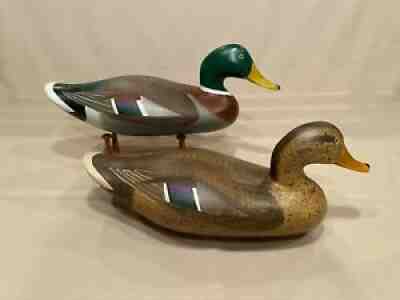
Sold on eBay Dec 29, 2021
Madison Mitchell Mallard Decoy Pair - Dated 1980 - See Photos & Description!
This Mallard pair was carved by Madison Mitchell, signed & dated 1980. Light cracks in paint on both, see photos for detail. 16"x6.5" each decoy. Stand not included. My collection covers a wide range of carvers and styles, including contemporary and working decoys.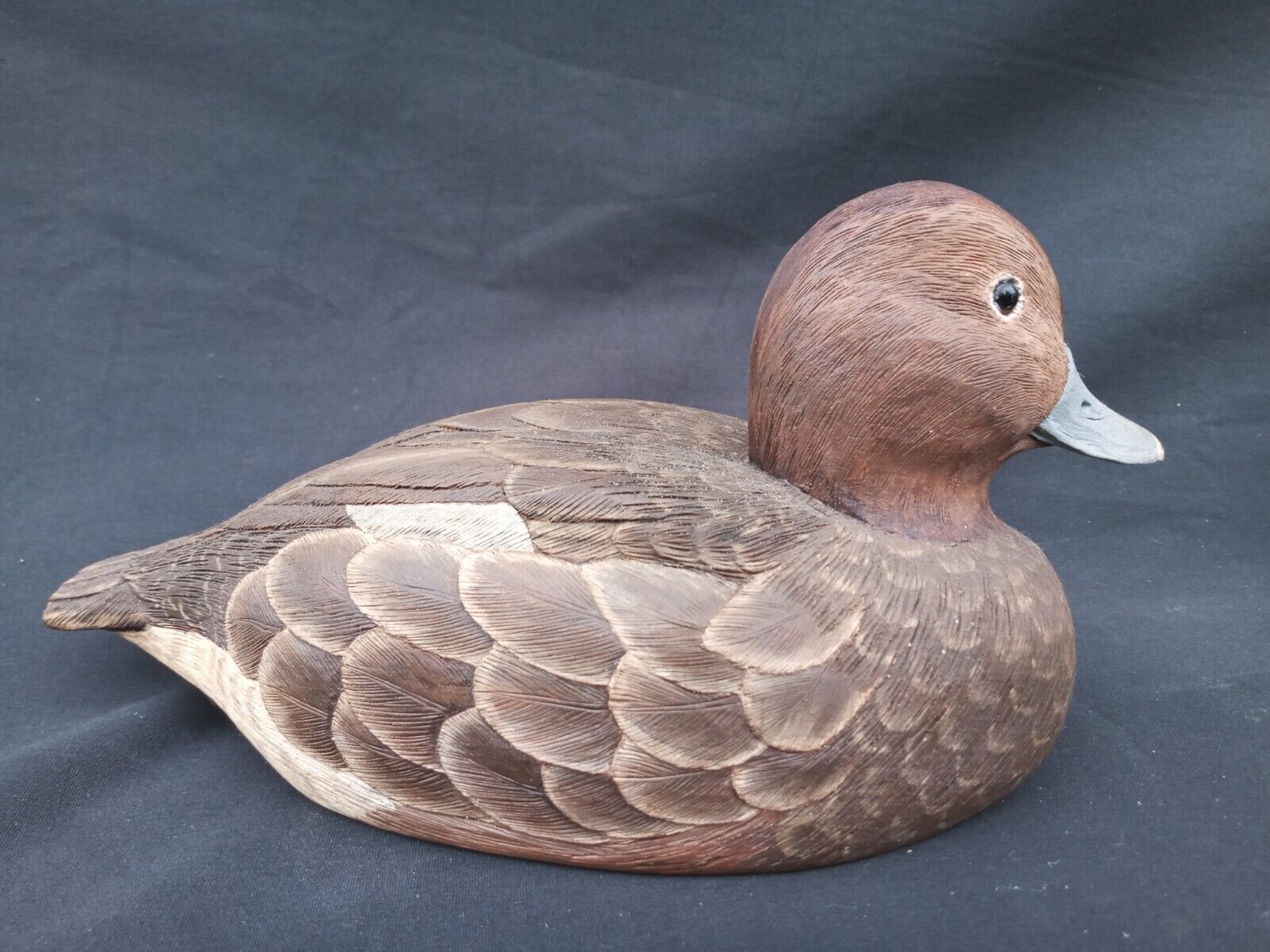
Sold on eBay December 5th, 2024
Winfred Gloria Walters Duck Decoy Wood Shoppe MD Competitor carver Cinnamon Teal
Up for consideration is fine hand carved wooden duck probably a cinnamon teal hen...decoy by noted MD artist Winfred Gloria Walters 1931-2019. The bird measures 8.5 inches in length and is signed on the bottom and dedicated to Ruth & Harold Frank Christmas 1980 by W. Gloria Walters Catonsville MD. Please see photos as part of the description. This is more or less a decorative bird. Guaranteed authentic.. Please see photos as part of the description. Buyer pays shipping. Best Regards JohnJohnnyCrystal Est. 1987 (Condition: Pre-Owned)
Sold on eBay April 17th, 2024
RARE MINT SUPERB HOLLOW MERGANSER ~SIGN & DATED 1997 CHIP ALSOPP Wood Duck Decoy
RARE, PRISTINE MINT, SUPERB, 27-YEAR OLD "SIGNED, DATED & HOT BRANDED" ALERT & TURN-HEADED "WELL HOLLOWED" DRAKE RED-BREASTED MERGANSER WOOD DUCK DECOY ~AMAZING 100% ORIGINAL PAINT DETAIL DOWN TO INDIVIDUAL FEATHERS, SUPERB CARVING DETAIL & CONDITION TO GUNNING DECOY by MASTER CARVER CHIP ALLSOPP of NEW JERSEY, ALSO ONE of the HOMES to WILDFOWLER ~STUNNING 100% ORIGINAL CONDITION ~BEAUTIFUL MELLOWED & AGED PATINA to the ARTIST OIL PAINT & EVEN RESIN BLEED TO A KNOT ADDS TO ITS AURA & APPEARANCE ~SUPERB CARVING to the HEAD, BILL, TAIL, BODY & HEAD CRESTS ~ORIGINAL RIGGING with WILDFOWLER LIKE KEEL with DRILLED FRONT & REAR LINE-TIES ~SUPERB BILL CARVING & PERFECTLY CARVED IN & LOCATED CORRECT RED GLASS TAXIDERMIST EYES ~DRAKE RED-BREASTED MERGANSER DECOYS FROM ANY AREA THIS NICE ARE RARE, SO HERE IS A CHANCE TO OWN AN AMAZING MERGANSER & STUNNING WOOD DUCK DECOY MADE BY ONE OF THE AREAS MOST RENOWNED DECOY CARVERS ~SUPERB DECOY THAT COMES FROM LIGHT & TEMPERATURE CONTROLLED COLLECTIONS! RARE MINT SUPERB HOLLOW MERGANSER ~SIGN & DATED 1997 CHIP ALSOPP Wood Duck Decoy RARE MINT SUPERB HOLLOW MERGANSER ~SIGN & DATED 1997 CHIP ALSOPP Wood Duck Decoy Click images to enlarge Description Captain "CHIP ALLSOPP" (Photos Below): REAL "DRAKE RED-BREASTED MERGANSERS" in the WILD SO YOU CAN SEE HOW this DRAKE by "CHIP ALLSOPP" DECOY up for auction REPRESENTS the SPECIES VERY REALISTICALLY and is a PERFECTLY CARVED & PAINTED WOOD SPECIMEN of this UNIQUE WATERFOWL SPECIES!! - (photo below): A 1981 Photo from Henry Fleckenstein's Book, "American Factory Decoys" of the Crew that Operated "The Barnegat Bay Decoy Company" .... (LEFT to RIGHT): Art Birdsall, Owner Rick Brown, Tim Forsyth & "CHIP ALLSOPP: "The Barnegat Bay" Decoy Factory! "CAPTAIN" CHIP ALLSOPP Lives in Bay Head, New Jersey Chip has Spent Many Years in Point Pleasant and its Other Towns Such as Point Pleasant Beach, Bay Head & Loveland Town! ? (above photo): This MAP SHOWS "POINT PLEASANT", Where CHIP ALLSOPP & the CREW RAN the The BARNEGAT BAY DECOY COMPANY, The SECOND LOCATION of the "WILDFOWLER FACTORY ........ and WHERE A PLETHORA of OTHER FAMOUS & HISTORICALLY IMPORTANT CARVERS SPENT their LIVES MAKING DECOYS, HUNTING and ESTABLISHING the AREA as ONE of the COUNTRY'S MOST IMPORTANT WATERFOWLING AREAS for CARVING WOODEN BIRDS & GUNNING WILD ONES!? (photo below): "CHIP ALLSOPP" in the "BARNEGAT BAY DECOY COMPANY" Carving Shop. Shown Running the Duplicating Lathe in the Early 1980's: (photo below): After Barnegat Bay Decoy Co. Closed, Chip Allsopp Began Carving on his Own Again in the "Classic Delaware River & New Jersey Coast" Styles, Constructions & Forms that his Decoys Emulate!! (photo below): A Spectacular, Life-Sized, Chip Allsopp "Tundra or Whistling Swan" Signed & Dated 1994 Hollow Wood "Gunning" Decoy: (photo below): A Beautiful & Atypical Puddle Duck, Chip Allsopp "Drake Wood Duck"; Signed & Dated 1994, Hollow Wood "Gunning" Decoy: (photo below): A Very Majestic, Chip Allsopp "Blue Goose"; Hollow Wood "Gunning" Decoy: This Rare, "Pristine", Signed & Dated, Semi-Alert & Turned-Head, 27-Year Old, 1997 "Chip Allsopp" Drake Red-Breasted Merganser Hollow Wood Duck Decoy up for Auction: Chip Allsopp possessed a unique talent for carving at a young age and soon began making decoys to gun over. He Carved Before and After his Involvement with "The Barnegat Bay Decoy Company", and All are Fine Examples of Decoys from the Delaware River and New Jersey Coast Schools of Carving. Chip Allsopp and his Days as an Integral Member of the "Barnegat Bay Decoy Company" Team: In the Late 1970's, Rick Brown Founded "Barnegat Bay Decoys", which operated on the Old Wildfowler Factory site in Point Pleasant, NJ. In the Early 1980's, Barnegat Bay Decoys Achieved National Fame following an article by "Sports Afield" Magazine about the company. Chip Allsopp was Instrumental of the Crew as a Master Carver & Painter at the Company! When Charles Birdsall Sold his "Wildfowler" Decoy Operation at Point Pleasant, New Jersey, All of the Equipment & the Wildfowler Name was Bought by Amel & Karen Massa and Moved it to Babylon, New York. At the Same Time, Rick Brown Bought Charlie Birdsall's Home & Shop, then He Re-Tooled the Shop, and the Result was the Start of "THE BARNEGAT BAY DECOY COMPANY"!! Rick Brown's New Company Began & was Operated and Made Decoys in the Same Tradition as Wildfowler Made Decoys and at Times "Wildfowler" Factory Decoys were Some of the Most Sought After in the World!! (photos below): Art Birdsall, Rick Brown, Tim Forsyth & CHIP ALLSOPP: "The Barnegat Bay" Decoy Factory! (photos below): A Perfect Example of a "Barnegat Bay Decoy Company" Gunning Decoy ....... Stamped with the Company Logo! Newspapers around the United States began Writing Articles about "Rick Brown's Company" as Being the "The Last Decoy Factory" -and- and the "Barnegat Bay Decoy Company" was Soon Inundated with Orders. In 1982, the New Jersey Network (NJN) Shot a Documentary Titled: "In the Barnegat Tradition" which Featured Footage of the Factory, as Well as Interviews with Employees of the Company. Barnegat Bay Decoys had Built a Significant Reputation in the Decoy World .......... and Rick Employed Talented Local Carvers: CHIP ALLSOPP, Art Birdsall & Tim Forsyth. - - - - - - - - - - - - - - - - - - - - - - - - - - - - - - - - - - - - - - - - - - - - - - - - - - - - - - - - - - - - - - - - - - - - - - - - - - - - - - - - - - - - - - - - - - - - - - - - - - - - - - - -- - - - - - - - - - - - -- - - - - - - - -- - - - - - - - -- - - -- (photos below): Charlie Birdsall (photo above): Art Birdsall's Famous Uncle, Charlie Birdsall, Owned the Wildfowler Decoy Factory from 1961 to 1977 ..... and Charlie often Visited the Barnegat Bay Decoy Company Shop & Even Sold Some of His Own Decoys While in Town from Florida!! Charlie Birdsall, Art's Uncle, also Often Came to the Shop from his Home in Florida just to Hang Out in the Paint Shop. Lucky visitors were able to Purchase Charlie's Decoys which he Sold from the Trunk of his Car. While the the Barnegat Bay Decoy Company Closed it's Doors More than a Decade Ago, Rick Continues to Hand Carve the Competition Quality Decoys that have Earned him Hundreds of Ribbons for More than a Quarter of a Century. After the Barnegat Bay Decoy Factory Rick Brown Began his Own Carving Career: Chip Allsopp Hand-Carved all of his Own Decoys After The Barnegat Bay Decoy Company, Just Like this Superb Merganser up for auction. Chip Makes his Decoys of Air-Dried Jersey White Cedar, which is Hollowed Out & then Hand-Carved. Like a True Artist, Chip has an Eye for Color & Never Misses a Stroke, allowing Him to Paint and Replicate Intricate Wing & Other Feather Group Patterns. He Usually Signed and Dated his Decoys and his Awesome Decoys are the Result of Hard, Dedicated Work that has Earned Chip the Much Deserved Praise of his Peers and Collectors Alike. (photos below): PICTURES of OUTSTANDING DECOYS by BARNEGAT BAY DECOY COMPANY; RICK BROWN, "CHIP ALLSOPP", ART BIRDSALL & TIM FORSYTH ...... ALL MADE BY THESE HIGHLY REGARDED CARVERS of HOLLOW GUNNING DECOYS!! (photos below): PICTURES of OTHER OUTSTANDING DECOYS by BARNEGAT BAY DECOY COMPANY: AWESOME PAIR of WOOD DUCKS: SUPERB DRAKE BLUE-WINGED TEAL & DRAKE GREEN-WINGED TEAL DUCK DECOYS: This Rare, "Pristine", "Signed & Dated", Alert & Turned-Head, 1997 "CHIP ALLSOPP" Drake Wood Duck up for Auction: (photos below): This MINT & OUTSTANDING "SIGNED & DATED" 27-YEAR-OLD; WELL HOLLOWED ; DRAKE "RED-BREASTED" DECOY up for auction!! This Scarce-Species, Mint & Pristine, Fully-Rigged, "CHIP ALLSOPP" Drake Red-Breasted Merganser Decoy Perfectly Exemplifies his Best Style & Form and Maybe One of the Best Specimens of his Work that You'll Come Across ......... It is Just Gorgeous and Yet Sleek, Long & Wide: (photo below): RARE, 100% ORIGINAL and an AMAZING EXAMPLE of One of "CHIP ALLSOPP'S" RARE SPECIES, the "RED-BREASTED MERGANSER" ...... STUNNING FORM & MAGNIFICENT, PRECISELY PAINTED with "STUNNING VERY FINELY DETAILED, FEATHER-PAINT" ....... SPECTACULAR CARVING; ESPECIALLY the "WIND SWEPT" HEAD with REALISTIC BILL & PERFECT TRIPLE CRESTED MERGANSER HEAD ....... and the ATTACHMENT & TRANSITION WHERE the TWO HOLLOWED BODY HALVES WERE ATTACHED is an "ALMOST INVISIBLE-TO SEE" SEAM!! This DRAKE RED BREASTED MERGANSER'S that was ATTACHED with a SCREW from the INSIDE BEFORE the HALFS were ATTACHED .......... is Also as TIGHTLY ATTACHED to the WELL FORMED NECK SEAT & BODY and is AS CLOSE to INVISIBLE as YOU CAN GET!! (photos below): Just Look at the Stunning & Extremely Detailed Carving and Paint From Pointed Left Angles as Well as From the Opposite Right Angles!! PLUS: This DRAKE RED-BREASTED MERGANSER is a "VERY-WELL HOLLOWED" DECOY HAS SOME of the MOST BEAUTIFUL, PRECISE & FINELY FEATHER DETAILED PAINT YOU'LL SEE! (Below Photos): The BOTTOM of this RARE & EXOTIC "CAPTAIN CHIP ALLSOPP" DECOY was OUTFITTED with a PRECISELY CUT & LOCATED WILDFOWLER LIKE KEEL ....... and THIS PERFECT KEEL has ROUNDED ENDS with a FRONT & LEADING LINE-TIE and ONE in the REAR for a STRING or SINGLE TRAILING DECOY!! The BOTTOM of this AMAZING DECOY was "HAND-SIGNED & DATED 1997 ....... and ALSO a DEEPLY, HOT-BRANDED "CHIP"!! + (below photos): The HEAD of this RARE & PRISTINE "ALERT & TURNED HEAD" DRAKE RED-BREASTED MERGANSER from SEVERAL ANGLES and YOU CAN SEE the BILL that LOOKS LIKE a LIVE DUCK ........ and the HEAD is PERFECTLY CARVED with a SLEEK POSE that is CRESTED on the BACK of the HEAD with 3 EQUALLY SIZED & SPACED, FEATHER-TUFTS!! REMARKABLE INCISED HEAD/BILL SEPARATION with a PERFECT, LONG & THIN, "MERGANSER" BILL with PERFECT CARVED-IN NOSTRILS & PAINTED-0N MANDIBLES & NAIL is FAULTLESS & LIFE-LIKE ......... and it HAS a PERFECTLY ROUNDED, JUTTING-OUT, LOW TAIL that is PERFECTLY SYMMETRICAL, JUST LIKE the ENTIRE DECOY IS!!! The ANATOMICALLY CORRECT BILL is SO REALISTIC it LOOKS ALMOST as LIFE-LIKE as a "STUDY BILL" that CARVERS, TAXIDERMISTS & HISTORIANS USE!! This "One-of-a-Kind" CHIP ALLSOPP "Drake Red-Breasted Merganser" Gunning Decoy has Perfect Balance, is Life-Sized and Weighs & Measures: 16-1/4" long. ..x..5-3/4" wide x. 7" tall ? And Weighs a Very Well Hollowed: ...1-lb. 10-oz. _ THAT is FANTASTIC & MAKES for a PERFECT, LIFE-SIZED "DRAKE RED-BREASTED MERGANSER" DECOY!! That Makes for an Awesome & Very Unique Gunning Decoy that are From the Same Man's Hands that was Integral in the Success of the Barnegat Bay Decoy Company!! This Spectacular Merganser Decoy Has Been in the Protection of a Climate and Light Controlled Collection or Collections Since the Day it Left Allsopp's Work Shop!! (Below Photos): This MERGANSER DECOY has the SAME SPECTACULAR SPECIES SPECIFIC FORM, WEIGHT and STYLE as SOME of the POINT PLEASANT WILDFOWLER DECOYS GREATEST DECOYS! INCREDIBLE PAINT GETS DOWN to the INDIVIDUAL FEATHER on MOST of the DECOY with PERFECT BLACK, GRAY & WHITE, BACK, WING, TAIL & SIDE FEATHERS .......... PERFECT "SPECIES & GENDER SPECIFIC CARVED & PAINTED" BILL and HEAD CREST with "STUNNING" FEATHER-BLENDED or CLEAN-EDGED "WET-on-WET and "WET-on-DRY" PAINT ........ and YOU CAN SEE "EVERY SINGLE PAINT BRUSH MARK" on THIS OUTSTANDING & FABULOUS DECOY!!! NOTE this MALE'S AWESOME, PRECISELY CARVED-IN & ACCURATELY LOCATED, "RED" SPECIES & GENDER CORRECT, GLASS TAXIDERMIST EYES!! ? This MINT, RARE and MARVELOUS "CHIP ALLSOPP" DRAKE "RED-BREASTED MERGANSER" DECOY up for auction: ? This DECOY is MINT, PRISTINE CONDITION ...... It DOESN'T HAVE a SINGLE CHIP, NICK, CHECK, DENT, CRACK or RUB of ANY KIND ...... It DOESN'T EVEN HAVE a SINGLE PAINT SMUDGE!!! _ Description of this STUNNING DRAKE "RED-BREASTED MERGANSER or FISH DUCK" DECOY Up For Auction: MINT, RARE, SPECTACULAR; 100% ORIGINAL; SIGNED & DATED; 1997 CAPTAIN CHIP ALLSOPP; VERY WELL "HOLLOWED" & 27-YEAR OLD; "DRAKE RED-BREASTED MERGANSER"; FULLY-RIGGED, WHITE CEDAR; WOOD "GUNNING" DECOY Bay Head, New Jersey (Point Pleasant) ? CHIP ALLSOPP CARVES using EASTERN WHITE CEDAR, which NATURALLY REPELS WATER and is EASY to WORK!! ? "MODEST YET LIFE-SIZED" DECOY in TRUE FASHION of the "FINEST" BARNEGAT BAY & WILDFOWLER COMPANY DECOYS!! Carved Life-Sized with Very Exquisite Carving Detail to Bill, Eggshell Hollowed Close to Middle of Two Body Halves & the Seam is Almost Impossible to See!! ? Just Outstanding & Incredible Wing, Head, Body & Tail Carving with Precise Symmetry!! Perfectly Carved-In and Located "RED" Taxidermist Glass Bird Eyes! An Outstanding "Captain Chip Allsopp" Decoy with Awesome "Vigilant & Turned to its Right Head", with a Smooth Body, Perfect Carved-In Eye Grooves that Go All the Way into the Crests and a Perfectly Rounded & Lower, Jutted-Out, Carved in "Merganser" Tail! This MINT, OUTSTANDING, 27-YEAR OLD, "SIGNED, DATED & HOT-BRANDED" BOTTOM with a PERFECT KEEL to KEEP it SWIMMING PERFECTLY FLAT & LIFE-LIKE: PERFECT CARVING DETAIL: AWESOME BILL, PRECISE EYE GROOVES & HEAD CRESTS with AMAZINGLY PAINTED & EXTREMELY DETAILED PAINT to ALL WING, BACK, TAIL, BREAST & SIDE FEATHER GROUPS ........ AS WELL AS "WET-ON-WET" FEATHER BLENDING -and- WET-ON-DRY, INDIVIDUAL FEATHERS that is SIMPLY "AS GOOD AS IT GETS on ANY DECOYS!!! ??? INCREDIBLE PAINT: AWESOME, IMMACULATE, MINT 100% ORIGINAL PAINT with INDIVIDUAL FEATHERING to ENTIRE DECOY & FEATHER BLENDING to HEAD, NECK, SIDES, BREAST, WINGS, BACK & TAIL!!!! OUTSTANDING FORM: ABSOLUTELY PERFECT CARVING to the PERFECTLY CONTOURED BODY, HEAD & OUTSTANDING BILL!!! PERFECT ORIGINAL RIGGING: MINT RIGGING with WILDFOWLER INSPIRED "SQUARE KEEL" ATTACHED with MARINE GLUE & 2 MEDIUM-SIZED FINISHING NAILS and FRONT & REAR, LINE-TIES!! ? HAND SIGNED & DATED: SIGNED: "CAPT. CHIP ALLSOPP" -and- "1997" ? ALSO, DEEPLY "HOT-BRANDED": "CHIP" Chip Allsopp Carves Part-Time Out of a Brick Building Next to "Johnson's Boat Works" Basin Off the Point Pleasant Canal in Bay Head, New Jersey. Bay Head is a Point Pleasant, New Jersey Community: RARE: INCREDIBLE PATINA to the OIL-BASED ARTIST'S PAINT!! RARE: CHIP ALLSOPP'S DECOYS are SOME of the NICEST BALANCED, SYMMETRICALLY CRAFTED and OUTSTANDING CARVED and PAINTED ROUGH-WATER DECOYS MADE in the LAST SEVERAL DECADES! A Perfect Specimen of a Rare Species, "Very Well Hollowed" Larger-Sized, Diving or Fish Eating Duck Hunting Block Made by One of Today's Best Gunning Decoy Makers!! This DECOY is PAINTED in It's FULL WINTER COLOR SCHEME and How We SOMETIMES SEE THEM VERY LATE DURING the HUNTING SEASON in MICHIGAN or IF THEY WINTER HERE; BUT WE ALSO OFTEN SEE THEM NOT YET in FULL BREEDING PLUMAGE EARLY in the FALL!!!! This DECOY Has the NICEST BILL CARVING, TAIL -and- TRIPLE HEAD-CRESTED -and- Some of the Finest Work You Will See from One of Today's Finest Carvers; AND a RARE DRAKE "RED-BREASTED MERGANSER" to BOOT!! TRULY SOME of the MOST OUTSTANDING PAINT DETAIL that has AGED BEAUTIFULLY to the 100% ORIGINAL ARTIST'S OIL PAINT!! ? THIS DECOY HAS SOME of CHIP'S MOST AWESOME "CARVING" to the BILL, BODY SHAPE & FORM, CRESTED HEAD and JUTTING-OUT, PADDLE-TAIL!! If You Like Decoys from Famous Master Carvers and Are in "MINT CONDITION" ........ THIS IS A VERY VALUABLE DECOY to ADD to Your COLLECTION!! _ (photos below): This CAPTAIN CHIP ALLSOPP "DRAKE RED-BREASTED MERGANSER" HOLLOW, WOOD DUCK DECOY up for auction!! (photos below): REAL "DRAKE RED-BREASTED MERGANSERS" in the WILD So You Can SEE HOW AWESOME this CHIP ALLSOPP DRAKE RED-BREASTED MERGANSER DECOY up for Auction REPRESENTS the SPECIES; IT'S EXCELLENT: DON'T MISS OUT ON THIS OUTSTANDING & RARE, "ONE-OF-A-KIND" DECOY: This DRAKE RED-BREASTED MERGANSER on Ebay has the Perfect Weight and Dimensions for the Species and is an Amazing Decoy that Could Be Gunned Over in the Often Unpredictable Currents of the River & Inclement Surface Weather & Swim Perfectly and Right Themselves Immediately!! ? ? ?This is Just An Awesome Decoy That Was Carved and Has the Perfect Form, Style & Dimensions of the Coastal New Jersey Decoys of a "Red-Breasted Merganser" Decoy and Live Duck!! This Drake Merganser on ebay Shows that it Came from Climate Controlled, Direct Light-Free Collection or Collections that it Has Been Kept Protected for the Past 27-Years and it Has Been Carefully Cared For as Well!! It Looks to Have Been Very CAREFULLY HANDLED & "WAS NEVER USED" as it is in "TRULY MINT CONDITION" as well as "100% ORIGINAL"!! This Immaculate Decoy Doesn't Have a Crack, Chip, Dent, Paint Smudge or Even a Tiny Nick or Scratch & Absolutely Everything is as Tight on this as if Made Yesterday!! ? IN THE NEXT FEW WEEKS I AM PUTTING ON EBAY MORE LAWRENCE BETHEL FISH DECOYS, A PAIR OF THE ONLY KNOWN PROTOTYPES MADE OF THE VERY FIRST PRE-PRODUCTION FIBRE DECOYS EVER MADE, A NEAR MINT 1927 HEDDON GIANT VAMPIRE FISHING LURE IN RARE SHAD, A PAIR of LATE PHASE DODGE MALLARDS, EXQUISITE AND RARE PAIR OF "SPECIAL ORDER" MALLARDS, A RARE PAIR OF CECIL ANGER (KEN'S COUSIN), A VERY RARE c1893 100% ORIGINAL TRANSITION PERIOD MASON DRAKE BUFFLEHEAD, A NEAR MINT PAIR OF MASON GLASS EYE PINTAILS, A MINT c1905 HEDDON ARTISTIC MINNOW, A SCARCE RALPH MALPAGE ATLANTIC BRANT, A YELLOW WITH RED EYE BLUSH MOONLIGHT SINGLE-HOOK PIKAROON, A NIB CREEK CHUB MULLET COLOR STRIPER PIKIE IN CORRECT BOX, A PAIR of INCREDIBLE CHALLENGE & PREMIER GRADE MASON BLUE-WINGED TEAL, A NICE PAIR OF MASON GLASS EYE BLUEBILLS, AN AWESOME ERNIE NEUMANN SUCKER FISH DECOY, A RARE DOUBLE SPECIAL CREEK CHUB BEETLE FISHING LURE, A VERY NICE ERNIE NEUMANN SUCKER, A RARE 12-1/2" CHET SAWYER MINNESOTA FISH DECOY, A NEAR MINT OSCAR PETERSON PERCH FISH DECOY, A MINT PAIR OF WRAGG & BURRELL WIGEON, AN OUTRAGEOUSLY HARD TO FIND PAIR OF CHARLIE POZZINI BLUEBILLS, A CHET SAWYER 13" CHET SAWYER FISH DECOYS, A VERY BIG & BULL-NECKED EARLY FERDINAND BACH DRAKE CANVASBACK FROM HIS PERSONAL RIG AND MORE!! ? Shipping Includes Insurance! I Don't Believe in Making a Profit on Shipping, You Pay What I Pay. If it's Less Than You Paid I Refund the Difference, If More I'll Pay For It. I COMBINE SHIPPING. I am also loading over 150 Duck Decoys, 150 Fish Decoys, 70 Scarce Fishing Lures, etc. so keep checking back. ________________ This Outstanding, 100% Original, Breathtaking Paint Detail & Long-Body Styled, Yet Wide & Somewhat Tall "Sturdy & Strong" 1997 "Drake Red-Breasted Merganser" Gunning Decoy up for Auction!! ITEM DESCRIPTION: This Rare & Unique, Very Nicely "Eggshell Hollowed" Wonderfully Carved and Painted "Vigilant & Turned Head" Drake "Red-Breasted Merganser" Wood Duck Decoy was carved by Captain Chip Allsopp of Bay Head in Point Pleasant, New Jersey. This is the Area where Chip started carving in his mid teens and never stopped until he perfected his craft. Not only was Point Pleasant home to a plethora of some of the finest East Coast carvers in history, but it was also once a home to the world famous Wildfowler Decoy factory from 1961 to 1977. Point Pleasant is a borough in Ocean County, New Jersey, United States. The borough is a Jersey Shore community situated on the Barnegat Peninsula, a long, narrow barrier peninsula that divides the Barnegat Bay from the Atlantic Ocean at the Manasquan Inlet, and the borough derives its name from this location. The borough is bounded on the north by the Manasquan River, on the east by Point Pleasant Beach and Bay Head, on the south by Beaver Dam Creek and on the west by Brick Township; the borough also borders Mantoloking in Ocean County and Brielle in Monmouth County. The town is home to the Point Pleasant Canal, completed in 1925, at the northern end of the Intracoastal Waterway. Point Pleasant's history is traced back to around 1500, the area that included the future Point Pleasant was the ceremonial meeting place of the Lenape Native Americans, who called it the "Land of Tall Timber". In approximately 1665, the first European settlers arrived in the area, mainly fishermen, farmers and boat builders. The town was initially a logging town, although logging was never a significant part of the local economy. Though often regarded as a summer resort, the borough's website emphasizes that it is a "year round community of approximately 19,000 residents". BELOW is a HISTORY of the AREA and REGION of NEW JERSEY: In the middle of the Atlantic Flyway, it no mystery why the New Jersey coastline was one of the most prolific waterfowling areas in the country from the mid-1800's to the early 1900's. This area was rich with large tidal bays, salt-marsh ponds, clean streams and swift-flowing rivers. It is thus no mystery why New Jersey's earliest forms of tourism involved guiding hunting parties along with the flourishing trade of market hunting. Among the areas frequented by the Victorian market gunners (1847-1901) was Sandy Hook south to Manahawkin Bay, Barnegat Bay and Great Egg Harbor Bay among many others. New Jersey decoys are often divided by area into Barnegat, Tuckerton, Manahawkin, Mullica River, Absecon, Head of the River and Cape May. A few of the more well-known Master Carvers from each area are Henry Grant (b. 1860 - d. 1924) and John Dorset for Barnegat, Harry V. Shourds (b. 1861 - d. 1920) of Tuckerton, John Updike for the Mullica River, Levi Truex (died 1934) and Captain Dan Showell for Absecon, Mark English for the Head of the River, Otis Townsend for Cape May and Joseph King, Lloyd Parker (b. 1859 - d. 1921) and Liberty Price (carved c1870 - 1910) for Manahawkin and John Bowen from Atlantic City. Like this Chip Allsopp decoy up for auction, the wood used by these master carvers was Eastern White Cedar as during this time period huge stands lined the rivers from the coastline inland. New Jersey's first industry was cutting these huge forests to provide lumber for the burgeoning shipbuilding trade. Coincidentally, this wood provided the perfect material for the early decoy carvers in the region that were making the tools with which the hunters in the area used to harvest the abundance of migrating waterfowl. Although the predominant New Jersey decoy would evolve into a "dugout" hollow decoy with glass eyes, some of the earliest decoys were a mix of semi-hollowed and solid decoys with almost all having painted-on, tack or no eyes at all. And of these carvers, Joe King (b. 1835 - d. 1910) of Manahawkin is considered by many to be the true father of the New Jersey style of decoys as it is known today and he was one of the first carvers to make decoys for a living, but never approaching the enormous output of New Jersey's most prolific sellers of decoys, Harry Vinuckson Shourds (b. 1861 - d. 1920). Joe King carved at least a pair of decoys for just about every species of duck and goose that frequented the New Jersey region of the Atlantic Flyway. As the Patriarch of the New Jersey style of decoy, Joe King was the inspiration and often the mentor to countless numbers of New Jersey carvers and his patterns were adopted by the well-known master carpenter, boat-builder and decoy carver Lloyd Parker, also of Manahawkin. Like Joe King, Harry V. Shourds was one of a very select number carvers that was known to have carved almost every species of migratory waterfowl that staged in the Jersey region. A great many of the carvers from the 1860's to later 1800's were also boat-builders or guidesmen by trade and there is some indication that the great Joe King also was employed in these areas in some capacity during his lifetime. Some of his earliest New Jersey birds were solid and full-bodied, but the bulk of the decoys were hollow, yet also very full-bodied. Like the decoys that would follow his form, the backs swooped down to the tail but not as sharply as other later carvers like Harry V. Shourds among others. Most employed "Ice Grooves' behind the head to make handling easier in inclement weather, but some carvers like Joe King also carved with and without ice grooves immediately behind the head on the beginning of the back, although very deep ice grooves are something King's decoys would become very well known for. King's decoys that did have ice grooves had grooves that were deeper and more widely incised than those made by most others including Lloyd Parker. The ice groove was carved in for exactly the purpose it's name suggests it was meant for, to make handling easier when ice build-up made the decoys harder to grasp in late season weather conditions. Like most of the New Jersey carvers, the makers employed rectangular lead "pad" ballast weights nailed onto the bottom, but some later decoy's weights were incised into the bottom much like the decoys made by Harry V. Shourds. While some early decoys had the head attached with a "through head" dowel, finishing nails through the neck and a white, lead-based marine caulk/adhesive, most of the other early carvers used finishing nails that were countersunk and the top holes filled with the lead caulk. However, many carvers heads and neck bases on the body were carved so perfectly and precise, that no neck putty was needed to fill in at the attachment point. Again, most of the earlier decoys had the attached to the body using a dowel, although I am sure later decoys adopted a screw from the hollowed upper half and up into the neck of the head as he carved for the better part of 7 decades and most likely adopted a myriad of styles and crafting techniques over the years. many of the early carvers decoy's had carved bill/head separation and faint nostrils, were well sanded, have a primer and finish coat and have simple yet effective paint patterns and the Majority of the area's decoys all had hollowed out cedar "dugout" bodies with the body halves also attached using a lead-based glue/caulk and were very well crafted. These men quite possibly lived during one of the most prolific eras in waterfowling history. Many of their decoys were considered so adequately aesthetic and functional that a great many of the subsequent carvers in the region made no dramatic changes to his design, but rather tweaked them with a closer ratio from body to head size and forward-aimed heads. The final touch to the decoys from the late 1800's was the wonderful, yet somewhat simplistic paint jobs that employed using a high quality oil and lead based marine paint which was also a carry over from the local boat building knowledge on what to use to best protect the surface of a boat for the longest period of time possible. The painting techniques and the quality of the paint used was extremely serviceable and the number of decoys that exist today in original paint is a testament to the quality of his finishes. BELOW is INFORMATION on "CHIP ALLSOPP", the MAKER of this AMAZING "DRAKE RED-BREASTED MERGANSER HOLLOW DECOY up for auction: Chip Allsopp's love for carving began nearly many decades earlier when he realized that it was much cheaper and very rewarding to carve and paint your own gunning decoys. Chip discovered he possessed a unique talent for carving and soon began making decoys full-time. He currently carves part-time out of a Brick Building next to Johnson's Boat Basin off the Point Pleasant Canal. He was asked to and joined on with the Barnegat Bay Decoy Company in Point Pleasant after being asked to join by the founder and owner Rick Brown. Along with Brown and Allsopp, Art Birdsall and Tim Forsyth comprised the main crew that produced these incredible decoys from one of history's lesser written about and acknowledged decoy factory operations. In the late 1970's, Rick Brown founded Barnegat Bay Decoys, which operated at and on the old Wildfowler factory site in Point Pleasant, New Jersey. Charles Birdsall owned and operated Wildfowler's 3rd location in Point Pleasant from 1961 to 1977, but sold the Brand Name and Equipment to Amel and Karen Mass, who moved the company to Babylon, New York. Rick Brown however, managed to buy Charlie Birdsall's home and shop, retooled the shop, and thus the beginning of the Barnegat Bay Decoy Company that closely followed in the same tradition as the Wildfowler company but soon began to perfect their own style and form of decoys but for the most part stayed true to the decoys made in the Coastal New Jersey and Delaware River fashion and form. In the early eighties, Barnegat Bay Decoys achieved national fame following an article by Sports Afield magazine magazine about the company. Newspapers around the United States began writing articles about "The Last Decoy Factory" and the company was inundated with orders. In 1982, NJN shot a documentary titled "In the Barnegat Tradition" which featured footage of the factory, as well as interviews with employees of the company. Barnegat Bay Decoys had built a significant reputation in the decoy world, and employed local carvers Chip Allsopp, Art Birdsall, and Tim Forsyth. Charlie Birdsall, Art's uncle, often came to the shop from his home in Florida just to hang out in the paint shop. Lucky visitors were able to purchase Charlie's decoys which he sold from the trunk of his car. While the company that operated under Rick's primary ownership closed it's doors more than a decade ago, Rick Brown continues to hand carve the competition quality decoys that have earned him hundreds of ribbons for more than a quarter of a century. When the Barnegat Bay Decoy Company closed, like Rick Brown, Chip Allsopp, Art Birdsall and Tim Forsyth continued carving decoys but went back to carving their own decoys at various locations in the area. Chip Allsopp, like this "Drake Red-Breasted Merganser" up for auction, now hand-carves all of his decoys. Each decoy is made out of air-dried Jersey white cedar, which is hollowed out and then hand-carved. Like a true artist, Chip has an eye for color and never misses a stroke, allowing him to paint and replicate intricate wing patterns. Captain Chip completes his decoys with various rigging depending on the style of decoy he was carving, but tended to closely follow the shape, style and form of Wildfowler decoys but with much more attention to the hand-made construction, carving and extremely detailed painting as well as fine carving details. He then signs, dates, and hot brands his decoys. His hard and dedicated work has earned Chip much deserved praise of his peers and collectors as well. As previously mentioned, Chip Allsopp was an active member of the crew of the Barnegat Bay Decoy Company of Point Pleasant, New Jersey. In 1977, Charlie Birdsall sold all of the equipment and assets of his Point Pleasant, New Jersey based Wildfowler Decoy company to Amel and Karen Massa, and the Massa's moved the business to Babylon, New York. It was at this time that Rick Brown bought Charlie's home and shop, retooled the shop and started the Barnegat Bay Decoy Company at the site. Charlie Birdsall eventually relocated to Florida, but he would return to Point Pleasant to visit and sell his own decoys at the Barnegat Bay Decoys showroom owned by Rick and housed in the very buildings Birdsall had used to operate Wildfowler so successfully. Barnegat Bay Decoy Company closed its doors in 1992. MORE ABOUT RICK BROWN, CHIP ALLSOPP & The BARNEGAT BAY DECOY COMPANY: As stated, Rick Brown was born in Philadelphia and raised in Burlington County, NJ. He later settled down at the Jersey Shore and currently resides in Point Pleasant, NJ. DESCRIPTION of this AMAZING CHIP ALLSOPP DRAKE RED-BREASTED MERGANSER up for auction: This Captain Chip Allsopp Drake "Red-Breasted Merganser" is a spectacular gunning decoys, it is in mint condition and the paint is 100% original and has a very nice mellowing patina. This decoy also exhibits some of Chip's most effective feathered paint work with excellent individual feather painting and also crisp painting where each is appropriate and like a live bird. This decoy is in mint original condition and is as solid as the day it was made. Not only was this decoy painted perfectly symmetrically, the carving job is fantastic in its own right. The contours on the body are outstanding and the head and tail were proportioned perfectly to the form and size of the body. The head on this Drake is carved perfectly and is in a turned to its right and vigilant posed as if looking for danger before it rests to feed, sleep or rest. The head has neat puffy-cheeks and deep eye grooves that lead to a somewhat puffed out brow that starts at the bill and along with the eye groove blends together and forms the triple-carved crest that perfectly represents the tufts of feathers on the back of a Red-Breasted Mergansers head. This Outstanding and Awe-Inspiring Chip Allsopp Drake "Red-Breasted Merganser" duck decoy up for auction has his distinctively carved "eye-groove indentations", "distinct eyebrowed-like, rear crested" Red-Breasted Merganser Hollow Wood Duck Decoy, but with a turned and very much alert head that looks as if its taking a last look around for danger before it relaxes or sleeps near its migration mates. It is certainly highlighted with one of his various trade-mark painting schemes that is the highlight of this decoy along with carving that is perfect for the species along with a bill that is tremendous and looks like it was cast from a real duck. This decoy is a true-to-form Chip Allsopp mid to larger-sized, diving duck decoy. This hollow decoy is as solid as the day that it was made and in Mint, Never Gunned Over Condition, let alone handled much period. Chip Allsopp's decoys are all extremely well made and as fine as any of the decoys from anywhere and this fine example is a testament to that. From a structural standpoint this decoy is in Perfect condition as the head is as tightly attached to the body as the day it was made, as are the two body half's and keel. The head was attached to the top half of the hollowed body by a large screw from the inside before the 2 halves were attached together and it is solid and tight as the day is long. This Incredible Drake Red-Breasted Merganser Hollow Wood Decoy on ebay is in mint structural condition with seams where the head meets the body and where the two body halfs were attached are practically invisible to the point that if you can't find a hint where the seam is you have to look at the grain of the wood to figure it out. This amazing decoy was obviously never gunned over and has never even seen water other than when he floated it to "tune in" the balance and where to locate the keel. Add a lead ballast weight and you have a durable and as life-like a decoy that could put up with any water conditions or winds and right itself immediately and swim and float very realistically. You could hunt over this decoy tomorrow but you wouldn't dare as his decoys are continuously growing in value every single time I see them at auction or available from private collections. This Chip Allsopp Drake Red-Breasted Merganser on ebay was carved over a quarter of a century ago and clearly has been in temperature and light controlled environmental collections since it was made; an incredible decoy to own. The paint has a very awesome mellowed patina as it has aged and will continue to age beautifully and the paint is as bright and inviting as the day it left his work bench. The patina even looks more spectacular in bright outdoor light and the paint gives the surface a beautiful tiny craquelured surface and some slight resin bleed from a knot that both simply add to the aura and authenticity of this amazing decoy. This decoy also exhibits all of the great aspects of the Classic Antique Delaware River and New jersey style of late 1800's and early to mid-1900's decoys. The head is as firmly attached with a large screw from the top half of this hollow decoy before the bottom half was attached. If adequately weighted, this decoy could ride out anything adverse water conditions that a body of water could dish out and if flipped by a rogue wave would right itself immediately. Absolutely perfectly carved in and located species and gender-correct, original "Red" glass taxidermist eyes that were mounted and carved in with perfect symmetry. This decoy is perfectly symmetrically carved and Chip Allsopp went to painstaking depths to ensure that this Drake Red_breasted Merganser was perfectly formed and carved. This bird is also one of the truest decoys to his overall form from the late 1990's you will see from its nice alert and turned sleek head that was mounted so flawlessly to the raised neck seat that the seam where it was attached is impossible to see. This Red-Breasted Merganser Drake looks spectacular with its "long-body" size, weight and was carved with outstanding symmetry that also is evident with the amazing feathered paint. This Drake Red-Breasted Merganser decoy also features an awesomely carved in head/bill separation, nostrils and painted mandibles and nail on the end, but all of Chip's carving was done with as much finesse as today's greatest carvers. This decoy was made with durability, quality and serviceability in mind along with great and alluring Merganser paint and carving form. This is also a fantastic example of a Chip Allsopp decoy that was made so perfectly that it could stand up to rough water and swim perfectly and right itself immediately. Obviously, Chip Allsopp's decoys speak for themselves and word-of-mouth is enough to sustain his career and enable it to always flourish without the need of advertising or marketing. It is an extremely solid and sturdy, mint signed, dated and hot-branded bird and makes for an excellent example of some of the finest carving and painting that Captain Chip puts on a Red-Breasted Merganser drake, a scarce species for not only him, but most carvers in general. This Exceptional decoy has perfectly carved in bill/head separation, his trademark awesomely carved nostrils, perfectly painted mandibles and nail and an absolutely perfectly shaped and formed "Merganser Bill". The bill is so accurate that it looks like it was cast after a real duck's bill, which isn't unusual for a Chip Allsopp hand-carved wooden duck decoy. Here's a chance to own one of the vintage "Gunning Blocks" that was carved and painted by one of New Jersey's more renowned contemporary master carvers. This decoy is symmetrically perfect from both carving and painting standpoints and has phenomenally mounted "Red Glass" eyes which are taxidermist glass eyes, possibly imported but many U.S. companies are making some of the nicest internal-iris and suspended pupil eyes as well. This bird is painted in a nice full winter plumage, which is what they look like when they migrate through the Great Lakes region very late in their migration, and usually have most of their full winter plumage. A great addition to any collection of vintage working duck decoys and shorebirds. If you have any questions or would like any additional photos feel free to email me. Thanks for looking. The first Photo in the beginning section of this listing is of this Awesome Cedar Drake Red-Breasted Merganser decoy up for auction. The 2nd and 3rd Photos are of thew Barnegat Bay Decoy Company and Chip Allsopp in the Point Pleasant, New Jersey Shop. The Next 16 Photos are Again of this Awesome Drake Red-Breasted Merganser Wood Duck Decoy Up for Auction by Itself from a Variety of Angles and Distances, Including Some Close-Ups that Show the Awesome Detailed Carving & Paint!! The Last 5 Photos are of Other Chip Allsopp Decoys that Are Other Remarkable Examples of His Incredible Talent!! Pictures sell!Auctiva offers Free Image Hosting and Editing.300+ Listing Templates Auctiva gets you noticed!The complete eBay Selling Solution. Track Page Views WithAuctiva's Counter (Condition: New (Other))
Sold on eBay February 27th, 2024
TOM TABER BOBWHITE QUAIL Bird - Carved Signed Sculpture Decoy Vintage
Beautiful carved quail, signed with artist’s signature. See pictures for accurate description and condition. I do not see damage or injury to the sculpture. Please ask questions prior to bidding. I believe from 1980’s. Stunning display sculpture for any nature lover. Failure to pay within two days or retracted bids may result in bidder being reported and blocked. On Feb-25-24 at 16:55:30 PST, seller added the following information:I had a question regarding photo #4. There does appear to be a mark on the side that I cannot tell is a natural defect or a scrape. This was purchased second hand so history is unknown. Please contact me for any additional questions. I uploaded an additional picture with a close up view for you to make your own decision.
Sold on eBay April 18th, 2025
Pair Of Signed Miniature Canvasback Decoys-Dorchester County Maryland!!!
This lot features a pair of Canvasback miniature decoys that are signed and were made in Dorchester County, Maryland. These were part of my Grandfather's collection. He would travel the coasts of NC, VA & Maryland in the 1960's through the 1980's to visit the various decoy makers, purchase his decoys and have them signed. He became good friends with Madison Mitchell, Harry Jobes & Oliver Lawson. This maker has signed the bottoms of these two decoys, but I can not make out who it is. I am sure someone who is a avid collector will know the signature. I will take a guess on the age of this pair to be in the mid to late 1980's. My Grandfather passed away in 1994. I ship to the lower 48 continental states with no international shipping at this time. Payment is due within 4 days following the auctions end. Lots are shipped out within 3 business days following final payment received. Best of luck to all. (Condition: Pre-Owned)
Sold on eBay October 16th, 2024
Fred Harding Antique Duck Lot 1980-90
Fred Harding Antique Duck Lot 1980-90. Condition is New. Shipped with USPS Ground Advantage. (Condition: Brand New)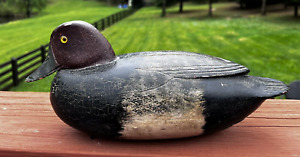
Sold on eBay April 26th, 2024
Antique/Vintage Reg Marter Red Head Blue Bill Duck Decoy Don Snyder Collection
I am told this early 20thC. decoy is Caleb Ridgeway Marter, Burlington, NJ not John English as I had listed earlier today. It comes from a fine collection and was purchased from Don W. Snyder in the 1980's. It has the initials DWS impressed into the bottom which the owner told me Don did to the decoys in his private collection. This one is a red head with a dark bluish green bill. He has glass eyes and an old tight crack on his back. Measures about 13.5" long. Please examine the photos as they are an important part of the description and email with any questions or additional photos.We make every effort to research the items we offer for sale and represent the items as they are to the best of our knowledge. We are not experts on anything but do our best. Pictures are taken with care to give you a true representation of the item but color and tone may vary a small amount due to lighting. We will always send additional pictures upon request. We will always tell you of anything we see wrong with the item. Items are offered and sold AS-IS. Every attempt has been made to provide an accurate detailing of the condition of the listed items. Please review the photographs carefully as the photos are part of the description. We try to answer all questions so please ask! Your feedback is important to us. If the shipping quote seems high, please contact us as Ebay often quotes higher than it should be. WE SHIP INTERNATIONAL EXCEPT TO CHINA OR RUSSIA We pride ourselves in shipping our items packaged so no damage can occur and ship as quickly as possible. If you every have a problem with any item we ship, please contact us immediately upon receipt and we will do anything possible to rectify the problem. It is our goal to have satisfied customers. We value you as a customer and always welcome your feedback on our service to you. Please visit our other items for sale to see more of what we have to offer! (Condition: Pre-Owned)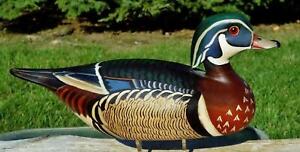
Sold on eBay February 5th, 2024