

MINT ~RARE PREENER ~SIGNED c1980 CHARLIE JOINER "DRAKE" Wood Duck Decoy MARYLAND
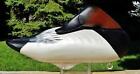
MINT ~RARE PREENER ~SIGNED c1980 CHARLIE JOINER "DRAKE" Wood Duck Decoy MARYLAND
SOLD $610.00 Sold: Aug 12, 2024 on eBayOriginal Listing Description
MINT, PRISTINE & RARE "PREENING" 100% ORIG. CHARLIE 'SPEED' JOINER "SIGNED & CITY & STATE" BOTTOM INSIGNIA ~c1980 AMAZING DRAKE CANVASBACK GUNNING DECOY with the HEN MATE also on ebay ~AWESOME "SOLID CEDAR" & SUPERB CARVING, STYLE, FORM & RELIEF CARVED BILL ~ORIG RIGGING: LEAD BALLAST WEIGHT, RING & STAPLE LINE-TIE ~SCARCE 44-YEAR OLD BIRD is STUNNING & PERFECT with NO CHIPS, DENTS, CRACKS & AN ORIGINAL AGE LINE FROM DAY IT WAS MADE ~AWESOME MELLOW & AGED DRY PATINA ~HEAD & ALL RIGGING is TIGHT AS THE DAY DECOY WAS MADE ~OUTSTANDING "WARD STYLE" STIPPLED, DAUBED & SWIRLED 3-DIMENSIONAL FEATHER PAINT TO ENTIRE HEAD DETAIL ON BACK, ALL WING DETAIL and MITCHELL CLEAN & CONCISE ON THE BREAST, BOTTOM & BILL ~PERFECT PAINTED EYES & ALL NAILS TO ATTACH HEAD ARE INVISIBLE ~HEAD & RIGGING AS TIGHT AS IF MADE YESTERDAY ~PERFECT CONFLUENCE OF MADISON MITCHELL & WARD BROS. STYLE, FORM & PAINT ~LIFE-SIZED & HEFTY 3-LB. DECOY A MUST FOR ANY HIGH END COLLECTION OF THE BEST EAST COAST DECOYS! MINT ~RARE PREENER ~SIGNED c1980 CHARLIE JOINER "DRAKE" Wood Duck Decoy MARYLAND MINT ~RARE PREENER ~SIGNED c1980 CHARLIE JOINER "DRAKE" Wood Duck Decoy MARYLAND Click images to enlarge Description (below photo): From 1941 to 1945 Charlie Served in the U. S. Navy’s Construction Battalion or “SEABEES” Building Airstrips on Islands in the Pacific Theatre of War from New Guinea to the Philippines. UPPER CHESAPEAKE BAY CARVING LEGEND..... CHARLIE "SPEED" JOINER Birth Name:.... Charles William "Charlie" Joiner Jr. (born): July 19, 1921 (died): March 13, 2015 (Age 93) of Chestertown, Maryland (below photo): Chestertown, Havre de Grace, Crisfield and the Upper Chesapeake Bay! Charlie Joiner Lived in Chestertown, Maryland; a Short Drive to 3 of His Best Friends: Madison Mitchell in Havre de Grace; and Mentors' Steve and Lem Ward in Crisfield, Maryland! (MAP SHOWN ABOVE): This MAP SHOWS WHERE CHARLIE "SPEED" JOINER, MADISON MITCHELL, the WARD BROTHERS and OTHERS ....... They SPENT their ENTIRE LIVES MAKING DECOYS, HUNTING and ESTABLISHING the AREA as ONE of the COUNTRY'S MOST IMPORTANT WATERFOWLING AREAS for CARVING WOODEN BIRDS & GUNNING WILD ONES! (below photo): ..HISTORIC 1983 PHOTO of CHARLIE JOINER with 2 of the MOST IMPORTANT FRIENDS & MENTORS in his CARVING CAREER & LIFE; (left to right): Charlie Joiner and "Madison Mitchell" Standing; "Lem Ward" in Front. Lem Ward Passed Away a Year Later in 1984! ? This is the Last Photo of the 3 of them Together! ? ______ (Below Photos): This AMAZING "VERY SCARCE" & "MINT", Outstanding c1980 "SIGNED & Hand-Written Hometown", Charlie 'Speed' Joiner ........... Solid-Cedar, Fully-Rigged, PREENING POSED DRAKE CANVASBACK Decoy Up for Auction!! Madison Mitchell's "Havre de Grace" Round Body Form -with- Lem & Steve Ward's Thick Stippled & Feathery Paint Detailing!! ______ (Below Photos): ..SUPERB STIPPLED, DAUBED & SWIRLED "WARD BROTHERS" INSPIRED FEATHER PAINT TO HEAD, BACK & WINGS ...... and CLEAN & CONCISE "MADISON MITCHELL" DRAKE PAINT on the BREAST, BOTTOM & TAIL!!! "WARD BROS." STYLED RED-BROWN & BLACK FEATHER BLENDING to HEAD -and- GRAY BACK FEATHERING; BLACK, GRAY & WHITE WING SECONDARY & PRIMARY FEATHERS -and- GORGEOUS, CLEAN & PRECISE "MITCHELL" STYLED WHITE & BLACK SPECULUMS and SOLID BLACK BREAST & TAIL!! (Below Photos): The Bottom of this Drake Canvasback Shows Madison Mitchell's Typical "Style" of Rigging that Includes: .... Perfectly Tight & Like-New, Lead Ballast Weight and "Staple & Ring" Line-Tie!! NOTE: The Picture Below is of the Signature & Written Home Town on the Bottom of this Canvasback up for auction. NOTE: The "SIGNED NUMBER 129" on this DRAKE, that is the Collection Number Assigned By the Collector ........ It is Important to See on the Decoy Below Which is the SIGNED 129" Used on the Hen Mate also on ebay with the Matching Collector's Number: NOTE: The "SIGNED NUMBER 129", Which is Prominently on the HEN CARVING & RIG-MATE also up for auction: (Below Photos): Also, Charlie Joiner's Trade-Marked Signature, Spelled City and State ...... all Done with a Black, Permanent Sharpie Like All His Signatures!! _____ \ (Below Photos): The HEAD of this RARE & MINT "PREENING" DRAKE CANVASBACK from SEVERAL ANGLES and to SEE the AWESOME RELIEF-CARVED "MITCHELL" MODELED HEAD that is PAINTED USING the "WARD BROS." STYLED RIPPLED PAINT to the ENTIRE HEAD & NECK!! INCREDIBLE INCISED HEAD/ BILL SEPARATION with PERFECT VERY LONG "CANVASBACK" BILL and "RIPPLED" FEATHERY PAINT to FACE ........ and YOU CAN SEE "EVERY SINGLE PAINT BRUSH MARK" on this ENTIRE DECOY!!! ALSO NOTE the INCREDIBLE & PRECISELY PAINTED RED "CANVASBACK" EYES & VERY SHARPLY-TURNED, "FAR-REACHING" HEAD POSTURE ?........ The VERY LONG PREENING HEAD & NECK is a .... HUGE: 8" LONG & EXTENDS ALL of the WAY BACK from the BREAST to the SPECULUM & SECONDARY WING FEATHERS!!! ? ______ (photo below): RARE, 100% ORIGINAL & AMAZING EXAMPLE of One of his RARE POSES, a GRACEFUL YET MUSCULAR-NECKED "PREENING CANVASBACK DUCK" ...... STUNNING FORM & MAGNIFICENT, PRECISELY PAINTED with "STUNNING VERY FINE DETAIL-PAINT" ....... SPECTACULAR CARVING; ESPECIALLY the LONG-REACHING NECK & HEAD and PERFECTLY SYMMETRICAL CONTOURED BODY ....... and the HEAD & ALL of the RIGGING ARE AS "TIGHT-LIKE NEW" on this MINT CONDITION DECOY!! (photos below): Just Look at the Stunning Detailed Carving and Paint From Top & Bottom Angles and From Different Directions!! PLUS: This DRAKE is in an IMPOSING POSE with its "MUSCULAR NECK" that is "STRAINING" & DETERMINED to PREEN ALMOST BACK to HIS WING TIPS! NOTE: This First Group of Photos are From the Upper Left and Angled Downward: NOTE: This 2nd Group of Photos are From the Upper Right and Angled Downward: ________ (Below Photos): This MINT & RARE "PREENING" DRAKE CANVASBACK SHOWN with the EQUALLY MAJESTIC MINT & EVEN RARER HEN that is also on ebay!! They MAKE a REMARKABLE & STUNNING PAIR as THEY WERE "CARVED TOGETHER at the EXACT SAME TIME and as a MATED PAIR" ........ with the EXACT SAME & COMPLIMENTING "REACHING HEAD & NECK" POSITIONS .......... POSSIBLY EVEN a SPECIAL ORDER as THEY ARE that INCREDIBLE!!! THEY ALSO "COMPLIMENT EACH OTHER" in a SPECTACULAR WAY as: "This PAIR are BOTH REACHING to the SAME TAIL PART" ............ SO THAT: "REGARDLESS of HOW YOU DISPLAY THEM; THEY LOOK AMAZING"!! THEY ALSO LOOK "SPECTACULAR TOGETHER" BECAUSE they HAVE the IDENTICAL SIZE & WEIGHT: ? This DRAKE CANVASBACK & the HEN BOTH MEASURE: 13-3/4" long. ..x..66" wide ..x.. 7-1/4" tall ? Each Weighs a Very Strong & Solid: .... 3-lb. Each _ THAT is FANTASTIC & Makes for a PERFECT PAIR of Carving & Rig-Mates at the Exact Same Time!! That Makes for an Awesome Pair of Very Unique Gunning Decoys that are From the Same Man's Hands & Made at the Same Time .......... as Both are Extraordinary Examples of His Enormous Ability & Out-of-the-Box, Creativity!! ______________________________ The "Very Rare", "Mint & Amazing Condition", 100% Original, "Very Scarce Preening-Posed" Charlie Joiner Drake Canvasback Solid Cedar Wood Duck Decoy: "MINT & STUNNING", 100% ORIGINAL; "SIGNED & WRITTEN CITY & STATE"; "WARD BROS. & MADISON MITCHELL MODELED"; SOLID-CEDAR; c1980 CHARLIE "SPEED" JOINER; ABSOLUTELY INCREDIBLE PATINA & STUNNING PAINT; "44-YEAR OLD"; "SCARCE PREENING-POSED" DRAKE CANVASBACK; WOOD DUCK DECOY; CHESTERTOWN, MARYLAND; SUSQUEHANNA FLATS (Eastern Upper Chesapeake Bay) This AMAZING "PREENING" DRAKE CANVASBACK GUNNING DECOY was CARVED LIFE-SIZED and ROUND BODIED & BOTTOMED!! ? This Life-Size and Round Bodied Style of His Decoys are His Most Sought After Work!! ? STUNNING ORIGINAL PAINT and CARVING on this VINTAGE GUNNING DECOY with AN INCREDIBLE, PERFECT PATINA!! EXCELLENT FORM & RARE STYLE on ONE of His VINTAGE DRAKE CANVASBACK GUNNING DECOYS as this DECOY was MADE WHEN WOODEN DECOYS WERE STILL SOMEWHAT BEING USED for HUNTING!! AWESOME "SOLID CEDAR" DECOY & AWESOME CARVING, STYLE & FORM with a MARVELOUS & PERFECTLY AMAZING "CANVASBACK" BILL!! ? AWESOME STIPPLED, DAUBED, SWIRLED & STRAIGHT-LINE, BRUSH-STROKES of a CONFLUENCE of MITCHELL & WARD BROS. PAINT -and- VERY FAR-REACHING HEAD & NECK PREENING POSED , REACHING BACK to its FAR "LEFT" WAY DOWN the BACK TOWARD the TAIL!! A). SUPERB STIPPLED, RIPPLED & SWIRLED FEATHER PAINT to HEAD, BACK & WINGS and CLEAN & CONCISE on the BREAST, BOTTOM, TAIL & BILL!! B). BLACK & RED-BROWN STIPPLED & SWIRLED FEATHERING to ENTIRE HEAD ..........GRAY STIPPLING to the BACK BACK .......... BLACK, GRAY & WHITE SECONDARY & PRIMARY WING FEATHERING that GOES ALMOST ALL of the WAY to the UPSWEPT TAIL TIP ......... NICELY ARCED BLACK & WHITE SPECULUMS!! C). EXTRAORDINARY CLEAN-LINED, SOLID BLACK BLACK BILL, BREAST & TAIL PAINT with SNOW WHITE SIDES & BOTTOM with SNOW WHITE BACK with FAN-BRUSHED GRAY FEATHERING MUCH LIKE a MADISON MITCHELL DECOY BUT FANCIER!! Vintage Hunting Decoy & His Very Best, Working Bird Style with His Nice, Very Long, Yet Stout, Amazingly Contoured Body Style and Form!! ORIGINAL RIGGING is also MINT & TIGHT LIKE NEW -and- 100% ORIGINAL: ? NAILED-ON, CAST LEAD BALLAST WEIGHT -and- "ZINC-COATED" STEEL "STAPLE & RING" LINE-TIE!! ? The HEAD/BODY SEAM & ALL RIGGING SEAMS are as SUPER TIGHT and PRISTINE as the DAY this DECOY Was MADE!! ? ? This HARD-TO-FIND, SOMEWHAT OLDER, DRAKE CANVASBACK SHOWS INCREDIBLY ....... "NOT A SINGLE" PAINT SMUDGE, CHIP, DENT or EVEN a PAINT BRUSH HAIR in the PAINT ..... It WAS CERTAINLY BABIED in the EAST COAST COLLECTION it CAME FROM!!! Even the "WOOD STOCK HE USED" for this Drake Canvasback and the Hen also on ebay is "ABSOLUTELY PERFECT" ......... It is "NO.1 GRADE WOOD" that Was Used for this Amazing Pair of Decoys!! EVEN the WEIGHT & LINE-TIE are AWESOME with ONLY a VERY TINY RUB to EACH WHICH is QUITE TYPICAL & OUTSTANDING on its OWN!! This DRAKE CANVASBACK Has an INCREDIBLE & VERY APPEALING, VERY DRY, MELLOW-AGED PATINA! ALTHOUGH PROLIFIC, PHENOMENAL and NOT OFTEN SEEN PREENING CANVASBACKS LIKE this DECOY are ALWAYS a RARE & SURPRISING FIND!! ? ? __________________________________________ OVER the YEARS, CHARLIE JOINER'S CLIENTELE INCLUDED ...... "ADMIRALS", "POLITICIANS" and "MILLIONAIRES", YET OBVIOUSLY his TYPICAL BUYER was a REGULAR HUNTER Looking for QUALITY DECOYS at a Fair Price. But Nevertheless, CHARLIE JOINER'S Decoys Found their Way into Some Notable Rigs, INCLUDING: "MEMBERS of the DuPONT FAMILY" CHARLIE JOINER also SOLD Decoys to "MAINE SENATOR ED MUSKIE", "BASEBALL LEGEND TED WILLIAMS" -and- "PHILADELPHIA PHILLIES OWNER BOB CARPENTER" and MANY other NOTABLE CUSTOMERS. ____________________________________________ It was Roy Walsh’s 1960 book "Gunning the Chesapeake", featuring a photo of "Charlie Joiner at Work" ...... with a Glowing Description of his Birds, that Brought “SPEED” his First Taste of National Fame, along with Hundreds of Orders ....... But it was Just the Beginning of his Legendary Status as One of the Best!! ANOTHER SOURCE of FAME & RECOGNITION for CHARLIE JOINER HAPPENED WHEN ........... To Encourage & Promote Leisure Travel in the 1940s and 1950s, Several Automakers Published Colorful Periodicals for the Drivers of their Cars. And "Charlie Joiner" was Featured in 2 of these, including a 1964 Issue of "Ford Times and a Mid-1960's Issue of "Chevrolet Friends Magazine". “The Magazine had a Back Page Feature where People Around the Country could Write-in about their Hobby"; Charlie once Remembered: “Well, one of my Neighbors Insisted that I do it, and Although I Didn't Want to, She took the Pictures & Sent Them in and Sure Enough they Ran it. You Wouldn't Believe the Mail I Started Getting. People from as Far Away as California, Arizona and Montana, and then Every State Back to the East Started to Write Me Letters Asking about my Decoys.” ____________________________________________ This is a Perfectly Symmetrically Carved & Painted Vintage Charlie Joiner Drake Canvasback Solid-Cedar, Lathe-Formed (Likely in Mitchell's Shop) Wooden Gunning Decoy! The ONLY TIME that this Decoy "EVER SAW WATER" was Was When Charlie Joiner in a Vat to "TUNE IT" By Adjusting Where the Ballast was Nailed On so It Would Swim with Perfection in a Hunting Rig!!! STRUCTURALLY PERFECT HEAD & NECK with ALL NAILS PERFECTLY INTACT and TIGHT AS IF MADE YESTERDAY WITHOUT a TYPICAL NECK CHECK or NAIL POP that YOU QUITE TYPICALLY FIND on UPPER BAY DECOYS as they are INHERENT to the CONSTRUCTION METHOD!!!?? ? All Nails to Attach the Head Were So Perfectly Countersunk and Topped and Sanded with Filler You Can't Even Tell Where One of the Nails Is Even Located!!! __________________________ ? (Below Photos): CHARLIE JOINER DIVER DECOYS! ~ Included in the Photos of his FULL-SIZE DECOYS are his MARVELOUS MINIATURES!!! The 1st Photo is of a Pair of Joiner's Canvasbacks, Similar in Style & Form to this Amazing and Rare Preening Canvasbacks up for auction: (Below Photos): CHARLIE JOINER PUDDLE DUCK DECOYS, Included in the Photos of his FULL-SIZE DECOYS are his SUPERB MINIATURES!!! ______________ (Below Photo): Charlie Joiner Shown Throwing Out Decoys on the Chester River for the Last Time ...... This was the Cover Photo for the 1987 Havre de Grace Festival's Program Where Charlie Joiner was Duly Honored!! (Below Photos): As a TRIBUTE to CHARLIE'S CELEBRATED CAREER, He was CHOSEN as HONORARY CHAIRMAN for the 1987 HAVRE de GRACE DECOY FESTIVAL!! BELOW are PICTURES of CHARLIE JOINER at the 1987 FESTIVAL!! SHOWN HERE with a Display of his FULL-SIZE DECOYS, MINIATURES -and- One of CHARLIE SIGNING a DECOY for a YOUNG ADMIRER!! ________ "MINT & VERY RARE", 100% ORIGINAL; "SIGNED & WRITTEN CITY & STATE"; "FULLY-RIGGED"; SOLID-CEDAR; c1980 CHARLIE "SPEED" JOINER; ABSOLUTELY INCREDIBLE PATINA & STUNNING PAINT; "44-YEAR OLD"; "RARE PREENING-POSED" DRAKE CANVASBACK; WOOD DUCK DECOY;? ? Very Nice, Very Old Dry Paint with a Beautiful, Clean and Crisp Patina!! ? AWESOME LATHE TURNED DECOYS that WERE THEN FINISHED with KNIVES, HAND TOOLS & SANDPAPER and MADE with PERFECTION!! These Awesome Decoys were Made to Swim & Perform with Perfect Realism!! Plus .... Their Large Size & Buoyant, But Realistic Swimming Weight, Depth & Design Made them Visible from Huge Distances, and their Heavy Weight Kept them Riding Perfectly & So Well Weighted they Were Hard to Flip & Righted Themselves Immediately Even in the Roughest of Water!! ? ? GREAT THICK, 100% ORIGINAL PAINT on this AWESOME, OLD GUNNING DECOY with GREAT PATINA!! ? SUPERB FORM & TRULY ONE OF HIS VERY BEST, LONG-NECKED, BACK-REACHING, PREENING CANVASBACK GUNNING DECOYS!! ? All ORIGINAL & You Could HUNT OVER This 44-YEAR OLD DECOY TODAY and LOSE NO PERFORMANCE from the DAY THAT IT WAS MADE!! DON'T MISS OUT on this Truly Great Upper Chesapeake Bay Gunning Bird with a Distinct Eastern Shore, Ward Brothers Influence & Style of Paint!! ? IF YOU are a FAN of GREAT GUNNING DECOYS that DID EXACTLY what they WERE MADE TO DO, This is a GREAT DECOY to add to YOUR COLLECTION!! Awesome Rear-Aimed, Straight Head & Neck Flows Perfectly From the Top of the Breast "Flawlessly" with Absolutely No Loss of Flow!! The Awesomely Carved Bills on these Desirable and Scarce Canvasbacks have Crisply Carved Bill/Head Separation and the Bodies Were Made with a Perfectly Rounded Breasts that Begin with an Undulating Form that Rises and Widens Near the Rear and then Tapers Down and Up to the Upswept Tail! ? The Dimensions & Weight are Perfect & Typical for Solid-Bodied, Solid-Cedar, "Charlie Joiner" Large Diving Duck!! This Drake Canvasback Clearly Shows That It Came from Climate Controlled, Direct Light-Free Collection or Collections It Has Been Kept in Over the Many Decades and Almost Half of a Century That It Has Been Carefully Cared For In!! ? If You Like Important Decoys from the one of the Most Famous Decoy Carvers Chesapeake Bay Carvers Ever, that Are in Outstanding, 100% Original, Never Gunned-Over Condition ....... THIS IS A GREAT DECOY FOR "ANY" COLLECTION!! _______ The STUNNING HEN RIG-MATE to this DRAKE is ALSO on EBAY if you are LOOKING for a STUPENDOUS 100% ORIGINAL, MINT CONDITION & VERY SCARCE PAIR of VINTAGE GUNNING MATES This Stunning Drake Preening Canvasback and the Hen also on ebay both Measure Exactly: 13-3/4" long x 6" wide x 7-1/4" tall -and- Both weigh a Very Hefty: 3-lb. each That is FANTASTIC & Makes for a "PERFECT PAIR" of CARVING and RIG-MATES that Were MADE at the EXACT SAME TIME!!! ? ? That Makes for an Awesome & Exceedingly Rare Pair of Very Unique Gunning Decoys that are From the Same "World Renowned" Carver and Made at the Exact Same Time!! That Makes for a Superb pair that Have Been Together Since They Were Made and Clearly in the Protection of Climate and Light Controlled Collections Since they Left Charlie Joiner's Workshop!! Like Everyone, Charlie Joiner Got Better & Better Over Time; But He Usually followed the Same Patterns, Style, Form, Paint, Rigging, Weight and Size From any Given Time Period, Even on the Various Species they All Usually Share the Same Attributes if From the Same Period of His Carving Career! He Did this SO MUCH SO THAT the DIMENSIONS & WEIGHT of the SPECIES of CHARLIE JOINER'S DECOYS are Usually CLOSE to the SAME! __________ RARE: CHARLIE JOINER'S DECOYS are SOME of the NICEST BALANCED, SYMMETRICALLY CRAFTED and OUTSTANDING CARVED and PAINTED ROUGH-WATER DECOYS MADE on the EAST COAST in the 20th CENTURY! A Perfect Specimen of a Beautiful Species, "King of Ducks" Diving Duck Hunting Block Made by one of The Best Gunning Decoy Carvers & Painters to Ever Call the Upper Bay Home!! This DECOY is PAINTED in It's FULL WINTER COLOR SCHEME and How We Usually See CANVASBACKS During the LATER PART of the HUNTING SEASON in MICHIGAN ...... But During MILD WINTER'S Like this YEAR a Great Many STAY HERE as LONG as They Can GET to FOOD & the Water is STILL OPEN!! This DECOY Has the NICEST BILL & HEAD CARVING -and- BODY SHAPE & FORM -and- Some of the Most Extraordinary Work You Will See on One of His Finest Decoys!! EXCEPTIONAL PATINA to the BEAUTIFUL, OLD DRY 100% ORIGINAL OIL PAINT!! If You Like "RARE" & "UNIQUELY POSED" Decoys from FAMOUS MASTER CARVERS and Are in "MINT CONDITION" ........ THIS is a VERY VALUABLE DECOY to ADD to Your COLLECTION!! ______________________________________ DON'T MISS OUT ON THIS OUTSTANDING & SCARCE DECOY: This Drake Canvasback and the Hen also on ebay Show That they Came from the Climate Controlled, Direct Light-Free Collection they Have Been Kept in for the Many Decades & Almost Half a Century that they Have Been Carefully Cared For In!! ? _______________________________________ IN THE NEXT FEW WEEKS I AM PUTTING ON EBAY MORE LAWRENCE BETHEL FISH DECOYS, A PAIR of MINT SIGNED CHARLIE JOINER CANVASBACKS, A PAIR OF THE ONLY KNOWN PROTOTYPES MADE OF THE VERY FIRST PRE-PRODUCTION FIBRE DECOYS EVER MADE, A NEAR MINT 1927 HEDDON GIANT VAMPIRE FISHING LURE IN RARE SHAD, A PAIR of LATE PHASE DODGE MALLARDS, EXQUISITE AND RARE PAIR OF "SPECIAL ORDER" MALLARDS, A RARE PAIR OF RALPH MALAPAGE GREEN-WINGED TEAL, A VERY RARE c1893 100% ORIGINAL TRANSITION PERIOD MASON DRAKE BUFFLEHEAD, A MINT RALPH MALPAGE CANADA GOOSE GUNNING DECOY, A MINT c1905 HEDDON ARTISTIC MINNOW, A VERY RARE PADCO OF MISSISSIPPI GOLDENEYES, A YELLOW WITH RED EYE BLUSH MOONLIGHT SINGLE-HOOK PIKAROON, A NIB CREEK CHUB MULLET COLOR STRIPER PIKIE IN CORRECT BOX, A PAIR of INCREDIBLE CHALLENGE GRADE MASON BLUE-WINGED TEAL, A NICE PAIR OF MASON GLASS EYE BLUEBILLS, AN AWESOME ERNIE NEUMANN SUCKER FISH DECOY, A RARE DOUBLE SPECIAL CREEK CHUB BEETLE FISHING LURE, A VERY NICE ERNIE NEUMANN SUCKER, A RARE 12-1/2" CHET SAWYER MINNESOTA FISH DECOY, A NEAR MINT OSCAR PETERSON PERCH FISH DECOY, A MINT PAIR OF WRAGG & BURRELL WIGEON, AN OUTRAGEOUSLY HARD TO FIND PAIR OF CHARLIE POZZINI BLUEBILLS, A CHET SAWYER 13" CHET SAWYER FISH DECOYS, A VERY BIG & BULL-NECKED EARLY FERDINAND BACH DRAKE CANVASBACK FROM HIS PERSONAL RIG AND MORE!! ? Shipping Includes Insurance! I Don't Believe in Making a Profit on Shipping, You Pay What I Pay. If it's Less Than You Paid I Refund the Difference, If More I'll Pay For It. I COMBINE SHIPPING. I am also loading over 150 Duck Decoys, 150 Fish Decoys, 70 Scarce Fishing Lures, etc. so keep checking back. __ This "STUNNING & SCARCE "SPEED" JOINER DECOY up for auction..... ITEM DESCRIPTION: This 44-Year Old "Drake Canvasback" was Carved and Painted by Charles "Charlie" or "Speed" Joiner (born: July 19, 1921 - died: March 13, 2015) of Chestertown, Maryland. Chestertown is a town in Kent County, Maryland, United States. The population was 5,252 as of the 2010 census and it is the county seat of Kent County. Founded in 1706, Chestertown rose in stature when it was named one of the English colony of Maryland's six Royal Ports of Entry. The shipping boom that followed this designation made the town at the navigable head of the Chester River wealthy. In the mid-eighteenth century, Chestertown trailed only Annapolis and was considered Maryland's second leading port. A burgeoning merchant class infused riches into the town, reflected in the many brick mansions and townhouses that sprang up along the waterfront. Another area in which Chestertown is second only to Annapolis is in its number of existing eighteenth century homes. As of the 1790 census, Chestertown was the geographical center of population of the United States. Chestertown was incorporated in 1805, and was named for the Chester River. (Below Photo): Charlie Painting a Canvasback Using His Typical Clam-shells as his Palettes, a Trick of the Trade he Picked Up from Lem & Steve Ward ....... He Said the Paint Color was Easy to See When it Dried, So it Was Easy to Mix Some More Up When You Got Back to that Color! Charles William Joiner was born on July 19, 1921 to Charles and Lena Luike Joiner. Charlie, as he was known, was born and raised in Betterton, Maryland, a waterfront community overlooking the confluence of the Sassafras, Elk and Susquehanna Rivers. It was here that Charlie Joiner developed an early love for the outdoors and the bounty of the land and water around him. Originally established as a fishing village in the mid-1700’s, by the turn of the 20th century, Betterton had exploded into a prime summertime resort and a favorite destination for mid-Atlantic urbanites looking for respite from the heat. “We had about 300 people in the winter", Charlie Joiner once recalled of Betterton in the 1920's and 1930's. "But probably 3,000 during the summertime. People came from everywhere", Charlie added. He vividly remembered the hotels and restaurants, concession stands, beer gardens and movie theaters, the dance halls, bingo parlors and bowling alleys. By the 1940's, however, with vast improvements in transportation providing easier access to ocean beaches and Betterton’s heyday was over. Charlie Joiner inherited several things from his father: a love of and respect for the outdoors, the profession he would master over the next 40 years and the nickname he would have until the day he passed away. “Everyone called him Speed,” Charlie once said of his father. “I never knew what it meant or where he got it, but when I came along, they started calling me Speed too. He was ‘Big Speed’ and I was ‘Little Speed’”. Growing up, Joiner loved to fish and when he was about 12, he started to hunt small game in the woods and fields near home. Around 1937 he and some childhood friends turned their interests to waterfowl and began gunning for marsh ducks. Unable to afford wooden decoys, Charlie and his friends fashioned their own from old gallon-sized antifreeze cans. “Back then, every fall, everybody would get Prestone put in their radiators.” Joiner explained, “and the garage chucked ‘em out on a pile and we’d go pick out 12 or 15 of ‘em. We’d take ‘em home, solder up the holes they punched in them, paint ’em flat black and tie a string around ‘em. They worked just as well as the best decoy ever made.” Charlie Joiner was first exposed to wooden decoys as a boy in the 1930’s, finding derelicts from the Upper Bay. “I used to walk along the shoreline in Betterton and find decoys. Betterton is directly across from the Susquehanna Flats and with that northeast wind they'd come. They had rigs of 400 birds, and if a string broke and one drifted off, they'd never miss it. You could always count on finding at least two or three every time, but sometimes I’d find as many as five or six, some of ‘em good, some of ‘em not so good. They were mostly canvasbacks, what we call river ducks or bay ducks.” These decoys were put to good use on the nearby Sassafras River. Charlie Joiner attended the local elementary school and graduated from Chestertown High in 1938 (Betterton was too small to have its own secondary school). While in high school he worked a bit as a sign painter, the first display of his artistic talents. As well as making signs for hotels and restaurants, he also painted the ornate names on the backs of boats at the local harbor. One time a boat was launched before he finished, forcing Charlie to hang over the back and paint the name upside down. Joiner’s first full-time job was working for airplane manufacturer Glenn L. Martin in the paint shop. In the days before aircraft cables and tubing were color-coded, he would paint the cables by hand, different colors denoting fuel lines, oxygen lines, fluid lines, and so on. It only took him a few months (and endless miles of cable) to decide this wasn't the job for him. Charlie Joiner’s father worked as an engineer for the local electric company. Knowing of an opening, he suggested Charlie apply for it. The result was a decades-long career. “Twenty-five cents an hour, that was my starting salary,” he recalled. In 1941 the federal government started building a camp at Aberdeen Proving Ground, just across the bay and not far from Havre de Grace. “They were hiring and offering three times as much money,” Joiner said. “I had enough experience as a lineman, so I took a job there.” Originally, he took a boat between Betterton and Aberdeen, but in the winter months the boat didn't run and it was hours to go around, so he decided to move and got a room in nearby Havre de Grace. “On weekends, I came home to see my parents and go goose hunting with friends,” he said. “We had about 75 silhouette goose decoys, cut them out of plywood. I was boarding with the Springer Family in Havre de Grace, so I took the goose decoys up there to paint them in the evenings when I would have time. But I had never done anything like that in my life. So Mr. Springer said, 'Well, go see Mr. Mitchell right down the alley here. He makes decoys and can probably help you.” And in January 1942, Charlie Joiner did just that and walked to Madison Mitchell's house. “I was scared to death,” Joiner recalled of that first meeting, “because I didn't know how he would take it. I introduced myself and told him of my plight. First I asked him how much Head charge to paint ‘em himself, and I can’t remember for sure, but it seems to me it was something like 50 cents apiece, and well, that was out of the question, definitely out of the question. So we both kind of laughed, and he sent me uptown to the hardware store to get a quart of white paint and about a pint of black. The rest of what I’d need, he said he had plenty of it there. So he got me upstairs - he had a table that was just the right height for painting - and he got his brushes out, mixed up the paint and he painted two. Then he got up and said, ‘There you are, it’s all yours, now sit down and paint the rest of ‘em’. They might not have looked like his, but they did the job.” At the time, Madison Mitchell already had a talented group of assistants working for him in his decoy shop, and Charlie vividly recalled each man’s role in the assembly-line operation: “Ed Sampson made heads, he made a great head. Eddie Mauldin did the body work downstairs, spoke-shaving bodies and running bodies on the machine. And there was a guy named Smitty, a local house painter, who did a lot of priming.” Joiner was in awe of Mitchell and his decoy making operation, and the two developed a lifelong friendship. “I started going back over to help him on the weekends and in the evenings,” he recalled. “During my time there I went through it all, from running the machine, spoke-shaving, sanding bodies, whittling heads.” Many early Mitchell decoys have Joiner’s fingerprints on them, yet he wasn't doing it for the money. “Throughout the whole time, I never took a dime from him. Never took a nickel,” he said. He was so much of a dear friend it was out of the question. (Below Photo): Charlie Joiner and One of the Closest Friends He Had Over his Entire Lifetime, Madison Mitchell! The Two are Chatting it up with Jimmy Pierce and Charlie Bryan: Madison Mitchell was a kind man and a patient teacher to willing disciples, but he was exacting when it came to his decoys and he could be stern and demanding when it came to quality control. Joiner recounts the day he knew his work began to rival that of his instructor. “We were doing a lot of work for a stretch there and I was taking heads home with me by the bushel basket at night to work on. When I’d get ‘em done, I’d bring ‘em back to the shop and every time I took ‘em back, Madison would check ‘em out and pick ‘em apart. He would say I either cut too much out of here, or I hadn't cut enough out of there, but he would say don't worry about it; I can straighten it up with the sander.’ Well, after this had gone on several times, I took a basket of heads back to the shop that I had been working on, and when I went through the shop, I picked up one of the heads that Michell had done. Charlie took it upstairs and asked, ‘how’s that?.’ And Madison looked at it and started picking it apart, and when he got done I said, ‘Well, that's one that you did,” he remembered, smiling. “And when he looked away I'm sure he was grinning to himself.” If Mitchell couldn't tell his own heads from somebody else, Joiner figured he must be doing okay. Only a few years after Charlie Joiner went to work at Aberdeen, Uncle Sam called upon him again, this time to join the United States Navy. “Until I was 20 years old, I was never any further from home that I couldn't look back and see smoke coming out of my chimney,” Charlie joked, “but when the war came, I went from Betterton to New Guinea and the Philippines. I joined the Navy and saw the world.” Indeed he did, spending the next several years in the Navy’s Construction Battalion or “SEABEES” building airstrips on islands in the Pacific. Joiner returned home in 1945 but was on active duty for another year. In 1946, he settled in Aberdeen, working once more at the military installation there. But he could see that they were going to be closing the camp down and didn't want to be out of a job, so he accepted a position with Delaware Power & Light in Wilmington, a job he held for seven years. During this time he moved his family back to Betterton, building a home there in 1950. With the post-war boom came development and traffic, and the commute from Betterton to Wilmington grew each year, so he took a job with Chestertown Power & Light in 1953. He lived in Betterton until 1963, when he built a house in Chestertown. Throughout the 1940's and 1950's, Charlie Joiner and Madison Mitchell enjoyed a special relationship, growing closer and closer through hunting trips, decoy and waterfowl shows and frequent visits to their respective shops. Madison Mitchell appreciated the genuine interest Charlie Joiner showed in his trade as well as the many hours of free labor he gave in exchange for his tutelage. Mitchell fondly returned those favors when Joiner returned from the war. “When I got home, one of the first things I wanted to do was go see Madison. He told me to go look upstairs in the back room of his shop, that there was something up there for me. There was a whole rig of decoys, near a hundred.” Most of the birds were patched up “cripples”, damaged birds with imperfections that Mitchell had refurbished and set aside for him. Joiner quickly put them to good use. “We never exchanged money for anything.” Joiner said, but then recalled one time when they did. “The band-saw I have out in my shop, I did buy that off of him. Back in 1949, Madison had bought it at a used tool place down in Baltimore, and after he got it home, he didn't like it. It’s a left-hand saw instead of a right-hand saw. He was gonna’ get rid of it and I said how much you want for it, and he said, ‘a hundred bucks.’ I paid him right then and there, before he could change his mind.” During those early years in the 1940's & 1950's while working for Madison Mitchell, Charlie Joiner crafted the first decoys that were all his own, the first true “Joiner” decoys. It only took a few more years to realize he could turn his talent and love for the art of decoy making into something more, a way to make a little extra money for his family and to help finance his hunting expenses. The first decoys that Joiner made from start to finish, a small rig of canvasbacks for his own use and two dozen black ducks that he traded for a shotgun, were made in Mitchell’s shop right after World War II, a time when demand for gunning decoys in the Chesapeake Bay region was growing. This demand, combined with his own interest in making decoys, the desire for a little extra income and encouragement from Mitchell, was the catalyst for the launch of his own decoy business in 1950. “When I first met Mr. Mitchell he was charging $1.25 for blackheads, $1.35 for canvasbacks, $1.55 for mallards and $1.65 for pintails. He got that extra dime ‘cause it took more wood for the pintail ….big deal.” he laughed. “By about 1950, Madison was getting $35 a dozen, so I thought, heck, I can get that too. I kept the price the same for 15 years, until about 1965” Charlie added. (Below Photo): A Pair of CHARLIE JOINER'S Very Effective & Realistic Canvasback Decoys Doing their Job Sitting in a Flock of Unsuspecting Wild Canvasbacks Surrounding Them: Charlie Joiner's early patterns were copied from Madison Mitchell’s, which he reworked slightly. In addition to making new decoys, by the early 1950’s Joiner built up quite a business repairing, refurbishing and repainting decoys for area gunners and clubs. It wasn't uncommon for several rigs of several hundred decoys each to be dropped off after hunting season, and for that reason his well-recognized paint patterns are found on hundreds of decoys by other Chesapeake Bay makers today. In the 1940’s, Joiner was making canvasbacks, redheads and blackheads (bluebills) and a few black ducks. “I always said I made 10,000 canvasbacks, redheads and blackheads before I made my first mallard. Nobody fooled with anything else at the time, as there wasn't the need. Early on, since I was making gunning decoys, collectors weren’t after ‘em then, so I only made species that was hunted around here” he said. By the 1950’s he branched out into other species on a special order basis, turning out Canada geese, black ducks, mallards, a few goldeneyes, and a handful of baldpate wigeon and a swan. By the 1960’s, he increased his repertoire, adding blue and green-winged teal, pintails, wood ducks and brant. In later years, he tried his hand at other members of the waterfowl family, offering collectors the opportunity to add his red-breasted mergansers, ring-necks and cinnamon teal decoys to their shelves. (Below Photo): Charlie Joiner and 2 of his Other Closest Forever Life-Time Friends, Lem and Steve Ward .... Charlie Spent Days and Weeks with the Ward's Over the Many Years Learning Everything He Could and Sharing His Thoughts & Ideas with Them as Well! It Showed in Charlie's Work and Ironically a Little of Charlie Joiner Maybe Even Rubbed Off on the Brothers as Well!! Ever the perfectionist and always eager to learn more about his chosen craft, Charlie Joiner decided to pay a visit to the Ward Brothers, whose own fame was quickly eclipsing their quaint hometown of Crisfield, Maryland. “I first went down to see the Wards in the late ‘50s, around ‘58. I went up to the house first and Lem’s daughter Ida was there. She said that Lem was lying down as it was after lunch, but Steve’s out in the shop so go out there and make yourself known. So I went in and Steve was there and he was sanding miniatures and I could see they were blackheads. Steve asked me how I was doing and what my name was, but he must not have really heard me, because I was sitting there talking to him and I said that those blackheads had a really good shape to ‘em", and he told Charlie, 'You must know something about ducks if you can tell what it is before it’s even painted’ and he said ‘What’d you say your name was?’ And Charlie told him and Steve Ward as they said ‘Well I’ll be’ I was surprised, but he had heard of me. And he said ‘Let me go get Lem’ and I said, ‘No, Ida said Lem's layin’ down, he’s not feeling well so I can come back later,’ and he said, ‘No need, that's fine, just wait here, I’ll go get him.’ And when Lem came out, Charlie was tickled to death. After that Charlie and the Ward brothers became very close friends and visited each other often after that. Charlie said that the Ward brothers even stayed at Charlie and his wife Janet's house when the brothers attended the first Havre de Grace Waterfowl shows. Always one with a quick wit, Charlie said that years after that, he had a guy make up a sign that read, 'Lem Ward Slept Here', and that he was going to hang it over the bed that he slept in. (Below Photo): Charlie and the Ward Brothers Became Very Close Life-Long Friends and Visited Each Others Shop and Home as Often as They Could! They Were So Close that Lem & Steve Spent the Night at Charlie and his Wife Janet's House One Night & Years Later Charlie Jokingly had Someone Make a Sign that Read "Lem Ward Slept Here" to Presumably Hang Over that Bed!! Charlie Joiner learned a tremendous amount watching the Ward brothers in their shop, but the lessons, seldom imparted formally, came largely from studying their technique and later emulating it back in his own shop. “They were very open to you, but I don’t remember really questioning them much about what they did or how they did it.” he recalled. “But I could take something they'd painted and look at it with a magnifying glass and I could tell you what they did first, and what they did next, and that's really where I learned to copy from them” he once said. Shortly thereafter, Joiner began experimenting with flat bottom birds carved and painted in the Ward style. For the next 50 years, Charlie Joiner moved seamlessly between the influences of the Madison Mitchell and Ward brothers' styles, occasionally combining and blending them to amazing artistic effect. Charlie Joiner carved well into his eighties, and still mixed his paint in clam-shells, something he picked up from the Ward brothers. “Up in Havre de Grace, we used to mix it up in cans”, he remembered, “but you can mix it better this way. You can see it better and because it leaves some of the color when it dries, you can go back to the same colors you use again and again more easily. And they're disposable. When it gets too bad, you just chuck’em.” When Charlie once reflected on his talents as a decoy painter he said, “The Wards told me to just keep at it, process of elimination, trial and error.” So when it is all said and done, it isn't any wonder that Joiner would come to embody skill, art and craftsmanship in wood. As Charlie's surname indicated, an English fore-bearer also made his trade in woodworking, so one could argue that the ability was very much in Charlie's blood. No surprise then that he used time-honored methods to craft his decoys. After cutting out the profiles on a saw, he used a draw-knife, spoke shave, wood rasp and whittling knife to evoke the birds waiting in the blocks. He used a belt sander to shape and smooth the wood. Madison Mitchell helped pioneer its use; realizing how much time and effort could be saved he developed the model for the belt system that most makers still use today. Madison Mitchell took a group of cut out heads home with him during lunch one day, Joiner recalled, and came back with them all finished. Even Bob McGaw was impressed, he remembered. (Below Photo): Charlie Whittling One of His Outstanding Heads that He Learned How to Make By Running His Early Efforts by Madison Mitchell to Get His Thoughts on His Progress! The look of Charlie Joiner’s round-bottomed Havre de Grace style decoys changed little over the last six decades that he carved, but he always was experimenting, making subtle improvements to both carving and paint. His earliest decoys, made on Mitchell’s patterns and in Mitchell’s shop, are nearly from his mentor’s. Some of his early 1950's canvasbacks, which feature bills with “Roman” style noses reminiscent of Jim Currier’s decoys, also exhibit a stylized waviness to the back father painting. Charlie's later decoys feature bills of slightly varying widths, models with painted and glass eyes, more heads in sleeping or preening positions, slightly varying shades of base coat, back feathering in various patterns and they were unique but accurate, adaptations of the Ward brothers’ style paint patterns, But almost exclusively done on Upper Bay body patterns. He also, on a rare occasion, he carved unrigged decorative decoys with flat bottoms to set on a shelf. Painting is where Charlie Joiner’s skills as a decoy maker really shined and his painting is considered exquisite by many collectors. His gunning birds utilized 2 coats of the same color primer as the species, just in case the decoy was dinged or chipped during use. He was first taught to paint under Madison Mitchell and later on after his visits to the Ward Brothers, Charlie studiously watched the techniques and styles of their painting and copied it back at his shop. He would also examine their work using a magnifying glass to better understand their process and see what order of method and technique they employed. Charlie took the techniques and styles of Mitchell and the Ward Brothers, arguably the best decoy painters on the Chesapeake Bay, and combined those styles together with his own embellishments to help create his own unique artistic painting method. He utilized a distinctive trademark curvature in primary wing feathering to the body’s contour that is immediately recognizable. (Below Photo): Another Pair of Charlie Joiner Preening Canvasbacks, Gorgeous But Not Quite Up To Par to This Stunning Pair up for auction!! The Pair Shown also Have Heads that Reach Back in the Same Direction and Pattern, But Complement Each Other and Present Themselves in a Very Cool Way with the Differentiation “Back in the 50's, some of my customers would buy 10 or 12 dozen decoys at a time,” Charlie once recalled. “To me, that was a big deal. For a few years there, I was making 1,200 to 1,500 decoys a year. The only things I had to buy were white pine for the heads, nails and the paint. The wood for the bodies was free since I had access to old cedar poles at the power company. Cedar was the best - it would last a long time. White pine is good too, but it was getting harder and harder to find when I got started” he said. Much later in his career, many of Joiner’s decoys were carved from basswood, but he still made gunning decoys from white pine. “If I know someone’s going to use them for hunting, I’ll use pine. It holds up better, works better on the water”, he said at the time. (Below Photo): A Pair of Amazing Charlie Joiner Miniature Balsa Canvasbacks that Charlie Carved that He Modeled After Flat-Bottomed Full-Size Ward Brother Decoys Using their Carving and Paint Style as Well!! While Charlie's nickname "Speed" had nothing to do with his quickness with a paintbrush, Joiner was about as speedy as they came. Having been timed with a stopwatch more than once, he could paint a canvasback drake, from start to finish, in seven minutes flat. The hen, which would require a little more blending, took him about 10 minutes. His famous duck head signature on the bottom of his decoys, was the final touch for a Joiner decoy, and was something he developed around 1970, and as a trademark and it was a work of art in itself. And over the years many collectors brought him his earlier gunning models for this final embellishment, his duck head signature on the bottom. For years Joiner poured his own lead weights using a cast iron mold based on Mitchell’s. Like many Upper Bay makers at the time, he bought his nails from Mitchell, who ordered them in bulk for his own shop and distributed them to others. Most area makers use steel rings and staples, often galvanized or zinc coated, but Charlie usually always used copper. “I’d get my staples at the power company,” he recalls, “steel staples coated with copper. I made my own rings most of the time, from tinned copper wire that I soldered together.” Joiner’s flat-bottomed work is in a league of its own. Having learned the style from Lem and Steve Ward, many believe Charlie’s best pieces rival and even surpass those of his Crisfield mentors. Over the years, he had made most of the species native to the Chesapeake Bay, in both full-sized versions and several styles of miniatures. He began making miniatures, each roughly 8" long, in the 1950's, using balsa from decommissioned liberty ships. Originally, these included canvasbacks, redheads, bluebills, pintails and mallards, and later he added wigeon, black ducks, wood ducks, goldeneye, teal, geese, swan and brant to his mix. Joiner also made Havre de Grace style minis (roughly 5" long) during that time, most mounted on walnut bases, some complete with tiny weights, rings and staples. Miniature canvasbacks, redheads, bluebills and a few mallards and swans are known in this style. (Below Photo): Charlie Joiner's Swans are Few and Far Between, But they are as Graceful and Beautiful as Anything He Made!! In the 1950's Joiner experimented with refrigerator cork, eventually turning out a few hundred decoys. He made two different styles of black ducks, three slightly different styles of geese and three swan decoys for his own rig. All told, he only worked with cork for a few years. “It was a dirty mess,” Charlie recalled, “My cork decoys are out of print now, I don't fool with that anymore.” (Below Photo): Charlie Joiner Used Cork for a Brief Period of Time But Found it Messy, And He was Known to Have Made a Couple Hundred Cork Ducks or Geese in Total! (Below Photo): A Pair of Charlie Joiner Cast Iron, Sink-Box, Canvasbacks that he Painted that Were Sold by the Orvis Company in the Mid-1980's!! Other Joiner rarities include gunning doves, crows, an albino canvasback, flying miniature swans and geese, a mini sink-box rig complete with tiny decoys, cast iron canvasback wing ducks, high-head canvasbacks and even once converted a wooden decoy into a mechanical one driven by a small electric motor with a propeller drive. Occasionally, collectors run across Charlie Joiner canvasbacks made from imperfect blocks, with heavy knots or creosote in them, that he sold as "Seconds". He usually set these aside and kept them for his own use, but occasionally hunters asked to buy them. So Joiner branded them with a large number “2” on the bottom and sold them with no guarantee, but for only $2.50, half his normal price at the time. (Below Photo): Charlie Joiner Sold His Decoys that Had Imperfections or Other Defects as Seconds. He Branded them with a "2" and Sold them for Half the Price of a Regular Decoy!! In the spirit of those first silhouette goose decoys that brought Charlie to Mitchell’s shop back in early 1942, Joiner continued to turn them out on occasion over the years, mainly for hunters but also for collectors. What these two-dimensional plywood birds lack in depth, they more than make up for in Joiner’s expressive paint. Over the years, Charlie shied away from the business end of decoy making, preferring instead to focus his time and energy on mastering his craft. For nearly 40 years, friend and fellow decoy maker Bob Coleman served as his sole distributor. Later, decoy maker Dave Walker managed his sales. “First of all, I wouldn't have the nerve enough to charge the people what these guys pay me,” Joiner said at the time, “I figure, let them do it.” In the 1980's, some of Joiner’s decoys were sold through the Orvis Company. Remarkably, Joiner’s operation was a one-man show for more than 65 years. One early customer, Dick Woollens, helped spoke-shave bodies in trade for decoys back in the 1950's. And Nelson Crew and Nelson Boone, two local friends, helped him repair and refurbish rigs of birds by helping him prime and putty decoys before painting, but that was the extent. “So that means any mistakes are mine,” he said at the time with a chuckle. “I’m downsized now,” Joiner said later in life, reflecting on his recently slimmed-down operations. “I used to maintain a much larger shop, much more space.” Yet he still turned out a number of beautiful, well-made decoys that quickly found their way into the hands of eager collectors. (Below Photo): A Pair of Decorative Charlie Joiner Canvasbacks with Ward Brother Inspired Flat Bottoms as Well as Lem & Steve Ward Inspired Paint Jobs!! During the 1940's and 1950's, Joiner engaged in every type of waterfowl gunning practiced on the bay. Although when bushwhacking was waning on the Susquehanna Flats in the late 1940's, he was able to experience this unique form of hunting with Madison Mitchell. He vividly recalled the first time Harry Jobes took him and Mitchell body booting in the 1950's. “It didn't grab me,” Charlie chuckled, remembering the freezing water, incoming tide and general discomfort. “Jobes said, ‘We’ll have to try this again sometime’, and Charlie said, ‘No thank you. I know easier ways than this to kill ducks,” he laughed. He added, “I only went a couple times and that cured me.” Thinking back to the 1930's, Joiner remembered his first gun. “I cut my teeth on an old L.C. Smith double barrel, side by side. I never shot an automatic until I was in the service,” he said, referring to the M-1 carbine he used while in the Navy. “When I came home, I decided I’d like to have an automatic shotgun for duck hunting, but it was impossible to buy one", he said. So one day Charlie was talking about this over at Mitchell’s shop one night and Madison said he knew someone, an older fellow in Havre de Grace, who had one, a Remington Model 11, for sale. So Madison Mitchell sent Charlie up there to meet the guy and he bought it. It was $75, a lot of money back then. That same gun is now on display in the Havre de Grace Decoy Museum. Charlie Joiner’s earliest goose decoys date from around 1950, and they were made for his own rig and the rig he shared with longtime gunning partners Robert Gears and Joe Ollife. They hunted on a huge estate near Betterton that was the property of Lamont DuPont Copeland, who frequently joined them. Although Joiner never guided professionally, he often invited Madison Mitchell on duck and goose hunts throughout the 1950's. (Below Photo): Charlie Joiner Hunted Geese Near his Hometown of Betterton and Often Invited Madison Mitchell Along for these Outings and they Often Hunted Ducks Together!! Joiner & Madison were So Close, that When Charlie Joiner Gave up Duck Hunting in 1960, Madison Mitchell Essentially Quit Duck Hunting as Well!! Madison Mitchell enjoyed gunning with Charlie Joiner so much, and planned so many of his outings with him, that when Charlie quit hunting in December 1960, Mitchell, for all practical purposes, did too. “1960 was the last year I gunned,” Charlie said, “I just lost the desire to do it. What really put the icing on the cake and made me quit was, I had shot a goose and crippled it. There was skim ice on the water; a boat would push through it okay, but the goose, it wouldn't hold him. And as I pushed along through the ice to get to him, I got to thinking to myself, as many times as that poor bird’s beat its way back from here to Canada, to come here and die a death like that for my sport, well, I quit right then and there. Life is just as precious to that bird as it is to me, and believe me, I’ve seen people killed too”, Charlie trailed off, remembering his wartime experiences. “I told that story one time to Lem Ward when he was visiting and he said, ‘that reminds me of a poem by Truman Reitmeyer called “Remorse” (see below). "After he recited it to me, I copied it down. One of my friends said he’s got copies of it made for me. For years, I gave them out to everyone who came to visit me in the shop", said Charlie. Although he’s told the story a thousand times, the conviction in his voice today is as powerful as it must have been nearly five decades ago. (Below Photo): Once Charlie Told Lem Ward about Wounding a Crippled Goose & Why He Quit Hunting & Ward Told Him of the Poem Shown Below. Charlie Handed it Out to Visitors to His Shop After That! After Charlie Joiner quit waterfowl hunting in 1960, he took up trap and skeet shooting and later, sporting clays. “I figure I'm not hurting anything or anybody.” he laughed at the time. “I still enjoy eating wild game and even though I don't hunt, my friends still bring me rabbits and duck. I love duck and quail. I was raised on wild duck"' he said. Over the years Joiner’s clientele included admirals, politicians and millionaires, but his typical customers were regular blue collar, working class hunters looking for quality decoys at a fair price. But nevertheless his decoys found their way into some notable rigs, including members of the DuPont family. He also sold birds to Maine senator Ed Muskie, baseball legend Ted Williams and Philadelphia Phillies owner Bob Carpenter. His customers also include names familiar to those in the decoy community: “Gunning the Chesapeake” author Roy Walsh, “The Outlaw Gunner” author Harry Walsh, Easton Waterfowl Festival founder Donald Disney Allen, and Eddie Robinson, whose large “ER” brand shows up on a number of Upper Bay birds. Joiner supplied, repaired and repainted Robinson's huge Chester River rig for many years. It was Roy Walsh’s 1960 book, featuring a photo of Joiner at work and a glowing description of his birds, that brought “Speed” his first taste of national fame, along with hundreds of orders, but it was just the beginning. To encourage and promote leisure travel in the 1940s and 1950s, several automakers published colorful periodicals for the drivers of their cars. Joiner was featured in two of these, including a 1964 issue of Ford Times and a mid-60s issue of Chevrolet Friends magazine. “They had a feature on the back page where people around the country could write-in about their hobby,” he remembers. “Well, one of my neighbors insisted that I do it, and although I didn't want to, she took the pictures and sent them in and sure enough they ran it. You wouldn't believe the mail I started getting. People from as far away as California, Arizona and Montana, and from every state back to the East started to write me letters asking about my decoys.” Pioneer collector Bill Mackey was also a regular visitor to Joiner’s shop on his collecting trips through the area, and the brief mention of Charlie and his decoys in his 1965 book, “American Bird Decoy”, kept the orders rolling in. And orders for Charlie's decoys didn't stop for over 40 years. (Below Photo): Charlie Joiner Loved to Experiment, and Below You'll See Carving and Painting Variations that He Wanted to See What they Would Look Like! Many people have wondered how many decoys Charlie Joiner made since he crafted his first metal can decoys in the early 1940's. Joiner kept records only sporadically, but once stated emphatically that he’d “made at least 40,000 ducks” over the years. And he added, “I’ve been making decoys for 66 years,” and joked that it’s “long enough to be better at it.” He smiled shyly and reluctantly when was once told that there are many who believe when it comes to Upper Bay decoys, due to his skill with a paint brush, there simply are none better. Even today, over 8 years since his passing, demand for Charlie Joiner’s work has continue to grow exponentially year after year his decoys and are continually stunning auction observers as they seem to go higher and higher with each and every auction. He enjoyed the nature right outside his door, quiet moments with his wife Janet (3/4/29 -to- 5/18/2018), regular visits from children and grandchildren, and extolled the same enthusiasm on regular visits from fellow decoy makers, aspiring young carvers and decoy collecting enthusiasts alike. Later in life, he often insisted, “I’m as happy as a clam in high tide”. When he reflected on the influence he received from both the top and bottom of the Chesapeake Bay - from Havre de Grace to Crisfield - Joiner noted, “I got a little bit of both and brought it back here. It’s a good combination between the two.” In the spirit of tutelage that Mitchell and the Ward brothers instilled in him, in addition to having secured his own legacy as one of the Chesapeake Bay’s master decoy makers, Joiner helped more than a dozen carvers spanning three generations in their own quests. Some of those men have already achieved greatness, and in turn, many have gone on to teach and influence others. Charlie Joiner had his share of ups and downs over the years, including a few health scares that many would not have endured. For three months in 2001 he was in a coma. His late wife Janet, who was by his side during that difficult period, called Charlie a “miracle man.” And while wives are known to gush over the men in their lives, her words were echoed again and again by everyone who knew him: “He’s such a good man, there’s nothing he wouldn’t do for a friend.” Most would agree that this decent, soft-spoken, humble man is also the most talented decoy maker of his generation. Long an advocate for waterfowl conservation and preservation of the Chesapeake Bay, Joiner understood the need to preserve the region’s history and culture as well. In support of those ideals, he donated hundreds of decoys to the Havre de Grace Decoy Museum, Ducks Unlimited and other nonprofit organizations. His contributions helped raise over $100,000 in support of the Havre de Grace Decoy Museum, where a selection of his carving is on permanent display. Charlie was viewed as a giving man and he often encouraged and helped rising carvers such as Bill Joiner, Charlie Bryan, Bill Schauber, Dave Blackiston and Dave Walker with their decoy making and especially their painting techniques. Charlie also donated hundreds of decoys and time and effort in causes such as Ducks Unlimited and the Havre de Grace Decoy Museum. (Below Photo): Charlie Using a Razor Sharp Draw-Knife that Allows a Carver to "Rip" Large Scathes of Wood with One, Precise Angled Cut!! Years ago, in honor of his fellow servicemen and the aircraft that used the runways that his SEABEE team helped build, Charlie Joiner crafted a huge, incredibly detailed model of a B-17 that really flew. The aircraft was a testament not only to his skill as a builder and painter, but also his mechanical and engineering prowess. Several local and national museums were vying for that plane at the time. On one particular visit to the World War II Memorial in Washington DC, it was an emotional pilgrimage; as Charlie was surrounded by his family and fellow service members, they were able to honor their brothers in arms who never came home. Several years later, and well into his eighties, and looking at least a decade younger at the time, Charlie Joiner still vividly remembered his past. Yet he reflected that few friends able to relate to those experiences were still around. At the time he said, “I look around and I see I'm the only one left. I guess God has a plan for me”. Whatever else that plan included, he still continued to enjoy the warmth of family and the respect of friends. He also intended to continue making his incredible decoys, furthering his legacy as a living legend of the Chesapeake Bay. The great Charlie Joiner led an incredible and long life that was both fulfilling and enriching, and while he passed away at the age of 93 on March 13, 2015, he will long be remembered for being a great family man, self-less individual and one of the best decoy carvers to ever call the Chesapeake Bay region home. The form and detail of this Drake Canvasback and the Hen Carving-Mate also on ebay are pure Charlie Joiner with perfect slightly upswept tails, magnificently contoured bodies and wonderfully flowing necks, heads and bills. This 44-year old pair of hunting decoys have great Have de Grace Madison Mitchell lines, Ward Brothers Inspired Paint and all of the character of his greatest gunning blocks. This extraordinary Drake Canvasback decoy was obviously never used and and it is such incredible condition that it couldn't have been taken any better care of in the collection it came from and where it and its Hen mate have been temperamentally babied over the last 44 years or so in the fine East Coast collection of great decoys they came from. But I am absolutely sure that if this decoy was used today, this awesome decoy would perform as well as if it was made yesterday, and as well as Charlie Joiner's decoys were made and crafted, it would swim with the reality of a real bird on the water; even to this very day you could gun over this Canvasback and it would dramatically out-perform any wooden decoys guy's still use on occasion from any era any certainly considerably better than any factory made decoy currently on the market! But like all of Joiner's work, it was so well made it is Impressive Mint 100% original structural and aesthetic condition. It retains all of the thick and perfectly applied original coat of paint to the entire decoy including the rigging, which has tiny but typical rubbing to the weight and line-tie. And per the normal, the overall condition of this decoy is spectacular and it is 100% Original everything on this entire decoy. The Head and Neck are Perfect and as tight as the day this decoy was made, and every single nail holding the head on to the body is perfectly intact and the paint and countersunk nail hole filler is so secure and original even if you look very closely you would never be able to tell where any of the nails are located, which is actually quite rare and a huge plus for any of the decoys from this area where the stress of picking them up by the neck usually caused at the very minimum a nail to push up the filler a tad. To further describe the great structural condition of this decoy is the awesome condition of the head of this Canvasback as it has a perfect form and shape which give it the statuesque form it has. This Superb Drake Canvasback is Mint and in such perfect condition that even though its roughly 40+ years old, it looks outstanding. When the decoy makers from the region, and exactly like Charlie Joiner, attached the heads to the body with large spike finishing nails hammered into pre-drilled starter holes, they then used a nail punch to drive the nails into the recessed hole, filled the hole with white lead or another filler or putty, sanded it smooth and then painted the decoy. While the vast majority of never used or lightly gunned over decoys never show a nail pop where the nail pushed up and either just raised the white lead up a bit or kicked it out entirely, those that are more heavily used quite often will show some raised white lead or even an entire nail pop. But this Drake Canvasback was rarely even picked up and admired as it doesn't even have a hint of a finger or hand mark and its neck and head are perfect, as is the entire decoy. The superbly inserted head and neck nails are so perfectly intact you can only guess where the nails are probably located. This is awesome and the main reason that this decoy's head is as tight and intact as if it just left Joiner's shop the day before. Charlie Joiner's decoys were made for punishment and almost never even showed signs of failing the challenge of the most brutal conditions expected of a rugged, well made decoy, made by a renowned, historic and quite famous gunning decoy carver and painter. This Drake Canvasback not only shows the quality of Joiner's craftsmanship, but also the care the owner gave this decoy in what was an indoor, temperature controlled environment his decoys were prominently displayed in. The absence of fading to the paint also shows that this decoy was well cared for and that it was added to the collection that is totally free of direct sunlight on the items in the collection and this Drake Canvasback and its Hen Carving-Mate as well. This decoy is in just "Outstanding" condition, the head and all rigging are as tightly attached as the day this decoy was made. The paint is stunning on both decoys and they have only small rubs on the weight bottoms and line-ties from a shelf and the drake has a very hard-to-see and original tight surface age line from a knot while being made, which if anything adds to the aura of this decoy. You just don't often come across Charlie Joiner decoys this old and in this extraordinarily perfect condition as they are quite scarce, which isn't necessarily because they are considered a very uncommon species, its an issue of availability and demand of preening models. Whether as a w
Note: This item has been sold and is no longer available. This page serves as a historical price reference for Duck Decoy collectors and appraisers.
Original Listing Description
MINT, PRISTINE & RARE "PREENING" 100% ORIG. CHARLIE 'SPEED' JOINER "SIGNED & CITY & STATE" BOTTOM INSIGNIA ~c1980 AMAZING DRAKE CANVASBACK GUNNING DECOY with the HEN MATE also on ebay ~AWESOME "SOLID CEDAR" & SUPERB CARVING, STYLE, FORM & RELIEF CARVED BILL ~ORIG RIGGING: LEAD BALLAST WEIGHT, RING & STAPLE LINE-TIE ~SCARCE 44-YEAR OLD BIRD is STUNNING & PERFECT with NO CHIPS, DENTS, CRACKS & AN ORIGINAL AGE LINE FROM DAY IT WAS MADE ~AWESOME MELLOW & AGED DRY PATINA ~HEAD & ALL RIGGING is TIGHT AS THE DAY DECOY WAS MADE ~OUTSTANDING "WARD STYLE" STIPPLED, DAUBED & SWIRLED 3-DIMENSIONAL FEATHER PAINT TO ENTIRE HEAD DETAIL ON BACK, ALL WING DETAIL and MITCHELL CLEAN & CONCISE ON THE BREAST, BOTTOM & BILL ~PERFECT PAINTED EYES & ALL NAILS TO ATTACH HEAD ARE INVISIBLE ~HEAD & RIGGING AS TIGHT AS IF MADE YESTERDAY ~PERFECT CONFLUENCE OF MADISON MITCHELL & WARD BROS. STYLE, FORM & PAINT ~LIFE-SIZED & HEFTY 3-LB. DECOY A MUST FOR ANY HIGH END COLLECTION OF THE BEST EAST COAST DECOYS! MINT ~RARE PREENER ~SIGNED c1980 CHARLIE JOINER "DRAKE" Wood Duck Decoy MARYLAND MINT ~RARE PREENER ~SIGNED c1980 CHARLIE JOINER "DRAKE" Wood Duck Decoy MARYLAND Click images to enlarge Description (below photo): From 1941 to 1945 Charlie Served in the U. S. Navy’s Construction Battalion or “SEABEES” Building Airstrips on Islands in the Pacific Theatre of War from New Guinea to the Philippines. UPPER CHESAPEAKE BAY CARVING LEGEND..... CHARLIE "SPEED" JOINER Birth Name:.... Charles William "Charlie" Joiner Jr. (born): July 19, 1921 (died): March 13, 2015 (Age 93) of Chestertown, Maryland (below photo): Chestertown, Havre de Grace, Crisfield and the Upper Chesapeake Bay! Charlie Joiner Lived in Chestertown, Maryland; a Short Drive to 3 of His Best Friends: Madison Mitchell in Havre de Grace; and Mentors' Steve and Lem Ward in Crisfield, Maryland! (MAP SHOWN ABOVE): This MAP SHOWS WHERE CHARLIE "SPEED" JOINER, MADISON MITCHELL, the WARD BROTHERS and OTHERS ....... They SPENT their ENTIRE LIVES MAKING DECOYS, HUNTING and ESTABLISHING the AREA as ONE of the COUNTRY'S MOST IMPORTANT WATERFOWLING AREAS for CARVING WOODEN BIRDS & GUNNING WILD ONES! (below photo): ..HISTORIC 1983 PHOTO of CHARLIE JOINER with 2 of the MOST IMPORTANT FRIENDS & MENTORS in his CARVING CAREER & LIFE; (left to right): Charlie Joiner and "Madison Mitchell" Standing; "Lem Ward" in Front. Lem Ward Passed Away a Year Later in 1984! ? This is the Last Photo of the 3 of them Together! ? ______ (Below Photos): This AMAZING "VERY SCARCE" & "MINT", Outstanding c1980 "SIGNED & Hand-Written Hometown", Charlie 'Speed' Joiner ........... Solid-Cedar, Fully-Rigged, PREENING POSED DRAKE CANVASBACK Decoy Up for Auction!! Madison Mitchell's "Havre de Grace" Round Body Form -with- Lem & Steve Ward's Thick Stippled & Feathery Paint Detailing!! ______ (Below Photos): ..SUPERB STIPPLED, DAUBED & SWIRLED "WARD BROTHERS" INSPIRED FEATHER PAINT TO HEAD, BACK & WINGS ...... and CLEAN & CONCISE "MADISON MITCHELL" DRAKE PAINT on the BREAST, BOTTOM & TAIL!!! "WARD BROS." STYLED RED-BROWN & BLACK FEATHER BLENDING to HEAD -and- GRAY BACK FEATHERING; BLACK, GRAY & WHITE WING SECONDARY & PRIMARY FEATHERS -and- GORGEOUS, CLEAN & PRECISE "MITCHELL" STYLED WHITE & BLACK SPECULUMS and SOLID BLACK BREAST & TAIL!! (Below Photos): The Bottom of this Drake Canvasback Shows Madison Mitchell's Typical "Style" of Rigging that Includes: .... Perfectly Tight & Like-New, Lead Ballast Weight and "Staple & Ring" Line-Tie!! NOTE: The Picture Below is of the Signature & Written Home Town on the Bottom of this Canvasback up for auction. NOTE: The "SIGNED NUMBER 129" on this DRAKE, that is the Collection Number Assigned By the Collector ........ It is Important to See on the Decoy Below Which is the SIGNED 129" Used on the Hen Mate also on ebay with the Matching Collector's Number: NOTE: The "SIGNED NUMBER 129", Which is Prominently on the HEN CARVING & RIG-MATE also up for auction: (Below Photos): Also, Charlie Joiner's Trade-Marked Signature, Spelled City and State ...... all Done with a Black, Permanent Sharpie Like All His Signatures!! _____ \ (Below Photos): The HEAD of this RARE & MINT "PREENING" DRAKE CANVASBACK from SEVERAL ANGLES and to SEE the AWESOME RELIEF-CARVED "MITCHELL" MODELED HEAD that is PAINTED USING the "WARD BROS." STYLED RIPPLED PAINT to the ENTIRE HEAD & NECK!! INCREDIBLE INCISED HEAD/ BILL SEPARATION with PERFECT VERY LONG "CANVASBACK" BILL and "RIPPLED" FEATHERY PAINT to FACE ........ and YOU CAN SEE "EVERY SINGLE PAINT BRUSH MARK" on this ENTIRE DECOY!!! ALSO NOTE the INCREDIBLE & PRECISELY PAINTED RED "CANVASBACK" EYES & VERY SHARPLY-TURNED, "FAR-REACHING" HEAD POSTURE ?........ The VERY LONG PREENING HEAD & NECK is a .... HUGE: 8" LONG & EXTENDS ALL of the WAY BACK from the BREAST to the SPECULUM & SECONDARY WING FEATHERS!!! ? ______ (photo below): RARE, 100% ORIGINAL & AMAZING EXAMPLE of One of his RARE POSES, a GRACEFUL YET MUSCULAR-NECKED "PREENING CANVASBACK DUCK" ...... STUNNING FORM & MAGNIFICENT, PRECISELY PAINTED with "STUNNING VERY FINE DETAIL-PAINT" ....... SPECTACULAR CARVING; ESPECIALLY the LONG-REACHING NECK & HEAD and PERFECTLY SYMMETRICAL CONTOURED BODY ....... and the HEAD & ALL of the RIGGING ARE AS "TIGHT-LIKE NEW" on this MINT CONDITION DECOY!! (photos below): Just Look at the Stunning Detailed Carving and Paint From Top & Bottom Angles and From Different Directions!! PLUS: This DRAKE is in an IMPOSING POSE with its "MUSCULAR NECK" that is "STRAINING" & DETERMINED to PREEN ALMOST BACK to HIS WING TIPS! NOTE: This First Group of Photos are From the Upper Left and Angled Downward: NOTE: This 2nd Group of Photos are From the Upper Right and Angled Downward: ________ (Below Photos): This MINT & RARE "PREENING" DRAKE CANVASBACK SHOWN with the EQUALLY MAJESTIC MINT & EVEN RARER HEN that is also on ebay!! They MAKE a REMARKABLE & STUNNING PAIR as THEY WERE "CARVED TOGETHER at the EXACT SAME TIME and as a MATED PAIR" ........ with the EXACT SAME & COMPLIMENTING "REACHING HEAD & NECK" POSITIONS .......... POSSIBLY EVEN a SPECIAL ORDER as THEY ARE that INCREDIBLE!!! THEY ALSO "COMPLIMENT EACH OTHER" in a SPECTACULAR WAY as: "This PAIR are BOTH REACHING to the SAME TAIL PART" ............ SO THAT: "REGARDLESS of HOW YOU DISPLAY THEM; THEY LOOK AMAZING"!! THEY ALSO LOOK "SPECTACULAR TOGETHER" BECAUSE they HAVE the IDENTICAL SIZE & WEIGHT: ? This DRAKE CANVASBACK & the HEN BOTH MEASURE: 13-3/4" long. ..x..66" wide ..x.. 7-1/4" tall ? Each Weighs a Very Strong & Solid: .... 3-lb. Each _ THAT is FANTASTIC & Makes for a PERFECT PAIR of Carving & Rig-Mates at the Exact Same Time!! That Makes for an Awesome Pair of Very Unique Gunning Decoys that are From the Same Man's Hands & Made at the Same Time .......... as Both are Extraordinary Examples of His Enormous Ability & Out-of-the-Box, Creativity!! ______________________________ The "Very Rare", "Mint & Amazing Condition", 100% Original, "Very Scarce Preening-Posed" Charlie Joiner Drake Canvasback Solid Cedar Wood Duck Decoy: "MINT & STUNNING", 100% ORIGINAL; "SIGNED & WRITTEN CITY & STATE"; "WARD BROS. & MADISON MITCHELL MODELED"; SOLID-CEDAR; c1980 CHARLIE "SPEED" JOINER; ABSOLUTELY INCREDIBLE PATINA & STUNNING PAINT; "44-YEAR OLD"; "SCARCE PREENING-POSED" DRAKE CANVASBACK; WOOD DUCK DECOY; CHESTERTOWN, MARYLAND; SUSQUEHANNA FLATS (Eastern Upper Chesapeake Bay) This AMAZING "PREENING" DRAKE CANVASBACK GUNNING DECOY was CARVED LIFE-SIZED and ROUND BODIED & BOTTOMED!! ? This Life-Size and Round Bodied Style of His Decoys are His Most Sought After Work!! ? STUNNING ORIGINAL PAINT and CARVING on this VINTAGE GUNNING DECOY with AN INCREDIBLE, PERFECT PATINA!! EXCELLENT FORM & RARE STYLE on ONE of His VINTAGE DRAKE CANVASBACK GUNNING DECOYS as this DECOY was MADE WHEN WOODEN DECOYS WERE STILL SOMEWHAT BEING USED for HUNTING!! AWESOME "SOLID CEDAR" DECOY & AWESOME CARVING, STYLE & FORM with a MARVELOUS & PERFECTLY AMAZING "CANVASBACK" BILL!! ? AWESOME STIPPLED, DAUBED, SWIRLED & STRAIGHT-LINE, BRUSH-STROKES of a CONFLUENCE of MITCHELL & WARD BROS. PAINT -and- VERY FAR-REACHING HEAD & NECK PREENING POSED , REACHING BACK to its FAR "LEFT" WAY DOWN the BACK TOWARD the TAIL!! A). SUPERB STIPPLED, RIPPLED & SWIRLED FEATHER PAINT to HEAD, BACK & WINGS and CLEAN & CONCISE on the BREAST, BOTTOM, TAIL & BILL!! B). BLACK & RED-BROWN STIPPLED & SWIRLED FEATHERING to ENTIRE HEAD ..........GRAY STIPPLING to the BACK BACK .......... BLACK, GRAY & WHITE SECONDARY & PRIMARY WING FEATHERING that GOES ALMOST ALL of the WAY to the UPSWEPT TAIL TIP ......... NICELY ARCED BLACK & WHITE SPECULUMS!! C). EXTRAORDINARY CLEAN-LINED, SOLID BLACK BLACK BILL, BREAST & TAIL PAINT with SNOW WHITE SIDES & BOTTOM with SNOW WHITE BACK with FAN-BRUSHED GRAY FEATHERING MUCH LIKE a MADISON MITCHELL DECOY BUT FANCIER!! Vintage Hunting Decoy & His Very Best, Working Bird Style with His Nice, Very Long, Yet Stout, Amazingly Contoured Body Style and Form!! ORIGINAL RIGGING is also MINT & TIGHT LIKE NEW -and- 100% ORIGINAL: ? NAILED-ON, CAST LEAD BALLAST WEIGHT -and- "ZINC-COATED" STEEL "STAPLE & RING" LINE-TIE!! ? The HEAD/BODY SEAM & ALL RIGGING SEAMS are as SUPER TIGHT and PRISTINE as the DAY this DECOY Was MADE!! ? ? This HARD-TO-FIND, SOMEWHAT OLDER, DRAKE CANVASBACK SHOWS INCREDIBLY ....... "NOT A SINGLE" PAINT SMUDGE, CHIP, DENT or EVEN a PAINT BRUSH HAIR in the PAINT ..... It WAS CERTAINLY BABIED in the EAST COAST COLLECTION it CAME FROM!!! Even the "WOOD STOCK HE USED" for this Drake Canvasback and the Hen also on ebay is "ABSOLUTELY PERFECT" ......... It is "NO.1 GRADE WOOD" that Was Used for this Amazing Pair of Decoys!! EVEN the WEIGHT & LINE-TIE are AWESOME with ONLY a VERY TINY RUB to EACH WHICH is QUITE TYPICAL & OUTSTANDING on its OWN!! This DRAKE CANVASBACK Has an INCREDIBLE & VERY APPEALING, VERY DRY, MELLOW-AGED PATINA! ALTHOUGH PROLIFIC, PHENOMENAL and NOT OFTEN SEEN PREENING CANVASBACKS LIKE this DECOY are ALWAYS a RARE & SURPRISING FIND!! ? ? __________________________________________ OVER the YEARS, CHARLIE JOINER'S CLIENTELE INCLUDED ...... "ADMIRALS", "POLITICIANS" and "MILLIONAIRES", YET OBVIOUSLY his TYPICAL BUYER was a REGULAR HUNTER Looking for QUALITY DECOYS at a Fair Price. But Nevertheless, CHARLIE JOINER'S Decoys Found their Way into Some Notable Rigs, INCLUDING: "MEMBERS of the DuPONT FAMILY" CHARLIE JOINER also SOLD Decoys to "MAINE SENATOR ED MUSKIE", "BASEBALL LEGEND TED WILLIAMS" -and- "PHILADELPHIA PHILLIES OWNER BOB CARPENTER" and MANY other NOTABLE CUSTOMERS. ____________________________________________ It was Roy Walsh’s 1960 book "Gunning the Chesapeake", featuring a photo of "Charlie Joiner at Work" ...... with a Glowing Description of his Birds, that Brought “SPEED” his First Taste of National Fame, along with Hundreds of Orders ....... But it was Just the Beginning of his Legendary Status as One of the Best!! ANOTHER SOURCE of FAME & RECOGNITION for CHARLIE JOINER HAPPENED WHEN ........... To Encourage & Promote Leisure Travel in the 1940s and 1950s, Several Automakers Published Colorful Periodicals for the Drivers of their Cars. And "Charlie Joiner" was Featured in 2 of these, including a 1964 Issue of "Ford Times and a Mid-1960's Issue of "Chevrolet Friends Magazine". “The Magazine had a Back Page Feature where People Around the Country could Write-in about their Hobby"; Charlie once Remembered: “Well, one of my Neighbors Insisted that I do it, and Although I Didn't Want to, She took the Pictures & Sent Them in and Sure Enough they Ran it. You Wouldn't Believe the Mail I Started Getting. People from as Far Away as California, Arizona and Montana, and then Every State Back to the East Started to Write Me Letters Asking about my Decoys.” ____________________________________________ This is a Perfectly Symmetrically Carved & Painted Vintage Charlie Joiner Drake Canvasback Solid-Cedar, Lathe-Formed (Likely in Mitchell's Shop) Wooden Gunning Decoy! The ONLY TIME that this Decoy "EVER SAW WATER" was Was When Charlie Joiner in a Vat to "TUNE IT" By Adjusting Where the Ballast was Nailed On so It Would Swim with Perfection in a Hunting Rig!!! STRUCTURALLY PERFECT HEAD & NECK with ALL NAILS PERFECTLY INTACT and TIGHT AS IF MADE YESTERDAY WITHOUT a TYPICAL NECK CHECK or NAIL POP that YOU QUITE TYPICALLY FIND on UPPER BAY DECOYS as they are INHERENT to the CONSTRUCTION METHOD!!!?? ? All Nails to Attach the Head Were So Perfectly Countersunk and Topped and Sanded with Filler You Can't Even Tell Where One of the Nails Is Even Located!!! __________________________ ? (Below Photos): CHARLIE JOINER DIVER DECOYS! ~ Included in the Photos of his FULL-SIZE DECOYS are his MARVELOUS MINIATURES!!! The 1st Photo is of a Pair of Joiner's Canvasbacks, Similar in Style & Form to this Amazing and Rare Preening Canvasbacks up for auction: (Below Photos): CHARLIE JOINER PUDDLE DUCK DECOYS, Included in the Photos of his FULL-SIZE DECOYS are his SUPERB MINIATURES!!! ______________ (Below Photo): Charlie Joiner Shown Throwing Out Decoys on the Chester River for the Last Time ...... This was the Cover Photo for the 1987 Havre de Grace Festival's Program Where Charlie Joiner was Duly Honored!! (Below Photos): As a TRIBUTE to CHARLIE'S CELEBRATED CAREER, He was CHOSEN as HONORARY CHAIRMAN for the 1987 HAVRE de GRACE DECOY FESTIVAL!! BELOW are PICTURES of CHARLIE JOINER at the 1987 FESTIVAL!! SHOWN HERE with a Display of his FULL-SIZE DECOYS, MINIATURES -and- One of CHARLIE SIGNING a DECOY for a YOUNG ADMIRER!! ________ "MINT & VERY RARE", 100% ORIGINAL; "SIGNED & WRITTEN CITY & STATE"; "FULLY-RIGGED"; SOLID-CEDAR; c1980 CHARLIE "SPEED" JOINER; ABSOLUTELY INCREDIBLE PATINA & STUNNING PAINT; "44-YEAR OLD"; "RARE PREENING-POSED" DRAKE CANVASBACK; WOOD DUCK DECOY;? ? Very Nice, Very Old Dry Paint with a Beautiful, Clean and Crisp Patina!! ? AWESOME LATHE TURNED DECOYS that WERE THEN FINISHED with KNIVES, HAND TOOLS & SANDPAPER and MADE with PERFECTION!! These Awesome Decoys were Made to Swim & Perform with Perfect Realism!! Plus .... Their Large Size & Buoyant, But Realistic Swimming Weight, Depth & Design Made them Visible from Huge Distances, and their Heavy Weight Kept them Riding Perfectly & So Well Weighted they Were Hard to Flip & Righted Themselves Immediately Even in the Roughest of Water!! ? ? GREAT THICK, 100% ORIGINAL PAINT on this AWESOME, OLD GUNNING DECOY with GREAT PATINA!! ? SUPERB FORM & TRULY ONE OF HIS VERY BEST, LONG-NECKED, BACK-REACHING, PREENING CANVASBACK GUNNING DECOYS!! ? All ORIGINAL & You Could HUNT OVER This 44-YEAR OLD DECOY TODAY and LOSE NO PERFORMANCE from the DAY THAT IT WAS MADE!! DON'T MISS OUT on this Truly Great Upper Chesapeake Bay Gunning Bird with a Distinct Eastern Shore, Ward Brothers Influence & Style of Paint!! ? IF YOU are a FAN of GREAT GUNNING DECOYS that DID EXACTLY what they WERE MADE TO DO, This is a GREAT DECOY to add to YOUR COLLECTION!! Awesome Rear-Aimed, Straight Head & Neck Flows Perfectly From the Top of the Breast "Flawlessly" with Absolutely No Loss of Flow!! The Awesomely Carved Bills on these Desirable and Scarce Canvasbacks have Crisply Carved Bill/Head Separation and the Bodies Were Made with a Perfectly Rounded Breasts that Begin with an Undulating Form that Rises and Widens Near the Rear and then Tapers Down and Up to the Upswept Tail! ? The Dimensions & Weight are Perfect & Typical for Solid-Bodied, Solid-Cedar, "Charlie Joiner" Large Diving Duck!! This Drake Canvasback Clearly Shows That It Came from Climate Controlled, Direct Light-Free Collection or Collections It Has Been Kept in Over the Many Decades and Almost Half of a Century That It Has Been Carefully Cared For In!! ? If You Like Important Decoys from the one of the Most Famous Decoy Carvers Chesapeake Bay Carvers Ever, that Are in Outstanding, 100% Original, Never Gunned-Over Condition ....... THIS IS A GREAT DECOY FOR "ANY" COLLECTION!! _______ The STUNNING HEN RIG-MATE to this DRAKE is ALSO on EBAY if you are LOOKING for a STUPENDOUS 100% ORIGINAL, MINT CONDITION & VERY SCARCE PAIR of VINTAGE GUNNING MATES This Stunning Drake Preening Canvasback and the Hen also on ebay both Measure Exactly: 13-3/4" long x 6" wide x 7-1/4" tall -and- Both weigh a Very Hefty: 3-lb. each That is FANTASTIC & Makes for a "PERFECT PAIR" of CARVING and RIG-MATES that Were MADE at the EXACT SAME TIME!!! ? ? That Makes for an Awesome & Exceedingly Rare Pair of Very Unique Gunning Decoys that are From the Same "World Renowned" Carver and Made at the Exact Same Time!! That Makes for a Superb pair that Have Been Together Since They Were Made and Clearly in the Protection of Climate and Light Controlled Collections Since they Left Charlie Joiner's Workshop!! Like Everyone, Charlie Joiner Got Better & Better Over Time; But He Usually followed the Same Patterns, Style, Form, Paint, Rigging, Weight and Size From any Given Time Period, Even on the Various Species they All Usually Share the Same Attributes if From the Same Period of His Carving Career! He Did this SO MUCH SO THAT the DIMENSIONS & WEIGHT of the SPECIES of CHARLIE JOINER'S DECOYS are Usually CLOSE to the SAME! __________ RARE: CHARLIE JOINER'S DECOYS are SOME of the NICEST BALANCED, SYMMETRICALLY CRAFTED and OUTSTANDING CARVED and PAINTED ROUGH-WATER DECOYS MADE on the EAST COAST in the 20th CENTURY! A Perfect Specimen of a Beautiful Species, "King of Ducks" Diving Duck Hunting Block Made by one of The Best Gunning Decoy Carvers & Painters to Ever Call the Upper Bay Home!! This DECOY is PAINTED in It's FULL WINTER COLOR SCHEME and How We Usually See CANVASBACKS During the LATER PART of the HUNTING SEASON in MICHIGAN ...... But During MILD WINTER'S Like this YEAR a Great Many STAY HERE as LONG as They Can GET to FOOD & the Water is STILL OPEN!! This DECOY Has the NICEST BILL & HEAD CARVING -and- BODY SHAPE & FORM -and- Some of the Most Extraordinary Work You Will See on One of His Finest Decoys!! EXCEPTIONAL PATINA to the BEAUTIFUL, OLD DRY 100% ORIGINAL OIL PAINT!! If You Like "RARE" & "UNIQUELY POSED" Decoys from FAMOUS MASTER CARVERS and Are in "MINT CONDITION" ........ THIS is a VERY VALUABLE DECOY to ADD to Your COLLECTION!! ______________________________________ DON'T MISS OUT ON THIS OUTSTANDING & SCARCE DECOY: This Drake Canvasback and the Hen also on ebay Show That they Came from the Climate Controlled, Direct Light-Free Collection they Have Been Kept in for the Many Decades & Almost Half a Century that they Have Been Carefully Cared For In!! ? _______________________________________ IN THE NEXT FEW WEEKS I AM PUTTING ON EBAY MORE LAWRENCE BETHEL FISH DECOYS, A PAIR of MINT SIGNED CHARLIE JOINER CANVASBACKS, A PAIR OF THE ONLY KNOWN PROTOTYPES MADE OF THE VERY FIRST PRE-PRODUCTION FIBRE DECOYS EVER MADE, A NEAR MINT 1927 HEDDON GIANT VAMPIRE FISHING LURE IN RARE SHAD, A PAIR of LATE PHASE DODGE MALLARDS, EXQUISITE AND RARE PAIR OF "SPECIAL ORDER" MALLARDS, A RARE PAIR OF RALPH MALAPAGE GREEN-WINGED TEAL, A VERY RARE c1893 100% ORIGINAL TRANSITION PERIOD MASON DRAKE BUFFLEHEAD, A MINT RALPH MALPAGE CANADA GOOSE GUNNING DECOY, A MINT c1905 HEDDON ARTISTIC MINNOW, A VERY RARE PADCO OF MISSISSIPPI GOLDENEYES, A YELLOW WITH RED EYE BLUSH MOONLIGHT SINGLE-HOOK PIKAROON, A NIB CREEK CHUB MULLET COLOR STRIPER PIKIE IN CORRECT BOX, A PAIR of INCREDIBLE CHALLENGE GRADE MASON BLUE-WINGED TEAL, A NICE PAIR OF MASON GLASS EYE BLUEBILLS, AN AWESOME ERNIE NEUMANN SUCKER FISH DECOY, A RARE DOUBLE SPECIAL CREEK CHUB BEETLE FISHING LURE, A VERY NICE ERNIE NEUMANN SUCKER, A RARE 12-1/2" CHET SAWYER MINNESOTA FISH DECOY, A NEAR MINT OSCAR PETERSON PERCH FISH DECOY, A MINT PAIR OF WRAGG & BURRELL WIGEON, AN OUTRAGEOUSLY HARD TO FIND PAIR OF CHARLIE POZZINI BLUEBILLS, A CHET SAWYER 13" CHET SAWYER FISH DECOYS, A VERY BIG & BULL-NECKED EARLY FERDINAND BACH DRAKE CANVASBACK FROM HIS PERSONAL RIG AND MORE!! ? Shipping Includes Insurance! I Don't Believe in Making a Profit on Shipping, You Pay What I Pay. If it's Less Than You Paid I Refund the Difference, If More I'll Pay For It. I COMBINE SHIPPING. I am also loading over 150 Duck Decoys, 150 Fish Decoys, 70 Scarce Fishing Lures, etc. so keep checking back. __ This "STUNNING & SCARCE "SPEED" JOINER DECOY up for auction..... ITEM DESCRIPTION: This 44-Year Old "Drake Canvasback" was Carved and Painted by Charles "Charlie" or "Speed" Joiner (born: July 19, 1921 - died: March 13, 2015) of Chestertown, Maryland. Chestertown is a town in Kent County, Maryland, United States. The population was 5,252 as of the 2010 census and it is the county seat of Kent County. Founded in 1706, Chestertown rose in stature when it was named one of the English colony of Maryland's six Royal Ports of Entry. The shipping boom that followed this designation made the town at the navigable head of the Chester River wealthy. In the mid-eighteenth century, Chestertown trailed only Annapolis and was considered Maryland's second leading port. A burgeoning merchant class infused riches into the town, reflected in the many brick mansions and townhouses that sprang up along the waterfront. Another area in which Chestertown is second only to Annapolis is in its number of existing eighteenth century homes. As of the 1790 census, Chestertown was the geographical center of population of the United States. Chestertown was incorporated in 1805, and was named for the Chester River. (Below Photo): Charlie Painting a Canvasback Using His Typical Clam-shells as his Palettes, a Trick of the Trade he Picked Up from Lem & Steve Ward ....... He Said the Paint Color was Easy to See When it Dried, So it Was Easy to Mix Some More Up When You Got Back to that Color! Charles William Joiner was born on July 19, 1921 to Charles and Lena Luike Joiner. Charlie, as he was known, was born and raised in Betterton, Maryland, a waterfront community overlooking the confluence of the Sassafras, Elk and Susquehanna Rivers. It was here that Charlie Joiner developed an early love for the outdoors and the bounty of the land and water around him. Originally established as a fishing village in the mid-1700’s, by the turn of the 20th century, Betterton had exploded into a prime summertime resort and a favorite destination for mid-Atlantic urbanites looking for respite from the heat. “We had about 300 people in the winter", Charlie Joiner once recalled of Betterton in the 1920's and 1930's. "But probably 3,000 during the summertime. People came from everywhere", Charlie added. He vividly remembered the hotels and restaurants, concession stands, beer gardens and movie theaters, the dance halls, bingo parlors and bowling alleys. By the 1940's, however, with vast improvements in transportation providing easier access to ocean beaches and Betterton’s heyday was over. Charlie Joiner inherited several things from his father: a love of and respect for the outdoors, the profession he would master over the next 40 years and the nickname he would have until the day he passed away. “Everyone called him Speed,” Charlie once said of his father. “I never knew what it meant or where he got it, but when I came along, they started calling me Speed too. He was ‘Big Speed’ and I was ‘Little Speed’”. Growing up, Joiner loved to fish and when he was about 12, he started to hunt small game in the woods and fields near home. Around 1937 he and some childhood friends turned their interests to waterfowl and began gunning for marsh ducks. Unable to afford wooden decoys, Charlie and his friends fashioned their own from old gallon-sized antifreeze cans. “Back then, every fall, everybody would get Prestone put in their radiators.” Joiner explained, “and the garage chucked ‘em out on a pile and we’d go pick out 12 or 15 of ‘em. We’d take ‘em home, solder up the holes they punched in them, paint ’em flat black and tie a string around ‘em. They worked just as well as the best decoy ever made.” Charlie Joiner was first exposed to wooden decoys as a boy in the 1930’s, finding derelicts from the Upper Bay. “I used to walk along the shoreline in Betterton and find decoys. Betterton is directly across from the Susquehanna Flats and with that northeast wind they'd come. They had rigs of 400 birds, and if a string broke and one drifted off, they'd never miss it. You could always count on finding at least two or three every time, but sometimes I’d find as many as five or six, some of ‘em good, some of ‘em not so good. They were mostly canvasbacks, what we call river ducks or bay ducks.” These decoys were put to good use on the nearby Sassafras River. Charlie Joiner attended the local elementary school and graduated from Chestertown High in 1938 (Betterton was too small to have its own secondary school). While in high school he worked a bit as a sign painter, the first display of his artistic talents. As well as making signs for hotels and restaurants, he also painted the ornate names on the backs of boats at the local harbor. One time a boat was launched before he finished, forcing Charlie to hang over the back and paint the name upside down. Joiner’s first full-time job was working for airplane manufacturer Glenn L. Martin in the paint shop. In the days before aircraft cables and tubing were color-coded, he would paint the cables by hand, different colors denoting fuel lines, oxygen lines, fluid lines, and so on. It only took him a few months (and endless miles of cable) to decide this wasn't the job for him. Charlie Joiner’s father worked as an engineer for the local electric company. Knowing of an opening, he suggested Charlie apply for it. The result was a decades-long career. “Twenty-five cents an hour, that was my starting salary,” he recalled. In 1941 the federal government started building a camp at Aberdeen Proving Ground, just across the bay and not far from Havre de Grace. “They were hiring and offering three times as much money,” Joiner said. “I had enough experience as a lineman, so I took a job there.” Originally, he took a boat between Betterton and Aberdeen, but in the winter months the boat didn't run and it was hours to go around, so he decided to move and got a room in nearby Havre de Grace. “On weekends, I came home to see my parents and go goose hunting with friends,” he said. “We had about 75 silhouette goose decoys, cut them out of plywood. I was boarding with the Springer Family in Havre de Grace, so I took the goose decoys up there to paint them in the evenings when I would have time. But I had never done anything like that in my life. So Mr. Springer said, 'Well, go see Mr. Mitchell right down the alley here. He makes decoys and can probably help you.” And in January 1942, Charlie Joiner did just that and walked to Madison Mitchell's house. “I was scared to death,” Joiner recalled of that first meeting, “because I didn't know how he would take it. I introduced myself and told him of my plight. First I asked him how much Head charge to paint ‘em himself, and I can’t remember for sure, but it seems to me it was something like 50 cents apiece, and well, that was out of the question, definitely out of the question. So we both kind of laughed, and he sent me uptown to the hardware store to get a quart of white paint and about a pint of black. The rest of what I’d need, he said he had plenty of it there. So he got me upstairs - he had a table that was just the right height for painting - and he got his brushes out, mixed up the paint and he painted two. Then he got up and said, ‘There you are, it’s all yours, now sit down and paint the rest of ‘em’. They might not have looked like his, but they did the job.” At the time, Madison Mitchell already had a talented group of assistants working for him in his decoy shop, and Charlie vividly recalled each man’s role in the assembly-line operation: “Ed Sampson made heads, he made a great head. Eddie Mauldin did the body work downstairs, spoke-shaving bodies and running bodies on the machine. And there was a guy named Smitty, a local house painter, who did a lot of priming.” Joiner was in awe of Mitchell and his decoy making operation, and the two developed a lifelong friendship. “I started going back over to help him on the weekends and in the evenings,” he recalled. “During my time there I went through it all, from running the machine, spoke-shaving, sanding bodies, whittling heads.” Many early Mitchell decoys have Joiner’s fingerprints on them, yet he wasn't doing it for the money. “Throughout the whole time, I never took a dime from him. Never took a nickel,” he said. He was so much of a dear friend it was out of the question. (Below Photo): Charlie Joiner and One of the Closest Friends He Had Over his Entire Lifetime, Madison Mitchell! The Two are Chatting it up with Jimmy Pierce and Charlie Bryan: Madison Mitchell was a kind man and a patient teacher to willing disciples, but he was exacting when it came to his decoys and he could be stern and demanding when it came to quality control. Joiner recounts the day he knew his work began to rival that of his instructor. “We were doing a lot of work for a stretch there and I was taking heads home with me by the bushel basket at night to work on. When I’d get ‘em done, I’d bring ‘em back to the shop and every time I took ‘em back, Madison would check ‘em out and pick ‘em apart. He would say I either cut too much out of here, or I hadn't cut enough out of there, but he would say don't worry about it; I can straighten it up with the sander.’ Well, after this had gone on several times, I took a basket of heads back to the shop that I had been working on, and when I went through the shop, I picked up one of the heads that Michell had done. Charlie took it upstairs and asked, ‘how’s that?.’ And Madison looked at it and started picking it apart, and when he got done I said, ‘Well, that's one that you did,” he remembered, smiling. “And when he looked away I'm sure he was grinning to himself.” If Mitchell couldn't tell his own heads from somebody else, Joiner figured he must be doing okay. Only a few years after Charlie Joiner went to work at Aberdeen, Uncle Sam called upon him again, this time to join the United States Navy. “Until I was 20 years old, I was never any further from home that I couldn't look back and see smoke coming out of my chimney,” Charlie joked, “but when the war came, I went from Betterton to New Guinea and the Philippines. I joined the Navy and saw the world.” Indeed he did, spending the next several years in the Navy’s Construction Battalion or “SEABEES” building airstrips on islands in the Pacific. Joiner returned home in 1945 but was on active duty for another year. In 1946, he settled in Aberdeen, working once more at the military installation there. But he could see that they were going to be closing the camp down and didn't want to be out of a job, so he accepted a position with Delaware Power & Light in Wilmington, a job he held for seven years. During this time he moved his family back to Betterton, building a home there in 1950. With the post-war boom came development and traffic, and the commute from Betterton to Wilmington grew each year, so he took a job with Chestertown Power & Light in 1953. He lived in Betterton until 1963, when he built a house in Chestertown. Throughout the 1940's and 1950's, Charlie Joiner and Madison Mitchell enjoyed a special relationship, growing closer and closer through hunting trips, decoy and waterfowl shows and frequent visits to their respective shops. Madison Mitchell appreciated the genuine interest Charlie Joiner showed in his trade as well as the many hours of free labor he gave in exchange for his tutelage. Mitchell fondly returned those favors when Joiner returned from the war. “When I got home, one of the first things I wanted to do was go see Madison. He told me to go look upstairs in the back room of his shop, that there was something up there for me. There was a whole rig of decoys, near a hundred.” Most of the birds were patched up “cripples”, damaged birds with imperfections that Mitchell had refurbished and set aside for him. Joiner quickly put them to good use. “We never exchanged money for anything.” Joiner said, but then recalled one time when they did. “The band-saw I have out in my shop, I did buy that off of him. Back in 1949, Madison had bought it at a used tool place down in Baltimore, and after he got it home, he didn't like it. It’s a left-hand saw instead of a right-hand saw. He was gonna’ get rid of it and I said how much you want for it, and he said, ‘a hundred bucks.’ I paid him right then and there, before he could change his mind.” During those early years in the 1940's & 1950's while working for Madison Mitchell, Charlie Joiner crafted the first decoys that were all his own, the first true “Joiner” decoys. It only took a few more years to realize he could turn his talent and love for the art of decoy making into something more, a way to make a little extra money for his family and to help finance his hunting expenses. The first decoys that Joiner made from start to finish, a small rig of canvasbacks for his own use and two dozen black ducks that he traded for a shotgun, were made in Mitchell’s shop right after World War II, a time when demand for gunning decoys in the Chesapeake Bay region was growing. This demand, combined with his own interest in making decoys, the desire for a little extra income and encouragement from Mitchell, was the catalyst for the launch of his own decoy business in 1950. “When I first met Mr. Mitchell he was charging $1.25 for blackheads, $1.35 for canvasbacks, $1.55 for mallards and $1.65 for pintails. He got that extra dime ‘cause it took more wood for the pintail ….big deal.” he laughed. “By about 1950, Madison was getting $35 a dozen, so I thought, heck, I can get that too. I kept the price the same for 15 years, until about 1965” Charlie added. (Below Photo): A Pair of CHARLIE JOINER'S Very Effective & Realistic Canvasback Decoys Doing their Job Sitting in a Flock of Unsuspecting Wild Canvasbacks Surrounding Them: Charlie Joiner's early patterns were copied from Madison Mitchell’s, which he reworked slightly. In addition to making new decoys, by the early 1950’s Joiner built up quite a business repairing, refurbishing and repainting decoys for area gunners and clubs. It wasn't uncommon for several rigs of several hundred decoys each to be dropped off after hunting season, and for that reason his well-recognized paint patterns are found on hundreds of decoys by other Chesapeake Bay makers today. In the 1940’s, Joiner was making canvasbacks, redheads and blackheads (bluebills) and a few black ducks. “I always said I made 10,000 canvasbacks, redheads and blackheads before I made my first mallard. Nobody fooled with anything else at the time, as there wasn't the need. Early on, since I was making gunning decoys, collectors weren’t after ‘em then, so I only made species that was hunted around here” he said. By the 1950’s he branched out into other species on a special order basis, turning out Canada geese, black ducks, mallards, a few goldeneyes, and a handful of baldpate wigeon and a swan. By the 1960’s, he increased his repertoire, adding blue and green-winged teal, pintails, wood ducks and brant. In later years, he tried his hand at other members of the waterfowl family, offering collectors the opportunity to add his red-breasted mergansers, ring-necks and cinnamon teal decoys to their shelves. (Below Photo): Charlie Joiner and 2 of his Other Closest Forever Life-Time Friends, Lem and Steve Ward .... Charlie Spent Days and Weeks with the Ward's Over the Many Years Learning Everything He Could and Sharing His Thoughts & Ideas with Them as Well! It Showed in Charlie's Work and Ironically a Little of Charlie Joiner Maybe Even Rubbed Off on the Brothers as Well!! Ever the perfectionist and always eager to learn more about his chosen craft, Charlie Joiner decided to pay a visit to the Ward Brothers, whose own fame was quickly eclipsing their quaint hometown of Crisfield, Maryland. “I first went down to see the Wards in the late ‘50s, around ‘58. I went up to the house first and Lem’s daughter Ida was there. She said that Lem was lying down as it was after lunch, but Steve’s out in the shop so go out there and make yourself known. So I went in and Steve was there and he was sanding miniatures and I could see they were blackheads. Steve asked me how I was doing and what my name was, but he must not have really heard me, because I was sitting there talking to him and I said that those blackheads had a really good shape to ‘em", and he told Charlie, 'You must know something about ducks if you can tell what it is before it’s even painted’ and he said ‘What’d you say your name was?’ And Charlie told him and Steve Ward as they said ‘Well I’ll be’ I was surprised, but he had heard of me. And he said ‘Let me go get Lem’ and I said, ‘No, Ida said Lem's layin’ down, he’s not feeling well so I can come back later,’ and he said, ‘No need, that's fine, just wait here, I’ll go get him.’ And when Lem came out, Charlie was tickled to death. After that Charlie and the Ward brothers became very close friends and visited each other often after that. Charlie said that the Ward brothers even stayed at Charlie and his wife Janet's house when the brothers attended the first Havre de Grace Waterfowl shows. Always one with a quick wit, Charlie said that years after that, he had a guy make up a sign that read, 'Lem Ward Slept Here', and that he was going to hang it over the bed that he slept in. (Below Photo): Charlie and the Ward Brothers Became Very Close Life-Long Friends and Visited Each Others Shop and Home as Often as They Could! They Were So Close that Lem & Steve Spent the Night at Charlie and his Wife Janet's House One Night & Years Later Charlie Jokingly had Someone Make a Sign that Read "Lem Ward Slept Here" to Presumably Hang Over that Bed!! Charlie Joiner learned a tremendous amount watching the Ward brothers in their shop, but the lessons, seldom imparted formally, came largely from studying their technique and later emulating it back in his own shop. “They were very open to you, but I don’t remember really questioning them much about what they did or how they did it.” he recalled. “But I could take something they'd painted and look at it with a magnifying glass and I could tell you what they did first, and what they did next, and that's really where I learned to copy from them” he once said. Shortly thereafter, Joiner began experimenting with flat bottom birds carved and painted in the Ward style. For the next 50 years, Charlie Joiner moved seamlessly between the influences of the Madison Mitchell and Ward brothers' styles, occasionally combining and blending them to amazing artistic effect. Charlie Joiner carved well into his eighties, and still mixed his paint in clam-shells, something he picked up from the Ward brothers. “Up in Havre de Grace, we used to mix it up in cans”, he remembered, “but you can mix it better this way. You can see it better and because it leaves some of the color when it dries, you can go back to the same colors you use again and again more easily. And they're disposable. When it gets too bad, you just chuck’em.” When Charlie once reflected on his talents as a decoy painter he said, “The Wards told me to just keep at it, process of elimination, trial and error.” So when it is all said and done, it isn't any wonder that Joiner would come to embody skill, art and craftsmanship in wood. As Charlie's surname indicated, an English fore-bearer also made his trade in woodworking, so one could argue that the ability was very much in Charlie's blood. No surprise then that he used time-honored methods to craft his decoys. After cutting out the profiles on a saw, he used a draw-knife, spoke shave, wood rasp and whittling knife to evoke the birds waiting in the blocks. He used a belt sander to shape and smooth the wood. Madison Mitchell helped pioneer its use; realizing how much time and effort could be saved he developed the model for the belt system that most makers still use today. Madison Mitchell took a group of cut out heads home with him during lunch one day, Joiner recalled, and came back with them all finished. Even Bob McGaw was impressed, he remembered. (Below Photo): Charlie Whittling One of His Outstanding Heads that He Learned How to Make By Running His Early Efforts by Madison Mitchell to Get His Thoughts on His Progress! The look of Charlie Joiner’s round-bottomed Havre de Grace style decoys changed little over the last six decades that he carved, but he always was experimenting, making subtle improvements to both carving and paint. His earliest decoys, made on Mitchell’s patterns and in Mitchell’s shop, are nearly from his mentor’s. Some of his early 1950's canvasbacks, which feature bills with “Roman” style noses reminiscent of Jim Currier’s decoys, also exhibit a stylized waviness to the back father painting. Charlie's later decoys feature bills of slightly varying widths, models with painted and glass eyes, more heads in sleeping or preening positions, slightly varying shades of base coat, back feathering in various patterns and they were unique but accurate, adaptations of the Ward brothers’ style paint patterns, But almost exclusively done on Upper Bay body patterns. He also, on a rare occasion, he carved unrigged decorative decoys with flat bottoms to set on a shelf. Painting is where Charlie Joiner’s skills as a decoy maker really shined and his painting is considered exquisite by many collectors. His gunning birds utilized 2 coats of the same color primer as the species, just in case the decoy was dinged or chipped during use. He was first taught to paint under Madison Mitchell and later on after his visits to the Ward Brothers, Charlie studiously watched the techniques and styles of their painting and copied it back at his shop. He would also examine their work using a magnifying glass to better understand their process and see what order of method and technique they employed. Charlie took the techniques and styles of Mitchell and the Ward Brothers, arguably the best decoy painters on the Chesapeake Bay, and combined those styles together with his own embellishments to help create his own unique artistic painting method. He utilized a distinctive trademark curvature in primary wing feathering to the body’s contour that is immediately recognizable. (Below Photo): Another Pair of Charlie Joiner Preening Canvasbacks, Gorgeous But Not Quite Up To Par to This Stunning Pair up for auction!! The Pair Shown also Have Heads that Reach Back in the Same Direction and Pattern, But Complement Each Other and Present Themselves in a Very Cool Way with the Differentiation “Back in the 50's, some of my customers would buy 10 or 12 dozen decoys at a time,” Charlie once recalled. “To me, that was a big deal. For a few years there, I was making 1,200 to 1,500 decoys a year. The only things I had to buy were white pine for the heads, nails and the paint. The wood for the bodies was free since I had access to old cedar poles at the power company. Cedar was the best - it would last a long time. White pine is good too, but it was getting harder and harder to find when I got started” he said. Much later in his career, many of Joiner’s decoys were carved from basswood, but he still made gunning decoys from white pine. “If I know someone’s going to use them for hunting, I’ll use pine. It holds up better, works better on the water”, he said at the time. (Below Photo): A Pair of Amazing Charlie Joiner Miniature Balsa Canvasbacks that Charlie Carved that He Modeled After Flat-Bottomed Full-Size Ward Brother Decoys Using their Carving and Paint Style as Well!! While Charlie's nickname "Speed" had nothing to do with his quickness with a paintbrush, Joiner was about as speedy as they came. Having been timed with a stopwatch more than once, he could paint a canvasback drake, from start to finish, in seven minutes flat. The hen, which would require a little more blending, took him about 10 minutes. His famous duck head signature on the bottom of his decoys, was the final touch for a Joiner decoy, and was something he developed around 1970, and as a trademark and it was a work of art in itself. And over the years many collectors brought him his earlier gunning models for this final embellishment, his duck head signature on the bottom. For years Joiner poured his own lead weights using a cast iron mold based on Mitchell’s. Like many Upper Bay makers at the time, he bought his nails from Mitchell, who ordered them in bulk for his own shop and distributed them to others. Most area makers use steel rings and staples, often galvanized or zinc coated, but Charlie usually always used copper. “I’d get my staples at the power company,” he recalls, “steel staples coated with copper. I made my own rings most of the time, from tinned copper wire that I soldered together.” Joiner’s flat-bottomed work is in a league of its own. Having learned the style from Lem and Steve Ward, many believe Charlie’s best pieces rival and even surpass those of his Crisfield mentors. Over the years, he had made most of the species native to the Chesapeake Bay, in both full-sized versions and several styles of miniatures. He began making miniatures, each roughly 8" long, in the 1950's, using balsa from decommissioned liberty ships. Originally, these included canvasbacks, redheads, bluebills, pintails and mallards, and later he added wigeon, black ducks, wood ducks, goldeneye, teal, geese, swan and brant to his mix. Joiner also made Havre de Grace style minis (roughly 5" long) during that time, most mounted on walnut bases, some complete with tiny weights, rings and staples. Miniature canvasbacks, redheads, bluebills and a few mallards and swans are known in this style. (Below Photo): Charlie Joiner's Swans are Few and Far Between, But they are as Graceful and Beautiful as Anything He Made!! In the 1950's Joiner experimented with refrigerator cork, eventually turning out a few hundred decoys. He made two different styles of black ducks, three slightly different styles of geese and three swan decoys for his own rig. All told, he only worked with cork for a few years. “It was a dirty mess,” Charlie recalled, “My cork decoys are out of print now, I don't fool with that anymore.” (Below Photo): Charlie Joiner Used Cork for a Brief Period of Time But Found it Messy, And He was Known to Have Made a Couple Hundred Cork Ducks or Geese in Total! (Below Photo): A Pair of Charlie Joiner Cast Iron, Sink-Box, Canvasbacks that he Painted that Were Sold by the Orvis Company in the Mid-1980's!! Other Joiner rarities include gunning doves, crows, an albino canvasback, flying miniature swans and geese, a mini sink-box rig complete with tiny decoys, cast iron canvasback wing ducks, high-head canvasbacks and even once converted a wooden decoy into a mechanical one driven by a small electric motor with a propeller drive. Occasionally, collectors run across Charlie Joiner canvasbacks made from imperfect blocks, with heavy knots or creosote in them, that he sold as "Seconds". He usually set these aside and kept them for his own use, but occasionally hunters asked to buy them. So Joiner branded them with a large number “2” on the bottom and sold them with no guarantee, but for only $2.50, half his normal price at the time. (Below Photo): Charlie Joiner Sold His Decoys that Had Imperfections or Other Defects as Seconds. He Branded them with a "2" and Sold them for Half the Price of a Regular Decoy!! In the spirit of those first silhouette goose decoys that brought Charlie to Mitchell’s shop back in early 1942, Joiner continued to turn them out on occasion over the years, mainly for hunters but also for collectors. What these two-dimensional plywood birds lack in depth, they more than make up for in Joiner’s expressive paint. Over the years, Charlie shied away from the business end of decoy making, preferring instead to focus his time and energy on mastering his craft. For nearly 40 years, friend and fellow decoy maker Bob Coleman served as his sole distributor. Later, decoy maker Dave Walker managed his sales. “First of all, I wouldn't have the nerve enough to charge the people what these guys pay me,” Joiner said at the time, “I figure, let them do it.” In the 1980's, some of Joiner’s decoys were sold through the Orvis Company. Remarkably, Joiner’s operation was a one-man show for more than 65 years. One early customer, Dick Woollens, helped spoke-shave bodies in trade for decoys back in the 1950's. And Nelson Crew and Nelson Boone, two local friends, helped him repair and refurbish rigs of birds by helping him prime and putty decoys before painting, but that was the extent. “So that means any mistakes are mine,” he said at the time with a chuckle. “I’m downsized now,” Joiner said later in life, reflecting on his recently slimmed-down operations. “I used to maintain a much larger shop, much more space.” Yet he still turned out a number of beautiful, well-made decoys that quickly found their way into the hands of eager collectors. (Below Photo): A Pair of Decorative Charlie Joiner Canvasbacks with Ward Brother Inspired Flat Bottoms as Well as Lem & Steve Ward Inspired Paint Jobs!! During the 1940's and 1950's, Joiner engaged in every type of waterfowl gunning practiced on the bay. Although when bushwhacking was waning on the Susquehanna Flats in the late 1940's, he was able to experience this unique form of hunting with Madison Mitchell. He vividly recalled the first time Harry Jobes took him and Mitchell body booting in the 1950's. “It didn't grab me,” Charlie chuckled, remembering the freezing water, incoming tide and general discomfort. “Jobes said, ‘We’ll have to try this again sometime’, and Charlie said, ‘No thank you. I know easier ways than this to kill ducks,” he laughed. He added, “I only went a couple times and that cured me.” Thinking back to the 1930's, Joiner remembered his first gun. “I cut my teeth on an old L.C. Smith double barrel, side by side. I never shot an automatic until I was in the service,” he said, referring to the M-1 carbine he used while in the Navy. “When I came home, I decided I’d like to have an automatic shotgun for duck hunting, but it was impossible to buy one", he said. So one day Charlie was talking about this over at Mitchell’s shop one night and Madison said he knew someone, an older fellow in Havre de Grace, who had one, a Remington Model 11, for sale. So Madison Mitchell sent Charlie up there to meet the guy and he bought it. It was $75, a lot of money back then. That same gun is now on display in the Havre de Grace Decoy Museum. Charlie Joiner’s earliest goose decoys date from around 1950, and they were made for his own rig and the rig he shared with longtime gunning partners Robert Gears and Joe Ollife. They hunted on a huge estate near Betterton that was the property of Lamont DuPont Copeland, who frequently joined them. Although Joiner never guided professionally, he often invited Madison Mitchell on duck and goose hunts throughout the 1950's. (Below Photo): Charlie Joiner Hunted Geese Near his Hometown of Betterton and Often Invited Madison Mitchell Along for these Outings and they Often Hunted Ducks Together!! Joiner & Madison were So Close, that When Charlie Joiner Gave up Duck Hunting in 1960, Madison Mitchell Essentially Quit Duck Hunting as Well!! Madison Mitchell enjoyed gunning with Charlie Joiner so much, and planned so many of his outings with him, that when Charlie quit hunting in December 1960, Mitchell, for all practical purposes, did too. “1960 was the last year I gunned,” Charlie said, “I just lost the desire to do it. What really put the icing on the cake and made me quit was, I had shot a goose and crippled it. There was skim ice on the water; a boat would push through it okay, but the goose, it wouldn't hold him. And as I pushed along through the ice to get to him, I got to thinking to myself, as many times as that poor bird’s beat its way back from here to Canada, to come here and die a death like that for my sport, well, I quit right then and there. Life is just as precious to that bird as it is to me, and believe me, I’ve seen people killed too”, Charlie trailed off, remembering his wartime experiences. “I told that story one time to Lem Ward when he was visiting and he said, ‘that reminds me of a poem by Truman Reitmeyer called “Remorse” (see below). "After he recited it to me, I copied it down. One of my friends said he’s got copies of it made for me. For years, I gave them out to everyone who came to visit me in the shop", said Charlie. Although he’s told the story a thousand times, the conviction in his voice today is as powerful as it must have been nearly five decades ago. (Below Photo): Once Charlie Told Lem Ward about Wounding a Crippled Goose & Why He Quit Hunting & Ward Told Him of the Poem Shown Below. Charlie Handed it Out to Visitors to His Shop After That! After Charlie Joiner quit waterfowl hunting in 1960, he took up trap and skeet shooting and later, sporting clays. “I figure I'm not hurting anything or anybody.” he laughed at the time. “I still enjoy eating wild game and even though I don't hunt, my friends still bring me rabbits and duck. I love duck and quail. I was raised on wild duck"' he said. Over the years Joiner’s clientele included admirals, politicians and millionaires, but his typical customers were regular blue collar, working class hunters looking for quality decoys at a fair price. But nevertheless his decoys found their way into some notable rigs, including members of the DuPont family. He also sold birds to Maine senator Ed Muskie, baseball legend Ted Williams and Philadelphia Phillies owner Bob Carpenter. His customers also include names familiar to those in the decoy community: “Gunning the Chesapeake” author Roy Walsh, “The Outlaw Gunner” author Harry Walsh, Easton Waterfowl Festival founder Donald Disney Allen, and Eddie Robinson, whose large “ER” brand shows up on a number of Upper Bay birds. Joiner supplied, repaired and repainted Robinson's huge Chester River rig for many years. It was Roy Walsh’s 1960 book, featuring a photo of Joiner at work and a glowing description of his birds, that brought “Speed” his first taste of national fame, along with hundreds of orders, but it was just the beginning. To encourage and promote leisure travel in the 1940s and 1950s, several automakers published colorful periodicals for the drivers of their cars. Joiner was featured in two of these, including a 1964 issue of Ford Times and a mid-60s issue of Chevrolet Friends magazine. “They had a feature on the back page where people around the country could write-in about their hobby,” he remembers. “Well, one of my neighbors insisted that I do it, and although I didn't want to, she took the pictures and sent them in and sure enough they ran it. You wouldn't believe the mail I started getting. People from as far away as California, Arizona and Montana, and from every state back to the East started to write me letters asking about my decoys.” Pioneer collector Bill Mackey was also a regular visitor to Joiner’s shop on his collecting trips through the area, and the brief mention of Charlie and his decoys in his 1965 book, “American Bird Decoy”, kept the orders rolling in. And orders for Charlie's decoys didn't stop for over 40 years. (Below Photo): Charlie Joiner Loved to Experiment, and Below You'll See Carving and Painting Variations that He Wanted to See What they Would Look Like! Many people have wondered how many decoys Charlie Joiner made since he crafted his first metal can decoys in the early 1940's. Joiner kept records only sporadically, but once stated emphatically that he’d “made at least 40,000 ducks” over the years. And he added, “I’ve been making decoys for 66 years,” and joked that it’s “long enough to be better at it.” He smiled shyly and reluctantly when was once told that there are many who believe when it comes to Upper Bay decoys, due to his skill with a paint brush, there simply are none better. Even today, over 8 years since his passing, demand for Charlie Joiner’s work has continue to grow exponentially year after year his decoys and are continually stunning auction observers as they seem to go higher and higher with each and every auction. He enjoyed the nature right outside his door, quiet moments with his wife Janet (3/4/29 -to- 5/18/2018), regular visits from children and grandchildren, and extolled the same enthusiasm on regular visits from fellow decoy makers, aspiring young carvers and decoy collecting enthusiasts alike. Later in life, he often insisted, “I’m as happy as a clam in high tide”. When he reflected on the influence he received from both the top and bottom of the Chesapeake Bay - from Havre de Grace to Crisfield - Joiner noted, “I got a little bit of both and brought it back here. It’s a good combination between the two.” In the spirit of tutelage that Mitchell and the Ward brothers instilled in him, in addition to having secured his own legacy as one of the Chesapeake Bay’s master decoy makers, Joiner helped more than a dozen carvers spanning three generations in their own quests. Some of those men have already achieved greatness, and in turn, many have gone on to teach and influence others. Charlie Joiner had his share of ups and downs over the years, including a few health scares that many would not have endured. For three months in 2001 he was in a coma. His late wife Janet, who was by his side during that difficult period, called Charlie a “miracle man.” And while wives are known to gush over the men in their lives, her words were echoed again and again by everyone who knew him: “He’s such a good man, there’s nothing he wouldn’t do for a friend.” Most would agree that this decent, soft-spoken, humble man is also the most talented decoy maker of his generation. Long an advocate for waterfowl conservation and preservation of the Chesapeake Bay, Joiner understood the need to preserve the region’s history and culture as well. In support of those ideals, he donated hundreds of decoys to the Havre de Grace Decoy Museum, Ducks Unlimited and other nonprofit organizations. His contributions helped raise over $100,000 in support of the Havre de Grace Decoy Museum, where a selection of his carving is on permanent display. Charlie was viewed as a giving man and he often encouraged and helped rising carvers such as Bill Joiner, Charlie Bryan, Bill Schauber, Dave Blackiston and Dave Walker with their decoy making and especially their painting techniques. Charlie also donated hundreds of decoys and time and effort in causes such as Ducks Unlimited and the Havre de Grace Decoy Museum. (Below Photo): Charlie Using a Razor Sharp Draw-Knife that Allows a Carver to "Rip" Large Scathes of Wood with One, Precise Angled Cut!! Years ago, in honor of his fellow servicemen and the aircraft that used the runways that his SEABEE team helped build, Charlie Joiner crafted a huge, incredibly detailed model of a B-17 that really flew. The aircraft was a testament not only to his skill as a builder and painter, but also his mechanical and engineering prowess. Several local and national museums were vying for that plane at the time. On one particular visit to the World War II Memorial in Washington DC, it was an emotional pilgrimage; as Charlie was surrounded by his family and fellow service members, they were able to honor their brothers in arms who never came home. Several years later, and well into his eighties, and looking at least a decade younger at the time, Charlie Joiner still vividly remembered his past. Yet he reflected that few friends able to relate to those experiences were still around. At the time he said, “I look around and I see I'm the only one left. I guess God has a plan for me”. Whatever else that plan included, he still continued to enjoy the warmth of family and the respect of friends. He also intended to continue making his incredible decoys, furthering his legacy as a living legend of the Chesapeake Bay. The great Charlie Joiner led an incredible and long life that was both fulfilling and enriching, and while he passed away at the age of 93 on March 13, 2015, he will long be remembered for being a great family man, self-less individual and one of the best decoy carvers to ever call the Chesapeake Bay region home. The form and detail of this Drake Canvasback and the Hen Carving-Mate also on ebay are pure Charlie Joiner with perfect slightly upswept tails, magnificently contoured bodies and wonderfully flowing necks, heads and bills. This 44-year old pair of hunting decoys have great Have de Grace Madison Mitchell lines, Ward Brothers Inspired Paint and all of the character of his greatest gunning blocks. This extraordinary Drake Canvasback decoy was obviously never used and and it is such incredible condition that it couldn't have been taken any better care of in the collection it came from and where it and its Hen mate have been temperamentally babied over the last 44 years or so in the fine East Coast collection of great decoys they came from. But I am absolutely sure that if this decoy was used today, this awesome decoy would perform as well as if it was made yesterday, and as well as Charlie Joiner's decoys were made and crafted, it would swim with the reality of a real bird on the water; even to this very day you could gun over this Canvasback and it would dramatically out-perform any wooden decoys guy's still use on occasion from any era any certainly considerably better than any factory made decoy currently on the market! But like all of Joiner's work, it was so well made it is Impressive Mint 100% original structural and aesthetic condition. It retains all of the thick and perfectly applied original coat of paint to the entire decoy including the rigging, which has tiny but typical rubbing to the weight and line-tie. And per the normal, the overall condition of this decoy is spectacular and it is 100% Original everything on this entire decoy. The Head and Neck are Perfect and as tight as the day this decoy was made, and every single nail holding the head on to the body is perfectly intact and the paint and countersunk nail hole filler is so secure and original even if you look very closely you would never be able to tell where any of the nails are located, which is actually quite rare and a huge plus for any of the decoys from this area where the stress of picking them up by the neck usually caused at the very minimum a nail to push up the filler a tad. To further describe the great structural condition of this decoy is the awesome condition of the head of this Canvasback as it has a perfect form and shape which give it the statuesque form it has. This Superb Drake Canvasback is Mint and in such perfect condition that even though its roughly 40+ years old, it looks outstanding. When the decoy makers from the region, and exactly like Charlie Joiner, attached the heads to the body with large spike finishing nails hammered into pre-drilled starter holes, they then used a nail punch to drive the nails into the recessed hole, filled the hole with white lead or another filler or putty, sanded it smooth and then painted the decoy. While the vast majority of never used or lightly gunned over decoys never show a nail pop where the nail pushed up and either just raised the white lead up a bit or kicked it out entirely, those that are more heavily used quite often will show some raised white lead or even an entire nail pop. But this Drake Canvasback was rarely even picked up and admired as it doesn't even have a hint of a finger or hand mark and its neck and head are perfect, as is the entire decoy. The superbly inserted head and neck nails are so perfectly intact you can only guess where the nails are probably located. This is awesome and the main reason that this decoy's head is as tight and intact as if it just left Joiner's shop the day before. Charlie Joiner's decoys were made for punishment and almost never even showed signs of failing the challenge of the most brutal conditions expected of a rugged, well made decoy, made by a renowned, historic and quite famous gunning decoy carver and painter. This Drake Canvasback not only shows the quality of Joiner's craftsmanship, but also the care the owner gave this decoy in what was an indoor, temperature controlled environment his decoys were prominently displayed in. The absence of fading to the paint also shows that this decoy was well cared for and that it was added to the collection that is totally free of direct sunlight on the items in the collection and this Drake Canvasback and its Hen Carving-Mate as well. This decoy is in just "Outstanding" condition, the head and all rigging are as tightly attached as the day this decoy was made. The paint is stunning on both decoys and they have only small rubs on the weight bottoms and line-ties from a shelf and the drake has a very hard-to-see and original tight surface age line from a knot while being made, which if anything adds to the aura of this decoy. You just don't often come across Charlie Joiner decoys this old and in this extraordinarily perfect condition as they are quite scarce, which isn't necessarily because they are considered a very uncommon species, its an issue of availability and demand of preening models. Whether as a w
Note: This item has been sold and is no longer available. This page serves as a historical price reference for Duck Decoy collectors and appraisers.