

Duck Decoy Collectibles : Sample Price List
average value
-
low
-high
-Found 20 out of 33,508 items matching 'sample'
Sold on eBay April 14th, 2025
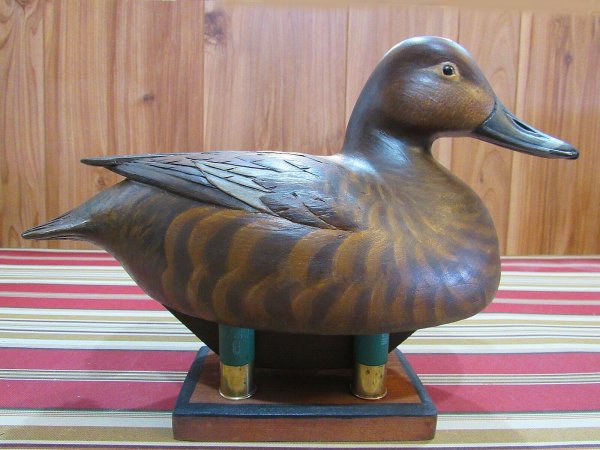
Redhead Hen Vintage Duck Decoy Original Working Paint Great Old Gunning Antique!
Redhead Hen Vintage Duck Decoy Original Working Paint Hand Carved From Cedar by Danny Lee Heuer.This decoy is from my 96 year old (deceased) fathers estate and my private duck decoy collection of my Dad's best to me.Hand carved and painted by Danny Lee Heuer out of Michigan High Ground White Cedar circa 1986.Approximate size is; 12 1/2 " in length by 8 " high and 6" wide, a full size working decoy.The bottom of the decoy has dad's initials carved into with the year & SSM location info as the picture shows.We floated and hunted this decoy several times, with strict instructions not to shoot near it!After hunting over this decoy, it was retired to my personal early fledging collection room which grew steadily each new year.This decoy was also one of the favorite's of mine, as it was one of the first of many we floated and hunted over which made it a special bird for my collection with this known history..95% of all of Dad's gunning decoys had the underside of the bills carved out in detail, a trait of his tool & die trade.This Vintage Working Redhead Hen is a great find and now available for a addition to that serious decoy collection.This Decoy comes with a unique hand made display stand to accommodate the keel with 12 ga. shotgun shell bases on a 3/4" wooden base approximately 6" long, by 3 1/2" wide, a great looking display stand, as shown by the picture.The poster: "The Decoys of Danny Lee Heuer" comes with your purchase at no extra charge.The poster shows just a small sample of the many decoys that he carved during his carving career.Surprise that someone special in your life and give the gift that never stops giving!FREE SHIPPING WITHIN THE USA!Guaranteed as stated or full refund if returned within 30 days of purchase!Thanks for taking the time to look and check out my other items in my eBay store HeuerArt.Good luck and purchase with confidence! (Condition: Pre-Owned)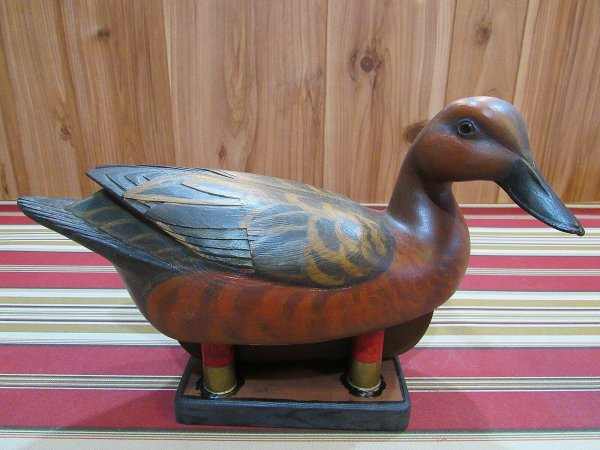
Sold on eBay April 14th, 2025
CinnamonTeal Drake Vintage Duck Decoy Original Working Paint Hand Carved
Cinnamon Teal Drake Vintage Duck Decoy Original Working Paint Hand Carved From Cedar by Danny Lee Heuer.This decoy is from my 96 year old (deceased) fathers estate and my private duck decoy collection of my Dad's best to me.Hand carved and painted by Danny Lee Heuer out of Michigan High Ground White Cedar circa 1988.Approximate size is; 12 " in length by 7 " high and 4 1/2" wide, a full size working decoy.This Drake Cinnamon Teal is a turned head representation, which definitely adds lots of character to this decoy and adds a great style of carving with the head animation.The bottom of the decoy has dad's name carved into it with the SSM location info as the picture shows.We floated and hunted this decoy for one early fall season, about 5 times along with the Matching Hen (that is listed in my other auctions) with strict instructions not to shoot near it, floated nice and was fun to do, great looking in the water during our pot hole hunts!After hunting over this decoy, it was retired to my personal collection room which grew steadily on a yearly basis, as Dad carved more which I added to the shelfs.This decoy was as with a bunch of his early work also is one of the favorite's of mine, as it was one of the first of many we floated and hunted over together.95% of all of Dad's gunning decoys had the underside of the bills carved out in detail, a trait of his tool & die trade.This Vintage Working Cinnamon Teal Drake is a rare find and now available for a addition to that serious decoy collection.This Decoy comes with a unique hand made display stand to accommodate the keel with 12 ga. shotgun shell bases on a 3/4" wooden base approximately 6" long, by 3 1/2" wide, a great looking display stand, as shown by the picture.The poster: "The Decoys of Danny Lee Heuer" comes with your purchase at no extra charge.The poster shows just a small sample of the many decoys that he carved during his carving career.Surprise that someone special in your life and give the gift that never stops giving!FREE SHIPPING WITHIN THE USA!Guaranteed as stated or full refund if returned within 30 days of purchase!Thanks for taking the time to look and check out my other items in my eBay store HeuerArt.Good luck and purchase with confidence! (Condition: Pre-Owned)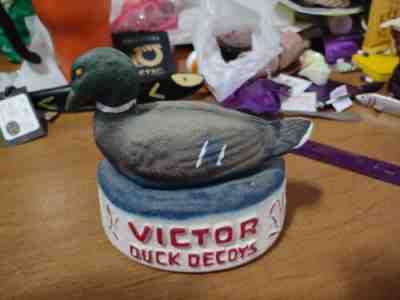
Sold on eBay Sep 06, 2022
Victor Veri Lite Mallard Salesman Sample Paper Mache Decoy Rare. VHTF.
Victor Veri Lite Mallard Salesman Sample Paper Mache Decoy Rare. VHTF.. A Very hard to find salesman sample counter display for store or A desk decorations This item is in 100% original paint and no restorations. Decoy will be well packed and protected as all my items are carefully shipped out. I also offer a return privelege for you as I want happy customers and not mad at me customers. I try to be be 100% transparent with my buyers. I want to be open and honest with you. Please let me know if you need other pictures or have any questions. Thank you for looking at my auctions.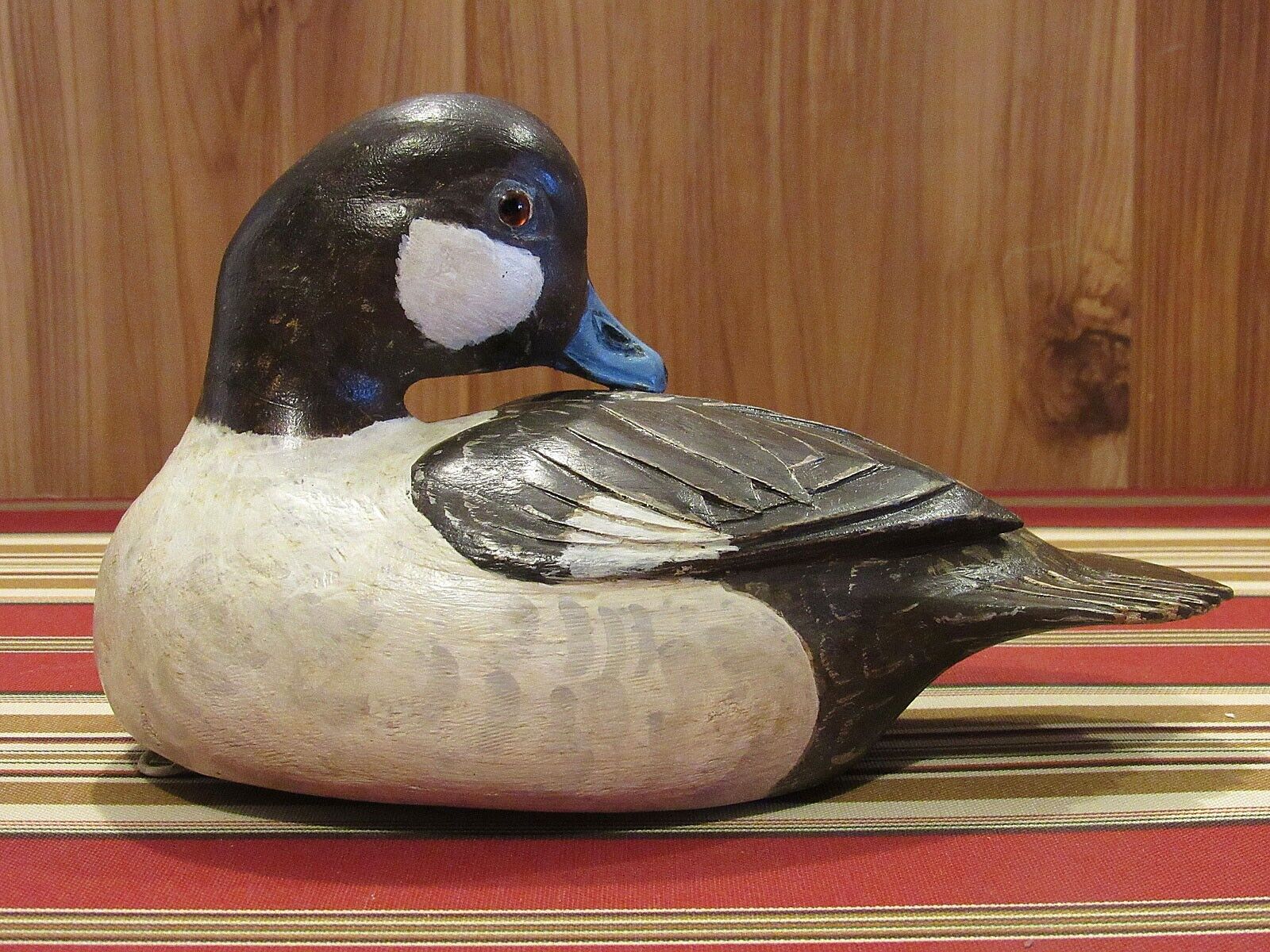
Sold on eBay December 19th, 2024
Bufflehead Hen Sleeper Duck Decoy Original Paint Floater Mint by Danny Lee Heuer
Bufflehead Hen Sleeper Duck Decoy Original Paint Floater Mint by Danny Lee Heuer.This decoy is from my (deceased) fathers estate and duck decoy collection.Hand carved and painted by Danny Lee Heuer out of Michigan High Ground White Cedar circa 1990 s Approximate size is; 9" in length by 5/3/4" high and 4 1/4"" wide, a nice size working decoy.The bottom of the decoy has dad's initials carved into it as the picture shows, a common practice to most of his carvings.We floated and hunted this decoy over a 4 year period, with strict instructions not to shoot near it!After hunting over this decoy, it was retired to his collection room to join many others he put on the shelf.This Bufflehead Hen sleeper is a rare find and a great addition to that serious decoy collection.The poster: "The Decoys of Danny Lee Heuer" comes with your purchase at no extra charge.The poster shows just a small sample of the many decoys that he carved during his carving career.Surprise that someone special in your life and give the gift that never stops giving!FREE SHIPPING WITHIN THE USA!Guaranteed to be as stated or full refund if returned within 30 days of purchase.Thanks for taking the time to look and check out my other auctions and eBay store; HeuerArt.Good luck and purchase with confidence! (Condition: Pre-Owned)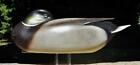
Sold on eBay August 26th, 2024
MINT RARE SIGNED & DATED 2002 HERB MILLER ~HOLLOW Wood Duck Decoy DELAWARE RIVER
RARE, PRISTINE MINT, SUPERB, NEVER HUNTED-OVER, 22-YEAR OLD, TUCKED & TURN-HEADED, SLEEPING DRAKE MALLARD HOLLOW WOODEN DUCK DECOY with HALF-CLOSED, GLASS EYES & EYELIDS ~AWESOME 100% ORIGINAL PAINT, CARVING DETAIL & CONDITION TO A EGG-SHELL "HOLLOW" GUNNING DECOY by MASTER CARVER HERB MILLER of SHIP BOTTOM, NEW JERSEY ~STUNNING 100% ORIGINAL CONDITION with a NICE MELLOWED PATINA & BEAUTIFULLY AGED & AMAZING ORIGINAL OIL-BASE PAINT THAT ADDS TO ITS AURA ~SUPERB CARVING to the HEAD, TAIL, BODY & WINGS ~ORIGINAL RIGGING with LEAD PAD WEIGHT, SIGNED & DATED, LEATHER LINE-TIE & HOT BRANDED ~SUPERB LIFE-LIKE CARVING & PERFECTLY CARVED IN & LOCATED BROWN GLASS TAXIDERMIST DUCK EYES ~This DRAKE MALLARD ON EBAY IS YOUR CHANCE TO OWN AN AMAZING DELAWARE RIVER DECOY ~ IT IS AN ABSOLUTELY STUNNING SLEEPING MALLARD DECOY BY ONE OF THE MOST RENOWNED DECOY CARVERS & A DECOY THAT WAS CARVED AND WENT RIGHT INTO A GREAT DISCRIMINATING COLLECTION ~JUST GREAT DECOY TO OWN & GREAT INVESTMENT AS WELL! MINT RARE SIGNED & DATED 2002 HERB MILLER ~HOLLOW Wood Duck Decoy DELAWARE RIVER MINT RARE SIGNED & DATED 2002 HERB MILLER ~HOLLOW Wood Duck Decoy DELAWARE RIVER Click images to enlarge Description Decoys of: "Delaware River" & "Jersey Coast" are Basically Cousins!! (photo below): c1953 Photo of HERBERT "HERB" MILLER (~Age 18) ..... The Decoy Carver, Waterfowl Hunter, Hunting Guide & Award Winning Carver ..... and Later a "Police Officer" in the "Ship Bottom, New Jersey" Department! Herbert H. "Herb" Miller Born: ..Nov. 8, 1935 ..Roebling, New Jersey ? Died: ..Dec. 30, 2021..Ship Bottom, New Jersey. (age 86) Miller Lived & Hunted the Delaware River & then the Atlantic Coast as Well; But Always Liked to Carve in the Fashion of the Delaware River Decoys .... At the Age 21, he Moved from the Shores of the Delaware River to the Atlantic Ocean Coast; when Army Corp. Engineers Began Dredging the River & Changing it Forever: Herb Miller Grew up in Roebling, New Jersey, which at the Time was a Hunting & Carving Mecca! Then Herb Spent the Remainder of His Life in Ship Bottom on the Jersey Shore, But Still Carved Delaware River Style Decoys! __ This Outstanding, Mint Condition, "Buried-Head; Half-Closed Eyes", HERB MILLER of "Ship Bottom, New Jersey" Drake Mallard up for auction: (photo below): The "LATE HERB MILLER" was a Gunning Decoy Carver, Waterfowl Hunter ..... Duck Hunting Guide, World Champion Wood Decoy Carver -and- Ship Bottom, New Jersey "Police Officer"! (Photos Below): REAL PAIRS of "SLEEPING MALLARDS" in the WILD SO YOU CAN SEE HOW this DRAKE MALLARD WOOD DUCK DECOY by: "HERB MILLER" up for auction REPRESENTS the SPECIES VERY REALISTICALLY and is a PERFECT CARVED & PAINTED WOOD SPECIMEN of this WATERFOWL SPECIES!! _ - This Rare, "Pristine", Signed & Dated, "Hot-Branded", Super-Tucked Head Sleeping", 22-Year Old, 2002 "Herb Miller" Drake Mallard "Hollow" Wood Decoy up for Auction: Herb Miller's Love for Duck Hunting Forced him to Start a Carving Career at Age 14 in 1949 ........ When he Began 75 Years Ago He Carved Because Herb Needed his Own Decoy Rig to Gun Over! Herb Miller discovered he possessed a unique talent for carving and eventually began making decoys full-time ....... in 1968, at the Babylon, New York Decoy Championships he Won 3rd in the Professional Class ........ in 1970, Herb Won 9 More Ribbons at the Championship Show ......... But in 1971 He Topped them All Winning the "Best Of Show" at the Babylon Show on Long Island with a Hen Goldeneye. Herb Miller Started Making Decoys at Age 14 & were All Over-Sized Black Ducks & Mallards ....... Later, when it Was Too Cold to Duck Hunt, He & Fellow Roebling Gunning Partner "Joe Bauer" Would Carved Decoys ....... All were for Personal Use Until 1961. _ This Rare, "Pristine", "Signed & Dated", Hot-Branded, Buried-Head Sleeper, 2002 "Herb Miller" Hollow Drake Mallard up for Auction: Awesome Carved-In, Raised Wings with Primary Feather Grooves ...... Amazing Fluted or Lapped, Curve-Carved Tail Feathers ...... and Stunning "Twisted Breast & Neck", Turned & "Buried into the Back-Feathers" Head!! (photos below): This MINT & OUTSTANDING "SIGNED & DATED", "HOT-BRANDED", DELAWARE RIVER; "EGGSHELL HOLLOWED"; DRAKE "MALLARD" DECOY up for auction!! This Scarcely-Posed, Mint & Pristine, Fully-Rigged, "HERB MILLER" Drake Mallard Perfectly Exemplifies his Best Style & Form and Maybe One of the Best Specimens of his Best Work that You'll Come Across ......... It is Just Gorgeous & Yet Formidable: _ (photo below): A Group of Herb Miller's Decoy's from a Past Auction, Giving a Nice Cross-Section But Small Sample Size of Only a Few Species: _ The Late Herb Miller (1935-2021) is Featured in the Book: "One of Today's Most Outstanding Living Gunning Decoy Carvers" (photos below): A GREAT INDICATION of the PROWESS of the LATE HERB MILLER is HIS INCLUSION in the BOOK BELOW: LOY HARRELL JR. "2007" BOOK: "SIXTY LIVING and OUTSTANDING NORTH AMERICAN CARVERS" __ (photos below): PICTURES of OTHER OUTSTANDING DECOYS by THE LATE GREAT "HERB MILLER", FOR DECADES, ONE of the COUNTRY'S MOST HIGHLY REGARDED CARVERS of HOLLOW "DELAWARE RIVER" GUNNING DECOYS!! This Exquisite "Very Neatly Posed", Fully-Rigged, Eggshell Hollow Sleeping Drake Mallard Wood Decoy up for auction: (photo below): RARE, 100% ORIGINAL and an AMAZING EXAMPLE of One of his RARELY-POSED DECOYS of ANY SPECIES ...... STUNNING FORM & MAGNIFICENT, PRECISELY PAINTED with "STUNNING VERY FINE DETAIL-PAINT" ....... SPECTACULAR CARVING; ESPECIALLY the HEAD, RAISED WINGS, CARVED PRIMARY FEATHERS & FLUTED TAIL ....... and the SEAM WHERE the TWO HOLLOW BODY HALFS were ATTACHED is an ALMOST IMPOSSIBLE to SEE SEAM!! _ This Incredibly Carved "Herb Miller (1935-2021) Drake Mallard with an Amazing & Stunning Paint Job and Outstanding Detailing: (Below Photos): SUPERB FEATHER BLENDING & INDIVIDUAL FEATHER PAINT to ALMOST ALL FEATHER GROUPS ....... with BEAUTIFUL FEATHER BLENDING WITHIN a FEATHER GROUP LIKE the GREEN & BLUE FEATHER HIGHLIGHTING ....... and RICH "LIFE-LIKE" VERY FINE, DETAILED PAINT EVERYWHERE ....... and REALISTIC SMALL & TIGHT SPECULUMS on a FLUFFED FEATHER RELAXED DUCK ....... ACTUALLY EVERYWHERE!!! MAYBE the MOST INCREDIBLE ASPECT of this DECOY ......... is the AMAZING, "PAINT BLENDING" to the BREAST, BACK, SIDES, HEAD, TAIL & WINGS ......... MUCH LIKE the FINEST EARLIER EXAMPLES of EARLY DELAWARE RIVER'S BEST DECOYS ....... as HERB MILLER ALSO USED THEIR BLENDING, STIPPLING, DAUBING & SWATHED SOLID PAINT to FEATHER GROUPS as WELL as INDIVIDUAL FEATHERS ........ GIVING it a PERFECTLY REALISTIC & "LIFE-LIKE" APPEAL, SURFACE & APPEARANCE .......... YOU CAN SEE EVERY PAINT BRUSH MARK on this AWESOME & RARE DECOY!! Look at Herb Miller's Perfectly Carved-In "Twisted Breast & Neck", Buried "Half-Asleep" Head, Ice Groove Separation on the Back, Raised Wing Feathers, Fluted Tail Feathers ...... Painted on Back, Side, Breast, Tail, Wing & Head Feathering with Gorgeous "Blue, Black & White" Tiny Painted Lines for the Speculums: The Precise Knife Cuts to the Raised-Wings, Individual Primary Wing Feathers and Lapped, Tail Feathers is Amazing .......... and Like the Best Made "Hollow" Decoys from Anywhere the Seam Where the Hollowed Half's were Attached is "Invisible" ....... and the Seam Where the Tucked & Sleeping Head, Incised Neck Seat & Where the Neck is Attached to the Body is Nearly Invisible!! This Very Rare & Possibly One of a Kind "Buried-Bill", "Half-Closed" Eyed, Sleeping Drake Mallard up for auction: (photos below): Just Look at the Stunning & Extremely Detailed Carving and Paint From a Top & Bottom Angles and From Different Directions!! (photo below): Note the Infinite Gorgeous Feather-Blended Browns, Grays and Black to the Entire Body .... Also, the Feather Blending & Each Individual Painted Feathers were Precisely Painted on to the Breast, Back, Sides & Tail: (photo below): Note the Carved-In, Raised Wings that Goes from the Tips to the Carved-In Side Feather Group: (photos below): This Group is of the Decoy's Bottom from the Same Angles as those Above: (photo below): Note the Beautiful, Deeply Carved-In Wings: Between the Brown & Tan Wing Primaries and the Tail Section with its Tiny Tan Feathers ........ It Forms a "V" where the Wing-Feathers & Top of the Tail Meet: (photo below): Note the Superb, Carved-In Fluted or Lapped Tail Feathers ..... and How they Flow Perfectly Out of the Black Upper-Tail Coverts: (photo below): Note the Precise & Perfectly Carved-In "Fluted" Tail Feathers: (photo below): Note the Carved-In, Raised Wings that Goes from the Tips to the Carved-In Side Feather Group with it Relief Carved Out in Between the Wings: (photo below): Note the Darker Gray Individually Painted on Feathers on the Back & Sides ........ as Well as the Very Tiny Brush Stroked Light Tan Feathering to the Dark Brown Breast: _ (Below Photos): The BOTTOM of this RARE & EXOTIC "HERB MILLER" DECOY SHOWS the PRECISELY LOCATED "LEATHER" LINE-TIE attached with 2 SOLID-BRASS WIRE NAILS ....... and his "SOLID-LEAD", BEVEL-EDGED, "PAD WEIGHT" ATTACHED with 4 SMALL BRASS BRADS!! Also, His Typical Branding Iron, "HOT BRANDED", Name "H. MILLER"!! BOTTOM of this SUPERB DECOY was HAND-SIGNED & DATED in BLACK INK:? "Herb Miller & '02" PERFECT ORIGINAL RIGGING: MINT RIGGING with LEAD PAD WEIGHT HELD on with SOLID BRASS BRADS & LEATHER "THONG" LINE-TIE also HELD on with 2 BRASS NAILS: SIGNED & DATED: HAND PAINTED, IN BLACK: HERB MILLER & '02 "HOT BRANDED ON": H MILLER + (below photos): The HEAD of this RARE & PRISTINE "TWISTED & TUCKED"; "HALF-SHUT EYED" DRAKE MALLARD from SEVERAL ANGLES and the BILL-LESS HEAD is BURIED in the BACK & WING ........ and the HEAD is PERFECTLY CARVED with SUPERB LENGTH & FORM, PRECISELY CARVED & PERFECT, BROWN GLASS TAXIDERMIST EYES ..... PAINTED "HALF- SHUT" with the 2-COLOR, EYE LIDS & LASH LINE!! This is a PERFECTLY FORMED, HERB MILLER DRAKE MALLARD that was NICELY "FILE & KNIFE-CARVED" & SMOOTHLY SANDED ........ with a "STUNNING" & TUCKED HEAD with a NECK & BREAST that TWIST SLIGHTLY to MAKE the POSE LIFE-LIKE ......... IT'S PHENOMENAL & RESEMBLES a RELAXED, FEELING-SAFE, MALLARD that is ASLEEP or HALF-ASLEEP!! ? -and- GORGEOUS EYE-LIDS & AMAZINGLY PAINTED "WHITE NECK RING" ....... and BLACK-GREEN HEAD HIGHLIGHTED with IRIDESCENT TINTS of BLUES, PURPLES & GREEN COLORS LIGHTLY BLENDED IN!! The Head is Attached by at Least One Large Screw Up-Through the Upper "Hollowed-Half" of the Body Before the 2 Body Half's were Attached ..... and Both the Neck & Body Seams are So Tight and Hard-to-See It is So Pristine it Looks Like it Just Left his Work Shop! _ (Below Photos): This MINT & RARE "MALLARD" DRAKE ..... is EGG-SHELL "HOLLOWED" & is MODESTLY-SIZED LIKE ALMOST ALL "DELAWARE RIVER SCHOOL" DECOYS!! IT LOOKS "SPECTACULAR" with ITS "LONG BODY" STYLE & WELL-ROUNDED FORM & LIGHT WEIGHT: This VERY RARE MALLARD MEASURES & WEIGHS: This "One-of-a-Kind" Herb Miller Drake Mallard Weighs & Measures a Real-Life Sized: ? 14-1/2" long..x..5-1/8" wide..x..5-1/2" tall ? -and- Weighs a Well-Hollowed: ...1-lb. 9-oz. _ THAT is FANTASTIC & MAKES for ONE of the LATE HERB MILLER'S FINEST & MOST UNIQUE WOOD DUCK DECOYS!! That Makes for an Awesome & Very Unique Gunning Decoy that is So Well Made that the Seams Between the 2 Hollowed Body Half's and the Head/Neck & Body are So Original & Tight that Both Seams are Close to Invisible!! That Makes for a Superb Decoy that Has Been in the Protection of a Climate and Light Controlled Collection or Collections Since the Day it Left Herb Miller's Work Shop as Maybe a Special Order!! _ This RARE & OUTSTANDING "HERB MILLER" DRAKE MALLARD'S HEAD is as REALISTIC & LIFE-LIKE as ANY CARVER CAN MAKE!! NOTE this MALLARD'S AWESOME, PRECISELY CARVED-IN & ACCURATELY LOCATED, "BROWN" GLASS TAXIDERMIST EYES .......... and AMAZINGLY PAINTED "HALF-SHUT"!! This MINT, RARE and MARVELOUS "HERB MILLER" "DRAKE MALLARD" WOOD DUCK DECOY up for auction: ? This DECOY is MINT, PRISTINE CONDITION ...... It DOESN'T HAVE a SINGLE CHIP, NICK, CHECK, DENT, CRACK or RUB of ANY KIND ...... It DOESN'T EVEN HAVE a SINGLE PAINT SMUDGE!!!!!!! _ Description of this STUNNING DRAKE "MALLARD" DECOY Up For Auction: MINT, RARE, SPECTACULAR; 100% ORIGINAL; HAND SIGNED & DATED; HOT BRANDED; 2022 The LATE HERBERT H. "HERB" MILLER; EGGSHELL "HOLLOW" & 22-YEAR OLD; "DRAKE MALLARD"; FULLY-RIGGED, WHITE CEDAR; WOOD "DELAWARE RIVER", "GUNNING" DECOY ? Ship Bottom, New Jersey on Long Beach Island ? HERB MILLER CARVED using EASTERN WHITE CEDAR, which NATURALLY REPELS WATER and is EASY to WORK!! ? MODESTLY "LIFE-SIZED" DECOY in TRUE FASHION of the DELAWARE RIVER, which on OCCASION, OFTEN MADE SLIGHTLY SMALLER that LIFE-SIZED DECOYS DEPENDING; OFTEN on SPECIES!! Carved Life-Sized, Raised Primaries, Fluted Tail, Carved-In Primary Feathers, Very Exquisite Carving Detail to Tucked Head, Eggshell Hollowed Close to Middle of Two Body Halves & the Seam is Practically Impossible to See!! ? Just Outstanding & Incredible Wing, Head, Body & Tail Carving with Precise Symmetry!! Perfectly Carved-In & Located, Brown "Mallard", High-End, Hand-Made, Taxidermist Eyes!! Excellent Herb Miller Decoy by this Late Master Carver with an Awesome "Turned & Buried, Sleeping" Head Posed, Raised & Carved Primary Feathers, Raised Wings and True, Fluted Tail Carving! _ PERFECT CARVING DETAIL: AWESOME HEAD, PRECISE RAISED WINGS with CARVED-IN PRIMARY FEATHERS & SUPERB FLUTED TAIL FEATHERS!! ??? INCREDIBLE PAINT: AWESOME, IMMACULATE, MINT 100% ORIGINAL PAINT with INDIVIDUAL FEATHERING to ENTIRE DECOY & FEATHER BLENDING to HEAD, NECK, SIDES, BREAST, WINGS, BACK & TAIL!!!! OUTSTANDING FORM: ABSOLUTELY PERFECT CARVING to the PERFECTLY CONTOURED BODY, HEAD & OUTSTANDING TAIL and BREAST!!! _ RARE: INCREDIBLE PATINA to the OIL-BASED ARTIST'S PAINT!! RARE: The LATE HERB MILLER'S DECOYS are SOME of the NICEST BALANCED, SYMMETRICALLY CRAFTED and OUTSTANDING CARVED and PAINTED ROUGH-WATER DECOYS MADE! A Perfect Specimen of a Rare Posed Sleeping, "Egg-Shell Hollow" Large-Sized, Dabbling or Puddle Duck Hunting Block Made by One of The Late, But Great Gunning Decoy Makers!! This DECOY is PAINTED in a LATE FALL - EARLY WINTER, COLOR SCHEME and How We SOMETIMES SEE THEM DURING the HUNTING SEASON in MICHIGAN; BUT WE ALSO OFTEN SEE THEM NOT QUITE YET in BREEDING PLUMAGE EARLIER!!!! This DECOY Has the NICEST HEAD CARVING, TAIL -and- RAISED WING & PRIMARY FEATHER CARVING -and- Some of the Finest Work You Will See from One of the Late, But Finest Carvers!! Lead "Pad" Ballast Weight Held on with 4 Small, Solid Brass Brads or Nails! OUTSTANDING PATINA to the BEAUTIFUL, 100% ORIGINAL ARTIST'S OIL PAINT!! ? This DECOY Has SOME of the LATE MR. HERB MILLER'S MOST AWESOME "CARVING" to the RAISED WINGS, DEEP INDIVIDUAL WING PRIMARIES, LATH OVERLAPPED FLUTED-TAIL and SUPER-TUCKED-IN HEAD!! If You Like Decoys from Famous Master Carvers and Are in "MINT CONDITION" ........ THIS IS A VERY VALUABLE DECOY to ADD to Your COLLECTION!! Great Breast Bulges Up & Sideways Like a Real Duck in the Wild When the Head is Twisted Backward & Tucked!! _ _ (photos below): This HERB MILLER DRAKE MALLARD WOOD DUCK DECOY up for auction!! DON'T MISS OUT ON THIS OUTSTANDING & SCARCE DECOY: This DRAKE MALLARD on Ebay has the Perfect Weight and Dimensions for DELAWARE RIVER Decoys that Could Be Gunned Over in the Often Unpredictable Currents of the River & Inclement Surface Weather & Swim Perfectly and Right Themselves Immediately!! ? ? ?This is Just An Awesome "Drake Mallard" Wood Duck Decoy That Was Carved and Has the Perfect Form, Style & Dimensions for the Delaware River Decoys of a "Wood Duck" Decoy and Live Duck as Well!! ? The Dimensions & Weight are Perfect & Typical for a Decoy by the Late Herb Miller, Large-Sized Puddle or Dabbling Duck, Eggshell Hollow-Bodied, Wooden Duck Decoy!!! This Drake Mallard on ebay Shows that it Came from Climate Controlled, Direct Light-Free Collection or Collections and Has Been Kept Protected for the Past 22-Years and It Has Been Carefully Cared For In!! It Clearly Has Been Very, Very CAREFULLY HANDLED & Certainly "WAS NEVER USED" as it is in "TRULY MINT CONDITION" as well as "100% ORIGINAL"!! ? It Looks to Have Hardly Been Handled as well as NEVER RIGGED ? IN THE NEXT FEW WEEKS I AM PUTTING ON EBAY MORE LAWRENCE BETHEL FISH DECOYS, A MINT SIGNED CHARLIE JOINER CANVASBACK, A PAIR OF THE ONLY KNOWN PROTOTYPES MADE OF THE VERY FIRST PRE-PRODUCTION FIBRE DECOYS EVER MADE, A NEAR MINT 1927 HEDDON GIANT VAMPIRE FISHING LURE IN RARE SHAD, A PAIR of LATE PHASE DODGE MALLARDS, EXQUISITE AND RARE PAIR OF "SPECIAL ORDER" MALLARDS, A RARE PAIR OF RALPH MALAPAGE GREEN-WINGED TEAL, A VERY RARE c1893 100% ORIGINAL TRANSITION PERIOD MASON DRAKE BUFFLEHEAD, A MINT RALPH MALPAGE CANADA GOOSE GUNNING DECOY, A MINT c1905 HEDDON ARTISTIC MINNOW, A VERY RARE PADCO OF MISSISSIPPI GOLDENEYES, A YELLOW WITH RED EYE BLUSH MOONLIGHT SINGLE-HOOK PIKAROON, A NIB CREEK CHUB MULLET COLOR STRIPER PIKIE IN CORRECT BOX, A PAIR of INCREDIBLE CHALLENGE GRADE MASON BLUE-WINGED TEAL, A NICE PAIR OF MASON GLASS EYE BLUEBILLS, AN AWESOME ERNIE NEUMANN SUCKER FISH DECOY, A RARE DOUBLE SPECIAL CREEK CHUB BEETLE FISHING LURE, A VERY NICE ERNIE NEUMANN SUCKER, A RARE 12-1/2" CHET SAWYER MINNESOTA FISH DECOY, A NEAR MINT OSCAR PETERSON PERCH FISH DECOY, A MINT PAIR OF WRAGG & BURRELL WIGEON, AN OUTRAGEOUSLY HARD TO FIND PAIR OF CHARLIE POZZINI BLUEBILLS, A CHET SAWYER 13" CHET SAWYER FISH DECOYS, A VERY BIG & BULL-NECKED EARLY FERDINAND BACH DRAKE CANVASBACK FROM HIS PERSONAL RIG AND MORE!! ? Shipping Includes Insurance! I Don't Believe in Making a Profit on Shipping, You Pay What I Pay. If it's Less Than You Paid I Refund the Difference, If More I'll Pay For It. I COMBINE SHIPPING. I am also loading over 150 Duck Decoys, 150 Fish Decoys, 70 Scarce Fishing Lures, etc. so keep checking back. ________________ This Outstanding, 100% Original, Well-Hollowed & Long-Body Styled, "Almost Fully Asleep" 2002 "Drake Mallard" Gunning Decoy with the Late Herb Miller's Signature, Date & with his "Hot Brand"!! ITEM DESCRIPTION This 22+ Year Old, Very-Rare Sleeping-Posed, Very-Hollow and Nicely Carved and Painted Drake Mallard decoy was made by Herbert H. "Herb" Miller (born: Nov. 8, 1935 ~ died: Dec. 33, 2021) of Ship Bottom, New Jersey and Formerly of Roebling, New Jersey. Much of Herb Miller's life was lived in Roebling during the tail end of the days when huge numbers of ducks found food and safety on the Delaware River during their migrations. But at the age of 26 Herb moved to the Jersey Coast when the Army Corp. of Engineers was dredging the Delaware River for shipping, and all but destroyed most of the great gunning areas. The Roebling Florence community is located in Florence Township and is within Burlington County. Roebling Florence is located on the banks of the upper portion the Delaware River, around eight miles south of Trenton, New Jersey and directly across the Delaware from Levittown, Pennsylvania. In addition to being the original home of Herb Miller, it was also the home to the Famous English family of decoy carvers, a couple of which helped him learn carving decoys. Florence Township is located on the traditionally rich duck hunting banks of the upper portion of the Delaware River and directly across the Delaware River from Tullytown, Bristol and Levittown, Pennsylvania, which were also home to a myriad of Delaware River duck hunters and decoy carvers. In 1961, Herb Miller and his wife Carol moved from Roebling, New Jersey to Ship Bottom, New Jersey. Ship Bottom is a borough and is known as the "Gateway to Long Beach Island", as Route 72 provides the sole road access from Manahawkin in Stafford Township, ending in Ship Bottom as it crosses Manahawkin Bay via the Manahawkin Bay Bridge and ends on Long Beach Island. When the Late Herb Miller (1935-2021) began duck hunting, it was in the tail end of an era that including hundreds of thousands of waterfowl using the relatively slow moving and food laden wetlands of the Delaware River as a perfect stop during migration to feed and rest. A young Herb Miller started making decoys at the age of 14, around 1949, and made decoys into his 80's, and he sadly passed away at the age of 86. Herb Miller's earliest decoys were made over-sized and he only made black ducks and mallards. He was constantly hunting, fishing and trapping with his good friend and fellow Roebling youngster, Joe Bauer. When it got too cold outside to hunt, the two of them stayed indoors and took advantage of the time to carve new decoys. Like many rivers around the country, there came a time when the Delaware River was entirely redeveloped so that larger and larger ships could get to Trenton, one of the strongest manufacturing cities in the region at the time. In the 1950's, the Army Corp. of Engineers oversaw the dredging and use of that sand, sludge and silt to fill in some of the best hunting areas and also straighten sections of the river. This was the final straw for some waterfowl hunters, including young man Herb Miller, so in 1961 Herb Miller and his wife moved to Ship Bottom on the Jersey Shore where he felt he would be close to good duck hunting once again. Every decoy that Herb Miller made before 1961 was for personal use, partially because there was no shortage of guys carving and selling decoys on the New Jersey and Pennsylvania sides of the Delaware, both up and down the river from Roebling, New Jersey. After his move the Ship Bottom on the Jersey Shore he saw a market for his decoys, in addition to his income as a Ship Bottom police officer for a portion of that time. The Great Herbert H. "Herb" Miller entered his first decoy contest in 1963 in Babylon, New York, where he won 3rd prize in the "Professional Class". In 1970, he won 9 more ribbons at the show, and in 1971 he topped them all, as he won the "Best of Show" at the Babylon show on Long Island, with an amazing hen goldeneye. As stated, prior to 1961, Herb Miller carved decoys only for personal use, but gradually that changed and he not only began selling decoys, but by 1972 Herb was guiding duck hunting parties with a large rig of Herter's decoys. It was shortly before this that his decoys were being bought by collectors, so he figured he would no longer hunt over decoys he was making as they were far more valuable to risk damaging them while hunting over them. MORE ABOUT ROEBLING, NJ: Roebling was founded by Charles Roebling, son of John A. Roebling. John A. Roebling & Sons company built and provided the steel for the Brooklyn Bridge, the Golden Gate Bridge, as well as numerous other bridges including one over Niagara Falls. The steel mill was also responsible for the production of the elevator cables for the Empire State Building in New York City, the Chicago Board of Trade Building in Chicago and the Washington Monument in Washington, D.C. John A. Roebling & Sons company made the wire for the original slinky as well. _ Herbert H. Miller's 2o21 Obituary Herbert Miller, 86, long-time of resident of Ship Bottom and former Ship Bottom Chief of Police, passed away on December 31, 2021 at Southern Ocean Medical Center. Herb was born and raised in Roebling, NJ. He served in the U.S. Navy and moved to Ship Bottom in 1961 where he attended the Ocean County Police Academy. After moving through the ranks in the Ship Bottom Police Department, Herb served as Chief of Police for 10 years, retiring in 1991. The Late Herb Miller was an accomplished marksman, dedicated hunter, fisherman and renowned master decoy carver. Herb carved his first rig of decoys, comprised of Black Ducks and Mallards, in 1949 at the age of 14. He took 3rd place overall and 2nd Place in Decorative Decoys in the Ward World Championship Wildfowl Carving Competition and Art Festival, Salsbury, Maryland. His carvings are featured in museums all over the United States. He was an inspirational artist to many. From whittling decoys to running a duck hunting guide service, Herb left a mark on a lot of people. His advice was always right although sometimes brutally honest. For 32 years of his life, he served the community with great dignity and respect. Herb was a good neighbor, good resident and great person. Predeceased by his loving wife of 60 years, Carol R. Miller (2019) and sisters, Phyllis and Gloria, Herb is survived by his sons, sons Stephen and his wife Dorothy, Eric and his wife Judy, Herb and his wife Kim, grandchildren Mike (Brittany), Jamie, Jordan, Luke, Nikki Bevacqua (Anthony), Katie Reed (Chris), Abbie (Jesse Vassallo) and great grandchildren Grady, Hunter, Shea and Alex. Also surviving is his brother, David and his wife Marge. HERBERT "HERB" MILLER: The Late Herb Miller, was born on November 8, 1935 in Roebling, New Jersey. While growing up, he would spend a great deal of time following in his father's footsteps plying his trade on or near the banks of the Delaware River. Miller's father was a dedicated hunter and fisherman, and along with Herb's uncles, worked at the renowned Roebling Steel Mill. Herb carved his first rig of decoys in 1949, at the age of 14. The bodies were made of cork that he got from Doan's Ship Salvage in Fieldsboro and he outfitted them with heads he carved from pine. This first rig was comprised of Black Ducks and Mallards. Also at the age of 14 years old, Herb Miller bought his first boat with money he earned from working at a nearby gas station. It was made by Mocker Bell and it was a Bordentown double ender, which is precisely the boat the Delaware gunners used to "ambush" ducks. He and friends Joe Bauer, Rick Gilfin and Earl Kovac hunted around Roebling Island, and when not in use he kept the boat chained to a buoy near the Roebling Steel Company complex. Around the age of 16, Miller ventured out and began to hunt other areas of the Delaware River including Money Island. It was here that he met veteran waterfowl hunter Joe King, not to be confused with New Jersey legend Joe King (1835-1913) of Manahawkin, New Jersey. Herb also met one of King's frequent gunning partners, a man that also would become quite well known on his own, Mr. Bill Quinn (1915-1965). Another hunter that often gunned with King and Quinn was none other than John Baker of Edgeley, Pennsylvania. Like the majority of the upper Delaware River gunners, Joe King and Bill Quinn would first position their decoys in their desired location then row out of sight until passing ducks landed in the decoys. They then would quietly approach the ducks, one man ready with the gun up front, while the other silently propelled and steered the boat using a sculling oar. The front man would take the initial shots and the rower would help kill cripples and retrieve the dead birds. After Quinn and King would set out their decoy spread they would go ashore and build a small fire to warm coffee, toast bread and keep the chill off of them. Along with his friends Bauer, Kovac and Gilfin, Herb Miller often joined long time veteran gunners Bill Quinn and Joe King on the shore and the two veteran's would take the younger gunners on a "sneak" or "scull" into the decoys that had waiting birds that had landed. Herb Miller fondly recalled the time that he shot his first duck on the wing, it was one of 3 mallards and Quinn shot the other 2. For his 16th birthday, Miller got an L. C. Smith double-barrel, 12-gauge shotgun. In all of the excitement, Miller took his new weapon out in a blizzard, snow storm to give it a test. Long after dark, when he had yet to return home, his older sister went out to look for him. After a short time, she fell on the ice and broke her leg. To say his sister was not amused with him when he returned home later that night would be an understatement. It was around this time, in 1951, that Miller carved his first rig of "all wood" decoys (2nd rig overall), that including many very nice mallards. His 3rd rig, in 1955, was over-sized decoys. But of all of these rigs, his 1951 second-rig of decoys was standard sized, were carved of western red cedar bodies and white pine heads, which is the same as this drake mallard up for auction. This 1951 rig was also all flat-bottomed, standard-sized, had carved primaries, detail carved bills & tails and quality glass eyes. This 1951 rig was also comprised of all low head and regular-height head positions and the hollowed body halves, as well as the heads and bodies, were held together by Weldwood Waterproof glue and painted with oil-based house paints. Miller used this rig for a year until he joined the Navy in 1952, then sold them to Charlie Wargo. Like this Herb Miller decoy up for auction, all of Miller's early decoys were carved in the fashion of the typical Delaware River decoy: beautifully rounded, hollowed 2 piece bodies with protruding chests and usually low, contented heads. Like the great majority of Delaware River carvers, Miller's decoys were for his own personal use and the size of his rigs were relatively small in comparison to hunters in other more open water regions. Although Herb never copied other carvers' decoys, just like anywhere, they inevitably followed the form of and show the influence of the famous master carvers Dan English, Joe King and Bill Quinn. Upon his return from the Navy in 1955, he and his father teamed up to carve an entirely new rig of decoys. This new rig was made in the typical Delaware school style, but they were carved over-sized because of the changing conditions of the faster flowing river. This new rig was made up of Black Ducks, Pintails and Mallards, and their larger size proved beneficial in luring wary birds. In 1959, Herb Miller married Carol Roach of adjoining Florence and had 3 sons; Steven, Eric and Herbert, Jr. In 1961, Herb Miller moved his wife and family to Ship Bottom, New Jersey, where he briefly worked as a carpenter before joining the local police department. He would end up working his way up through the ranks and after 32 years he ended up retiring as the Chief of Police in 1993. Before this, in 1965, Herb Miller started hunting Barnegat Bay, which was a stone's throw to the north of his new hometown of Ship Bottom. During this time in the mid-1960's the waterfowl seasons were long and the limit was 10 ducks a day. He bought a 30-foot Garvey boat along with 3 sneak boxes and guided hunters. His rig at the time was 300 Herter's decoys as they were lightweight and inexpensive. He did this for approximately 15 years, but around 1980, when the seasons were shortened and the bag limits were cut, he decided not to continue. He had carved decoys during this period and in 1968 he started carving competitively. He carved for competitions until 1980 and during that time his decoys won a plethora of ribbons and an equally impressive number of "Best in Show" awards. Over time, just like any master of any craft, Herb Miller's decoys went from an effective, finely constructed and wonderfully painted hollow hunting blocks, to his later decoys like this Sleeping Drake Mallard up for auction, that perfectly mirror the wild kin they were intended to imitate. The decoys of the Delaware river rated among the finest in the country when it came down to the beauty of the carving and painting. Like many areas in the country, like this Herb Miller Sleeping Drake Mallard up for auction, the decoys were typically made with either white pine or cedar for the bodies and white pine for the heads, and most had a rectangular shaped "pad" ballast weight nailed or screwed on to the bottom, just like those used in a great many areas on the Atlantic coast and this Mallard up for auction. The Delaware decoys were also painted with oil-based paints and some carvers coated their decoys with a mix of beeswax melted in gasoline as a top coat preservative. The method of hunting on the Delaware River, much like Mr. Miller in his Roebling gunning days, dictated that the decoys that were used were as realistic as possible. The typical hunter used a double-ended sculling boat to sneak up and bushwhack ducks. The hunters would set up their rig of decoys at known feeding grounds, then anchor upstream or upwind and wait for ducks to land in the decoys. When the birds landed they would scull slowly toward the decoys while ducked behind the slightly raised cowling or a raised edge or lip on the front of the boat's compartment construction. This "sculling" method of hunting is almost identical to the "screen" boat hunters in Ontario or the "sneak" boat shooters on Lake St. Clair between Michigan and Canada. The Ontario screeners would often be on shore and oar toward the decoys hiding behind a medium height, horizontally shaped screen that acted like a shield and was often thatched with vegetation to match the shore background behind them. The Lake St. Clair and western Lake Erie Michigan "sneak" boats had and have a similarly shaped shield to the Ontario "screeners", but since the sneaks are in open water with no perceivable background, the shield and boat are/were both painted the same grayish-green color to closely match the color of the water they hunted. Vital to these ambush type styles of hunting, like the Delaware scullers, the decoys must be very realistic looking and perform life-like in the water to "hold" the birds in the decoys until the hunter gets close enough to shoot. The decoys had to have a relaxed appearance like tucked heads or sleepers and they needed to swim perfectly in any water conditions with no yawing, slapping or jerking as to not spook the holding ducks. Considering the mild currents of the Delaware River in the late 1800's and early 1900's, the smaller, very hollowed decoys of the time with their realistic paint jobs were considered some of the finest in the country. Most of the decoys, like this pair of Great Sleeping Mallard up for auction, had relaxed, tucked or sleeping posed heads to convey an attitude of a contented duck with little or no sense of danger to alarm the sitting birds. Size was a major factor as the sculling boats had limited room for gear so the smaller size afforded a larger number of decoys in the set. Another factor in creating an incredibly realistic looking and high performing decoy is the amount of competition for premium hunting spots on the river. In the hey-day of Delaware River hunting, when a large number of hunters were operating rigs on the river, hunters were very territorial which led to many decoy thefts. Also, from a creative standpoint, with a great number of hunters competing for wild ducks within close proximity to other rigs, carvers attempted to outdo their neighbors by making a more realistic, better performing decoy to get an edge. With all of these factors in mind, the typical Delaware River decoy was full-breasted and hollow constructed in the 2-piece manner for lightness and good buoyancy. Most of the decoys had fine glass eyes, a relaxed appearance and extremely well carved wing and tail detail like this black duck up for auction. The head on this Sleeping Drake Mallard was carved into the body with a perfectly, twisted head and neck carving detail, so that the aim of the head and the direction of the breast work together flawlessly with an invisible seam. The nicely carved-in fluted tail is amazing as the gorgeous carving to each tail feather overlaps over the next one that is detail carved like they all are. It is also evident that the further downriver you got, the Delaware school of carvers paid less attention to carving detail, especially in the wings and tail. This was in part due to the decrease in the hunting pressure as the river widened substantially and competition thinned out dramatically. The realistic paint patterns were more consistent throughout the school of carvers, but like this Drake Mallard up for auction, the paint detail did increase the further "upstream" you went. The group of carvers that make up the Delaware School of carvers includes many of the finest master carvers on or near the eastern seaboard. The area encompassed by this awesome network of carvers stretches roughly from the Delaware River near Trenton, New Jersey to the north and south to Philadelphia and Delaware Bay. Midway in between were the three most prominent carving communities, Bordentown and Florence in New Jersey, and the Bristol area of Pennsylvania. The carver heritage, in addition to Mr. Herb Miller, includes the likes of John English (1852-1915) and his sons Jack (1874-1944) and Dan (1883-1962) from Florence, New Jersey; John Dawson (1889-1959) of Trenton, John McLaughlin (b. 1911) of Bordentown, New Jersey; Bill Quinn (1915-1969) of Yardley Pennsylvania; Jess Heisler (1891-1943) of Burlington, New Jersey, John Heisler of Bordentown, New Jersey; Paul Green of Yardville, New Jersey; J. Baker of Edgely, Pennsylvania; Tom Fitzpatrick of Delanco, New Jersey; Lawrence McLaughlin of Edgely, Pennsylvania; Reg Marter of Delanco, New Jersey; Al Reitz of Croyden, Pennsylvania; Lou Boldizar of Roebling, New Jersey and of course Miller's elder friend Joe King. Tony Bianco, Richard Anderson and James West are a few names that come to mind from various areas. Given the proximity of these carvers to each other and the overlap of their hunting grounds, many knew each other and thus the profound influence that reciprocated between them of styles and construction techniques. These were the vintage carvers of the late 1800's and well into the first half of the 20th century. Their smaller size and well-hollowed decoy's construction made them very transportable and effective but things changed significantly in the coming years. Starting in the 1920's and continuing until 1940, the river changed dramatically and thus did the vintage decoys. During this time, the Delaware River was dredged from its average depth of 12 feet to produce a 40 foot deep channel to accommodate the shipping requirements of the steel mills in Trenton, NJ. The Army Corps. of Engineers then used the dredged sand to straighten the direction of the river by filling in the surrounding flats and eddys, which reclaimed thousands of marshland and in doing so increased the rate of current of the river. The wonderful decoys that were carved from around 1870 to 1920 were small, 2-piece hollow construction and round, graceful, streamlined bodies that worked superbly in the slower, shallower water had to change. After the river was artificially reconfigured, the Delaware became faster and deeper particularly during tidal changes which presented new challenges. To adjust to these new conditions while the alterations to the river were taking place, carvers adjusted to make their decoys with flatter bottoms and less hollowed to enhance their water-riding ability. As time went on they changed even more. When the river dredging and filling was completed, and much like the transformation that Herb Miller's decoys took with his 1955 Rig, the decoys were made bigger, more blocky and completely flat-bottomed with barge-like sides. Also, the rectangular bottom weights that were always located in the bottom center of the decoy and primary function was to keep the decoy righted, were moved to the back of the decoy to keep the decoy righted and swimming correctly in the faster current and rougher top water. With the deeper water and disappearance of the flats, marshland, potholes and shallower water conducive to plant-life and protection, there no longer existed the attractive environment for migrating and nesting waterfowl and hence the duck hunting and the pursuit of waterfowl declined exponentially, thus ending the reign of the turn of the century, vintage Delaware River duck decoy. But it did lead to a generation of carvers that have carved in the last 25-30 years of carver's that still carry on the Delaware River School with the same construction, rigging and style, but with the most realistic paint and life-like heads and poses. Herb Miller carved true gunning decoys from around 1949 to 1967, with the majority coming after 1951 and few after 1968 when he began carving competitive decoys. Herb Miller carved many puddle ducks with perfect, raised and carved wing tips, and like this Sleeping Drake Mallard up for auction, they always had extraordinary paint jobs and even some with exquisite comb painting. Like most Delaware River carvers, Miller's decoys are known for their low heads (a great many resting on the chest), in a complacent, relaxed or even sleeping posture with nicely carved in tail feathers and very intricately painted and carved wing primaries and perfect blending between feather groups. Also like this Sleeping Drake Mallard up for auction, he was known for his sleek heads with deliberate and deep eye-line indentations and brow ridges with carved nostrils, bill/head delineation and mandibles that run the full length of the bill but sometimes intermittent. Herb Miller's decoys are also noted for being very light and hollow and also for their, rectangular "forged and brass nailed" lead "pad-shaped" ballast weights. Herb Miller's decoys were constructed with the traditional 2 piece, hollowed design and like this Sleeping Drake Mallard up for auction, his early and even later birds had a bottom that was much flatter than many of his contemporaries. Herb Miller's most active gunning days were at the later end and right after of one of the most prolific eras in waterfowling history with its unchecked and unregulated tactics and limits. Herb Miller lived 40 odd miles from the place he grew up in Roebling, New Jersey, to the Home he Adopted for the rest of his life, Ship bottom, New Jersey. So while Herb didn't carve and hunt in the best and most prolific gunning eras, he was able to enjoy still excellent shooting in 2 places he was able to master; the Delaware River and the Jersey Coast ....which ain't half bad!! The paint on this Sleeping Drake Mallard decoy up for auction is in mint original condition, and as you can see by the many close up photos the thick, original coat of oil-based paint has a very nice patina. This "Sleeping Mallard" decoys is also in mint 100% original condition and is as solid as the day that Herb made it. This is also perfectly symmetrically carved and painted and from a structural standpoint this decoy is also mint. The bill on this decoy is hidden under the back & wing feathers in a great sleeping pose, but on his typical decoy you'll find that their heads are absolutely extraordinarily accurately carved and have perfect head/bill separation, nostrils, mandibles and the heads and necks were so perfectly carved that he had no need for neck putty where they were attached to the "cut in" head shelf. The full breasts are also nicely carved as they bulge up and forward just as a real duck's neck does when it is tucked back under the wing. This vintage Herb Miller decoy is as solid as the day that it was made and went straight into a discriminating collection on the east coast. This Drake Mallard Sleeper decoy was carved modestly-sized in the manner of most Delaware River decoys and measures 14-1/2" long x 5-1/8" wide x a modest 5-1/2" tall and weighs a very rig-manageable 1-lb., 9-oz. These measurements are fantastic for a Delaware River or protected areas of the Jersey Coast decoy. This truly awesome Delaware River decoy would make a great addition to any collection of historic duck decoys and shorebirds. If you have any questions or would like any additional photos feel free to email me. Thanks for looking. The first photo is of this Very Nice Sleeping Herb Miller Mallard up for auction. The 3rd picture is a Vintage photo of Herb Miller c1953. The next 15 photos are also of this great Drake Mallard up for auction. The last 5 photos are of more of his gunning or even tournament decoys from earlier in his career!! Pictures sell!Auctiva offers Free Image Hosting and Editing.300+ Listing Templates Auctiva gets you noticed!The complete eBay Selling Solution. Track Page Views WithAuctiva's Counter (Condition: New (Other))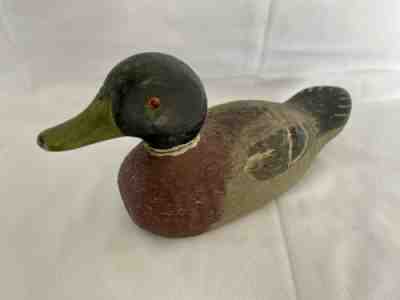
Sold on eBay Apr 17, 2022
Antique Salesman Sample Duck Decoy By Hudson Pratt, folk art, hunting
Antique Salesman Sample Duck Decoy By Hudson Pratt, folk art, hunting. Beautiful hand carved and painted salesman sample Duck decoy by Hudson Pratt. 7â? with glass eyes. Signed on reverse. From the decoy collection of Larry Sisson, Chesapeake Bay. As found.Please email any questions prior to bidding. Photos are part of the description so please review carefully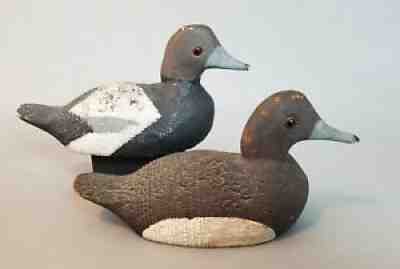
Sold on eBay Jan 10, 2022
PADCO Miniature Salesman sample Redhead Duck Decoy - Vintage Decoys
"Rigmate" pair of Padco or Pascagoula Redhead duck decoys in excellent dry all original condition with no touch-up or restoration. This pair was together from it's their beginning and not a matched pair.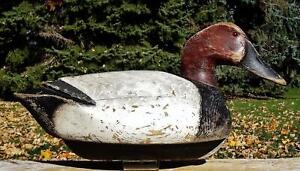
Sold on eBay November 17th, 2023
RARE EARLY ~SWANSON RIG c1950 FRANK CUMMINGS Wood Duck Decoy HARSENS ISLAND MICH
eBay A VERY EARLY & VERY RARE 1950 DRAKE CANVASBACK by FRANK CUMMINGS (1918-2002) of HARSEN'S ISLAND, MICHIGAN of the ST. CLAIR FLATS of MICHIGAN & the COUNTRY'S LARGEST MARSHLAND RIVER DELTA ~THIS RARE DECOY is FROM the RIG of ONE of SOUTHEASTERN MICHIGAN'S MOST FAMOUS & WEALTHY HUNTERS & COLLECTORS of the 1900's in METRO DETROIT, the LATE RONALD SAARINEN "RON" SWANSON (1939-2022) of BLOOMFIELD HILLS MICHIGAN ~SUPERB STYLE, FORM & CONSTRUCTION on this DECOY with SUPERB, EARLY HAND-BRUSHED ON ORIG. PAINT, BRIGHT RED GLASS TAXIDERMIST EYES & ORIG. KEEL ~CUMMINGS DECOYS PROMINENTLY FEATURED in CLUNE WALSH & LOWELL JACKSON'S BOOK: "WATERFOWL DECOYS OF MICHIGAN AND THE LAKE ST. CLAIR REGION" on Page 126 & 127 ~FRANK LIVED RIGHT in the MIDDLE of the ST. CLAIR FLATS AREA of LAKE ST. CLAIR & DURING HIS CARVING YEARS FROM 1943-1980 HIS DECOYS WERE THE FINEST WOOD DECOYS MADE in the REGION ~LOOKS FANTASTIC & EVEN The RUBS to EDGES & HIGH POINTS & A COUPLE SHOT MARKS ADD TO THE AURA OF THIS RARE BIRD RARE EARLY ~SWANSON RIG c1950 FRANK CUMMINGS Wood Duck Decoy HARSENS ISLAND MICH RARE EARLY ~SWANSON RIG c1950 FRANK CUMMINGS Wood Duck Decoy HARSENS ISLAND MICH Click images to enlarge Description (photo below): c1950 Frank Cummings the Decoy Carver, Bait & Tackle Shop Owner, was Also the Fire Chief of "Harsen's Island, Michigan"! HARSEN'S ISLAND & ST. CLAIR FLATS CARVING and BAIT & TACKLE SHOP LEGEND ....... FRANK CUMMINGS Birth Name: Frank William Cummings (Chicago, Illinois) (born): May 25, 1918 (died): Oct. 13, 2002 (Age 84) of Sans Souci, Harsen's Island, Clay Township, Michigan Frank, Lucille & their Daughter's Harsen's Island House and "Cummings Bait & Tackle" was Located at 208 La Croix Street ......... Right on the Outskirts of San Souci 3 Blocks from the St. Clair River ........... and 100-ft. from the Harsen's Island Fire Department & Post Office ........... Right in the Middle of the St. Clair Flats and all of his Customers!! (photo below): Dave Bollman's 1997 Painting of Frank Cummings in his St. Croix Street Shop on Harsen's Island called "LIL SHAVERS" ....... an Incredible Likeness of Him on this "FAMOUS PAINTING" Done 5 Years Before His 2002 Death with his Two Grandchildren Looking On!! Frank "St. Clair Flats" Cummings (1918-2002) FRANK OWNED "CUMMINGS BAIT & TACKLE"- SOLD a COMPLETE LINE of LIVE BAIT & TACKLE to FISHERMAN from his HARSEN'S ISLAND STORE!! ? Frank Also CATERED to "ICE FISHERMEN"- During the Winter, Frank Cummings Sold Minnows, Suckers, Lures & Tackle like Tip-Ups ........... and Even Rented Out Ice Shanties & Carved and Sold Fish Decoys!!! ? OUTFITTED DUCK HUNTERS all FALL SEASON: Michigan and Canadian Hunters in the St. Clair Flats Carvers Bought all the Duck & Goose Decoys Frank Could Make ............ and Not Only Did He Fish & Hunt, He was Still Mostly at his Bait & Tackle Selling Fish Bait .......... and Also had Duck Hunters Frequenting him to Buy his Great Gunning Decoys, Plus Ammunition as Well!! (pictures below): FRANK CUMMING'S BELOVED ST. CLAIR FLATS!! After FRANK & His WIFE LUCILLE MOVED to HARSEN'S ISLAND Around 1943 ........ He DECIDED that the AREA NEEDED a "BAIT & TACKLE SHOP", "HAND-CARVED WOOD DUCK DECOYS, FISH DECOYS" & SUPPLIES ....... and NATURALLY "ICE FISHING" SHANTIES to RENT: This Frank Cummings Family Home & "Cummings Bait & Tackle" Were Located in the Northeast Corner of Harsen's Island a Block from the South Channel!! (picture below): "The Actual South Channel Location of the Cumming's Home & Store was Located Right in the Middle of the St. Clair Flats on the U.S. & Canada Border: NOTE: The "Red Arrow" Denotes the "Cummings Bait & Tackle": NOTE: The "Red Circle" Denotes the "Cummings Home, Bait & Tackle Shop & Carving Shack": A Very Rare "73-Year Old" Decoy from the Rig of Ronald Saarinen "Ron" Swanson; A Renowned & Wealthy "Man of Means" Hunter & Decoy Collector from the Prestigious Metro Detroit Area of West Bloomfield, Michigan!! EXCELLENT ORIGINAL CONDITION, VERY RARE & VERY EARLY: DECOY from the FAMOUS "RON SWANSON RIG"!!! c1950 Frank W. Cummings (1918-2002) Drake Canvasback; "Solid Cedar" Wood "GUNNING" Duck Decoy; Harsen's Island, Michigan (Lake St. Clair; St. Clair Flats) (photo below); FRANK CUMMING'S DECOYS ARE FEATURED IN: Clune Walsh & Lowell Jackson's 1983 Book: "WATERFOWL DECOYS OF MICHIGAN and THE LAKE ST. CLAIR REGION" on Page 126. The Black Duck Shown is One of Frank's Nicest, Early, Hand-Painted Duck decoys: ) _ This Very Early & Rare Frank Cummings "Ron Swanson" Rig Drake Canvasback is 73 Years Old and Looks Fantastic: This is ONE of CUMMING'S FINEST & EARLIEST GUNNING DECOYS that YOU WILL EVER SEE!! CLEARLY MADE for FRIEND & FAMOUS COLLECTOR "RON SWANSON'S RIG" NICE BIG, OUTSTANDING & RARE EARLY STOUT STYLE & FORM, SOLID CEDAR, GORGEOUS EARLY-FORMED, LONG-STYLE HEADED, 16" LONG, WORKING BIRD from the HAND'S of MICHIGAN'S LESSER KNOWN, BUT JUST as IMPORTANT as ANY OTHER MICHIGAN CARVER'S SPOT in HISTORY!! OUTSTANDING, DEEP ICE-GROOVE in the BACK for EASY RETRIEVAL ....with INCREDIBLE PRIMARY & SECONDARY "STEPPED" WING TIP CUTS & DEEPLY CARVED WING SEPARATION!! HIS were SOME Of the MOST POPULAR, MOST EFFECTIVE & HIGHLY SOUGHT AFTER "GUNNING DECOYS in ALL of the ST. CLAIR FLATS REGION from 1943 thru AROUND 1980 WHEN HE WAS NO LONGER ABLE to CARVE; BUT DID MAKE a HANDFUL AFTER that for HIS DAUGHTER or CLOSE FRIENDS!!! EXCELLENT ORIGINAL PAINT with BLACK TAIL, BREAST, BILL & BA CK WING SEPARATION ...... With BACK & SIDES with SUBTLE, DRY-BRUSHED GRAY on the BACK & DARKER GRAY PRIMARY FEATHERS ...... and a RED-BROWN HEAD with DRY-BRUSHED BLACK to FACE, TOP of HEAD & NECK FRONT with VERY SMALL TOUCH-UP to SMALL "IN-USE" NECK FIX!! His Early 73-Year old & Perfect Original Paint "Drake Canvasback" Paint Scheme -and- Tight Like-New, Original, Rounded-End Keel!! Frank Cummings was a Devoted St. Clair Flats Conservationist Active Civic & Community Member, Hunting & Fishing Retailer, Wetlands & Waterfowl Expert, Family Man, Guide, Sportsman, Waterfowl Hunter and Duck, Goose & Fish Decoy Carver!! _ The PROVENANCE of this DECOY: A Very Early 1950 Decoy From the 'PERSONAL-RIG' of "RONALD SAARINEN SWANSON"; A Very Well Known Fisherman, Duck Hunter and Very Early Duck Decoy Collector & Well-Known for His Outstanding Decoy Collection! (photo above): A Late 1940's Photo of "RON SWANSON" ....... a Member of the Important & World Renowned Swanson & Saarinen Families of World Acclaimed Designers & Architects!! Birth Name: Ronald Saarinen Swanson (West Bloomfield & Bloomfield Hills, Michigan) (born): Oct. 12, 1939 (died): Aug. 4, 2022 (Age 83) Ronald Saarinen Swanson of the Affluent City of Bloomfield Hills, Michigan, passed away on August 4, 2022 after a long illness. Ron Swanson was the son of the Famous Architect and Designer J Robert F. Swanson and the Vary famous Interior Designer Pipsan Saarinen Swanson. Ron Swanson Not Only was a Well-Known Duck Hunter and Decoy Collector, he was an Important Part of the Fabric of the Detroit Community. Ron was the Grandson of Eliel Saarinen, World Famous Architect, Teacher and President of the Cranbrook Academy of Art, of which Ron was deeply involved with the Arts and Cranbrook. Ron Swanson had many Passions and was a Prominent Figure in the World of Duck and Fish Decoy Collecting. Ron also Loved to Fly fish and Hunt Game and he Traveled Around the World Extensively on Salmon Fishing and Hunting Expeditions. He loved the history of Fishing, Rivers, and the Chase of Trophy fish. He Authored Two Books; "Record Atlantic Salmon" and "Fish Models, Plaques & Effigies". He was a also a Regular Contributor to the "Atlantic Salmon Journal" and "Decoy Magazine". Professionally, Ron Co-founded Arkitektura, a Modern Furnishing and Design Store, that Has Been in Business for 40 years with locations in Bloomfield Hills and San Francisco. Ron served on the Cranbrook Academy of Art Board of Governors and Ran Countryside, the Swanson Family Office, for 30 years. Ron Attended the Cranbrook School for Boys and Earned a BA from Brown University. Ron loved the Histories of the Niche Subjects that Fascinated Him and was Always Questing for a Rare Book, Unique Duck or Goose Decoy, or Story that was Almost Lost to History. He Shared these Passions Willingly and Cultivated a Diverse Group of Friends Across a Landscape of Countries, Hunting Lodges, Folk Art Fairs and Decoy Auctions. Ron Swanson was a Michigan man through and through and he Was Happiest Spending Time with Family and Friends at the Well To Do City of Harbor Springs, in Northern Michigan. He loved to Swim and Sail in the Waters of Little Traverse Bay and Relax in the Sands of Menonaqua Beach. Ron was a Gentle Soul and his Laugh, Smile, Wit, and Excitement around Cocktail Hour, and at the Close of the Day will be Fondly Remembered by Family, Friends and Acquaintances Alike Forever. Ron had a Son, Eric Swanson, and when he Died in 2022 and He had 2 Granddaughters, Elinor and Madeline Swanson. He and His Decoy Collecting Camaraderie Will Be Known for Years to Come!! __ (Below Photos): This is a Very Rare & Very Early, Outstanding, Gunning Decoy from the Famous "Swanson Rig"; Early c1950 "Cold-Stamped "FC" for the Maker Frank Cummings -and- "Signed by Ron Swanson", Also Written on Decoy by Swanson "Frank Cummings" and "Made By Frank Cummings in 1950" for His Personal Rig!! Frank Cummings Beautifully "Typical to Him" Contours, Head Form and Wing Carving Mimic a "Live Duck in Appearance" & this Early Body Style has Very Deep Detail Cuts and is in Outstanding Condition ........ And the Very Early Head Style Impresses with Its Long Form, Huge Bill with Deep Head/Bill Separation & Nostrils that Combs Back to a Pointed Crest ....... this Decoy was Clearly Made as a Special Decoy for Ron Swanson's Rig from this Master Carver of the St. Clair Flats!! This Superb, Very Early & Rare, Life-Sized Solid-Cedar, Canvasback Decoy Measures: ?16" long x 7-1/4" wide x 8" tall ? Weighs a Quite Hefty: 2-lb. 11-oz. Frank Cummings Rigged All of his Decoys with a Permanent Keel & Drilled-Hole Line-Tie .......... He Didn't Put Lead Weights on & Left it for the Hunter as Many Pothole Hunters Didn't Necessarily Use or Need One .......... and Big, Open Water Hunters Might Use a Much Heavier Weight than a Shore or Open Marsh Gunner!! This AWESOME DECOY is in PERFECT STRUCTURAL CONDITION with ALL ORIGINAL PAINT with 1 SMALL TOUCH UP, EVEN RUBS to HIGH SPOTS and EDGES, TYPICAL SMALL SCATTERED DENTS & 2 OLD LEAD EMBEDDED SHOT MARKS!! This Drake Canvasback Clearly Shows that the Collection or Collections it Has been in was Climate Controlled, Direct Light-Free ......... and Kept these Decoys in Awesome Condition when it was Retired Maybe the 5 Decades it Was Kept Preserved!! (Below Photos): SUPERB DRAW-KNIFE, SPOKE-SHAVE, FILE & KNIFE WORK GIVES the DECOY an APPEALING & LIFE-LIKE SURFACE ....... CONCISE CARVING DETAIL to HEAD/BILL SEPARATION & NOSTRILS ........... DEEPLY CARVED, ICE-GROOVE "HANDLING" WING SEPARATION on the BACK, VERY DEEP WING CARING DETAIL to WING PRIMARY FEATHERS, VERY HIGH RAISED WING TIPS ......... and ROUNDED BOTTOM EDGES to CUT THROUGH WATER!! This DECOY WOULD SWIM & FLOAT REALISTICALLY by FLOATING IN, THROUGH & OVER WAVES and SAT PERFECTLY FLAT while DOING SO!! (Below Photos): The Bottom of this Frank Cummings Drake Canvasback has His Perfectly Located "FC" Cold Stamp Right Next to the Keel on the Bottom .......... Along with Several Hand Written Notes by Ron Swanson on the Bottom About this Decoy!! (picture below): "R S SWANSON" Stands for: ~RONALD SAARINEN SWANSON~ (picture below): "FC" Cold-Stamped for: "FRANK CUMMINGS" (picture below): While it is Somewhat Hard to Read; RON SWANSON WROTE: MADE BY: "FRANK CUMMINGS c1950" Well Before 1980 Frank Cumming Had Been Air-Brushing All of His Decoys for Years!! (Below Photos): The HEAD of this VERY RARE & EARLY, DRAKE CANVASBACK from SEVERAL ANGLES to SEE the AWESOME, LONG-STYLED CRESTED HEAD & LARGE "CANVASBACK" BILL ....... with NICE, DEEPLY KNIFE-CARVED HEAD/BILL SEPARATION, MANDIBLES & NOSTRILS with an OUTSTANDING LONG, SOMEWHAT-ALERT, WELL-TURNED to its RIGHT HEAD & NECK!! HEAD is as TIGHT to the BODY as the DAY it WAS MADE by MOUNTING it with a GLUED & CLAMPED DOWEL!!! AWESOME DEEP BRIGHT RED TAXIDERMIST EYES are PERFECTLY MOUNTED & SYMMETRICALLY MATCH EACH OTHER on the HEAD!! (Below Photos): Superb 73-Year Old, Very Early & Rare Frank Cummings Style & Form with Hand-Brushed Paint Detail as He Switched to Air-Brushing Later! This Outstanding Drake Canvasback was Intricately Adorned with Thick Coats of Hand-Brushed, Daubed & Straight Line "Wet-on-Dry", Very Old, Lead-Based, Flat Enamel!! PRECISE FEATHERED TRANSITION PAINT BETWEEN BREAST and SIDES & BACK as WELL as SIDES to TAIL ...... ALSO FEATHERY "DRY-on-WET" DETAILING to GRAY on the BACK & BLACK onto the RED BROWN HEAD ......... VERY UNIQUE SOLID GRAY PAINTED TOP of WING PRIMARY FEATHERS! HEAD is HELD ON with MARINE GLUE and a VERY LONG 3/8" DOWEL that GOES UP from DEEP INSIDE the SOLID CEDAR BODY and UP THROUGH the ENTIRE HEAD & SANDED EVEN with TOP of HEAD!! The KEEL was ATTACHED with a GENEROUS BEAD of MARINE GLUE and 2 LARGE, COUNTERSUNK SCREWS 73-YEAR OLD ........... the LINE-TIE was a SIMPLE DRILLED HOLE & WEIGHT was Removed WHEN was RETIRED!! (picture below): FRANK CUMMINGS TYPICAL "FC" COLD-STAMPED BRAND USUALLY ALWAYS RIGHT to a SIDE of the KEEL: THIS DECOY is as SOLID AS the DAY IT WAS MADE, YOU COULD SWING IT BY the HEAD & LOSE NOTHING!!! Frank Cummings Earliest Decoys Like this Canvasback up for auction "ARE VERY RARE" and Were All Hand-Painted and Made for Hunters and Used for Gunning! He Began Carving his Outstanding & "Very Much in Demand" Decoys Not Long Before the Advent of Plastic Gunning Decoys!! As the Years Moved On Plastic Decoys were Replacing Wood Decoys ........ and Frank's Decoys were Being Bought Almost Exclusively by Collectors ....... Which is Why You Rarely See His Early Gunned Over Decoys ..... and Almost All that are Available for Sale Were Never Gunned Over!! This is Not Unlike Other Carver's, Regardless of When they Started Carving ............. Even the Great Madison Mitchell's Early Gunning Decoys are Hard to Find ............. While his Decoys Made After Plastic Decoys Dominated the Scene were Almost All Bought by Collectors .......... and Mitchell's Later and Last Decoys that are Widely Available are Almost All Near Mint, Signed & Were Never Gunned Over!!? (Below Photos): This VERY EARLY, COMPLETELY HAND-MADE, HAND BRUSH-PAINTED DECOY with EARLY FAT BILL ENTIRE LENGTH, CRESTED-HEAD with NO NECK BULGE, THINNER NECK, SHARPER EDGES & LONGER TAIL: (Below Photo): LATER CUMMINGS CANS, COMPLETELY AIR-BRUSH PAINTED with THIN BILL END, THICKER-HEAD with LARGE NECK BULGE, FATTER NECK, SHORTER TAIL and MUCH MORE ROUNDED EDGES: (Below Photos): LATER "AIR-BRUSHED" FRANK CUMMINGS REDHEADS! This 73-Year Old "Very Rare & Early", Hand-Brush Painted, Frank Cummings, Canvasback Gunning Decoy!! This EARLY CANVASBACK has a SOMEWHAT HIGHER-HEIGHT, BACKED BODY, that LOWERS TOWARD the BREAST ...... BUT the CARVED-IN, RAISED NECK SEAT is ALMOST as TALL as thew BACK & SEAMLESSLY FLOWS into the BODY!! INCREDIBLE PATINA with OUTSTANDING CRAZING in SPOTS to the ORIGINAL, LEAD-CASED, GUNNING PAINT & EVEN the SMALL TOUCH-UP to the PROFESSIONAL IN-USE NECK REPAIR that was LIKELY DONE by CUMMINGS for SWANSON!! AWESOME, LONG-STYLED HEAD. UNIQUELY CRESTS to a POINT at the BACK of the NECK on these EARLIEST DECOYS!!! Carved from a Very Dense Piece of Cedar that was Clearly Kiln-Dried or Left to Naturally Dry and ONLY Has 1 Tight & Hard-to-See Surface Check!! "A Perfect Specimen of a Vintage Open Water Hunting Block Made to Take on Any Weather a Large Lake Could Whip Up Including Freighter Wake and Crafted by One of Michigan's Lesser Known Carver's that was Actually a Michigan Carving Legend; and Even More Important to Michigan's Legacy as Compared to Many More that are Just Simply More Widely Known!" If You Like Rare, Well Over a 70-Year Old Decoys from Lesser Known, But Infinitely Important Carvers from the St. Clair Flats Gunning Region, this is in Excellent Condition, Well Taken Care of and from the Hands of a Michigan Master Carver from the St. Clair Flats Region ............. THIS IS A GREAT DECOY FOR "ANY" COLLECTION!! ? ? This Drake Canvasback Accurately Reflects the Care it Got in the Climate Controlled & Direct Light-Free, Collection that it Came From! It Has Been Handled with Very Much Care Over the "PAST 73 YEARS" After Retirement ........ and It Is A "TRULY PERFECTLY FUNCTION-ABLE, "MARKET HUNTING" DECOY" ......... YOU COULD PUT a WEIGHT ON IT & HUNT it TOMORROW and it WOULD PERFORM LIKE it was NEW!! YOU COULD HUNT OVER it TODAY and it WOULD SWIM, RIGHT-ITSELF and PERFORM as GOOD as ANY DECOY on the WATER as PERFECTLY as it WOULD HAVE WHEN it was MADE & USED OVER 73 YEARS AGO!! IF YOU LIKE DECOYS THAT DID WHAT THEY WERE MADE FOR; SURVIVED in GREAT CONDITION BECAUSE they were RETIRED EARLY & COULD STILL BE USED, This is a GREAT DECOY for ANY COLLECTION!! This Decoy Doesn't Have a Crack or Chip & It Has Scattered Small Dents, Typical Rubs from Use to the Edges and High Points, A Few Paint Flakes, a Couple Shot Marks, a Small Paint Touch-up from a Small, In-Use Neck Repair Done by Cummings for Swanson & Absolutely Everything is as Tight on this as if Made Yesterday!! I'm SURE It SAW SEVERAL SEASONS of HEAVY ACTION and CAME OUT in PERFECT STRUCTURAL CONDITION and OBVIOUSLY had a SMALL NECK REPAIR & GUNNING PAINT WHILE "IN-USE". BUT IT NICELY ONLY has TYPICAL MEDIUM to LIGHT RUBBING to HIGH POINTS, BILL & TAIL TIP & BOTTOM EDGE & THAT'S WELL AFTER the 73 YEARS WHEN IT WAS MADE .......... which IN and OF ITSELF is QUITE REMARKABLE for ANYTHING that was MADE of WOOD & TREATED to HARSH CONDITIONS of USE!! Frank's Decoys were Also Some of the Most Inexpensive Decoys in the Entire Flats Region for a Hand-Made Wooden Decoy and My Brother-in-Law Remembered that in the Mid-1970's When he Added More Divers to His Rig, He Went to Frank Cummings as He Had See How Perfect Frank's Decoys Looked and Rode in the Rough Lake St. Clair Open Waters; and at that Time Large Divers Like Cans and Redheads were $8.00 each, Smaller Divers were $5.00 each and Goldeneyes were $10.00 each. His Puddle Ducks Roughly Followed these Prices But were around $1.00 each more because of all of the Feather Checking he Put on Puddle Duck Hens, which he Didn't Do on Diver Hens. ? IN THE NEXT FEW WEEKS I AM PUTTING ON EBAY MORE LAWRENCE BETHEL FISH DECOYS, A PAIR OF THE ONLY KNOWN PROTOTYPES MADE OF THE VERY FIRST PRE-PRODUCTION FIBRE DECOYS EVER MADE, A NEAR MINT 1927 HEDDON GIANT VAMPIRE FISHING LURE IN RARE SHAD, A PAIR of LATE PHASE DODGE MALLARDS, A VERY RARE VICTORS DRAKE BUFFLEHEAD, A RALPH MALPAGE PAIRT OF WOOD DUCKS & TEAL, A VERY RARE c1893 100% ORIGINAL TRANSITION PERIOD MASON DRAKE BUFFLEHEAD, A NEAR MINT PAIR OF MASON GLASS EYE PINTAILS, A MINT c1905 HEDDON ARTISTIC MINNOW, A SCARCE RALPH MALPAGE ATLANTIC BRANT, A YELLOW WITH RED EYE BLUSH MOONLIGHT SINGLE-HOOK PIKAROON, A NIB CREEK CHUB MULLET COLOR STRIPER PIKIE IN CORRECT BOX, A PAIR of INCREDIBLE CHALLENGE & PREMIER GRADE MASON BLUE-WINGED TEAL, A NICE PAIR OF MASON GLASS EYE BLUEBILLS, AN AWESOME ERNIE NEUMANN SUCKER FISH DECOY, A RARE c1880 ST' CLAIR FLATS DRAKE REDHEAD, A VERY NICE ERNIE NEUMANN SUCKER, A RARE 12-1/2" CHET SAWYER MINNESOTA FISH DECOY, A NEAR MINT OSCAR PETERSON PERCH FISH DECOY, A MINT PAIR OF WRAGG & BURRELL WIGEON, AN OUTRAGEOUSLY HARD TO FIND PAIR OF CHARLIE POZZINI BLUEBILLS, AN AMAZING JOHN HOLLOWAY SLEEPING TURNED HEAD DRAKE PINTAIL, A VERY BIG & BULL-NECKED EARLY FERDINAND BACH DRAKE CANVASBACK FROM HIS PERSONAL RIG AND MORE!! ? Shipping Includes Insurance! I Don't Believe in Making a Profit on Shipping, You Pay What I Pay. If it's Less Than You Paid I Refund the Difference, If More I'll Pay For It. I COMBINE SHIPPING. I am also loading over 150 Duck Decoys, 150 Fish Decoys, 70 Scarce Fishing Lures, etc. so keep checking back. "VERY RARE & VERY EARLY"; "COLD-STAMPED "LIFE-SIZED; 16" ~2-lb. 6-oz. BIRD"; SOLID-CEDAR; 1950 FRANK CUMMINGS (1898-1976); ABSOLUTELY INCREDIBLE PATINA; "73" YEAR-OLD; DRAKE CANVASBACK; WOOD DUCK DECOY; ITEM DESCRIPTION: This Outstanding, Excellent Condition Gunning Decoy is a Precisely Executed 73-year old, Drake Canvasback hunting decoy that was hand carved and hand brush-painted by Frank W. Cummings (1918-2002) of Harsen's Island, Michigan. Harsen's Island is located in Clay Township, of which is part of the larger governmental unit, St. Clair County. Frank lived in a small town on Harsen's Island named Sans Souci (English Translation: Without Worries or Care), which is located on the South channel (or nicknamed "the shipping channel") of the St. Clair River delta which acts as the border between the US and Canada. Harsen's Island is also part of the St. Clair Flats River Delta, which is formed where the St. Clair River branches into 3 channels and flows into Lake St. Clair. The North, South and Middle channels are the 3 waterways that are formed as the St. Clair River disperses into Lake St. Clair and this entire area is referred to as the St. Clair Flats. These 3 channels combine to become a very integral part of the Great Lakes and drain and filters water from Lake Huron down into Lake St. Clair, where it again funnels into the Detroit River to the south and becomes the mighty Detroit River. It is the South Channel that marks the international boundary between the United States and Canada. The South Channel off Harsen's Island carries more freighter traffic than the Suez and Panama Canals combined!! Over 1 billion US gallons of fresh water per day flow down the St. Clair River, and through its delta region, the St. Clair Flats. Harsen's Island was named for its first white settler, James (or Jacob) Harsen, a Dutchman, who came from New York state in about 1779 with his son-in-law Isaac Graveraet (or Graveret). Harsen bought the island from Native Americans in 1783. It was also known as "Jacob Island" (also James or Jacobus Island) as late as 1809. Frank Cummings was born on March 25, 1918 in Cook County, Chicago, Illinois on March 25, 1918. Fred was born to Parents; Frank Raymond Cummings (1893-1947) and his wife Emily Nee Libert Cummings (1989-?), who were both Chicago Residents. Frank Cummings (1918-2002) also would marry a girl that also hailed from Chicago and they were married on May 2, 1042 in Henry, Ohio, on the Illinois River some 60 miles southwest of Chicago. Frank's new wife was Lucille Margaret 'nee Look' Cummings (1918-2000) and she moved to Michigan in the Late Teens or at the Earliest 1919, as Lucille's family Lived in Flint in the 1920's and Tawas City, Michigan in the 1930's. They eventually met in Michigan and possibly their family members knew each other from their native Chicago and were introduced. Frank Cummings himself had a similar path to Michigan at the very early age of 2 in 1920, and lived with his grandparents, aunts and uncles, and his mother at a Detroit home near Grand Boulevard. In 1940, 2 years before he married his future wife Lucille, and probably were already in courtship, Frank worked for the Briggs Manufacturing Company at the Mack Road Plant, also in Detroit. It was around 1943 that Frank Cummings and his wife of a year or so, Lucille, moved from Detroit to Harsen's Island and decided that there was a lack of a true "Bait & Tackle" Store and Expert Duck & Fish Decoy Carver with some hunting supplies like Ammo, etc. This idea was actually brilliant because there was no fishing & hunting shop on the Islands and/or in that area of the Flats. And thus, after opening "Cummings Bait & Tackle", Frank became a perfectly located source for local fisherman and duck hunters that was convenient to buy hunting, fishing & trapping licenses. And hence his "Ice Fishing" shanty rental business, live bait and tackle business, wooden duck & fish decoy business and hunting business that flourished in 1970 when the DNR began managing 3433 acres on the Harsen's Island for duck hunters that needed licenses and ammo. (photo below): Some of Frank Cumming's Outstanding & Realistic Duck and Goose Decoys and It is Fairly Easy to See Which Ones Were Hand Painted & Which Ones were Air-Brushed: (photo below): A Pair of Frank Cummings Mallards Shown with a Pair of Friend Ben Schmidt's Decoys; A Black Duck & a Hen Mallard: After moving to 208 La Croix Street in Sans Souci on Harsen's Island, which is across the North Channel via ferry to the mainland, right across the South Channel from Canada and its Native Canadian Islands of Squirrel and Walpole. And Frank Cummings and hid wife would never move again, they found that living in the center of the St. Clair Flats was sufficiently lucrative, they loved the area and region, and Frank and his wife Lucille would spend almost their entire adult life's on Harsen's Island and would die there as well. Frank built a small carving "shack" or small shop where he made all of his duck, goose and fish decoys. Frank and Lucille lived in the small island town of Sans Souci off the South Channel and they were certainly one of the island's longest running year-round pair of residents. Along with his wife Lucille, they ran his thriving bait shop on the island and carried everything the sportsman would need for all of his year-round sporting activities. It was located at 208 La Croix Road and everyone knew that to find his bait shop you: "Take a left when you pull off of the ferry from the mainland, then a right as the road curves, then follow the road down and follow the left curve or you'll end up in the marsh, and head straight for the South Channel and you can't miss it". Frank himself was also a sportsman and hunted, fished and supplemented his income by living off of the land in a variety of ways. (photo below): The 1947 FLATS AREA & LAKE ST. CLAIR PHONE LISTINGS: "ST. CLAIR RIVER DISTRICT DIRECTORY": NOTE THAT FRANK CUMMINGS OCCUPATION IS LISTED AS: "FISHERMAN" He Also Began Advertising "Cummings Bait & Tackle" and the Items he Carried in the "1948 St. Clair River Directory" with a Display Advertisement" Frank and Lucille Cummings became the proud parents of daughter Joan around 1943, and the Cummings house, bait shop and carving shack were a mere located a mere 6 houses off of the south channel. Through the leave-less trees during the winter-time, the passing-by freighters were clearly visible from his shop window which he enjoyed. In addition to live bait he carried a full line of tackle and was integral in outfitting sportsmen for any type of fishing at any time of year no matter what the sought after species. For the open water fishermen, Cummings carried bait and gear for the men chasing walleye and other game fish in the deep channels as well as anything that was needed for those looking to fill their limit of bass and pan-fish in the mid to shallow depths. His bait shop not only had its full complement of live bait like minnows and crawlers, but he also carried a full array of artificial baits including some that he made himself. Frank was one of the few men in the immediate area that tackle reps sought out to not only try to sell their product to, but also to use him as a sounding board to gain knowledge and "get a pulse" on what types of lures and colors the anglers in the area were using, and what type of lures they might be interested in. In the winter, Cummings Bait & Tackle" shop was also the place to go to get live bait like minnows, mousies and waxworms, but also suckers as bait for tip-ups and as live decoys for pike spearers. But his winter business didn't end there, as he also made an unknown number of his own wood fish decoys and rented out ice shanty's at various points during his lifetime. I personally still have a prototype "Creek Chub Winged Plunker" fishing lure that Frank had for many years and it was something that he acquired from the representative that called on him for Creek Chub and a few other manufacturers. I contacted noted Creek Chub historian and author Harold Smith about this lure that Frank Cummings owned for many years and he indeed verify that it would have been only a "one-of-a-kind" or quite possibly one of maybe 2 or 3 and certainly a lure that would have been a salesman's sample. In addition to being a very well-liked man by all who met him as well as a great family man, Frank Cummings was also one of the most well-known and civic-minded men on Harsen's Island and even served a stint as the Harsen's Island Fire Chief. Perhaps what Frank might be best remembered for is his unrivaled prowess in the area as a maker of truly outstanding cedar, solid-bodied, wood duck decoys. Frank's duck decoys were on a par with anything made on and for Lake St. Clair from both aesthetic and performance standpoints. His decoys were consistent in form and style with all of the great carvers on the American side of Lake St. Clair that made decoys from the late 1920's until around 1970 when wood blocks were seeing an ever-dwindling market share to plastic decoys. The other men that carved the typical "St. Clair Flats" decoys during that era and that were basically used on the northern half of Lake St. Clair and the surrounding area, included some of Michigan's most famous carving names. And a few rigs that had early Frank Cummings decoys in it, also contained included other southeastern Michigan and metro Detroit makers like Ben Schmidt, Frank Schmidt, Jim Kelson, Ralph Reghi, Hank Walters, Gordon "Pecore" Fox, Alfred Dreschel, Nick Purdo, Larry Reno among others. But during this time period Frank Cumming's cedar decoys were very popular as many of those other makers from the "Mt. Clemens" or "Clinton River School" were making balsa bodied birds that actually were good open-water decoys, but when correctly weighted the solid cedar decoys were still preferred, especially in very heavy winds or rough water conditions, where the chop might include 3 foot white caps rolling in. Frank made a great variety of duck species in both Diving ducks as well as Puddlers ....... and If you are not familiar with his work, below is a pictures of a pair of Frank's Mallards that are Featured on page 127 of Clune and Jackson's 1983 book: "Waterfowl Decoys of Michigan and the Lake St. Clair Region" (The Red Book) The Pair of Mallards Shown is a Pair of Frank's Nicest, Early, Hand-Painted Duck Decoys ...... Long Bodied in the Fashion of Most of his Puddle Ducks, Unlike his Divers which are Shorter and Stouter: The "Waterfowl of Michigan of the Lake St. Clair Region" book, while a quite antiquated reference book as far as its status as one of the most definitive books focusing on decoys from the Lake St. Clair region, certainly is a must for collector's and historians that want a basic yet understandably dated working knowledge of the decoys from the region. And as part of that knowledge and the content therein, it is no coincidence that Clune and Jackson made sure that the outstanding Mallards and Black Ducks of Frank Cummings were included. Frank Cummings duck decoys were hunted over all around the St. Clair Flats and Lake St. Clair in general, and were made strong, sturdy and for the most part hard to break except some of his later decoys and their more artistic, but thinner bills and features. The tails and wing primaries on all of Frank's decoys have distinctively carved in detail, but in varying degrees. His carving detail on his diver ducks is usually only on the wings and it is in the form of between 2 and 5 "steps" of feather groups, that start with the first primary and end at the beginning of the tail. Some of his puddle ducks however, and like this Drake Canvasback up for auction, have similar wing detail as his divers, but hid puddle ducks were a different, as they often have extraordinary feather stamping much like the decoys of Ben and Frank Schmidt and Al Wragg and Doug Burrell of nearby Ontario, but made in cleaner and more deliberate "rows" and "lines" and with an elongated v-tipped, straight sided, bullet-like feather shape. Many of his puddle ducks like some of his hens of various species and black ducks are a perfect example of his finest feather stamping work. Throughout his career, all of Frank Cummings' earliest carvings had hand-brush painted carving detail that was executed with nice feathery paint detail especially the transition between feather groups while his later completely air-brush decoys are very feathery and have more of a "full winter plumage appearance" with no sharp transitioning from any feathers or feather groups. From a carving standpoint, all of Frank's tail feather carving from each wing primary feather to primary feather on Divers and on Puddle ducks his secondary feathers multiple primary feathers is always a blocky, stepping-stone pattern that could be almost considered pyramidal. It is a clean and crisp look that certainly lends itself well to paint jobs that are of ducks being represented in close to full winter plumage, especially on the mid and later filly "Air-Brushed" decoys. While Cummings Divers almost always have a shorter body style, many of his finest puddle duck decoys, closely resemble the older style of long-bodied decoys that Ben Schmidt carved in the 1930's and 1940's. Frank Cummings was well-liked not only by his sportsmen contemporaries and customers, but he was also a very close friend to his neighbor, carving legend and lifetime Harsen's Island resident William "Bill" Finkle (1866-1948). For several years, and right up until Bill Finkle's death in 1948, Frank Cumming would drive Bill Finkle around Harsen's Island to sell the vegetables he grew in his large garden as well as his duck decoys, fishing lures and game he shot. He also drove Finkle off the island for his needs, as Bill Finkle never had a driver's license and never owned a car. Bill Finkle and his wife Mary "Matie" nee Brunson (b. 1870) were married in 1897 and would spend their entire lives on the Island. Finkle was a sailor by trade and continued that livelihood in some capacity until around 1930. The last reference to William Finkle being associated with working on lake freighters is that he classified his occupation as a "Great Lakes Sailor" in the 1930 U.S. Federal Census. However, all along, and when not away plying his trade on an ore carrier, he and his wife farmed their land at 992 Lacroix Road, which was located about 3/4's of a mile north of Cummings on St. Croix Road right near the Harsen's Island small airport. (photo below): The 1947 FLATS AREA & LAKE ST. CLAIR PHONE LISTINGS: "ST. CLAIR RIVER DISTRICT DIRECTORY": WILLIAM "BILL" FINKLE NEVER ADVERTISED his DECOYS: As Hunter's Loved his Decoys & He Had No Problem Finding Buyers -and- Since He Also Hunted Saginaw Bay Often with His Brother Hayes Finkle which was Also a Place for Him to Sell his Decoys!! When the Bill Finkle retired from sailing the Great Lakes he led a rather simple life on the Island and basically his income was his vegetables, duck & fish decoys and dd jobs. Bill Finkle was one of seven children born to David and Eliza (nee Pemberton) and had four brothers and two sisters. Bill's younger brother Hayes (1875-1953) also was a sailor by trade and lived upstream on the St. Clair River in Port Huron, and would eventually become one of the several carving legends to develop and emerge from the Saginaw Bay area of Michigan a hundred miles to the north. Upon his retirement from sailing, Bill Finkle earned a modest living by hunting and fishing, and like his younger friend Frank Cummings, he carved duck decoys and made his own fishing lures. Finkle also carved many other trinkets, plaques and other wooden objects and the like that caught his fancy, but what they were and what became of them was never clearly logged or documented. As mentioned, Finkle also raised vegetables in his garden for not only he and his wife's consumption, but also for sale to other islanders. As his sole source of income, Bill Finkle sold ducks, fish, duck decoys, fishing lures, his other assorted wood carvings and vegetables throughout Harsen's Island. Bill Finkle however never owned a car during his lifetime and never learned how to drive, so Frank Cummings was more than happy to help his older comrade by driving him door-to-door to sell the fresh game, produce and wooden creations like his duck decoys. Cummings and Finkle carved together on occasion and a good friend of Frank Cummings told me that he liked "hanging around" with the older Finkle and respected the simple life Bill led in retirement. Bill Finkle's earliest decoys reflected the decoys from the time period (late 1800's), which were smaller and very hollow, flat bottomed with bottom boards similar to those made by Chris Smith and others. Hayes Finkle gradually grew to make larger duck decoys over the years as other carvers did and his later and last decoys were large and solid bodied. He was also known to have not put any eyes on his decoys or simply paint eyes on, and this is something that was consistent throughout his career, although when available to him he did use glass eyes. (photo below): One of Frank Cumming's Closest Friends was Bill Finkle; and Below is One of Finkle's Finer Canvasback Decoys: A good personal friend of mine was also one of Frank Cummings very close friends, and I personally have several old fishing collectibles that Frank Cummings passed on to my friend that includes many very rare and vintage fishing lures. My friend was so close to Frank Cummings, that when Frank died his will specified that my friend Ken received all of his fishing lures, many of which I purchased from Ken in his later years before he passed away. One such item is a lure that Ken pulled out of his safe and told me that it was given to Frank by one of the lure sales representatives that called on him on occasion as Frank was uniquely located and had a wide and varied customer base. The lure that Ken gave me that Frank had given him was a one of a kind, Creek Chub Winged Plunker prototype that I still own and always will. Frank Cummings was also an acquaintance of Lou Eppinger of Daredevle Lure fame from one of several trips that Lou made to Harsen's Island to get a taste of the fishing and market his company's spoons. One of my favorite fishing related collectibles is a limited edition printing of Lou Eppinger's 1928 book titled "Fisherman's Luck", that Lou Eppinger himself signed and personalized for Frank Cummings. It says: "To Frank Cummings, GREETINGS, Lou J. Eppinger", which I also still own and always will cherish. I started duck hunting when I was 12 years old and my brother in law s rig had several of Cummings' decoys in it. As a kid, on occasion when we went to Harsen's Island fishing, I fondly remember when we stopped by Frank's Bait Shop to stock up on what was needed for the day, or we occasionally stopped in to see Frank Cumming's at his shop during duck season to shoot the bull and maybe buy a decoy or two. Frank Cummings was known by almost everyone that met him as a personable, kind and good-natured man and was certainly well-liked by the many people on Harsen's Island that he shared his hometown with. He was a gracious man and his legacy as a maker of extraordinary, beautiful and wonderfully performing wood duck and fish decoys will long be remembered in southeastern Michigan. He was also known as a compassionate and caring family man and as an ever-lasting testament to this is that in 1997 Artist David Bollman painted a wonderful and uncannily life-like painting of Frank Cummings in his work shop with his grandchildren and the painting is titled: "LI'L SHAVERS". The painting is of an "on-in-years" Frank Cummings with his daughter Joan's children and himself in his workshop. It depicts him smoking a pipe and working on a duck decoy while talking to his grandson and grand-daughter (the "lil shavers"). It is really an excellent painting that uses the perceived light coming in the window to set the tones and hues of the entire painting and the colors are bright and very rich. The very talented David Bollman captured as much of Frank in this fine piece of work that portrays Frank in a wonderful light and has a Great Lakes feel with a bit of a Norman Rockwell flair. The topaz and amber glass bottles on the window sill really use light and space beautifully as well. One of my favorite parts of this painting is actually a little "slice of life" that is occurring in the background. As I stated earlier, on a clear winter day when the trees have long lost their leaves, you can see the massive freighters making their way past Sans Souci going down the South Channel right at the end of Frank Cummings' street. Hence, my favorite part of this fine painting is that if you look at the outside glass window in the background of the painting, there is a south-bound freighter heading towards Lake Erie and Detroit from Lake Huron. Another very neat thing about the painting is that Frank's reddish colored house and connected workshop faced Southeast, so if you were to look out the back window you could see the freighters go by when there were no leaves on the trees and the foliage was bare. The whole painting is pretty accurate and is a wonderful tribute to a very, very nice and talented man. The 1997 PAINTING OF FRANK CUMMINGS BY ARTIST DAVID BOLLMAN: A Wonderful and Important Painting Depicting Frank Cummings in his work shop with his grandchildren and the piece is titled: "LI'L SHAVERS" Another wonderful tribute to Frank Cumming's was a Surprise Trip he was taken on by another very close friend of his, Ralph Kandt Sr., the late owner of Ralph's Wholesale Live Baits, who supplied Frank with his bait fish and complete line of worms and other live bait. Unbeknown to Frank Cummings, Ralph Kandt gifted to the Point Mouiliee Game Area a set of most species of Frank's gunning decoys from his own collection. Ralph Kandt picked up a reluctant Frank Cummings at his house and told him they were going for a ride, but wouldn't share with him their destination until they arrived at Point Mouiliee. And to Frank Cumming's amazement, when they entered the building there it was, an impressive display of Frank's decoys and they are still displayed there today. You don't often hear Frank Cummings name brought up when people discus Michigan's master carvers, but Frank's birds were as huntable, capable and effective, as they were aesthetic with great form, outstanding paint, crisp wing and tail lines and as perfectly performing as any other decoy carved in the Lake St. Clair Region. His stout-bodied decoys like this Drake Canvasback up for auction were as steady and seaworthy in treacherous waters as anything made by his contemporaries and were made to take a punishment maybe even more so than most of the other decoys made in the area from the same time period. Like this Ron Swanson-Rig Drake Canvasback up for auction, his decoys were carved and painted with uncompromising and perfect symmetry and could get birds to decoy and sit in the decoys on a par with anyone's birds. They were carved large and heavy in the tradition and era of the region, and were visible from enormous distances, which is the main reason that the demand for them soared and kept Frank constantly in his workshop.And when it came to price, Frank Cumming's decoys were more or as affordable as anyone elses decoys, but as he lived on Harsen's Island he was a little "off the grid", but word of mouth ore than made up for that. Also, it's important to note that Ron Swanson could certainly afford to buy any wooden decoys that were being carved in the metro Detroit area, and for him to choose to have Frank's decoys in his rig and spread is a testimonial in and of itself. But aside from his duck and goose decoys that were very effective at pulling in wary ducks, his fish decoys were also in great demand as they lured in lunker pike and muskies with his large ones and big perch with his small ones. He started carving fish decoys about the same time he was renting out ice shanties to spearers or fishermen, which was only natural. But the word of mouth also spread for his fish decoys, even though there were many competitors on the island that also made them, and sold his fair share out of his bait and tackle shop. (photo below): Just Like You Can Narrow Down the Date of his Duck Decoys Based on Which Ones Were Hand Painted & Which Ones were Air-Brushed .......... You Can Do the Same with His Fish Decoys as You Can See in the Pictures Below Which are Hand-Painted & those Air-Brushed: If you look at the photos closely of this incredible very early and very rare Frank Cummings Drake Canvasback gunning decoy's very early style, form, paint and patina, I am sure you will find yourself hard pressed to find any examples anywhere that have such extraordinary execution and symmetrical appearance from this very early period. While Frank Cumming's name and decoys are not very widely known outside of Michigan and some areas of the Great Lakes region like western Lake Erie, he is as an important Michigan carver and as important and relevant when it comes to the St. Clair Flats he is as important as any other carver of the mid 1900's. But no matter how you look at it, Frank Cumming's style, form and precise construction and the final result is just an outstanding decoy with a feathery hand-brushed paint detail that is extraordinary and unparalleled for his era. There is no doubt that Ben Schmidt, Hank Walters, Jim Kelson, Ralph Johnston, Ralph Reghi and others are names that are perhaps the most important and "top of Mind" carvers from the southeastern, Michigan and Detroit metropolitan area, but when it comes to the St. Clair Flats itself, from the mid 1940's until around 1985 when his arthritis was so poor and his decoys were no longer being bought by hunters he stopped making decoys entirely. It was also in the early 1980's that Frank Cumming's physician told him that his arthritis was so advanced that he wouldn't be able to hunt anymore. He told the doctor that he could still hunt just fine, but the next time he went he realized the doctor was actually right, and he was never able to hunt ducks ever again. Frank Cumming's decoys have as true of and effective a Flats form and style that his decoys could match or surpass that of the other carvers that provided decoys during his era to Flats hunters that gunned Harsen's Island's Big & Little Muscamoot Bays, Harsen's Island's DNR Waterfowl Managed gunning area, Dickerson Island, Mud Lake, Fisher Bay and other central areas of the St. Clair Flats. This Frank Cummings decoy certainly saw several seasons of gunning over by Ron Swanson and his hunting buddies, but came through with flying colors as it is still in outstanding original condition and without any doubt could be gunned over today and drew in wary ducks. The deep bright red, taxidermist grade glass eyes are perfectly carved in and located with perfection just like all of his decoys. The surface of his decoys and including this Drake Canvasback up for auction was sanded smooth but he used the grain's texture that along with his feathery hand-paint brush job gives the surface a feathery texture, The body and head were carved perfectly contoured for the species and he always used quality, extremely flat, lead-based and later on oil-based enamel paints. Like this Drake Canvasback up for auction, all of his decoys were made realistic and appealing but yet very utilitarian in nature as the tails were carved to be thick and impervious to breakage and the thick bills very resistant to any breakage or damage as well, especially considering he carved everything lengthwise with the grain of the wood. His excellent bills were also carved perfectly symmetrical with great bill/head separation, deep cut mandibles, precise nostrils and on later decoys he occasionally even cut in a clean nail on the end. You also will never find any neck filler on a Frank Cummings decoy as the heads and necks were carved perfectly so that the neck was attached to the neck seat so precisely that much like this Canvasback up for auction you have to look hard to find the seam. Unlike the majority of the decoys from the region, which attached their heads with large screws from recessed holes in the bottom and up into the head and then were covered with glued in dowel ends and then the keel also covered the area, on Frank Cummings earlier and earliest decoys were all made by attaching the head to the body by drilling deep into the body from the top of the neck seat and all of the way through the head with a glued and clamped 3/8" hardwood dowel. This way of attaching head was so impervious that to find his decoys with broken or cracked necks is very rarely seen. You could grab any Frank Cummings decoy by the head at the end of a long day and not worry one bit about compromising the joint. Much like this gunning Drake Canvasback decoy up for auction, Frank made decoys for hunting over and hence he floated and accordingly located the keel so it sat and swam perfectly, but he left adding the ballast to the buyer based on where they intended to hunt over the bird. This particular Canvasback had a small lead strip weight attached to the rear top of the keel, but it was long removed when it was retired or cannibalized for a newer decoy. Much like a great many of the finest decoy makers anywhere, his hens were given slightly more carving detail as to better reflect the more mottled and intricate feathering that their wild kin also exhibited. However, sometimes his drakes were also given his typical extra attention and the long and deep feather stamping to the entire back feather group. Frank Cummings also carved in a deep wing separation on the center of the back as an ice-groove for easy pick up after a long day but also to give it a realistic look as it gave the wing separation a life-like appearance. He also always carved in a "Y" behind the head to create "shoulders" for the wings and made a nice handling "ice groove". This Drake Canvasback up for auction also has gouged, knife and chisel cut out wing tip separation and carved and incised wing tip primaries. Finally, Frank finished all of his decoys with a solid, perfectly cut keel that was attached to the body with marine adhesive and 2 very large wood screws. As for a line tie, Frank left this one feature up the hunter to customize per their preference and simply drilled a hole in the front of the keel. I have seen them with anything from intricate hand-made copper swivels to old brass fishing swivels that were tied directly to the parachute cord anchor line. A Frank Cummings decoy was made to be gunned over and made to deal with whatever waters that the Great Lakes could whip up and this Drake Canvasback was certainly made to his stringent standards. I floated this great pair and not only did it swim and sit flat, but even without the weight it swam perfectly and has an outstanding profile. This Canvasback was obviously gunned over and went directly from Frank's workbench, was gunned over and then into Ron Swanson's discriminating and very fine decoy collection. Although Frank never carved a decoy that was not up to his standards, I truly have to say that this Early Canvasback certainly is as good as it gets and although you may see a later Canvasback that was air-brushed, the more aloof style, form and character and appearance is truly inferior and less appealing when compared to the beautiful form, style and paint of this Early Drake Canvasback up for auction. The Drake's head is turned about 15 degrees to its right and this outstanding Drake Canvasback measures an impressive stout-bodied 16" x 7-1/4" wide x 8" tall and weighs a formidable yet manageable 2-lbs. 11-oz. An adult and fairly large Canvasback in the wild weighs around 3-lbs. and measures around 26" from the nib of the bill to the tip of the tail when stretched out, and this Canvasback up for auction is exactly that and it is an outstanding and accurately proportioned decoy that almost exactly mirrors its wild kin. Frank Cummings is one of Michigan Master Carver's that was certainly not as prolific as some of his contemporaries, but I think maybe the time he spent making his fine birds kept him from doing so. Thus his name may not be widely known outside of the region but for those that know the carvers and the birds that were made in this area, his decoys were second to none. If you have any questions or would like any additional photos please feel free to email me. Thanks for looking. The first photo is of this excellent Frank Cummings Drake Canvasback decoy up for auction and it is followed by a photo of Frank and a photo of the famous painting Li'l Shavers that captures Frank's likeness uncannily perfect. The next 15 photos are again of this Drake from various angles and distances for your perusal. The Next 5 photos are of other Frank Cummings Duck Decoys and the Last Photo is of several of Frank's awesome and highly sought after fish decoys. Images sell!Get Supersized Images & Free Image HostingCreate your brand with Auctiva sCustomizable Templates Attention Sellers - Get TemplatesImage Hosting, Scheduling at Auctiva.com. Track Page Views WithAuctiva's Counter (Condition: Pre-Owned)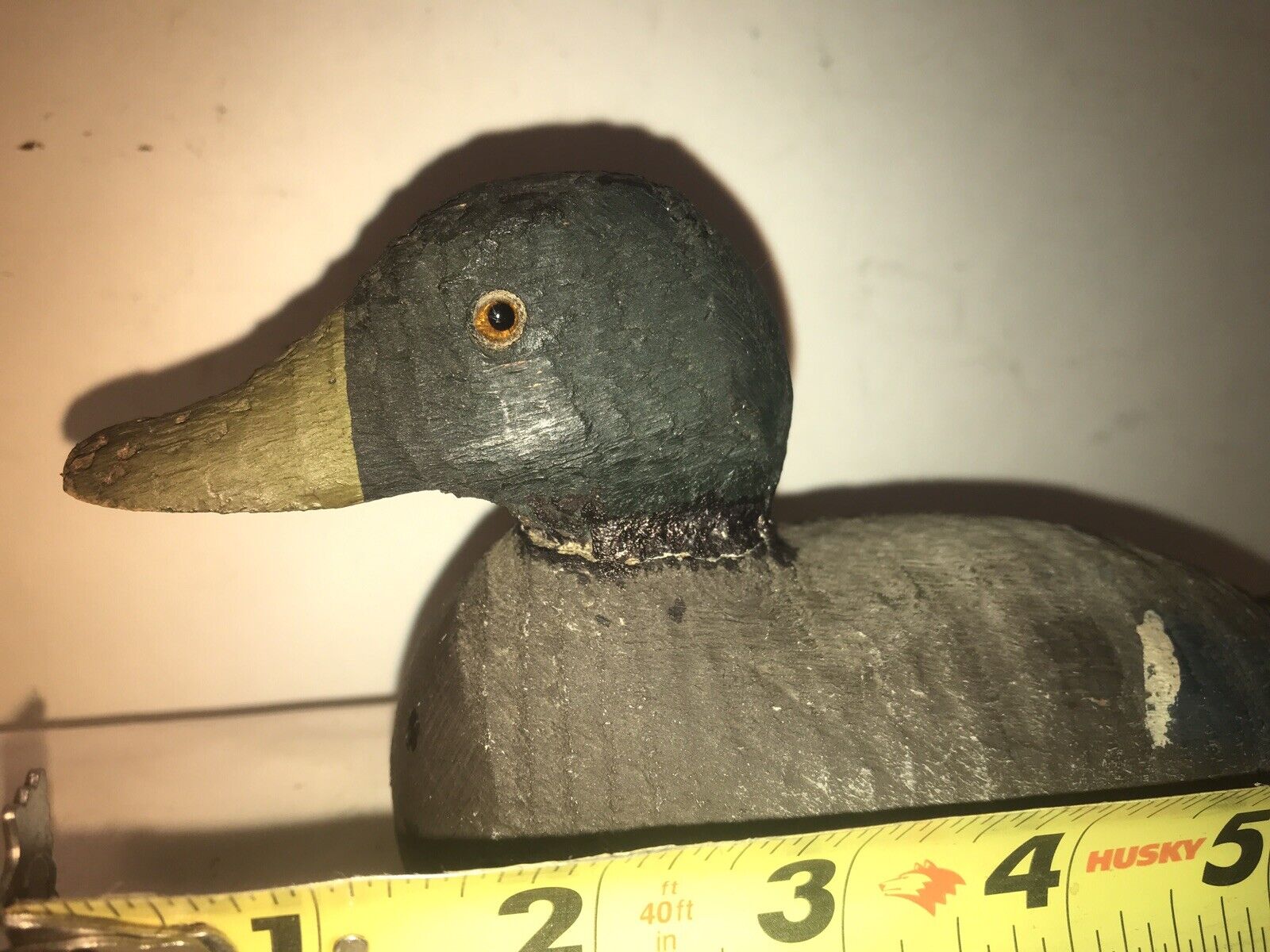
Sold on eBay February 2nd, 2025
victor animal trap duck decoy mallard drake salesman sample vintage
Vintage salesman sample Mallard drake duck decoy Completely original Very good condition with some minor damage to the bill Stamped on bottom Please view all pictures and feel free to ask any questions prior to purchase (Condition: Pre-Owned)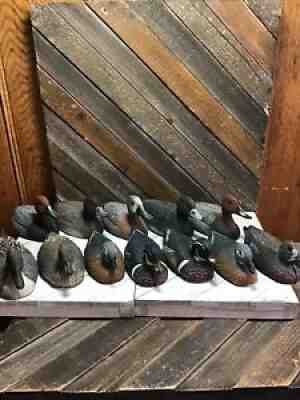
Sold on eBay Jan 25, 2022
VINTAGE RARE Lot Of 12 CARRY-LITE SPORT PLAST SALESMAN SAMPLE DUCK Goose Decoy
VINTAGE RARE Lot Of 12 CARRY-LITE SPORT PLAST SALESMAN SAMPLE DUCK Goose Decoy. Hi this a lot of 12 duck and geese some have wear nothing crazy they are salesman samples I ??m not going to list all the birds you duck guys know them.selling all as a family to a new owner thanks for looking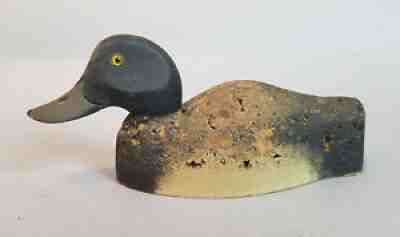
Sold on eBay Jan 10, 2022
RUPPEL Miniature Salesman 1/4 size sample Duck Decoy - Vintage Decoys
Walter Ruppel salesman sample in a nice 1/4 size. Minor rubs/wear to the cork as shown.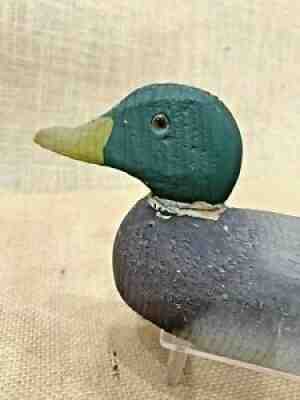
Sold on eBay Nov 11, 2021
VICTOR SALESMAN SAMPLE MINIATURE WOOD MALLARD DRAKE DUCK DECOY
THESE JUNIOR DECOYS ARE RARE. OTHERWISE, IN ORIGINAL CONDITION WITH NO CRACKS OR SPLITS. HE IS SOLID WOOD WITH A LATHE-TURNED BODY AND HEAD, AND HAS ORIGINAL, INTACT, UN-CRACKED GLASS EYES. THE ACRYLIC STAND IS INCLUDED.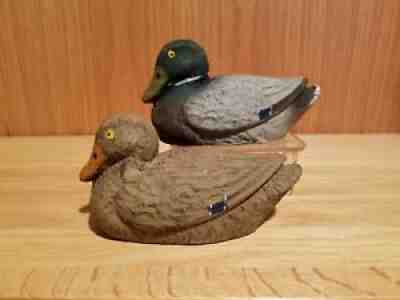
Sold on eBay Nov 14, 2021
Very Nice Carry-Lite Salesman Sample Vintage Duck Decoys Pair Milwaukee WI
These little gems are about 5" long.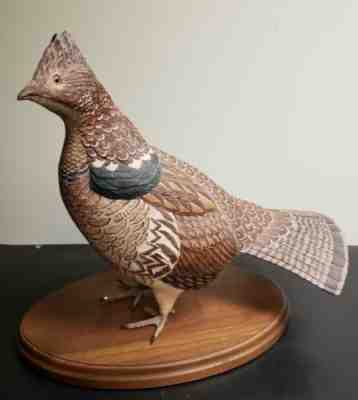
Sold on eBay Feb 21, 2023
LOON LAKE CITY RUFFED GROUSE DECOY ORVIS SAMPLE SAM NOTTLEMAN
Find many great new & used options and get the best deals for LOON LAKE CITY RUFFED GROUSE DECOY ORVIS SAMPLE SAM NOTTLEMAN at the best online prices at eBay! Free shipping for many products!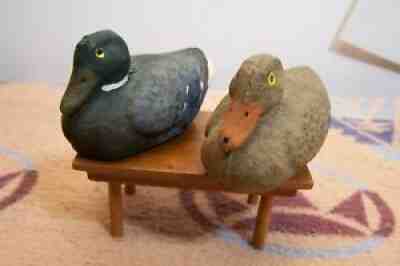
Sold on eBay Feb 04, 2022
PAIR N-MINT EARLY CARRYLITE SALESMAN SAMPLE DUCK DECOY PAPER LABEL PAPER MACHE
MILWAUKEE USED TO HAVE A SPORTS SHOW IN THE 40'S AND 50'S MAYBE INTO THE 60'S.
Sold on eBay July 11th, 2024
* Rare PADCO FACORY "Pintail Drake" Wood Hunting Decoy " Salesman Sample !
Excellent "Pascagoula Decoy Company Only" ( PADCO ) Factory Salesman Sample . Pintail Drake Decoy . 9 or 9 1/8th inches Overall length. one little tiny flake on left side of bill . Near to mint as one might find. Great Addition to Your Factory Decoy Collection ! Selling Without Reserve . Shipping to 48 States Only ! (Condition: Pre-Owned)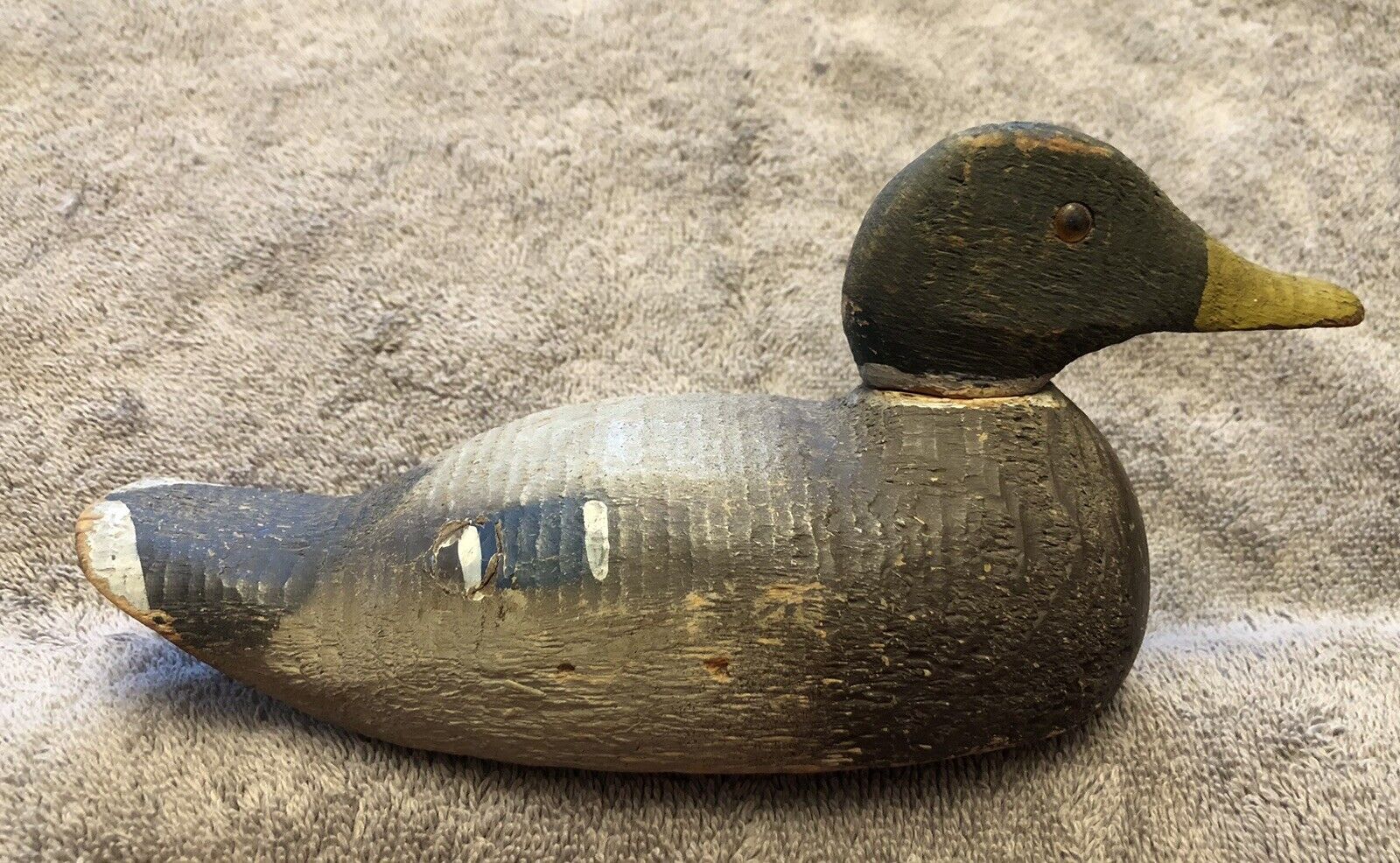
Sold on eBay February 14th, 2025
victor animal trap duck decoy mallard drake salesman sample vintage
Here’s a fairly hard to find Victor company mini sample decoy. It has some scuffing to the paint, check out the photos. Great addition to the collection. PLEASE PAY WITHIN 3 DAYS OF AUCTIONS END. NO INTERNATIONAL SHIPPING. THANKS FOR LOOKING!! (Condition: Pre-Owned)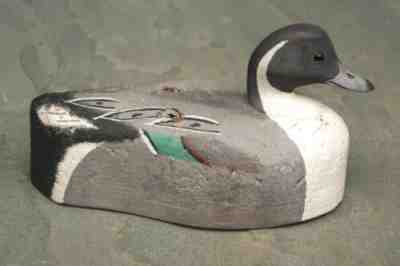
Sold on eBay Jun 20, 2022
Walter Ruppel Miniature Pintail Duck Decoy Salesman's Sample
For your consideration is a miniature Walter Ruppel pintail duck decoy. Walter Ruppel manufactured cork on wood decoys in Sheboygan Wisconsin in the 1930s. It also has one eye that has been broken off.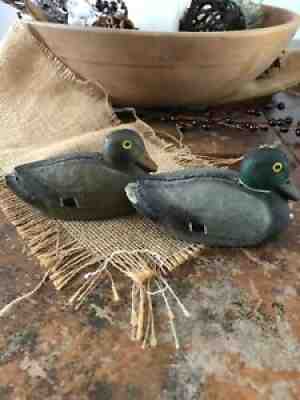
Sold on eBay Jan 10, 2022
Vintage Carry-Lite Salesman Sample Decoys
Marked on Bottom â?? Carry-Lite Decoys Milwaukee, WIâ? These are Near Mint!
Sold on eBay August 3rd, 2024