

RARE EARLY ~SWANSON RIG c1950 FRANK CUMMINGS Wood Duck Decoy HARSENS ISLAND MICH
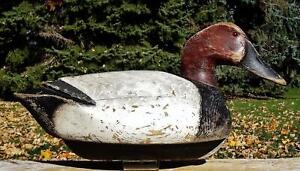
RARE EARLY ~SWANSON RIG c1950 FRANK CUMMINGS Wood Duck Decoy HARSENS ISLAND MICH
SOLD $255.01 Sold: Nov 17, 2023 on eBayOriginal Listing Description
eBay A VERY EARLY & VERY RARE 1950 DRAKE CANVASBACK by FRANK CUMMINGS (1918-2002) of HARSEN'S ISLAND, MICHIGAN of the ST. CLAIR FLATS of MICHIGAN & the COUNTRY'S LARGEST MARSHLAND RIVER DELTA ~THIS RARE DECOY is FROM the RIG of ONE of SOUTHEASTERN MICHIGAN'S MOST FAMOUS & WEALTHY HUNTERS & COLLECTORS of the 1900's in METRO DETROIT, the LATE RONALD SAARINEN "RON" SWANSON (1939-2022) of BLOOMFIELD HILLS MICHIGAN ~SUPERB STYLE, FORM & CONSTRUCTION on this DECOY with SUPERB, EARLY HAND-BRUSHED ON ORIG. PAINT, BRIGHT RED GLASS TAXIDERMIST EYES & ORIG. KEEL ~CUMMINGS DECOYS PROMINENTLY FEATURED in CLUNE WALSH & LOWELL JACKSON'S BOOK: "WATERFOWL DECOYS OF MICHIGAN AND THE LAKE ST. CLAIR REGION" on Page 126 & 127 ~FRANK LIVED RIGHT in the MIDDLE of the ST. CLAIR FLATS AREA of LAKE ST. CLAIR & DURING HIS CARVING YEARS FROM 1943-1980 HIS DECOYS WERE THE FINEST WOOD DECOYS MADE in the REGION ~LOOKS FANTASTIC & EVEN The RUBS to EDGES & HIGH POINTS & A COUPLE SHOT MARKS ADD TO THE AURA OF THIS RARE BIRD RARE EARLY ~SWANSON RIG c1950 FRANK CUMMINGS Wood Duck Decoy HARSENS ISLAND MICH RARE EARLY ~SWANSON RIG c1950 FRANK CUMMINGS Wood Duck Decoy HARSENS ISLAND MICH Click images to enlarge Description (photo below): c1950 Frank Cummings the Decoy Carver, Bait & Tackle Shop Owner, was Also the Fire Chief of "Harsen's Island, Michigan"! HARSEN'S ISLAND & ST. CLAIR FLATS CARVING and BAIT & TACKLE SHOP LEGEND ....... FRANK CUMMINGS Birth Name: Frank William Cummings (Chicago, Illinois) (born): May 25, 1918 (died): Oct. 13, 2002 (Age 84) of Sans Souci, Harsen's Island, Clay Township, Michigan Frank, Lucille & their Daughter's Harsen's Island House and "Cummings Bait & Tackle" was Located at 208 La Croix Street ......... Right on the Outskirts of San Souci 3 Blocks from the St. Clair River ........... and 100-ft. from the Harsen's Island Fire Department & Post Office ........... Right in the Middle of the St. Clair Flats and all of his Customers!! (photo below): Dave Bollman's 1997 Painting of Frank Cummings in his St. Croix Street Shop on Harsen's Island called "LIL SHAVERS" ....... an Incredible Likeness of Him on this "FAMOUS PAINTING" Done 5 Years Before His 2002 Death with his Two Grandchildren Looking On!! Frank "St. Clair Flats" Cummings (1918-2002) FRANK OWNED "CUMMINGS BAIT & TACKLE"- SOLD a COMPLETE LINE of LIVE BAIT & TACKLE to FISHERMAN from his HARSEN'S ISLAND STORE!! ? Frank Also CATERED to "ICE FISHERMEN"- During the Winter, Frank Cummings Sold Minnows, Suckers, Lures & Tackle like Tip-Ups ........... and Even Rented Out Ice Shanties & Carved and Sold Fish Decoys!!! ? OUTFITTED DUCK HUNTERS all FALL SEASON: Michigan and Canadian Hunters in the St. Clair Flats Carvers Bought all the Duck & Goose Decoys Frank Could Make ............ and Not Only Did He Fish & Hunt, He was Still Mostly at his Bait & Tackle Selling Fish Bait .......... and Also had Duck Hunters Frequenting him to Buy his Great Gunning Decoys, Plus Ammunition as Well!! (pictures below): FRANK CUMMING'S BELOVED ST. CLAIR FLATS!! After FRANK & His WIFE LUCILLE MOVED to HARSEN'S ISLAND Around 1943 ........ He DECIDED that the AREA NEEDED a "BAIT & TACKLE SHOP", "HAND-CARVED WOOD DUCK DECOYS, FISH DECOYS" & SUPPLIES ....... and NATURALLY "ICE FISHING" SHANTIES to RENT: This Frank Cummings Family Home & "Cummings Bait & Tackle" Were Located in the Northeast Corner of Harsen's Island a Block from the South Channel!! (picture below): "The Actual South Channel Location of the Cumming's Home & Store was Located Right in the Middle of the St. Clair Flats on the U.S. & Canada Border: NOTE: The "Red Arrow" Denotes the "Cummings Bait & Tackle": NOTE: The "Red Circle" Denotes the "Cummings Home, Bait & Tackle Shop & Carving Shack": A Very Rare "73-Year Old" Decoy from the Rig of Ronald Saarinen "Ron" Swanson; A Renowned & Wealthy "Man of Means" Hunter & Decoy Collector from the Prestigious Metro Detroit Area of West Bloomfield, Michigan!! EXCELLENT ORIGINAL CONDITION, VERY RARE & VERY EARLY: DECOY from the FAMOUS "RON SWANSON RIG"!!! c1950 Frank W. Cummings (1918-2002) Drake Canvasback; "Solid Cedar" Wood "GUNNING" Duck Decoy; Harsen's Island, Michigan (Lake St. Clair; St. Clair Flats) (photo below); FRANK CUMMING'S DECOYS ARE FEATURED IN: Clune Walsh & Lowell Jackson's 1983 Book: "WATERFOWL DECOYS OF MICHIGAN and THE LAKE ST. CLAIR REGION" on Page 126. The Black Duck Shown is One of Frank's Nicest, Early, Hand-Painted Duck decoys: ) _ This Very Early & Rare Frank Cummings "Ron Swanson" Rig Drake Canvasback is 73 Years Old and Looks Fantastic: This is ONE of CUMMING'S FINEST & EARLIEST GUNNING DECOYS that YOU WILL EVER SEE!! CLEARLY MADE for FRIEND & FAMOUS COLLECTOR "RON SWANSON'S RIG" NICE BIG, OUTSTANDING & RARE EARLY STOUT STYLE & FORM, SOLID CEDAR, GORGEOUS EARLY-FORMED, LONG-STYLE HEADED, 16" LONG, WORKING BIRD from the HAND'S of MICHIGAN'S LESSER KNOWN, BUT JUST as IMPORTANT as ANY OTHER MICHIGAN CARVER'S SPOT in HISTORY!! OUTSTANDING, DEEP ICE-GROOVE in the BACK for EASY RETRIEVAL ....with INCREDIBLE PRIMARY & SECONDARY "STEPPED" WING TIP CUTS & DEEPLY CARVED WING SEPARATION!! HIS were SOME Of the MOST POPULAR, MOST EFFECTIVE & HIGHLY SOUGHT AFTER "GUNNING DECOYS in ALL of the ST. CLAIR FLATS REGION from 1943 thru AROUND 1980 WHEN HE WAS NO LONGER ABLE to CARVE; BUT DID MAKE a HANDFUL AFTER that for HIS DAUGHTER or CLOSE FRIENDS!!! EXCELLENT ORIGINAL PAINT with BLACK TAIL, BREAST, BILL & BA CK WING SEPARATION ...... With BACK & SIDES with SUBTLE, DRY-BRUSHED GRAY on the BACK & DARKER GRAY PRIMARY FEATHERS ...... and a RED-BROWN HEAD with DRY-BRUSHED BLACK to FACE, TOP of HEAD & NECK FRONT with VERY SMALL TOUCH-UP to SMALL "IN-USE" NECK FIX!! His Early 73-Year old & Perfect Original Paint "Drake Canvasback" Paint Scheme -and- Tight Like-New, Original, Rounded-End Keel!! Frank Cummings was a Devoted St. Clair Flats Conservationist Active Civic & Community Member, Hunting & Fishing Retailer, Wetlands & Waterfowl Expert, Family Man, Guide, Sportsman, Waterfowl Hunter and Duck, Goose & Fish Decoy Carver!! _ The PROVENANCE of this DECOY: A Very Early 1950 Decoy From the 'PERSONAL-RIG' of "RONALD SAARINEN SWANSON"; A Very Well Known Fisherman, Duck Hunter and Very Early Duck Decoy Collector & Well-Known for His Outstanding Decoy Collection! (photo above): A Late 1940's Photo of "RON SWANSON" ....... a Member of the Important & World Renowned Swanson & Saarinen Families of World Acclaimed Designers & Architects!! Birth Name: Ronald Saarinen Swanson (West Bloomfield & Bloomfield Hills, Michigan) (born): Oct. 12, 1939 (died): Aug. 4, 2022 (Age 83) Ronald Saarinen Swanson of the Affluent City of Bloomfield Hills, Michigan, passed away on August 4, 2022 after a long illness. Ron Swanson was the son of the Famous Architect and Designer J Robert F. Swanson and the Vary famous Interior Designer Pipsan Saarinen Swanson. Ron Swanson Not Only was a Well-Known Duck Hunter and Decoy Collector, he was an Important Part of the Fabric of the Detroit Community. Ron was the Grandson of Eliel Saarinen, World Famous Architect, Teacher and President of the Cranbrook Academy of Art, of which Ron was deeply involved with the Arts and Cranbrook. Ron Swanson had many Passions and was a Prominent Figure in the World of Duck and Fish Decoy Collecting. Ron also Loved to Fly fish and Hunt Game and he Traveled Around the World Extensively on Salmon Fishing and Hunting Expeditions. He loved the history of Fishing, Rivers, and the Chase of Trophy fish. He Authored Two Books; "Record Atlantic Salmon" and "Fish Models, Plaques & Effigies". He was a also a Regular Contributor to the "Atlantic Salmon Journal" and "Decoy Magazine". Professionally, Ron Co-founded Arkitektura, a Modern Furnishing and Design Store, that Has Been in Business for 40 years with locations in Bloomfield Hills and San Francisco. Ron served on the Cranbrook Academy of Art Board of Governors and Ran Countryside, the Swanson Family Office, for 30 years. Ron Attended the Cranbrook School for Boys and Earned a BA from Brown University. Ron loved the Histories of the Niche Subjects that Fascinated Him and was Always Questing for a Rare Book, Unique Duck or Goose Decoy, or Story that was Almost Lost to History. He Shared these Passions Willingly and Cultivated a Diverse Group of Friends Across a Landscape of Countries, Hunting Lodges, Folk Art Fairs and Decoy Auctions. Ron Swanson was a Michigan man through and through and he Was Happiest Spending Time with Family and Friends at the Well To Do City of Harbor Springs, in Northern Michigan. He loved to Swim and Sail in the Waters of Little Traverse Bay and Relax in the Sands of Menonaqua Beach. Ron was a Gentle Soul and his Laugh, Smile, Wit, and Excitement around Cocktail Hour, and at the Close of the Day will be Fondly Remembered by Family, Friends and Acquaintances Alike Forever. Ron had a Son, Eric Swanson, and when he Died in 2022 and He had 2 Granddaughters, Elinor and Madeline Swanson. He and His Decoy Collecting Camaraderie Will Be Known for Years to Come!! __ (Below Photos): This is a Very Rare & Very Early, Outstanding, Gunning Decoy from the Famous "Swanson Rig"; Early c1950 "Cold-Stamped "FC" for the Maker Frank Cummings -and- "Signed by Ron Swanson", Also Written on Decoy by Swanson "Frank Cummings" and "Made By Frank Cummings in 1950" for His Personal Rig!! Frank Cummings Beautifully "Typical to Him" Contours, Head Form and Wing Carving Mimic a "Live Duck in Appearance" & this Early Body Style has Very Deep Detail Cuts and is in Outstanding Condition ........ And the Very Early Head Style Impresses with Its Long Form, Huge Bill with Deep Head/Bill Separation & Nostrils that Combs Back to a Pointed Crest ....... this Decoy was Clearly Made as a Special Decoy for Ron Swanson's Rig from this Master Carver of the St. Clair Flats!! This Superb, Very Early & Rare, Life-Sized Solid-Cedar, Canvasback Decoy Measures: ?16" long x 7-1/4" wide x 8" tall ? Weighs a Quite Hefty: 2-lb. 11-oz. Frank Cummings Rigged All of his Decoys with a Permanent Keel & Drilled-Hole Line-Tie .......... He Didn't Put Lead Weights on & Left it for the Hunter as Many Pothole Hunters Didn't Necessarily Use or Need One .......... and Big, Open Water Hunters Might Use a Much Heavier Weight than a Shore or Open Marsh Gunner!! This AWESOME DECOY is in PERFECT STRUCTURAL CONDITION with ALL ORIGINAL PAINT with 1 SMALL TOUCH UP, EVEN RUBS to HIGH SPOTS and EDGES, TYPICAL SMALL SCATTERED DENTS & 2 OLD LEAD EMBEDDED SHOT MARKS!! This Drake Canvasback Clearly Shows that the Collection or Collections it Has been in was Climate Controlled, Direct Light-Free ......... and Kept these Decoys in Awesome Condition when it was Retired Maybe the 5 Decades it Was Kept Preserved!! (Below Photos): SUPERB DRAW-KNIFE, SPOKE-SHAVE, FILE & KNIFE WORK GIVES the DECOY an APPEALING & LIFE-LIKE SURFACE ....... CONCISE CARVING DETAIL to HEAD/BILL SEPARATION & NOSTRILS ........... DEEPLY CARVED, ICE-GROOVE "HANDLING" WING SEPARATION on the BACK, VERY DEEP WING CARING DETAIL to WING PRIMARY FEATHERS, VERY HIGH RAISED WING TIPS ......... and ROUNDED BOTTOM EDGES to CUT THROUGH WATER!! This DECOY WOULD SWIM & FLOAT REALISTICALLY by FLOATING IN, THROUGH & OVER WAVES and SAT PERFECTLY FLAT while DOING SO!! (Below Photos): The Bottom of this Frank Cummings Drake Canvasback has His Perfectly Located "FC" Cold Stamp Right Next to the Keel on the Bottom .......... Along with Several Hand Written Notes by Ron Swanson on the Bottom About this Decoy!! (picture below): "R S SWANSON" Stands for: ~RONALD SAARINEN SWANSON~ (picture below): "FC" Cold-Stamped for: "FRANK CUMMINGS" (picture below): While it is Somewhat Hard to Read; RON SWANSON WROTE: MADE BY: "FRANK CUMMINGS c1950" Well Before 1980 Frank Cumming Had Been Air-Brushing All of His Decoys for Years!! (Below Photos): The HEAD of this VERY RARE & EARLY, DRAKE CANVASBACK from SEVERAL ANGLES to SEE the AWESOME, LONG-STYLED CRESTED HEAD & LARGE "CANVASBACK" BILL ....... with NICE, DEEPLY KNIFE-CARVED HEAD/BILL SEPARATION, MANDIBLES & NOSTRILS with an OUTSTANDING LONG, SOMEWHAT-ALERT, WELL-TURNED to its RIGHT HEAD & NECK!! HEAD is as TIGHT to the BODY as the DAY it WAS MADE by MOUNTING it with a GLUED & CLAMPED DOWEL!!! AWESOME DEEP BRIGHT RED TAXIDERMIST EYES are PERFECTLY MOUNTED & SYMMETRICALLY MATCH EACH OTHER on the HEAD!! (Below Photos): Superb 73-Year Old, Very Early & Rare Frank Cummings Style & Form with Hand-Brushed Paint Detail as He Switched to Air-Brushing Later! This Outstanding Drake Canvasback was Intricately Adorned with Thick Coats of Hand-Brushed, Daubed & Straight Line "Wet-on-Dry", Very Old, Lead-Based, Flat Enamel!! PRECISE FEATHERED TRANSITION PAINT BETWEEN BREAST and SIDES & BACK as WELL as SIDES to TAIL ...... ALSO FEATHERY "DRY-on-WET" DETAILING to GRAY on the BACK & BLACK onto the RED BROWN HEAD ......... VERY UNIQUE SOLID GRAY PAINTED TOP of WING PRIMARY FEATHERS! HEAD is HELD ON with MARINE GLUE and a VERY LONG 3/8" DOWEL that GOES UP from DEEP INSIDE the SOLID CEDAR BODY and UP THROUGH the ENTIRE HEAD & SANDED EVEN with TOP of HEAD!! The KEEL was ATTACHED with a GENEROUS BEAD of MARINE GLUE and 2 LARGE, COUNTERSUNK SCREWS 73-YEAR OLD ........... the LINE-TIE was a SIMPLE DRILLED HOLE & WEIGHT was Removed WHEN was RETIRED!! (picture below): FRANK CUMMINGS TYPICAL "FC" COLD-STAMPED BRAND USUALLY ALWAYS RIGHT to a SIDE of the KEEL: THIS DECOY is as SOLID AS the DAY IT WAS MADE, YOU COULD SWING IT BY the HEAD & LOSE NOTHING!!! Frank Cummings Earliest Decoys Like this Canvasback up for auction "ARE VERY RARE" and Were All Hand-Painted and Made for Hunters and Used for Gunning! He Began Carving his Outstanding & "Very Much in Demand" Decoys Not Long Before the Advent of Plastic Gunning Decoys!! As the Years Moved On Plastic Decoys were Replacing Wood Decoys ........ and Frank's Decoys were Being Bought Almost Exclusively by Collectors ....... Which is Why You Rarely See His Early Gunned Over Decoys ..... and Almost All that are Available for Sale Were Never Gunned Over!! This is Not Unlike Other Carver's, Regardless of When they Started Carving ............. Even the Great Madison Mitchell's Early Gunning Decoys are Hard to Find ............. While his Decoys Made After Plastic Decoys Dominated the Scene were Almost All Bought by Collectors .......... and Mitchell's Later and Last Decoys that are Widely Available are Almost All Near Mint, Signed & Were Never Gunned Over!!? (Below Photos): This VERY EARLY, COMPLETELY HAND-MADE, HAND BRUSH-PAINTED DECOY with EARLY FAT BILL ENTIRE LENGTH, CRESTED-HEAD with NO NECK BULGE, THINNER NECK, SHARPER EDGES & LONGER TAIL: (Below Photo): LATER CUMMINGS CANS, COMPLETELY AIR-BRUSH PAINTED with THIN BILL END, THICKER-HEAD with LARGE NECK BULGE, FATTER NECK, SHORTER TAIL and MUCH MORE ROUNDED EDGES: (Below Photos): LATER "AIR-BRUSHED" FRANK CUMMINGS REDHEADS! This 73-Year Old "Very Rare & Early", Hand-Brush Painted, Frank Cummings, Canvasback Gunning Decoy!! This EARLY CANVASBACK has a SOMEWHAT HIGHER-HEIGHT, BACKED BODY, that LOWERS TOWARD the BREAST ...... BUT the CARVED-IN, RAISED NECK SEAT is ALMOST as TALL as thew BACK & SEAMLESSLY FLOWS into the BODY!! INCREDIBLE PATINA with OUTSTANDING CRAZING in SPOTS to the ORIGINAL, LEAD-CASED, GUNNING PAINT & EVEN the SMALL TOUCH-UP to the PROFESSIONAL IN-USE NECK REPAIR that was LIKELY DONE by CUMMINGS for SWANSON!! AWESOME, LONG-STYLED HEAD. UNIQUELY CRESTS to a POINT at the BACK of the NECK on these EARLIEST DECOYS!!! Carved from a Very Dense Piece of Cedar that was Clearly Kiln-Dried or Left to Naturally Dry and ONLY Has 1 Tight & Hard-to-See Surface Check!! "A Perfect Specimen of a Vintage Open Water Hunting Block Made to Take on Any Weather a Large Lake Could Whip Up Including Freighter Wake and Crafted by One of Michigan's Lesser Known Carver's that was Actually a Michigan Carving Legend; and Even More Important to Michigan's Legacy as Compared to Many More that are Just Simply More Widely Known!" If You Like Rare, Well Over a 70-Year Old Decoys from Lesser Known, But Infinitely Important Carvers from the St. Clair Flats Gunning Region, this is in Excellent Condition, Well Taken Care of and from the Hands of a Michigan Master Carver from the St. Clair Flats Region ............. THIS IS A GREAT DECOY FOR "ANY" COLLECTION!! ? ? This Drake Canvasback Accurately Reflects the Care it Got in the Climate Controlled & Direct Light-Free, Collection that it Came From! It Has Been Handled with Very Much Care Over the "PAST 73 YEARS" After Retirement ........ and It Is A "TRULY PERFECTLY FUNCTION-ABLE, "MARKET HUNTING" DECOY" ......... YOU COULD PUT a WEIGHT ON IT & HUNT it TOMORROW and it WOULD PERFORM LIKE it was NEW!! YOU COULD HUNT OVER it TODAY and it WOULD SWIM, RIGHT-ITSELF and PERFORM as GOOD as ANY DECOY on the WATER as PERFECTLY as it WOULD HAVE WHEN it was MADE & USED OVER 73 YEARS AGO!! IF YOU LIKE DECOYS THAT DID WHAT THEY WERE MADE FOR; SURVIVED in GREAT CONDITION BECAUSE they were RETIRED EARLY & COULD STILL BE USED, This is a GREAT DECOY for ANY COLLECTION!! This Decoy Doesn't Have a Crack or Chip & It Has Scattered Small Dents, Typical Rubs from Use to the Edges and High Points, A Few Paint Flakes, a Couple Shot Marks, a Small Paint Touch-up from a Small, In-Use Neck Repair Done by Cummings for Swanson & Absolutely Everything is as Tight on this as if Made Yesterday!! I'm SURE It SAW SEVERAL SEASONS of HEAVY ACTION and CAME OUT in PERFECT STRUCTURAL CONDITION and OBVIOUSLY had a SMALL NECK REPAIR & GUNNING PAINT WHILE "IN-USE". BUT IT NICELY ONLY has TYPICAL MEDIUM to LIGHT RUBBING to HIGH POINTS, BILL & TAIL TIP & BOTTOM EDGE & THAT'S WELL AFTER the 73 YEARS WHEN IT WAS MADE .......... which IN and OF ITSELF is QUITE REMARKABLE for ANYTHING that was MADE of WOOD & TREATED to HARSH CONDITIONS of USE!! Frank's Decoys were Also Some of the Most Inexpensive Decoys in the Entire Flats Region for a Hand-Made Wooden Decoy and My Brother-in-Law Remembered that in the Mid-1970's When he Added More Divers to His Rig, He Went to Frank Cummings as He Had See How Perfect Frank's Decoys Looked and Rode in the Rough Lake St. Clair Open Waters; and at that Time Large Divers Like Cans and Redheads were $8.00 each, Smaller Divers were $5.00 each and Goldeneyes were $10.00 each. His Puddle Ducks Roughly Followed these Prices But were around $1.00 each more because of all of the Feather Checking he Put on Puddle Duck Hens, which he Didn't Do on Diver Hens. ? IN THE NEXT FEW WEEKS I AM PUTTING ON EBAY MORE LAWRENCE BETHEL FISH DECOYS, A PAIR OF THE ONLY KNOWN PROTOTYPES MADE OF THE VERY FIRST PRE-PRODUCTION FIBRE DECOYS EVER MADE, A NEAR MINT 1927 HEDDON GIANT VAMPIRE FISHING LURE IN RARE SHAD, A PAIR of LATE PHASE DODGE MALLARDS, A VERY RARE VICTORS DRAKE BUFFLEHEAD, A RALPH MALPAGE PAIRT OF WOOD DUCKS & TEAL, A VERY RARE c1893 100% ORIGINAL TRANSITION PERIOD MASON DRAKE BUFFLEHEAD, A NEAR MINT PAIR OF MASON GLASS EYE PINTAILS, A MINT c1905 HEDDON ARTISTIC MINNOW, A SCARCE RALPH MALPAGE ATLANTIC BRANT, A YELLOW WITH RED EYE BLUSH MOONLIGHT SINGLE-HOOK PIKAROON, A NIB CREEK CHUB MULLET COLOR STRIPER PIKIE IN CORRECT BOX, A PAIR of INCREDIBLE CHALLENGE & PREMIER GRADE MASON BLUE-WINGED TEAL, A NICE PAIR OF MASON GLASS EYE BLUEBILLS, AN AWESOME ERNIE NEUMANN SUCKER FISH DECOY, A RARE c1880 ST' CLAIR FLATS DRAKE REDHEAD, A VERY NICE ERNIE NEUMANN SUCKER, A RARE 12-1/2" CHET SAWYER MINNESOTA FISH DECOY, A NEAR MINT OSCAR PETERSON PERCH FISH DECOY, A MINT PAIR OF WRAGG & BURRELL WIGEON, AN OUTRAGEOUSLY HARD TO FIND PAIR OF CHARLIE POZZINI BLUEBILLS, AN AMAZING JOHN HOLLOWAY SLEEPING TURNED HEAD DRAKE PINTAIL, A VERY BIG & BULL-NECKED EARLY FERDINAND BACH DRAKE CANVASBACK FROM HIS PERSONAL RIG AND MORE!! ? Shipping Includes Insurance! I Don't Believe in Making a Profit on Shipping, You Pay What I Pay. If it's Less Than You Paid I Refund the Difference, If More I'll Pay For It. I COMBINE SHIPPING. I am also loading over 150 Duck Decoys, 150 Fish Decoys, 70 Scarce Fishing Lures, etc. so keep checking back. "VERY RARE & VERY EARLY"; "COLD-STAMPED "LIFE-SIZED; 16" ~2-lb. 6-oz. BIRD"; SOLID-CEDAR; 1950 FRANK CUMMINGS (1898-1976); ABSOLUTELY INCREDIBLE PATINA; "73" YEAR-OLD; DRAKE CANVASBACK; WOOD DUCK DECOY; ITEM DESCRIPTION: This Outstanding, Excellent Condition Gunning Decoy is a Precisely Executed 73-year old, Drake Canvasback hunting decoy that was hand carved and hand brush-painted by Frank W. Cummings (1918-2002) of Harsen's Island, Michigan. Harsen's Island is located in Clay Township, of which is part of the larger governmental unit, St. Clair County. Frank lived in a small town on Harsen's Island named Sans Souci (English Translation: Without Worries or Care), which is located on the South channel (or nicknamed "the shipping channel") of the St. Clair River delta which acts as the border between the US and Canada. Harsen's Island is also part of the St. Clair Flats River Delta, which is formed where the St. Clair River branches into 3 channels and flows into Lake St. Clair. The North, South and Middle channels are the 3 waterways that are formed as the St. Clair River disperses into Lake St. Clair and this entire area is referred to as the St. Clair Flats. These 3 channels combine to become a very integral part of the Great Lakes and drain and filters water from Lake Huron down into Lake St. Clair, where it again funnels into the Detroit River to the south and becomes the mighty Detroit River. It is the South Channel that marks the international boundary between the United States and Canada. The South Channel off Harsen's Island carries more freighter traffic than the Suez and Panama Canals combined!! Over 1 billion US gallons of fresh water per day flow down the St. Clair River, and through its delta region, the St. Clair Flats. Harsen's Island was named for its first white settler, James (or Jacob) Harsen, a Dutchman, who came from New York state in about 1779 with his son-in-law Isaac Graveraet (or Graveret). Harsen bought the island from Native Americans in 1783. It was also known as "Jacob Island" (also James or Jacobus Island) as late as 1809. Frank Cummings was born on March 25, 1918 in Cook County, Chicago, Illinois on March 25, 1918. Fred was born to Parents; Frank Raymond Cummings (1893-1947) and his wife Emily Nee Libert Cummings (1989-?), who were both Chicago Residents. Frank Cummings (1918-2002) also would marry a girl that also hailed from Chicago and they were married on May 2, 1042 in Henry, Ohio, on the Illinois River some 60 miles southwest of Chicago. Frank's new wife was Lucille Margaret 'nee Look' Cummings (1918-2000) and she moved to Michigan in the Late Teens or at the Earliest 1919, as Lucille's family Lived in Flint in the 1920's and Tawas City, Michigan in the 1930's. They eventually met in Michigan and possibly their family members knew each other from their native Chicago and were introduced. Frank Cummings himself had a similar path to Michigan at the very early age of 2 in 1920, and lived with his grandparents, aunts and uncles, and his mother at a Detroit home near Grand Boulevard. In 1940, 2 years before he married his future wife Lucille, and probably were already in courtship, Frank worked for the Briggs Manufacturing Company at the Mack Road Plant, also in Detroit. It was around 1943 that Frank Cummings and his wife of a year or so, Lucille, moved from Detroit to Harsen's Island and decided that there was a lack of a true "Bait & Tackle" Store and Expert Duck & Fish Decoy Carver with some hunting supplies like Ammo, etc. This idea was actually brilliant because there was no fishing & hunting shop on the Islands and/or in that area of the Flats. And thus, after opening "Cummings Bait & Tackle", Frank became a perfectly located source for local fisherman and duck hunters that was convenient to buy hunting, fishing & trapping licenses. And hence his "Ice Fishing" shanty rental business, live bait and tackle business, wooden duck & fish decoy business and hunting business that flourished in 1970 when the DNR began managing 3433 acres on the Harsen's Island for duck hunters that needed licenses and ammo. (photo below): Some of Frank Cumming's Outstanding & Realistic Duck and Goose Decoys and It is Fairly Easy to See Which Ones Were Hand Painted & Which Ones were Air-Brushed: (photo below): A Pair of Frank Cummings Mallards Shown with a Pair of Friend Ben Schmidt's Decoys; A Black Duck & a Hen Mallard: After moving to 208 La Croix Street in Sans Souci on Harsen's Island, which is across the North Channel via ferry to the mainland, right across the South Channel from Canada and its Native Canadian Islands of Squirrel and Walpole. And Frank Cummings and hid wife would never move again, they found that living in the center of the St. Clair Flats was sufficiently lucrative, they loved the area and region, and Frank and his wife Lucille would spend almost their entire adult life's on Harsen's Island and would die there as well. Frank built a small carving "shack" or small shop where he made all of his duck, goose and fish decoys. Frank and Lucille lived in the small island town of Sans Souci off the South Channel and they were certainly one of the island's longest running year-round pair of residents. Along with his wife Lucille, they ran his thriving bait shop on the island and carried everything the sportsman would need for all of his year-round sporting activities. It was located at 208 La Croix Road and everyone knew that to find his bait shop you: "Take a left when you pull off of the ferry from the mainland, then a right as the road curves, then follow the road down and follow the left curve or you'll end up in the marsh, and head straight for the South Channel and you can't miss it". Frank himself was also a sportsman and hunted, fished and supplemented his income by living off of the land in a variety of ways. (photo below): The 1947 FLATS AREA & LAKE ST. CLAIR PHONE LISTINGS: "ST. CLAIR RIVER DISTRICT DIRECTORY": NOTE THAT FRANK CUMMINGS OCCUPATION IS LISTED AS: "FISHERMAN" He Also Began Advertising "Cummings Bait & Tackle" and the Items he Carried in the "1948 St. Clair River Directory" with a Display Advertisement" Frank and Lucille Cummings became the proud parents of daughter Joan around 1943, and the Cummings house, bait shop and carving shack were a mere located a mere 6 houses off of the south channel. Through the leave-less trees during the winter-time, the passing-by freighters were clearly visible from his shop window which he enjoyed. In addition to live bait he carried a full line of tackle and was integral in outfitting sportsmen for any type of fishing at any time of year no matter what the sought after species. For the open water fishermen, Cummings carried bait and gear for the men chasing walleye and other game fish in the deep channels as well as anything that was needed for those looking to fill their limit of bass and pan-fish in the mid to shallow depths. His bait shop not only had its full complement of live bait like minnows and crawlers, but he also carried a full array of artificial baits including some that he made himself. Frank was one of the few men in the immediate area that tackle reps sought out to not only try to sell their product to, but also to use him as a sounding board to gain knowledge and "get a pulse" on what types of lures and colors the anglers in the area were using, and what type of lures they might be interested in. In the winter, Cummings Bait & Tackle" shop was also the place to go to get live bait like minnows, mousies and waxworms, but also suckers as bait for tip-ups and as live decoys for pike spearers. But his winter business didn't end there, as he also made an unknown number of his own wood fish decoys and rented out ice shanty's at various points during his lifetime. I personally still have a prototype "Creek Chub Winged Plunker" fishing lure that Frank had for many years and it was something that he acquired from the representative that called on him for Creek Chub and a few other manufacturers. I contacted noted Creek Chub historian and author Harold Smith about this lure that Frank Cummings owned for many years and he indeed verify that it would have been only a "one-of-a-kind" or quite possibly one of maybe 2 or 3 and certainly a lure that would have been a salesman's sample. In addition to being a very well-liked man by all who met him as well as a great family man, Frank Cummings was also one of the most well-known and civic-minded men on Harsen's Island and even served a stint as the Harsen's Island Fire Chief. Perhaps what Frank might be best remembered for is his unrivaled prowess in the area as a maker of truly outstanding cedar, solid-bodied, wood duck decoys. Frank's duck decoys were on a par with anything made on and for Lake St. Clair from both aesthetic and performance standpoints. His decoys were consistent in form and style with all of the great carvers on the American side of Lake St. Clair that made decoys from the late 1920's until around 1970 when wood blocks were seeing an ever-dwindling market share to plastic decoys. The other men that carved the typical "St. Clair Flats" decoys during that era and that were basically used on the northern half of Lake St. Clair and the surrounding area, included some of Michigan's most famous carving names. And a few rigs that had early Frank Cummings decoys in it, also contained included other southeastern Michigan and metro Detroit makers like Ben Schmidt, Frank Schmidt, Jim Kelson, Ralph Reghi, Hank Walters, Gordon "Pecore" Fox, Alfred Dreschel, Nick Purdo, Larry Reno among others. But during this time period Frank Cumming's cedar decoys were very popular as many of those other makers from the "Mt. Clemens" or "Clinton River School" were making balsa bodied birds that actually were good open-water decoys, but when correctly weighted the solid cedar decoys were still preferred, especially in very heavy winds or rough water conditions, where the chop might include 3 foot white caps rolling in. Frank made a great variety of duck species in both Diving ducks as well as Puddlers ....... and If you are not familiar with his work, below is a pictures of a pair of Frank's Mallards that are Featured on page 127 of Clune and Jackson's 1983 book: "Waterfowl Decoys of Michigan and the Lake St. Clair Region" (The Red Book) The Pair of Mallards Shown is a Pair of Frank's Nicest, Early, Hand-Painted Duck Decoys ...... Long Bodied in the Fashion of Most of his Puddle Ducks, Unlike his Divers which are Shorter and Stouter: The "Waterfowl of Michigan of the Lake St. Clair Region" book, while a quite antiquated reference book as far as its status as one of the most definitive books focusing on decoys from the Lake St. Clair region, certainly is a must for collector's and historians that want a basic yet understandably dated working knowledge of the decoys from the region. And as part of that knowledge and the content therein, it is no coincidence that Clune and Jackson made sure that the outstanding Mallards and Black Ducks of Frank Cummings were included. Frank Cummings duck decoys were hunted over all around the St. Clair Flats and Lake St. Clair in general, and were made strong, sturdy and for the most part hard to break except some of his later decoys and their more artistic, but thinner bills and features. The tails and wing primaries on all of Frank's decoys have distinctively carved in detail, but in varying degrees. His carving detail on his diver ducks is usually only on the wings and it is in the form of between 2 and 5 "steps" of feather groups, that start with the first primary and end at the beginning of the tail. Some of his puddle ducks however, and like this Drake Canvasback up for auction, have similar wing detail as his divers, but hid puddle ducks were a different, as they often have extraordinary feather stamping much like the decoys of Ben and Frank Schmidt and Al Wragg and Doug Burrell of nearby Ontario, but made in cleaner and more deliberate "rows" and "lines" and with an elongated v-tipped, straight sided, bullet-like feather shape. Many of his puddle ducks like some of his hens of various species and black ducks are a perfect example of his finest feather stamping work. Throughout his career, all of Frank Cummings' earliest carvings had hand-brush painted carving detail that was executed with nice feathery paint detail especially the transition between feather groups while his later completely air-brush decoys are very feathery and have more of a "full winter plumage appearance" with no sharp transitioning from any feathers or feather groups. From a carving standpoint, all of Frank's tail feather carving from each wing primary feather to primary feather on Divers and on Puddle ducks his secondary feathers multiple primary feathers is always a blocky, stepping-stone pattern that could be almost considered pyramidal. It is a clean and crisp look that certainly lends itself well to paint jobs that are of ducks being represented in close to full winter plumage, especially on the mid and later filly "Air-Brushed" decoys. While Cummings Divers almost always have a shorter body style, many of his finest puddle duck decoys, closely resemble the older style of long-bodied decoys that Ben Schmidt carved in the 1930's and 1940's. Frank Cummings was well-liked not only by his sportsmen contemporaries and customers, but he was also a very close friend to his neighbor, carving legend and lifetime Harsen's Island resident William "Bill" Finkle (1866-1948). For several years, and right up until Bill Finkle's death in 1948, Frank Cumming would drive Bill Finkle around Harsen's Island to sell the vegetables he grew in his large garden as well as his duck decoys, fishing lures and game he shot. He also drove Finkle off the island for his needs, as Bill Finkle never had a driver's license and never owned a car. Bill Finkle and his wife Mary "Matie" nee Brunson (b. 1870) were married in 1897 and would spend their entire lives on the Island. Finkle was a sailor by trade and continued that livelihood in some capacity until around 1930. The last reference to William Finkle being associated with working on lake freighters is that he classified his occupation as a "Great Lakes Sailor" in the 1930 U.S. Federal Census. However, all along, and when not away plying his trade on an ore carrier, he and his wife farmed their land at 992 Lacroix Road, which was located about 3/4's of a mile north of Cummings on St. Croix Road right near the Harsen's Island small airport. (photo below): The 1947 FLATS AREA & LAKE ST. CLAIR PHONE LISTINGS: "ST. CLAIR RIVER DISTRICT DIRECTORY": WILLIAM "BILL" FINKLE NEVER ADVERTISED his DECOYS: As Hunter's Loved his Decoys & He Had No Problem Finding Buyers -and- Since He Also Hunted Saginaw Bay Often with His Brother Hayes Finkle which was Also a Place for Him to Sell his Decoys!! When the Bill Finkle retired from sailing the Great Lakes he led a rather simple life on the Island and basically his income was his vegetables, duck & fish decoys and dd jobs. Bill Finkle was one of seven children born to David and Eliza (nee Pemberton) and had four brothers and two sisters. Bill's younger brother Hayes (1875-1953) also was a sailor by trade and lived upstream on the St. Clair River in Port Huron, and would eventually become one of the several carving legends to develop and emerge from the Saginaw Bay area of Michigan a hundred miles to the north. Upon his retirement from sailing, Bill Finkle earned a modest living by hunting and fishing, and like his younger friend Frank Cummings, he carved duck decoys and made his own fishing lures. Finkle also carved many other trinkets, plaques and other wooden objects and the like that caught his fancy, but what they were and what became of them was never clearly logged or documented. As mentioned, Finkle also raised vegetables in his garden for not only he and his wife's consumption, but also for sale to other islanders. As his sole source of income, Bill Finkle sold ducks, fish, duck decoys, fishing lures, his other assorted wood carvings and vegetables throughout Harsen's Island. Bill Finkle however never owned a car during his lifetime and never learned how to drive, so Frank Cummings was more than happy to help his older comrade by driving him door-to-door to sell the fresh game, produce and wooden creations like his duck decoys. Cummings and Finkle carved together on occasion and a good friend of Frank Cummings told me that he liked "hanging around" with the older Finkle and respected the simple life Bill led in retirement. Bill Finkle's earliest decoys reflected the decoys from the time period (late 1800's), which were smaller and very hollow, flat bottomed with bottom boards similar to those made by Chris Smith and others. Hayes Finkle gradually grew to make larger duck decoys over the years as other carvers did and his later and last decoys were large and solid bodied. He was also known to have not put any eyes on his decoys or simply paint eyes on, and this is something that was consistent throughout his career, although when available to him he did use glass eyes. (photo below): One of Frank Cumming's Closest Friends was Bill Finkle; and Below is One of Finkle's Finer Canvasback Decoys: A good personal friend of mine was also one of Frank Cummings very close friends, and I personally have several old fishing collectibles that Frank Cummings passed on to my friend that includes many very rare and vintage fishing lures. My friend was so close to Frank Cummings, that when Frank died his will specified that my friend Ken received all of his fishing lures, many of which I purchased from Ken in his later years before he passed away. One such item is a lure that Ken pulled out of his safe and told me that it was given to Frank by one of the lure sales representatives that called on him on occasion as Frank was uniquely located and had a wide and varied customer base. The lure that Ken gave me that Frank had given him was a one of a kind, Creek Chub Winged Plunker prototype that I still own and always will. Frank Cummings was also an acquaintance of Lou Eppinger of Daredevle Lure fame from one of several trips that Lou made to Harsen's Island to get a taste of the fishing and market his company's spoons. One of my favorite fishing related collectibles is a limited edition printing of Lou Eppinger's 1928 book titled "Fisherman's Luck", that Lou Eppinger himself signed and personalized for Frank Cummings. It says: "To Frank Cummings, GREETINGS, Lou J. Eppinger", which I also still own and always will cherish. I started duck hunting when I was 12 years old and my brother in law s rig had several of Cummings' decoys in it. As a kid, on occasion when we went to Harsen's Island fishing, I fondly remember when we stopped by Frank's Bait Shop to stock up on what was needed for the day, or we occasionally stopped in to see Frank Cumming's at his shop during duck season to shoot the bull and maybe buy a decoy or two. Frank Cummings was known by almost everyone that met him as a personable, kind and good-natured man and was certainly well-liked by the many people on Harsen's Island that he shared his hometown with. He was a gracious man and his legacy as a maker of extraordinary, beautiful and wonderfully performing wood duck and fish decoys will long be remembered in southeastern Michigan. He was also known as a compassionate and caring family man and as an ever-lasting testament to this is that in 1997 Artist David Bollman painted a wonderful and uncannily life-like painting of Frank Cummings in his work shop with his grandchildren and the painting is titled: "LI'L SHAVERS". The painting is of an "on-in-years" Frank Cummings with his daughter Joan's children and himself in his workshop. It depicts him smoking a pipe and working on a duck decoy while talking to his grandson and grand-daughter (the "lil shavers"). It is really an excellent painting that uses the perceived light coming in the window to set the tones and hues of the entire painting and the colors are bright and very rich. The very talented David Bollman captured as much of Frank in this fine piece of work that portrays Frank in a wonderful light and has a Great Lakes feel with a bit of a Norman Rockwell flair. The topaz and amber glass bottles on the window sill really use light and space beautifully as well. One of my favorite parts of this painting is actually a little "slice of life" that is occurring in the background. As I stated earlier, on a clear winter day when the trees have long lost their leaves, you can see the massive freighters making their way past Sans Souci going down the South Channel right at the end of Frank Cummings' street. Hence, my favorite part of this fine painting is that if you look at the outside glass window in the background of the painting, there is a south-bound freighter heading towards Lake Erie and Detroit from Lake Huron. Another very neat thing about the painting is that Frank's reddish colored house and connected workshop faced Southeast, so if you were to look out the back window you could see the freighters go by when there were no leaves on the trees and the foliage was bare. The whole painting is pretty accurate and is a wonderful tribute to a very, very nice and talented man. The 1997 PAINTING OF FRANK CUMMINGS BY ARTIST DAVID BOLLMAN: A Wonderful and Important Painting Depicting Frank Cummings in his work shop with his grandchildren and the piece is titled: "LI'L SHAVERS" Another wonderful tribute to Frank Cumming's was a Surprise Trip he was taken on by another very close friend of his, Ralph Kandt Sr., the late owner of Ralph's Wholesale Live Baits, who supplied Frank with his bait fish and complete line of worms and other live bait. Unbeknown to Frank Cummings, Ralph Kandt gifted to the Point Mouiliee Game Area a set of most species of Frank's gunning decoys from his own collection. Ralph Kandt picked up a reluctant Frank Cummings at his house and told him they were going for a ride, but wouldn't share with him their destination until they arrived at Point Mouiliee. And to Frank Cumming's amazement, when they entered the building there it was, an impressive display of Frank's decoys and they are still displayed there today. You don't often hear Frank Cummings name brought up when people discus Michigan's master carvers, but Frank's birds were as huntable, capable and effective, as they were aesthetic with great form, outstanding paint, crisp wing and tail lines and as perfectly performing as any other decoy carved in the Lake St. Clair Region. His stout-bodied decoys like this Drake Canvasback up for auction were as steady and seaworthy in treacherous waters as anything made by his contemporaries and were made to take a punishment maybe even more so than most of the other decoys made in the area from the same time period. Like this Ron Swanson-Rig Drake Canvasback up for auction, his decoys were carved and painted with uncompromising and perfect symmetry and could get birds to decoy and sit in the decoys on a par with anyone's birds. They were carved large and heavy in the tradition and era of the region, and were visible from enormous distances, which is the main reason that the demand for them soared and kept Frank constantly in his workshop.And when it came to price, Frank Cumming's decoys were more or as affordable as anyone elses decoys, but as he lived on Harsen's Island he was a little "off the grid", but word of mouth ore than made up for that. Also, it's important to note that Ron Swanson could certainly afford to buy any wooden decoys that were being carved in the metro Detroit area, and for him to choose to have Frank's decoys in his rig and spread is a testimonial in and of itself. But aside from his duck and goose decoys that were very effective at pulling in wary ducks, his fish decoys were also in great demand as they lured in lunker pike and muskies with his large ones and big perch with his small ones. He started carving fish decoys about the same time he was renting out ice shanties to spearers or fishermen, which was only natural. But the word of mouth also spread for his fish decoys, even though there were many competitors on the island that also made them, and sold his fair share out of his bait and tackle shop. (photo below): Just Like You Can Narrow Down the Date of his Duck Decoys Based on Which Ones Were Hand Painted & Which Ones were Air-Brushed .......... You Can Do the Same with His Fish Decoys as You Can See in the Pictures Below Which are Hand-Painted & those Air-Brushed: If you look at the photos closely of this incredible very early and very rare Frank Cummings Drake Canvasback gunning decoy's very early style, form, paint and patina, I am sure you will find yourself hard pressed to find any examples anywhere that have such extraordinary execution and symmetrical appearance from this very early period. While Frank Cumming's name and decoys are not very widely known outside of Michigan and some areas of the Great Lakes region like western Lake Erie, he is as an important Michigan carver and as important and relevant when it comes to the St. Clair Flats he is as important as any other carver of the mid 1900's. But no matter how you look at it, Frank Cumming's style, form and precise construction and the final result is just an outstanding decoy with a feathery hand-brushed paint detail that is extraordinary and unparalleled for his era. There is no doubt that Ben Schmidt, Hank Walters, Jim Kelson, Ralph Johnston, Ralph Reghi and others are names that are perhaps the most important and "top of Mind" carvers from the southeastern, Michigan and Detroit metropolitan area, but when it comes to the St. Clair Flats itself, from the mid 1940's until around 1985 when his arthritis was so poor and his decoys were no longer being bought by hunters he stopped making decoys entirely. It was also in the early 1980's that Frank Cumming's physician told him that his arthritis was so advanced that he wouldn't be able to hunt anymore. He told the doctor that he could still hunt just fine, but the next time he went he realized the doctor was actually right, and he was never able to hunt ducks ever again. Frank Cumming's decoys have as true of and effective a Flats form and style that his decoys could match or surpass that of the other carvers that provided decoys during his era to Flats hunters that gunned Harsen's Island's Big & Little Muscamoot Bays, Harsen's Island's DNR Waterfowl Managed gunning area, Dickerson Island, Mud Lake, Fisher Bay and other central areas of the St. Clair Flats. This Frank Cummings decoy certainly saw several seasons of gunning over by Ron Swanson and his hunting buddies, but came through with flying colors as it is still in outstanding original condition and without any doubt could be gunned over today and drew in wary ducks. The deep bright red, taxidermist grade glass eyes are perfectly carved in and located with perfection just like all of his decoys. The surface of his decoys and including this Drake Canvasback up for auction was sanded smooth but he used the grain's texture that along with his feathery hand-paint brush job gives the surface a feathery texture, The body and head were carved perfectly contoured for the species and he always used quality, extremely flat, lead-based and later on oil-based enamel paints. Like this Drake Canvasback up for auction, all of his decoys were made realistic and appealing but yet very utilitarian in nature as the tails were carved to be thick and impervious to breakage and the thick bills very resistant to any breakage or damage as well, especially considering he carved everything lengthwise with the grain of the wood. His excellent bills were also carved perfectly symmetrical with great bill/head separation, deep cut mandibles, precise nostrils and on later decoys he occasionally even cut in a clean nail on the end. You also will never find any neck filler on a Frank Cummings decoy as the heads and necks were carved perfectly so that the neck was attached to the neck seat so precisely that much like this Canvasback up for auction you have to look hard to find the seam. Unlike the majority of the decoys from the region, which attached their heads with large screws from recessed holes in the bottom and up into the head and then were covered with glued in dowel ends and then the keel also covered the area, on Frank Cummings earlier and earliest decoys were all made by attaching the head to the body by drilling deep into the body from the top of the neck seat and all of the way through the head with a glued and clamped 3/8" hardwood dowel. This way of attaching head was so impervious that to find his decoys with broken or cracked necks is very rarely seen. You could grab any Frank Cummings decoy by the head at the end of a long day and not worry one bit about compromising the joint. Much like this gunning Drake Canvasback decoy up for auction, Frank made decoys for hunting over and hence he floated and accordingly located the keel so it sat and swam perfectly, but he left adding the ballast to the buyer based on where they intended to hunt over the bird. This particular Canvasback had a small lead strip weight attached to the rear top of the keel, but it was long removed when it was retired or cannibalized for a newer decoy. Much like a great many of the finest decoy makers anywhere, his hens were given slightly more carving detail as to better reflect the more mottled and intricate feathering that their wild kin also exhibited. However, sometimes his drakes were also given his typical extra attention and the long and deep feather stamping to the entire back feather group. Frank Cummings also carved in a deep wing separation on the center of the back as an ice-groove for easy pick up after a long day but also to give it a realistic look as it gave the wing separation a life-like appearance. He also always carved in a "Y" behind the head to create "shoulders" for the wings and made a nice handling "ice groove". This Drake Canvasback up for auction also has gouged, knife and chisel cut out wing tip separation and carved and incised wing tip primaries. Finally, Frank finished all of his decoys with a solid, perfectly cut keel that was attached to the body with marine adhesive and 2 very large wood screws. As for a line tie, Frank left this one feature up the hunter to customize per their preference and simply drilled a hole in the front of the keel. I have seen them with anything from intricate hand-made copper swivels to old brass fishing swivels that were tied directly to the parachute cord anchor line. A Frank Cummings decoy was made to be gunned over and made to deal with whatever waters that the Great Lakes could whip up and this Drake Canvasback was certainly made to his stringent standards. I floated this great pair and not only did it swim and sit flat, but even without the weight it swam perfectly and has an outstanding profile. This Canvasback was obviously gunned over and went directly from Frank's workbench, was gunned over and then into Ron Swanson's discriminating and very fine decoy collection. Although Frank never carved a decoy that was not up to his standards, I truly have to say that this Early Canvasback certainly is as good as it gets and although you may see a later Canvasback that was air-brushed, the more aloof style, form and character and appearance is truly inferior and less appealing when compared to the beautiful form, style and paint of this Early Drake Canvasback up for auction. The Drake's head is turned about 15 degrees to its right and this outstanding Drake Canvasback measures an impressive stout-bodied 16" x 7-1/4" wide x 8" tall and weighs a formidable yet manageable 2-lbs. 11-oz. An adult and fairly large Canvasback in the wild weighs around 3-lbs. and measures around 26" from the nib of the bill to the tip of the tail when stretched out, and this Canvasback up for auction is exactly that and it is an outstanding and accurately proportioned decoy that almost exactly mirrors its wild kin. Frank Cummings is one of Michigan Master Carver's that was certainly not as prolific as some of his contemporaries, but I think maybe the time he spent making his fine birds kept him from doing so. Thus his name may not be widely known outside of the region but for those that know the carvers and the birds that were made in this area, his decoys were second to none. If you have any questions or would like any additional photos please feel free to email me. Thanks for looking. The first photo is of this excellent Frank Cummings Drake Canvasback decoy up for auction and it is followed by a photo of Frank and a photo of the famous painting Li'l Shavers that captures Frank's likeness uncannily perfect. The next 15 photos are again of this Drake from various angles and distances for your perusal. The Next 5 photos are of other Frank Cummings Duck Decoys and the Last Photo is of several of Frank's awesome and highly sought after fish decoys. Images sell!Get Supersized Images & Free Image HostingCreate your brand with Auctiva sCustomizable Templates Attention Sellers - Get TemplatesImage Hosting, Scheduling at Auctiva.com. Track Page Views WithAuctiva's Counter (Condition: Pre-Owned)
Note: This item has been sold and is no longer available. This page serves as a historical price reference for Duck Decoy collectors and appraisers.
Original Listing Description
eBay A VERY EARLY & VERY RARE 1950 DRAKE CANVASBACK by FRANK CUMMINGS (1918-2002) of HARSEN'S ISLAND, MICHIGAN of the ST. CLAIR FLATS of MICHIGAN & the COUNTRY'S LARGEST MARSHLAND RIVER DELTA ~THIS RARE DECOY is FROM the RIG of ONE of SOUTHEASTERN MICHIGAN'S MOST FAMOUS & WEALTHY HUNTERS & COLLECTORS of the 1900's in METRO DETROIT, the LATE RONALD SAARINEN "RON" SWANSON (1939-2022) of BLOOMFIELD HILLS MICHIGAN ~SUPERB STYLE, FORM & CONSTRUCTION on this DECOY with SUPERB, EARLY HAND-BRUSHED ON ORIG. PAINT, BRIGHT RED GLASS TAXIDERMIST EYES & ORIG. KEEL ~CUMMINGS DECOYS PROMINENTLY FEATURED in CLUNE WALSH & LOWELL JACKSON'S BOOK: "WATERFOWL DECOYS OF MICHIGAN AND THE LAKE ST. CLAIR REGION" on Page 126 & 127 ~FRANK LIVED RIGHT in the MIDDLE of the ST. CLAIR FLATS AREA of LAKE ST. CLAIR & DURING HIS CARVING YEARS FROM 1943-1980 HIS DECOYS WERE THE FINEST WOOD DECOYS MADE in the REGION ~LOOKS FANTASTIC & EVEN The RUBS to EDGES & HIGH POINTS & A COUPLE SHOT MARKS ADD TO THE AURA OF THIS RARE BIRD RARE EARLY ~SWANSON RIG c1950 FRANK CUMMINGS Wood Duck Decoy HARSENS ISLAND MICH RARE EARLY ~SWANSON RIG c1950 FRANK CUMMINGS Wood Duck Decoy HARSENS ISLAND MICH Click images to enlarge Description (photo below): c1950 Frank Cummings the Decoy Carver, Bait & Tackle Shop Owner, was Also the Fire Chief of "Harsen's Island, Michigan"! HARSEN'S ISLAND & ST. CLAIR FLATS CARVING and BAIT & TACKLE SHOP LEGEND ....... FRANK CUMMINGS Birth Name: Frank William Cummings (Chicago, Illinois) (born): May 25, 1918 (died): Oct. 13, 2002 (Age 84) of Sans Souci, Harsen's Island, Clay Township, Michigan Frank, Lucille & their Daughter's Harsen's Island House and "Cummings Bait & Tackle" was Located at 208 La Croix Street ......... Right on the Outskirts of San Souci 3 Blocks from the St. Clair River ........... and 100-ft. from the Harsen's Island Fire Department & Post Office ........... Right in the Middle of the St. Clair Flats and all of his Customers!! (photo below): Dave Bollman's 1997 Painting of Frank Cummings in his St. Croix Street Shop on Harsen's Island called "LIL SHAVERS" ....... an Incredible Likeness of Him on this "FAMOUS PAINTING" Done 5 Years Before His 2002 Death with his Two Grandchildren Looking On!! Frank "St. Clair Flats" Cummings (1918-2002) FRANK OWNED "CUMMINGS BAIT & TACKLE"- SOLD a COMPLETE LINE of LIVE BAIT & TACKLE to FISHERMAN from his HARSEN'S ISLAND STORE!! ? Frank Also CATERED to "ICE FISHERMEN"- During the Winter, Frank Cummings Sold Minnows, Suckers, Lures & Tackle like Tip-Ups ........... and Even Rented Out Ice Shanties & Carved and Sold Fish Decoys!!! ? OUTFITTED DUCK HUNTERS all FALL SEASON: Michigan and Canadian Hunters in the St. Clair Flats Carvers Bought all the Duck & Goose Decoys Frank Could Make ............ and Not Only Did He Fish & Hunt, He was Still Mostly at his Bait & Tackle Selling Fish Bait .......... and Also had Duck Hunters Frequenting him to Buy his Great Gunning Decoys, Plus Ammunition as Well!! (pictures below): FRANK CUMMING'S BELOVED ST. CLAIR FLATS!! After FRANK & His WIFE LUCILLE MOVED to HARSEN'S ISLAND Around 1943 ........ He DECIDED that the AREA NEEDED a "BAIT & TACKLE SHOP", "HAND-CARVED WOOD DUCK DECOYS, FISH DECOYS" & SUPPLIES ....... and NATURALLY "ICE FISHING" SHANTIES to RENT: This Frank Cummings Family Home & "Cummings Bait & Tackle" Were Located in the Northeast Corner of Harsen's Island a Block from the South Channel!! (picture below): "The Actual South Channel Location of the Cumming's Home & Store was Located Right in the Middle of the St. Clair Flats on the U.S. & Canada Border: NOTE: The "Red Arrow" Denotes the "Cummings Bait & Tackle": NOTE: The "Red Circle" Denotes the "Cummings Home, Bait & Tackle Shop & Carving Shack": A Very Rare "73-Year Old" Decoy from the Rig of Ronald Saarinen "Ron" Swanson; A Renowned & Wealthy "Man of Means" Hunter & Decoy Collector from the Prestigious Metro Detroit Area of West Bloomfield, Michigan!! EXCELLENT ORIGINAL CONDITION, VERY RARE & VERY EARLY: DECOY from the FAMOUS "RON SWANSON RIG"!!! c1950 Frank W. Cummings (1918-2002) Drake Canvasback; "Solid Cedar" Wood "GUNNING" Duck Decoy; Harsen's Island, Michigan (Lake St. Clair; St. Clair Flats) (photo below); FRANK CUMMING'S DECOYS ARE FEATURED IN: Clune Walsh & Lowell Jackson's 1983 Book: "WATERFOWL DECOYS OF MICHIGAN and THE LAKE ST. CLAIR REGION" on Page 126. The Black Duck Shown is One of Frank's Nicest, Early, Hand-Painted Duck decoys: ) _ This Very Early & Rare Frank Cummings "Ron Swanson" Rig Drake Canvasback is 73 Years Old and Looks Fantastic: This is ONE of CUMMING'S FINEST & EARLIEST GUNNING DECOYS that YOU WILL EVER SEE!! CLEARLY MADE for FRIEND & FAMOUS COLLECTOR "RON SWANSON'S RIG" NICE BIG, OUTSTANDING & RARE EARLY STOUT STYLE & FORM, SOLID CEDAR, GORGEOUS EARLY-FORMED, LONG-STYLE HEADED, 16" LONG, WORKING BIRD from the HAND'S of MICHIGAN'S LESSER KNOWN, BUT JUST as IMPORTANT as ANY OTHER MICHIGAN CARVER'S SPOT in HISTORY!! OUTSTANDING, DEEP ICE-GROOVE in the BACK for EASY RETRIEVAL ....with INCREDIBLE PRIMARY & SECONDARY "STEPPED" WING TIP CUTS & DEEPLY CARVED WING SEPARATION!! HIS were SOME Of the MOST POPULAR, MOST EFFECTIVE & HIGHLY SOUGHT AFTER "GUNNING DECOYS in ALL of the ST. CLAIR FLATS REGION from 1943 thru AROUND 1980 WHEN HE WAS NO LONGER ABLE to CARVE; BUT DID MAKE a HANDFUL AFTER that for HIS DAUGHTER or CLOSE FRIENDS!!! EXCELLENT ORIGINAL PAINT with BLACK TAIL, BREAST, BILL & BA CK WING SEPARATION ...... With BACK & SIDES with SUBTLE, DRY-BRUSHED GRAY on the BACK & DARKER GRAY PRIMARY FEATHERS ...... and a RED-BROWN HEAD with DRY-BRUSHED BLACK to FACE, TOP of HEAD & NECK FRONT with VERY SMALL TOUCH-UP to SMALL "IN-USE" NECK FIX!! His Early 73-Year old & Perfect Original Paint "Drake Canvasback" Paint Scheme -and- Tight Like-New, Original, Rounded-End Keel!! Frank Cummings was a Devoted St. Clair Flats Conservationist Active Civic & Community Member, Hunting & Fishing Retailer, Wetlands & Waterfowl Expert, Family Man, Guide, Sportsman, Waterfowl Hunter and Duck, Goose & Fish Decoy Carver!! _ The PROVENANCE of this DECOY: A Very Early 1950 Decoy From the 'PERSONAL-RIG' of "RONALD SAARINEN SWANSON"; A Very Well Known Fisherman, Duck Hunter and Very Early Duck Decoy Collector & Well-Known for His Outstanding Decoy Collection! (photo above): A Late 1940's Photo of "RON SWANSON" ....... a Member of the Important & World Renowned Swanson & Saarinen Families of World Acclaimed Designers & Architects!! Birth Name: Ronald Saarinen Swanson (West Bloomfield & Bloomfield Hills, Michigan) (born): Oct. 12, 1939 (died): Aug. 4, 2022 (Age 83) Ronald Saarinen Swanson of the Affluent City of Bloomfield Hills, Michigan, passed away on August 4, 2022 after a long illness. Ron Swanson was the son of the Famous Architect and Designer J Robert F. Swanson and the Vary famous Interior Designer Pipsan Saarinen Swanson. Ron Swanson Not Only was a Well-Known Duck Hunter and Decoy Collector, he was an Important Part of the Fabric of the Detroit Community. Ron was the Grandson of Eliel Saarinen, World Famous Architect, Teacher and President of the Cranbrook Academy of Art, of which Ron was deeply involved with the Arts and Cranbrook. Ron Swanson had many Passions and was a Prominent Figure in the World of Duck and Fish Decoy Collecting. Ron also Loved to Fly fish and Hunt Game and he Traveled Around the World Extensively on Salmon Fishing and Hunting Expeditions. He loved the history of Fishing, Rivers, and the Chase of Trophy fish. He Authored Two Books; "Record Atlantic Salmon" and "Fish Models, Plaques & Effigies". He was a also a Regular Contributor to the "Atlantic Salmon Journal" and "Decoy Magazine". Professionally, Ron Co-founded Arkitektura, a Modern Furnishing and Design Store, that Has Been in Business for 40 years with locations in Bloomfield Hills and San Francisco. Ron served on the Cranbrook Academy of Art Board of Governors and Ran Countryside, the Swanson Family Office, for 30 years. Ron Attended the Cranbrook School for Boys and Earned a BA from Brown University. Ron loved the Histories of the Niche Subjects that Fascinated Him and was Always Questing for a Rare Book, Unique Duck or Goose Decoy, or Story that was Almost Lost to History. He Shared these Passions Willingly and Cultivated a Diverse Group of Friends Across a Landscape of Countries, Hunting Lodges, Folk Art Fairs and Decoy Auctions. Ron Swanson was a Michigan man through and through and he Was Happiest Spending Time with Family and Friends at the Well To Do City of Harbor Springs, in Northern Michigan. He loved to Swim and Sail in the Waters of Little Traverse Bay and Relax in the Sands of Menonaqua Beach. Ron was a Gentle Soul and his Laugh, Smile, Wit, and Excitement around Cocktail Hour, and at the Close of the Day will be Fondly Remembered by Family, Friends and Acquaintances Alike Forever. Ron had a Son, Eric Swanson, and when he Died in 2022 and He had 2 Granddaughters, Elinor and Madeline Swanson. He and His Decoy Collecting Camaraderie Will Be Known for Years to Come!! __ (Below Photos): This is a Very Rare & Very Early, Outstanding, Gunning Decoy from the Famous "Swanson Rig"; Early c1950 "Cold-Stamped "FC" for the Maker Frank Cummings -and- "Signed by Ron Swanson", Also Written on Decoy by Swanson "Frank Cummings" and "Made By Frank Cummings in 1950" for His Personal Rig!! Frank Cummings Beautifully "Typical to Him" Contours, Head Form and Wing Carving Mimic a "Live Duck in Appearance" & this Early Body Style has Very Deep Detail Cuts and is in Outstanding Condition ........ And the Very Early Head Style Impresses with Its Long Form, Huge Bill with Deep Head/Bill Separation & Nostrils that Combs Back to a Pointed Crest ....... this Decoy was Clearly Made as a Special Decoy for Ron Swanson's Rig from this Master Carver of the St. Clair Flats!! This Superb, Very Early & Rare, Life-Sized Solid-Cedar, Canvasback Decoy Measures: ?16" long x 7-1/4" wide x 8" tall ? Weighs a Quite Hefty: 2-lb. 11-oz. Frank Cummings Rigged All of his Decoys with a Permanent Keel & Drilled-Hole Line-Tie .......... He Didn't Put Lead Weights on & Left it for the Hunter as Many Pothole Hunters Didn't Necessarily Use or Need One .......... and Big, Open Water Hunters Might Use a Much Heavier Weight than a Shore or Open Marsh Gunner!! This AWESOME DECOY is in PERFECT STRUCTURAL CONDITION with ALL ORIGINAL PAINT with 1 SMALL TOUCH UP, EVEN RUBS to HIGH SPOTS and EDGES, TYPICAL SMALL SCATTERED DENTS & 2 OLD LEAD EMBEDDED SHOT MARKS!! This Drake Canvasback Clearly Shows that the Collection or Collections it Has been in was Climate Controlled, Direct Light-Free ......... and Kept these Decoys in Awesome Condition when it was Retired Maybe the 5 Decades it Was Kept Preserved!! (Below Photos): SUPERB DRAW-KNIFE, SPOKE-SHAVE, FILE & KNIFE WORK GIVES the DECOY an APPEALING & LIFE-LIKE SURFACE ....... CONCISE CARVING DETAIL to HEAD/BILL SEPARATION & NOSTRILS ........... DEEPLY CARVED, ICE-GROOVE "HANDLING" WING SEPARATION on the BACK, VERY DEEP WING CARING DETAIL to WING PRIMARY FEATHERS, VERY HIGH RAISED WING TIPS ......... and ROUNDED BOTTOM EDGES to CUT THROUGH WATER!! This DECOY WOULD SWIM & FLOAT REALISTICALLY by FLOATING IN, THROUGH & OVER WAVES and SAT PERFECTLY FLAT while DOING SO!! (Below Photos): The Bottom of this Frank Cummings Drake Canvasback has His Perfectly Located "FC" Cold Stamp Right Next to the Keel on the Bottom .......... Along with Several Hand Written Notes by Ron Swanson on the Bottom About this Decoy!! (picture below): "R S SWANSON" Stands for: ~RONALD SAARINEN SWANSON~ (picture below): "FC" Cold-Stamped for: "FRANK CUMMINGS" (picture below): While it is Somewhat Hard to Read; RON SWANSON WROTE: MADE BY: "FRANK CUMMINGS c1950" Well Before 1980 Frank Cumming Had Been Air-Brushing All of His Decoys for Years!! (Below Photos): The HEAD of this VERY RARE & EARLY, DRAKE CANVASBACK from SEVERAL ANGLES to SEE the AWESOME, LONG-STYLED CRESTED HEAD & LARGE "CANVASBACK" BILL ....... with NICE, DEEPLY KNIFE-CARVED HEAD/BILL SEPARATION, MANDIBLES & NOSTRILS with an OUTSTANDING LONG, SOMEWHAT-ALERT, WELL-TURNED to its RIGHT HEAD & NECK!! HEAD is as TIGHT to the BODY as the DAY it WAS MADE by MOUNTING it with a GLUED & CLAMPED DOWEL!!! AWESOME DEEP BRIGHT RED TAXIDERMIST EYES are PERFECTLY MOUNTED & SYMMETRICALLY MATCH EACH OTHER on the HEAD!! (Below Photos): Superb 73-Year Old, Very Early & Rare Frank Cummings Style & Form with Hand-Brushed Paint Detail as He Switched to Air-Brushing Later! This Outstanding Drake Canvasback was Intricately Adorned with Thick Coats of Hand-Brushed, Daubed & Straight Line "Wet-on-Dry", Very Old, Lead-Based, Flat Enamel!! PRECISE FEATHERED TRANSITION PAINT BETWEEN BREAST and SIDES & BACK as WELL as SIDES to TAIL ...... ALSO FEATHERY "DRY-on-WET" DETAILING to GRAY on the BACK & BLACK onto the RED BROWN HEAD ......... VERY UNIQUE SOLID GRAY PAINTED TOP of WING PRIMARY FEATHERS! HEAD is HELD ON with MARINE GLUE and a VERY LONG 3/8" DOWEL that GOES UP from DEEP INSIDE the SOLID CEDAR BODY and UP THROUGH the ENTIRE HEAD & SANDED EVEN with TOP of HEAD!! The KEEL was ATTACHED with a GENEROUS BEAD of MARINE GLUE and 2 LARGE, COUNTERSUNK SCREWS 73-YEAR OLD ........... the LINE-TIE was a SIMPLE DRILLED HOLE & WEIGHT was Removed WHEN was RETIRED!! (picture below): FRANK CUMMINGS TYPICAL "FC" COLD-STAMPED BRAND USUALLY ALWAYS RIGHT to a SIDE of the KEEL: THIS DECOY is as SOLID AS the DAY IT WAS MADE, YOU COULD SWING IT BY the HEAD & LOSE NOTHING!!! Frank Cummings Earliest Decoys Like this Canvasback up for auction "ARE VERY RARE" and Were All Hand-Painted and Made for Hunters and Used for Gunning! He Began Carving his Outstanding & "Very Much in Demand" Decoys Not Long Before the Advent of Plastic Gunning Decoys!! As the Years Moved On Plastic Decoys were Replacing Wood Decoys ........ and Frank's Decoys were Being Bought Almost Exclusively by Collectors ....... Which is Why You Rarely See His Early Gunned Over Decoys ..... and Almost All that are Available for Sale Were Never Gunned Over!! This is Not Unlike Other Carver's, Regardless of When they Started Carving ............. Even the Great Madison Mitchell's Early Gunning Decoys are Hard to Find ............. While his Decoys Made After Plastic Decoys Dominated the Scene were Almost All Bought by Collectors .......... and Mitchell's Later and Last Decoys that are Widely Available are Almost All Near Mint, Signed & Were Never Gunned Over!!? (Below Photos): This VERY EARLY, COMPLETELY HAND-MADE, HAND BRUSH-PAINTED DECOY with EARLY FAT BILL ENTIRE LENGTH, CRESTED-HEAD with NO NECK BULGE, THINNER NECK, SHARPER EDGES & LONGER TAIL: (Below Photo): LATER CUMMINGS CANS, COMPLETELY AIR-BRUSH PAINTED with THIN BILL END, THICKER-HEAD with LARGE NECK BULGE, FATTER NECK, SHORTER TAIL and MUCH MORE ROUNDED EDGES: (Below Photos): LATER "AIR-BRUSHED" FRANK CUMMINGS REDHEADS! This 73-Year Old "Very Rare & Early", Hand-Brush Painted, Frank Cummings, Canvasback Gunning Decoy!! This EARLY CANVASBACK has a SOMEWHAT HIGHER-HEIGHT, BACKED BODY, that LOWERS TOWARD the BREAST ...... BUT the CARVED-IN, RAISED NECK SEAT is ALMOST as TALL as thew BACK & SEAMLESSLY FLOWS into the BODY!! INCREDIBLE PATINA with OUTSTANDING CRAZING in SPOTS to the ORIGINAL, LEAD-CASED, GUNNING PAINT & EVEN the SMALL TOUCH-UP to the PROFESSIONAL IN-USE NECK REPAIR that was LIKELY DONE by CUMMINGS for SWANSON!! AWESOME, LONG-STYLED HEAD. UNIQUELY CRESTS to a POINT at the BACK of the NECK on these EARLIEST DECOYS!!! Carved from a Very Dense Piece of Cedar that was Clearly Kiln-Dried or Left to Naturally Dry and ONLY Has 1 Tight & Hard-to-See Surface Check!! "A Perfect Specimen of a Vintage Open Water Hunting Block Made to Take on Any Weather a Large Lake Could Whip Up Including Freighter Wake and Crafted by One of Michigan's Lesser Known Carver's that was Actually a Michigan Carving Legend; and Even More Important to Michigan's Legacy as Compared to Many More that are Just Simply More Widely Known!" If You Like Rare, Well Over a 70-Year Old Decoys from Lesser Known, But Infinitely Important Carvers from the St. Clair Flats Gunning Region, this is in Excellent Condition, Well Taken Care of and from the Hands of a Michigan Master Carver from the St. Clair Flats Region ............. THIS IS A GREAT DECOY FOR "ANY" COLLECTION!! ? ? This Drake Canvasback Accurately Reflects the Care it Got in the Climate Controlled & Direct Light-Free, Collection that it Came From! It Has Been Handled with Very Much Care Over the "PAST 73 YEARS" After Retirement ........ and It Is A "TRULY PERFECTLY FUNCTION-ABLE, "MARKET HUNTING" DECOY" ......... YOU COULD PUT a WEIGHT ON IT & HUNT it TOMORROW and it WOULD PERFORM LIKE it was NEW!! YOU COULD HUNT OVER it TODAY and it WOULD SWIM, RIGHT-ITSELF and PERFORM as GOOD as ANY DECOY on the WATER as PERFECTLY as it WOULD HAVE WHEN it was MADE & USED OVER 73 YEARS AGO!! IF YOU LIKE DECOYS THAT DID WHAT THEY WERE MADE FOR; SURVIVED in GREAT CONDITION BECAUSE they were RETIRED EARLY & COULD STILL BE USED, This is a GREAT DECOY for ANY COLLECTION!! This Decoy Doesn't Have a Crack or Chip & It Has Scattered Small Dents, Typical Rubs from Use to the Edges and High Points, A Few Paint Flakes, a Couple Shot Marks, a Small Paint Touch-up from a Small, In-Use Neck Repair Done by Cummings for Swanson & Absolutely Everything is as Tight on this as if Made Yesterday!! I'm SURE It SAW SEVERAL SEASONS of HEAVY ACTION and CAME OUT in PERFECT STRUCTURAL CONDITION and OBVIOUSLY had a SMALL NECK REPAIR & GUNNING PAINT WHILE "IN-USE". BUT IT NICELY ONLY has TYPICAL MEDIUM to LIGHT RUBBING to HIGH POINTS, BILL & TAIL TIP & BOTTOM EDGE & THAT'S WELL AFTER the 73 YEARS WHEN IT WAS MADE .......... which IN and OF ITSELF is QUITE REMARKABLE for ANYTHING that was MADE of WOOD & TREATED to HARSH CONDITIONS of USE!! Frank's Decoys were Also Some of the Most Inexpensive Decoys in the Entire Flats Region for a Hand-Made Wooden Decoy and My Brother-in-Law Remembered that in the Mid-1970's When he Added More Divers to His Rig, He Went to Frank Cummings as He Had See How Perfect Frank's Decoys Looked and Rode in the Rough Lake St. Clair Open Waters; and at that Time Large Divers Like Cans and Redheads were $8.00 each, Smaller Divers were $5.00 each and Goldeneyes were $10.00 each. His Puddle Ducks Roughly Followed these Prices But were around $1.00 each more because of all of the Feather Checking he Put on Puddle Duck Hens, which he Didn't Do on Diver Hens. ? IN THE NEXT FEW WEEKS I AM PUTTING ON EBAY MORE LAWRENCE BETHEL FISH DECOYS, A PAIR OF THE ONLY KNOWN PROTOTYPES MADE OF THE VERY FIRST PRE-PRODUCTION FIBRE DECOYS EVER MADE, A NEAR MINT 1927 HEDDON GIANT VAMPIRE FISHING LURE IN RARE SHAD, A PAIR of LATE PHASE DODGE MALLARDS, A VERY RARE VICTORS DRAKE BUFFLEHEAD, A RALPH MALPAGE PAIRT OF WOOD DUCKS & TEAL, A VERY RARE c1893 100% ORIGINAL TRANSITION PERIOD MASON DRAKE BUFFLEHEAD, A NEAR MINT PAIR OF MASON GLASS EYE PINTAILS, A MINT c1905 HEDDON ARTISTIC MINNOW, A SCARCE RALPH MALPAGE ATLANTIC BRANT, A YELLOW WITH RED EYE BLUSH MOONLIGHT SINGLE-HOOK PIKAROON, A NIB CREEK CHUB MULLET COLOR STRIPER PIKIE IN CORRECT BOX, A PAIR of INCREDIBLE CHALLENGE & PREMIER GRADE MASON BLUE-WINGED TEAL, A NICE PAIR OF MASON GLASS EYE BLUEBILLS, AN AWESOME ERNIE NEUMANN SUCKER FISH DECOY, A RARE c1880 ST' CLAIR FLATS DRAKE REDHEAD, A VERY NICE ERNIE NEUMANN SUCKER, A RARE 12-1/2" CHET SAWYER MINNESOTA FISH DECOY, A NEAR MINT OSCAR PETERSON PERCH FISH DECOY, A MINT PAIR OF WRAGG & BURRELL WIGEON, AN OUTRAGEOUSLY HARD TO FIND PAIR OF CHARLIE POZZINI BLUEBILLS, AN AMAZING JOHN HOLLOWAY SLEEPING TURNED HEAD DRAKE PINTAIL, A VERY BIG & BULL-NECKED EARLY FERDINAND BACH DRAKE CANVASBACK FROM HIS PERSONAL RIG AND MORE!! ? Shipping Includes Insurance! I Don't Believe in Making a Profit on Shipping, You Pay What I Pay. If it's Less Than You Paid I Refund the Difference, If More I'll Pay For It. I COMBINE SHIPPING. I am also loading over 150 Duck Decoys, 150 Fish Decoys, 70 Scarce Fishing Lures, etc. so keep checking back. "VERY RARE & VERY EARLY"; "COLD-STAMPED "LIFE-SIZED; 16" ~2-lb. 6-oz. BIRD"; SOLID-CEDAR; 1950 FRANK CUMMINGS (1898-1976); ABSOLUTELY INCREDIBLE PATINA; "73" YEAR-OLD; DRAKE CANVASBACK; WOOD DUCK DECOY; ITEM DESCRIPTION: This Outstanding, Excellent Condition Gunning Decoy is a Precisely Executed 73-year old, Drake Canvasback hunting decoy that was hand carved and hand brush-painted by Frank W. Cummings (1918-2002) of Harsen's Island, Michigan. Harsen's Island is located in Clay Township, of which is part of the larger governmental unit, St. Clair County. Frank lived in a small town on Harsen's Island named Sans Souci (English Translation: Without Worries or Care), which is located on the South channel (or nicknamed "the shipping channel") of the St. Clair River delta which acts as the border between the US and Canada. Harsen's Island is also part of the St. Clair Flats River Delta, which is formed where the St. Clair River branches into 3 channels and flows into Lake St. Clair. The North, South and Middle channels are the 3 waterways that are formed as the St. Clair River disperses into Lake St. Clair and this entire area is referred to as the St. Clair Flats. These 3 channels combine to become a very integral part of the Great Lakes and drain and filters water from Lake Huron down into Lake St. Clair, where it again funnels into the Detroit River to the south and becomes the mighty Detroit River. It is the South Channel that marks the international boundary between the United States and Canada. The South Channel off Harsen's Island carries more freighter traffic than the Suez and Panama Canals combined!! Over 1 billion US gallons of fresh water per day flow down the St. Clair River, and through its delta region, the St. Clair Flats. Harsen's Island was named for its first white settler, James (or Jacob) Harsen, a Dutchman, who came from New York state in about 1779 with his son-in-law Isaac Graveraet (or Graveret). Harsen bought the island from Native Americans in 1783. It was also known as "Jacob Island" (also James or Jacobus Island) as late as 1809. Frank Cummings was born on March 25, 1918 in Cook County, Chicago, Illinois on March 25, 1918. Fred was born to Parents; Frank Raymond Cummings (1893-1947) and his wife Emily Nee Libert Cummings (1989-?), who were both Chicago Residents. Frank Cummings (1918-2002) also would marry a girl that also hailed from Chicago and they were married on May 2, 1042 in Henry, Ohio, on the Illinois River some 60 miles southwest of Chicago. Frank's new wife was Lucille Margaret 'nee Look' Cummings (1918-2000) and she moved to Michigan in the Late Teens or at the Earliest 1919, as Lucille's family Lived in Flint in the 1920's and Tawas City, Michigan in the 1930's. They eventually met in Michigan and possibly their family members knew each other from their native Chicago and were introduced. Frank Cummings himself had a similar path to Michigan at the very early age of 2 in 1920, and lived with his grandparents, aunts and uncles, and his mother at a Detroit home near Grand Boulevard. In 1940, 2 years before he married his future wife Lucille, and probably were already in courtship, Frank worked for the Briggs Manufacturing Company at the Mack Road Plant, also in Detroit. It was around 1943 that Frank Cummings and his wife of a year or so, Lucille, moved from Detroit to Harsen's Island and decided that there was a lack of a true "Bait & Tackle" Store and Expert Duck & Fish Decoy Carver with some hunting supplies like Ammo, etc. This idea was actually brilliant because there was no fishing & hunting shop on the Islands and/or in that area of the Flats. And thus, after opening "Cummings Bait & Tackle", Frank became a perfectly located source for local fisherman and duck hunters that was convenient to buy hunting, fishing & trapping licenses. And hence his "Ice Fishing" shanty rental business, live bait and tackle business, wooden duck & fish decoy business and hunting business that flourished in 1970 when the DNR began managing 3433 acres on the Harsen's Island for duck hunters that needed licenses and ammo. (photo below): Some of Frank Cumming's Outstanding & Realistic Duck and Goose Decoys and It is Fairly Easy to See Which Ones Were Hand Painted & Which Ones were Air-Brushed: (photo below): A Pair of Frank Cummings Mallards Shown with a Pair of Friend Ben Schmidt's Decoys; A Black Duck & a Hen Mallard: After moving to 208 La Croix Street in Sans Souci on Harsen's Island, which is across the North Channel via ferry to the mainland, right across the South Channel from Canada and its Native Canadian Islands of Squirrel and Walpole. And Frank Cummings and hid wife would never move again, they found that living in the center of the St. Clair Flats was sufficiently lucrative, they loved the area and region, and Frank and his wife Lucille would spend almost their entire adult life's on Harsen's Island and would die there as well. Frank built a small carving "shack" or small shop where he made all of his duck, goose and fish decoys. Frank and Lucille lived in the small island town of Sans Souci off the South Channel and they were certainly one of the island's longest running year-round pair of residents. Along with his wife Lucille, they ran his thriving bait shop on the island and carried everything the sportsman would need for all of his year-round sporting activities. It was located at 208 La Croix Road and everyone knew that to find his bait shop you: "Take a left when you pull off of the ferry from the mainland, then a right as the road curves, then follow the road down and follow the left curve or you'll end up in the marsh, and head straight for the South Channel and you can't miss it". Frank himself was also a sportsman and hunted, fished and supplemented his income by living off of the land in a variety of ways. (photo below): The 1947 FLATS AREA & LAKE ST. CLAIR PHONE LISTINGS: "ST. CLAIR RIVER DISTRICT DIRECTORY": NOTE THAT FRANK CUMMINGS OCCUPATION IS LISTED AS: "FISHERMAN" He Also Began Advertising "Cummings Bait & Tackle" and the Items he Carried in the "1948 St. Clair River Directory" with a Display Advertisement" Frank and Lucille Cummings became the proud parents of daughter Joan around 1943, and the Cummings house, bait shop and carving shack were a mere located a mere 6 houses off of the south channel. Through the leave-less trees during the winter-time, the passing-by freighters were clearly visible from his shop window which he enjoyed. In addition to live bait he carried a full line of tackle and was integral in outfitting sportsmen for any type of fishing at any time of year no matter what the sought after species. For the open water fishermen, Cummings carried bait and gear for the men chasing walleye and other game fish in the deep channels as well as anything that was needed for those looking to fill their limit of bass and pan-fish in the mid to shallow depths. His bait shop not only had its full complement of live bait like minnows and crawlers, but he also carried a full array of artificial baits including some that he made himself. Frank was one of the few men in the immediate area that tackle reps sought out to not only try to sell their product to, but also to use him as a sounding board to gain knowledge and "get a pulse" on what types of lures and colors the anglers in the area were using, and what type of lures they might be interested in. In the winter, Cummings Bait & Tackle" shop was also the place to go to get live bait like minnows, mousies and waxworms, but also suckers as bait for tip-ups and as live decoys for pike spearers. But his winter business didn't end there, as he also made an unknown number of his own wood fish decoys and rented out ice shanty's at various points during his lifetime. I personally still have a prototype "Creek Chub Winged Plunker" fishing lure that Frank had for many years and it was something that he acquired from the representative that called on him for Creek Chub and a few other manufacturers. I contacted noted Creek Chub historian and author Harold Smith about this lure that Frank Cummings owned for many years and he indeed verify that it would have been only a "one-of-a-kind" or quite possibly one of maybe 2 or 3 and certainly a lure that would have been a salesman's sample. In addition to being a very well-liked man by all who met him as well as a great family man, Frank Cummings was also one of the most well-known and civic-minded men on Harsen's Island and even served a stint as the Harsen's Island Fire Chief. Perhaps what Frank might be best remembered for is his unrivaled prowess in the area as a maker of truly outstanding cedar, solid-bodied, wood duck decoys. Frank's duck decoys were on a par with anything made on and for Lake St. Clair from both aesthetic and performance standpoints. His decoys were consistent in form and style with all of the great carvers on the American side of Lake St. Clair that made decoys from the late 1920's until around 1970 when wood blocks were seeing an ever-dwindling market share to plastic decoys. The other men that carved the typical "St. Clair Flats" decoys during that era and that were basically used on the northern half of Lake St. Clair and the surrounding area, included some of Michigan's most famous carving names. And a few rigs that had early Frank Cummings decoys in it, also contained included other southeastern Michigan and metro Detroit makers like Ben Schmidt, Frank Schmidt, Jim Kelson, Ralph Reghi, Hank Walters, Gordon "Pecore" Fox, Alfred Dreschel, Nick Purdo, Larry Reno among others. But during this time period Frank Cumming's cedar decoys were very popular as many of those other makers from the "Mt. Clemens" or "Clinton River School" were making balsa bodied birds that actually were good open-water decoys, but when correctly weighted the solid cedar decoys were still preferred, especially in very heavy winds or rough water conditions, where the chop might include 3 foot white caps rolling in. Frank made a great variety of duck species in both Diving ducks as well as Puddlers ....... and If you are not familiar with his work, below is a pictures of a pair of Frank's Mallards that are Featured on page 127 of Clune and Jackson's 1983 book: "Waterfowl Decoys of Michigan and the Lake St. Clair Region" (The Red Book) The Pair of Mallards Shown is a Pair of Frank's Nicest, Early, Hand-Painted Duck Decoys ...... Long Bodied in the Fashion of Most of his Puddle Ducks, Unlike his Divers which are Shorter and Stouter: The "Waterfowl of Michigan of the Lake St. Clair Region" book, while a quite antiquated reference book as far as its status as one of the most definitive books focusing on decoys from the Lake St. Clair region, certainly is a must for collector's and historians that want a basic yet understandably dated working knowledge of the decoys from the region. And as part of that knowledge and the content therein, it is no coincidence that Clune and Jackson made sure that the outstanding Mallards and Black Ducks of Frank Cummings were included. Frank Cummings duck decoys were hunted over all around the St. Clair Flats and Lake St. Clair in general, and were made strong, sturdy and for the most part hard to break except some of his later decoys and their more artistic, but thinner bills and features. The tails and wing primaries on all of Frank's decoys have distinctively carved in detail, but in varying degrees. His carving detail on his diver ducks is usually only on the wings and it is in the form of between 2 and 5 "steps" of feather groups, that start with the first primary and end at the beginning of the tail. Some of his puddle ducks however, and like this Drake Canvasback up for auction, have similar wing detail as his divers, but hid puddle ducks were a different, as they often have extraordinary feather stamping much like the decoys of Ben and Frank Schmidt and Al Wragg and Doug Burrell of nearby Ontario, but made in cleaner and more deliberate "rows" and "lines" and with an elongated v-tipped, straight sided, bullet-like feather shape. Many of his puddle ducks like some of his hens of various species and black ducks are a perfect example of his finest feather stamping work. Throughout his career, all of Frank Cummings' earliest carvings had hand-brush painted carving detail that was executed with nice feathery paint detail especially the transition between feather groups while his later completely air-brush decoys are very feathery and have more of a "full winter plumage appearance" with no sharp transitioning from any feathers or feather groups. From a carving standpoint, all of Frank's tail feather carving from each wing primary feather to primary feather on Divers and on Puddle ducks his secondary feathers multiple primary feathers is always a blocky, stepping-stone pattern that could be almost considered pyramidal. It is a clean and crisp look that certainly lends itself well to paint jobs that are of ducks being represented in close to full winter plumage, especially on the mid and later filly "Air-Brushed" decoys. While Cummings Divers almost always have a shorter body style, many of his finest puddle duck decoys, closely resemble the older style of long-bodied decoys that Ben Schmidt carved in the 1930's and 1940's. Frank Cummings was well-liked not only by his sportsmen contemporaries and customers, but he was also a very close friend to his neighbor, carving legend and lifetime Harsen's Island resident William "Bill" Finkle (1866-1948). For several years, and right up until Bill Finkle's death in 1948, Frank Cumming would drive Bill Finkle around Harsen's Island to sell the vegetables he grew in his large garden as well as his duck decoys, fishing lures and game he shot. He also drove Finkle off the island for his needs, as Bill Finkle never had a driver's license and never owned a car. Bill Finkle and his wife Mary "Matie" nee Brunson (b. 1870) were married in 1897 and would spend their entire lives on the Island. Finkle was a sailor by trade and continued that livelihood in some capacity until around 1930. The last reference to William Finkle being associated with working on lake freighters is that he classified his occupation as a "Great Lakes Sailor" in the 1930 U.S. Federal Census. However, all along, and when not away plying his trade on an ore carrier, he and his wife farmed their land at 992 Lacroix Road, which was located about 3/4's of a mile north of Cummings on St. Croix Road right near the Harsen's Island small airport. (photo below): The 1947 FLATS AREA & LAKE ST. CLAIR PHONE LISTINGS: "ST. CLAIR RIVER DISTRICT DIRECTORY": WILLIAM "BILL" FINKLE NEVER ADVERTISED his DECOYS: As Hunter's Loved his Decoys & He Had No Problem Finding Buyers -and- Since He Also Hunted Saginaw Bay Often with His Brother Hayes Finkle which was Also a Place for Him to Sell his Decoys!! When the Bill Finkle retired from sailing the Great Lakes he led a rather simple life on the Island and basically his income was his vegetables, duck & fish decoys and dd jobs. Bill Finkle was one of seven children born to David and Eliza (nee Pemberton) and had four brothers and two sisters. Bill's younger brother Hayes (1875-1953) also was a sailor by trade and lived upstream on the St. Clair River in Port Huron, and would eventually become one of the several carving legends to develop and emerge from the Saginaw Bay area of Michigan a hundred miles to the north. Upon his retirement from sailing, Bill Finkle earned a modest living by hunting and fishing, and like his younger friend Frank Cummings, he carved duck decoys and made his own fishing lures. Finkle also carved many other trinkets, plaques and other wooden objects and the like that caught his fancy, but what they were and what became of them was never clearly logged or documented. As mentioned, Finkle also raised vegetables in his garden for not only he and his wife's consumption, but also for sale to other islanders. As his sole source of income, Bill Finkle sold ducks, fish, duck decoys, fishing lures, his other assorted wood carvings and vegetables throughout Harsen's Island. Bill Finkle however never owned a car during his lifetime and never learned how to drive, so Frank Cummings was more than happy to help his older comrade by driving him door-to-door to sell the fresh game, produce and wooden creations like his duck decoys. Cummings and Finkle carved together on occasion and a good friend of Frank Cummings told me that he liked "hanging around" with the older Finkle and respected the simple life Bill led in retirement. Bill Finkle's earliest decoys reflected the decoys from the time period (late 1800's), which were smaller and very hollow, flat bottomed with bottom boards similar to those made by Chris Smith and others. Hayes Finkle gradually grew to make larger duck decoys over the years as other carvers did and his later and last decoys were large and solid bodied. He was also known to have not put any eyes on his decoys or simply paint eyes on, and this is something that was consistent throughout his career, although when available to him he did use glass eyes. (photo below): One of Frank Cumming's Closest Friends was Bill Finkle; and Below is One of Finkle's Finer Canvasback Decoys: A good personal friend of mine was also one of Frank Cummings very close friends, and I personally have several old fishing collectibles that Frank Cummings passed on to my friend that includes many very rare and vintage fishing lures. My friend was so close to Frank Cummings, that when Frank died his will specified that my friend Ken received all of his fishing lures, many of which I purchased from Ken in his later years before he passed away. One such item is a lure that Ken pulled out of his safe and told me that it was given to Frank by one of the lure sales representatives that called on him on occasion as Frank was uniquely located and had a wide and varied customer base. The lure that Ken gave me that Frank had given him was a one of a kind, Creek Chub Winged Plunker prototype that I still own and always will. Frank Cummings was also an acquaintance of Lou Eppinger of Daredevle Lure fame from one of several trips that Lou made to Harsen's Island to get a taste of the fishing and market his company's spoons. One of my favorite fishing related collectibles is a limited edition printing of Lou Eppinger's 1928 book titled "Fisherman's Luck", that Lou Eppinger himself signed and personalized for Frank Cummings. It says: "To Frank Cummings, GREETINGS, Lou J. Eppinger", which I also still own and always will cherish. I started duck hunting when I was 12 years old and my brother in law s rig had several of Cummings' decoys in it. As a kid, on occasion when we went to Harsen's Island fishing, I fondly remember when we stopped by Frank's Bait Shop to stock up on what was needed for the day, or we occasionally stopped in to see Frank Cumming's at his shop during duck season to shoot the bull and maybe buy a decoy or two. Frank Cummings was known by almost everyone that met him as a personable, kind and good-natured man and was certainly well-liked by the many people on Harsen's Island that he shared his hometown with. He was a gracious man and his legacy as a maker of extraordinary, beautiful and wonderfully performing wood duck and fish decoys will long be remembered in southeastern Michigan. He was also known as a compassionate and caring family man and as an ever-lasting testament to this is that in 1997 Artist David Bollman painted a wonderful and uncannily life-like painting of Frank Cummings in his work shop with his grandchildren and the painting is titled: "LI'L SHAVERS". The painting is of an "on-in-years" Frank Cummings with his daughter Joan's children and himself in his workshop. It depicts him smoking a pipe and working on a duck decoy while talking to his grandson and grand-daughter (the "lil shavers"). It is really an excellent painting that uses the perceived light coming in the window to set the tones and hues of the entire painting and the colors are bright and very rich. The very talented David Bollman captured as much of Frank in this fine piece of work that portrays Frank in a wonderful light and has a Great Lakes feel with a bit of a Norman Rockwell flair. The topaz and amber glass bottles on the window sill really use light and space beautifully as well. One of my favorite parts of this painting is actually a little "slice of life" that is occurring in the background. As I stated earlier, on a clear winter day when the trees have long lost their leaves, you can see the massive freighters making their way past Sans Souci going down the South Channel right at the end of Frank Cummings' street. Hence, my favorite part of this fine painting is that if you look at the outside glass window in the background of the painting, there is a south-bound freighter heading towards Lake Erie and Detroit from Lake Huron. Another very neat thing about the painting is that Frank's reddish colored house and connected workshop faced Southeast, so if you were to look out the back window you could see the freighters go by when there were no leaves on the trees and the foliage was bare. The whole painting is pretty accurate and is a wonderful tribute to a very, very nice and talented man. The 1997 PAINTING OF FRANK CUMMINGS BY ARTIST DAVID BOLLMAN: A Wonderful and Important Painting Depicting Frank Cummings in his work shop with his grandchildren and the piece is titled: "LI'L SHAVERS" Another wonderful tribute to Frank Cumming's was a Surprise Trip he was taken on by another very close friend of his, Ralph Kandt Sr., the late owner of Ralph's Wholesale Live Baits, who supplied Frank with his bait fish and complete line of worms and other live bait. Unbeknown to Frank Cummings, Ralph Kandt gifted to the Point Mouiliee Game Area a set of most species of Frank's gunning decoys from his own collection. Ralph Kandt picked up a reluctant Frank Cummings at his house and told him they were going for a ride, but wouldn't share with him their destination until they arrived at Point Mouiliee. And to Frank Cumming's amazement, when they entered the building there it was, an impressive display of Frank's decoys and they are still displayed there today. You don't often hear Frank Cummings name brought up when people discus Michigan's master carvers, but Frank's birds were as huntable, capable and effective, as they were aesthetic with great form, outstanding paint, crisp wing and tail lines and as perfectly performing as any other decoy carved in the Lake St. Clair Region. His stout-bodied decoys like this Drake Canvasback up for auction were as steady and seaworthy in treacherous waters as anything made by his contemporaries and were made to take a punishment maybe even more so than most of the other decoys made in the area from the same time period. Like this Ron Swanson-Rig Drake Canvasback up for auction, his decoys were carved and painted with uncompromising and perfect symmetry and could get birds to decoy and sit in the decoys on a par with anyone's birds. They were carved large and heavy in the tradition and era of the region, and were visible from enormous distances, which is the main reason that the demand for them soared and kept Frank constantly in his workshop.And when it came to price, Frank Cumming's decoys were more or as affordable as anyone elses decoys, but as he lived on Harsen's Island he was a little "off the grid", but word of mouth ore than made up for that. Also, it's important to note that Ron Swanson could certainly afford to buy any wooden decoys that were being carved in the metro Detroit area, and for him to choose to have Frank's decoys in his rig and spread is a testimonial in and of itself. But aside from his duck and goose decoys that were very effective at pulling in wary ducks, his fish decoys were also in great demand as they lured in lunker pike and muskies with his large ones and big perch with his small ones. He started carving fish decoys about the same time he was renting out ice shanties to spearers or fishermen, which was only natural. But the word of mouth also spread for his fish decoys, even though there were many competitors on the island that also made them, and sold his fair share out of his bait and tackle shop. (photo below): Just Like You Can Narrow Down the Date of his Duck Decoys Based on Which Ones Were Hand Painted & Which Ones were Air-Brushed .......... You Can Do the Same with His Fish Decoys as You Can See in the Pictures Below Which are Hand-Painted & those Air-Brushed: If you look at the photos closely of this incredible very early and very rare Frank Cummings Drake Canvasback gunning decoy's very early style, form, paint and patina, I am sure you will find yourself hard pressed to find any examples anywhere that have such extraordinary execution and symmetrical appearance from this very early period. While Frank Cumming's name and decoys are not very widely known outside of Michigan and some areas of the Great Lakes region like western Lake Erie, he is as an important Michigan carver and as important and relevant when it comes to the St. Clair Flats he is as important as any other carver of the mid 1900's. But no matter how you look at it, Frank Cumming's style, form and precise construction and the final result is just an outstanding decoy with a feathery hand-brushed paint detail that is extraordinary and unparalleled for his era. There is no doubt that Ben Schmidt, Hank Walters, Jim Kelson, Ralph Johnston, Ralph Reghi and others are names that are perhaps the most important and "top of Mind" carvers from the southeastern, Michigan and Detroit metropolitan area, but when it comes to the St. Clair Flats itself, from the mid 1940's until around 1985 when his arthritis was so poor and his decoys were no longer being bought by hunters he stopped making decoys entirely. It was also in the early 1980's that Frank Cumming's physician told him that his arthritis was so advanced that he wouldn't be able to hunt anymore. He told the doctor that he could still hunt just fine, but the next time he went he realized the doctor was actually right, and he was never able to hunt ducks ever again. Frank Cumming's decoys have as true of and effective a Flats form and style that his decoys could match or surpass that of the other carvers that provided decoys during his era to Flats hunters that gunned Harsen's Island's Big & Little Muscamoot Bays, Harsen's Island's DNR Waterfowl Managed gunning area, Dickerson Island, Mud Lake, Fisher Bay and other central areas of the St. Clair Flats. This Frank Cummings decoy certainly saw several seasons of gunning over by Ron Swanson and his hunting buddies, but came through with flying colors as it is still in outstanding original condition and without any doubt could be gunned over today and drew in wary ducks. The deep bright red, taxidermist grade glass eyes are perfectly carved in and located with perfection just like all of his decoys. The surface of his decoys and including this Drake Canvasback up for auction was sanded smooth but he used the grain's texture that along with his feathery hand-paint brush job gives the surface a feathery texture, The body and head were carved perfectly contoured for the species and he always used quality, extremely flat, lead-based and later on oil-based enamel paints. Like this Drake Canvasback up for auction, all of his decoys were made realistic and appealing but yet very utilitarian in nature as the tails were carved to be thick and impervious to breakage and the thick bills very resistant to any breakage or damage as well, especially considering he carved everything lengthwise with the grain of the wood. His excellent bills were also carved perfectly symmetrical with great bill/head separation, deep cut mandibles, precise nostrils and on later decoys he occasionally even cut in a clean nail on the end. You also will never find any neck filler on a Frank Cummings decoy as the heads and necks were carved perfectly so that the neck was attached to the neck seat so precisely that much like this Canvasback up for auction you have to look hard to find the seam. Unlike the majority of the decoys from the region, which attached their heads with large screws from recessed holes in the bottom and up into the head and then were covered with glued in dowel ends and then the keel also covered the area, on Frank Cummings earlier and earliest decoys were all made by attaching the head to the body by drilling deep into the body from the top of the neck seat and all of the way through the head with a glued and clamped 3/8" hardwood dowel. This way of attaching head was so impervious that to find his decoys with broken or cracked necks is very rarely seen. You could grab any Frank Cummings decoy by the head at the end of a long day and not worry one bit about compromising the joint. Much like this gunning Drake Canvasback decoy up for auction, Frank made decoys for hunting over and hence he floated and accordingly located the keel so it sat and swam perfectly, but he left adding the ballast to the buyer based on where they intended to hunt over the bird. This particular Canvasback had a small lead strip weight attached to the rear top of the keel, but it was long removed when it was retired or cannibalized for a newer decoy. Much like a great many of the finest decoy makers anywhere, his hens were given slightly more carving detail as to better reflect the more mottled and intricate feathering that their wild kin also exhibited. However, sometimes his drakes were also given his typical extra attention and the long and deep feather stamping to the entire back feather group. Frank Cummings also carved in a deep wing separation on the center of the back as an ice-groove for easy pick up after a long day but also to give it a realistic look as it gave the wing separation a life-like appearance. He also always carved in a "Y" behind the head to create "shoulders" for the wings and made a nice handling "ice groove". This Drake Canvasback up for auction also has gouged, knife and chisel cut out wing tip separation and carved and incised wing tip primaries. Finally, Frank finished all of his decoys with a solid, perfectly cut keel that was attached to the body with marine adhesive and 2 very large wood screws. As for a line tie, Frank left this one feature up the hunter to customize per their preference and simply drilled a hole in the front of the keel. I have seen them with anything from intricate hand-made copper swivels to old brass fishing swivels that were tied directly to the parachute cord anchor line. A Frank Cummings decoy was made to be gunned over and made to deal with whatever waters that the Great Lakes could whip up and this Drake Canvasback was certainly made to his stringent standards. I floated this great pair and not only did it swim and sit flat, but even without the weight it swam perfectly and has an outstanding profile. This Canvasback was obviously gunned over and went directly from Frank's workbench, was gunned over and then into Ron Swanson's discriminating and very fine decoy collection. Although Frank never carved a decoy that was not up to his standards, I truly have to say that this Early Canvasback certainly is as good as it gets and although you may see a later Canvasback that was air-brushed, the more aloof style, form and character and appearance is truly inferior and less appealing when compared to the beautiful form, style and paint of this Early Drake Canvasback up for auction. The Drake's head is turned about 15 degrees to its right and this outstanding Drake Canvasback measures an impressive stout-bodied 16" x 7-1/4" wide x 8" tall and weighs a formidable yet manageable 2-lbs. 11-oz. An adult and fairly large Canvasback in the wild weighs around 3-lbs. and measures around 26" from the nib of the bill to the tip of the tail when stretched out, and this Canvasback up for auction is exactly that and it is an outstanding and accurately proportioned decoy that almost exactly mirrors its wild kin. Frank Cummings is one of Michigan Master Carver's that was certainly not as prolific as some of his contemporaries, but I think maybe the time he spent making his fine birds kept him from doing so. Thus his name may not be widely known outside of the region but for those that know the carvers and the birds that were made in this area, his decoys were second to none. If you have any questions or would like any additional photos please feel free to email me. Thanks for looking. The first photo is of this excellent Frank Cummings Drake Canvasback decoy up for auction and it is followed by a photo of Frank and a photo of the famous painting Li'l Shavers that captures Frank's likeness uncannily perfect. The next 15 photos are again of this Drake from various angles and distances for your perusal. The Next 5 photos are of other Frank Cummings Duck Decoys and the Last Photo is of several of Frank's awesome and highly sought after fish decoys. Images sell!Get Supersized Images & Free Image HostingCreate your brand with Auctiva sCustomizable Templates Attention Sellers - Get TemplatesImage Hosting, Scheduling at Auctiva.com. Track Page Views WithAuctiva's Counter (Condition: Pre-Owned)
Note: This item has been sold and is no longer available. This page serves as a historical price reference for Duck Decoy collectors and appraisers.