

SUPERB ~SIGNED 100% ORIG. c1968 MADISON MITCHELL ~BLACK DUCK Wood Decoy MARYLAND
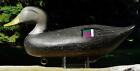
SUPERB ~SIGNED 100% ORIG. c1968 MADISON MITCHELL ~BLACK DUCK Wood Decoy MARYLAND
SOLD $321.99 Sold: Jun 29, 2024 on eBayOriginal Listing Description
SCARCE, SUPERB 100% ORIGINAL CONDITION "HAND SIGNED" 56+ YEAR OLD MADISON MITCHELL RED CEDAR WOOD, BLACK DUCK, GUNNING DECOY in LIGHTLY and/or VERY CAREFULLY GUNNED OVER and in MINT STRUCTURAL CONDITION ~AMAZING & STUNNING 100% ORIG. "SCRATCH PAINTING" CARVING STYLE & FORM ~ORIG RIGGING: LEAD BALLAST WEIGHT & STAPLE LINE-TIE ~SUPERB LARGE SIZE, STYLE, FORM, CARVING, PAINT PATTERNS & in OUTSTANDING "LIGHTLY USED" CONDITION ~THE HEAD & NECK PLUS ALL 5 NAILS that HOLD IT ON ARE TIGHT & ONLY 1 IS VISIBLE FROM A SLIGHT POP UP IN THE WHITE LEAD ~DECOY WAS CLEARLY SIGNED FOR FRIEND or FAN; HE SIGNED IT IN INK AT SOME POINT IN TIME, ALTHOUGH BLACK INK ON BLACK is HARDER TO SEE ~HEAD & NECK ARE PERFECT & SLIGHT SHADOW FROM 1 NAIL is ONLY CLUE WHERE the 5 NAILS WERE USED to ATTACH the HEAD ~SUPERB BIRD & PERFECT HEAD is TIGHT LIKE MADE YESTERDAY, JUST LIKE the LINE TIE-STAPLE & BALLAST WEIGHT ~TINY RUBS TO BILL & TAIL & RUBBING TO WEIGHT & LINE-TIE FROM USE ~DON'T MISS OUT ON A SCARCE BLACK DUCK SUPERB ~SIGNED 100% ORIG. c1968 MADISON MITCHELL ~BLACK DUCK Wood Decoy MARYLAND SUPERB ~SIGNED 100% ORIG. c1968 MADISON MITCHELL ~BLACK DUCK Wood Decoy MARYLAND Click images to enlarge Description AMERICAN CARVING LEGEND..... R. MADISON MITCHELL Birth Name: ..Robert Madison Mitchell (born): March 11, 1901 (died): Jan. 14, 1993 (Age 91) of Havre de Grace, Maryland (picture below): HAVRE DE GRACE & The UPPER BAY! This is WHERE MITCHELL SPENT PRACTICALLY His ENTIRE LIFE MAKING DECOYS, HUNTING, BURYING FRIENDS, STRANGERS & LOVED ONES ALIKE ........ EVENTUALLY BECOMING ONE of the MOST BELOVED FAMILY MEN and ENDEARING INDIVIDUALS to GRACE SUCH a BEAUTIFUL and HARD WORKING COMMUNITY! AMERICAN CARVING LEGEND..... "R. MADISON MITCHELL" (1901-1993) of Havre de Grace, Maryland (Picture Below): HISTORIC c1980 PHOTO of MADISON MITCHELL with MANY of The MEN That HELPED HIM Over the YEARS! Pictured along with a Contemporary, Paul Gibson; (left to right) Harry Jobes, Paul Gibson, MADISON MITCHELL, Clarence Bauer and Jim Pierce. ________ This Outstanding, "SIGNED" 100% Original Everything ...... Including Rigging, Hand Scratch Painted Madison Mitchell "Black Duck" Decoy that is Up For Auction! AMAZING 100% ORIGINAL!! "SIGNED in INK PEN" GUNNING BIRD; c1968 R. MADISON MITCHELL; NICELY "HAND SIGNED"; 56+ YEAR-OLD "BLACK DUCK; WOOD DUCK DECOY; Havre de Grace, Maryland; SUSQUEHANNA FLATS (UPPER CHESAPEAKE BAY) This DRAKE GUNNING DECOY was CARVED LIFE-SIZED!! (This Size of His Decoys are His Most Sought After Work!!) INCREDIBLE ASPECTS of this DECOY ......... is the AMAZING, "OVER Half of a CENTURY OLD" THICK & STILL BRIGHT & VIBRANT "MINT 100% ORIGINAL LEAD-BASED PAINT ....... and this MIDDLE-LATE PERIOD DECOY has BEAUTIFUL & TIME-PERIOD PERFECT, "SCRATCH-PAINT" & "SPECULUM PAINT" !! _______ (Below Photos): ..SUPERB LIGHT TAN UNDERCOAT to BODY & GREAT FEATHER, SCRATCH-PAINT through DARK BROWN FINAL COAT of PAINT ...... and the HEAD is OPPOSITE with a DARK BROWN BASE & FEATHER SCRATCHING to TOP COAT of TAN ....... NEAT PURPLE & GREEN SPECULUMS with BLACK & WHITE BORDERS & BLACK SWOOSH on the TOP ....... with CLEAN & CONCISE DARK BROWN HEAD HIGHLIGHTS & EYE STRIPE ....... and PERFECT PAINTED OLIVE-GREEN BILL ..... and the YELLOW PAINTED EYES are CONCISE, PERFECTLY LOCATED with BRIGHT IRISES & PRECISE BLACK PUPILS!! ONE of the MOST INCREDIBLE ASPECTS of this DECOY ......... is the AMAZING, FEATHER SCRATCH PAINT" to the ENTIRE DECOYS ......... as the SCRATCH-PAINT DETAILS ALL of the INDIVIDUAL FEATHERS & FEATHER GROUPS ....... with ALL SIZES of FEATHER SCRATCHED-PAINT to MATCH the FEATHER SIZES LIKE LONG PRIMARIES, GRADUATING SIZE on the BODY, ETC. ........ GIVING it PERFECT REALISM & "LIFE-LIKE" FEATHERING, INCLUDING the ENTIRE BODY, and SIDES & BOTTOM of NECK & HEAD! _ This SUPERB, 54-YEAR OLD; AUTOGRAPHED; FULLY-RIGGED; MADISON MITCHELL "BLACK DUCK" Decoy up for auction!! These Pictures are From the Front & Rear, as Well as Left & Right Angles ......... So You Can See the Incredible Scratch Painting as Well as the Outstanding "Carefully and/or Lightly Gunned Over Patina: ALTHOUGH VERY PROLIFIC, EXCELLENT "SOMEWHAT ANTIQUE" CAREFULLY & LIGHTLY GUNNED-OVER BLACK DUCKS LIKE THIS are ALWAYS a PLEASANT SURPRISE!! This is a Perfectly Symmetrically Carved & Painted Vintage Madison Mitchell Black Duck Decoy! This Superb, Life-Sized "Adult Black Duck" Measures: ? ? 17" long.. x.. 6-3/8" wide...x...8" tall ? -and- ..Weighs a Very Hefty: ...3-lb. 8-oz. ? ? _______ (Below Photos): This Mitchell "Black Duck" has his Typical Nailed-On Weight, Staple & Brass Ring, Line-Tie ......... Both are Perfectly Tight & Intact Just Like the Head ......... and it is "HAND AUTOGRAPHED" with a BLACK INK PEN!! (below photo): HAND AUTOGRAPHED "R. MADISON MITCHELL" -and- LIKE ALL SIGNED "BLACK DUCK SPECIES", EVEN with ELECTRO-PEN, IT CAN BE OFTEN HARD to SEE: Below are Some Close-Up Photos So You Can Better See Mitchell's Black-Ink Signature, Parallel with the Weight ....... Just How He Always Signed Every Decoy Regardless if Pen or his Electro-Etching Tool: 1.) (below photo): BELOW is a CLOSE-UP of the HAND-SIGNED, "BEGINNING of his SIGNATURE": "R. MADISON" 2.) -AND- BELOW is a CLOSE-UP of the HAND-SIGNED, "ENDING of his SIGNATURE": "MITCHELL" ________ (Below Photos): The HEAD of this SUPERB & SCARCE-PAINT JOB, BLACK DUCK HEAD from SEVERAL ANGLES ........ NOTE the "HAND-MADE" KNIFE CARVED" & PERFECT "PUDDLE-DUCK", DABBLING-BIRD BILL ......... with PERFECT, DEEP & WONDERFUL, HAND KNIFE-CARVED in HEAD/BILL SEPARATION!! ALL HEAD & NECK NAILS USED to ATTACH the HEAD ARE PERFECTLY INTACT with the ORIGINAL WHITE LEAD PERFECTLY INTACT -and- LOOK SO PERFECT as if HE MOUNTED the HEAD to the BODY YESTERDAY ......... and the YELLOW & BLACK EYES are "IMMACULATE", PERFECT & VIVID & BRIGHT!! The MOST INCREDIBLE ASPECT of this DECOY'S HEAD ......... is the AMAZING, "ALMOST 60-YEAR OLD" PATINA; "This HEAD is ONE of the NICER PROPORTIONED HEAD-TO-BODY RATIO YOU'LL SEE" ....... and LOOKS AMAZING with ITS "AWESOME" 100% ORIGINAL LEAD or OIL-BASED PAINT, ESPECIALLY on the REVERSE TO THE BODY SCRATCH-PAINTED HEAD!! ? A PERFECTLY FORMED, "MADISON MITCHELL" BLACK DUCK "KNIFE-CARVED" HEAD ........ of a "PERFECT LARGE PUDDLE DUCK HEAD" & PERFECT MATCHING BILL ..... that is MOUNTED to the BODY with 5 LARGE COUNTER-SUNK, FINISHING NAILS ......... COVERED with WHITE LEAD & ALL 5 PERFECTLY INTACT!! ? -and- The IMPRESSIVE HEAD & NECK FLOW FLAWLESSLY into the PERFECTLY FORMED NECK-SEAT ....... and it TRANSITIONS SO BEAUTIFULLY YOU HAVE to LOOK HARD to FIND the SEAM ...... and the COUNTER-SUNK NAILS COVERED with WHITE LEAD & PAINT are ALMOST INVISIBLE ....... OTHER THAN 1 NAIL on TOP of the HEAD that HAS VERY SLIGHT PUSH-UP from AGE!! ? _______ AMAZING 100% ORIGINAL!! "SIGNED in BLACK INK PEN" GUNNING BIRD; c1968 R. MADISON MITCHELL; NICELY "HAND SIGNED"; 56+ YEAR-OLD "BLACK DUCK; WOOD DUCK DECOY; Havre de Grace, Maryland; SUSQUEHANNA FLATS (UPPER CHESAPEAKE BAY) OUTSTANDING 100% ORIGINAL PAINT & CARVING on this VINTAGE GUNNING DECOY with a PERFECT PATINA!! EXCELLENT FORM on ONE of HIS VINTAGE SCRATCH PAINTED BLACK DUCK, GUNNING DECOYS' as this DECOY WAS MADE WHEN WOODEN DECOYS WERE STILL BEING WIDELY USED; BUT PLASTIC DECOYS were SOON to GRADUALLY TAKE OVER the MARKET!! AWESOME MIDDLE-PERIOD STYLE, MITCHELL SPECULUM PAINT -and- THICK & STURDY, ALERT POSED, HEAD & NECK TURNED VERY SLIGHTLY to its LEFT!! Vintage Hunting Decoy and His Very Best, Working Bird Style with his Nice, Long Yet Very Broad-Body Style & Form!! ORIGINAL RIGGING is PERFECT -with- 100% ORIG. RIGGING: NAILED-ON LEAD BALLAST WEIGHT and LINE-TIE STAPLE! ______________ Below are Pictures of Other "Madison Mitchell" Black Ducks from Different Time Periods! Other than the Obvious Differences in Style & Form of Mitchell's Large Puddle Ducks Like Black Ducks ...... the Most Notable & Identifiable Differences are the Various Speculum Paint Schemes Used ....... and the Various Feathered "Scratch Painting" Patterns Used!! (below picture): .PICTURE of a SUPERB DECORATIVE, 100% ORIGINAL; MADISON MITCHELL "BLACK DUCK" DUCK DECOY with INTERESTING TRIANGLE FEATHER PATCH in FRONT of SPECULUMS!! (below pictures): .PICTURES of AWESOME LATER EXAMPLES of MADISON MITCHELL "BLACK DUCK" DUCK DECOYS with DIFFERENT DARK or LIGHTER SHADES of GRAY-TAN "TRIANGLES" of FEATHERS in FRONT of the SPECULUMS .......... and TYPICAL MIDDLE & LATE PERIOD BLACK SWOOSH ABOVE the SPECULUMS!! (below pictures): This EXAMPLE of a MADISON MITCHELL "BLACK DUCK" DUCK DECOY has VERY LIGHT SHADES of GRAY-TAN "TRIANGLES" in FRONT of the SPECULUMS & ON the HEAD as WELL ........... and it ALSO has VERY LARGE "FEATHER SCRATCH PAINT (below): This SAME EXAMPLE as ABOVE ALSO HAS the VERY HARD to READ "ELECTRO-PEN" SIGNATURE that is HARD to READ ON MOST of his BLACK DUCKS .............. REGARDLESS of WHETHER IT was SIGNED with an INK-PEN or ELECTRIC ETCHING PEN: (below pictures): ..This EXAMPLE of a MADISON MITCHELL "BLACK DUCK" DUCK DECOY has NO TRIANGLES in FRONT of the SPECULUMS & IS FROM the LATE MIDDLE-PERIOD ........... JUST LIKE this OUTSTANDING BLACK DUCK up for auction: An UNCOMMON EASY-TO-READ "ELECTRO-PEN" SIGNATURE that was DONE on a VERY LIGHT UNDER-COAT & HIS HAND was YOUNGER & STEADIER as HE LIKELY HAD a GOOD PLACE & SMOOTH, HARD WOOD SURFACE to SIGN! (below pictures): .This EXAMPLE has NO TRIANGLES in FRONT of the SPECULUMS & IS FROM the LATE EARLY PERIOD ........... and the FEATHER "SCRATCH-PAINT" has YET to GAIN ITS LATER "ARTISTIC & PRECISE" FEATHERING: (below pictures): .These VERY EARLY EXAMPLES have VERY ELONGATED SPECULUMS ......... with NO FEATHER PAINT AROUND the SPECULUMS & SINGLE-COLOR SPECULUMS THEMSELVES: (below pictures): An EXAMPLE of HOW MITCHELL'S "HAND SIGNED in INK PEN" SIGNATURE STANDS OUT on the LIGHT (NON BLACK BROWN) BOTTOMS of ALMOST ALL SPECIES of DUCKS HE CARVED: (below pictures): AWESOME PHOTO OF MR. MITCHELL with a DISPLAY of MANY of HIS GREAT DECOYS of DIFFERENT SPECIES!! ~AFTER 1960 HE WAS KNOWN TO HAVE CARVED AT LEAST A PAIR OR MORE OF EVERY SPECIES OF DUCK THAT WAS KNOWN TO USE THE ATLANTIC FLYWAY: ? _ Again, this Outstanding, "SIGNED" 100% Original Everything Black Duck ...... Including Rigging, Hand Scratch Painted Madison Mitchell Decoy that is Up For Auction! ? ? Very Nice, Very Old Dry Paint with a Beautiful, Clean and Crisp Patina!! GREAT THICK, 100% ORIGINAL PAINT on this AWESOME, OLD GUNNING DECOY with GREAT PATINA!! SUPERB FORM & TRULY ONE OF HIS VERY NICE, BLACK DUCK DECOYS!! SUPERB BIRD with GORGEOUS & PERFECT HEAD is TIGHT LIKE MADE YESTERDAY as is TIE-STAPLE & BALLAST WEIGHT ALL ORIGINAL & YOU COULD HUNT OVER THIS 56+ YEAR OLD DECOY TODAY and LOSE NO PERFORMANCE SINCE THE DAY IT WAS MADE!! This is a Perfectly Symmetrically Carved & Painted Vintage Madison Mitchell Black Duck! DON'T MISS OUT on this Truly a Great Upper Chesapeake Bay Black Duck!! ? This BLACK DUCK Has an INCREDIBLE & VERY APPEALING, DRY, MELLOW, "OVER 1/2 of a CENTURY", BEAUTIFULLY AGED PATINA! This Black Duck Doesn't Have One Single Chip, Crack, Shot Mark, Dent or Paint Smudge & there bare a Few Small paint Rubs to the Bill & Tail Tips and Typical Heavier Rubbing to the Ballast Weight & Line Tie which if Anything Adds to the Decoy's Aura!! ___________________________________________ ? This Black Duck Clearly Shows That It Came from Climate Controlled, Direct Light-Free Collection or Collections It Has Been Kept in Over the Almost 5 Decades That It Has Been Carefully Cared For In!! ? If You Like Important Decoys from the one of the Most Important Decoy Carvers From the Upper Chesapeake Bay, that Are in Outstanding, 100% Original Condition THIS IS A GREAT DECOY FOR "ANY" COLLECTION!! _______________________________________ IN THE NEXT FEW WEEKS I AM PUTTING ON EBAY MORE LAWRENCE BETHEL FISH DECOYS, A PAIR OF THE ONLY KNOWN PROTOTYPES MADE OF THE VERY FIRST PRE-PRODUCTION FIBRE DECOYS EVER MADE, A NEAR MINT 1927 HEDDON GIANT VAMPIRE FISHING LURE IN RARE SHAD, A PAIR of LATE PHASE DODGE MALLARDS, EXQUISITE AND RARE PAIR OF "SPECIAL ORDER" MALLARDS, A RARE PAIR OF RALPH MALAPAGE GREEN-WINGED TEAL, A VERY RARE c1893 100% ORIGINAL TRANSITION PERIOD MASON DRAKE BUFFLEHEAD, A MINT RALPH MALPAGE CANADA GOOSE GUNNING DECOY, A MINT c1905 HEDDON ARTISTIC MINNOW, A VERY RARE PADCO OF MISSISSIPPI GOLDENEYES, A YELLOW WITH RED EYE BLUSH MOONLIGHT SINGLE-HOOK PIKAROON, A NIB CREEK CHUB MULLET COLOR STRIPER PIKIE IN CORRECT BOX, A PAIR of INCREDIBLE CHALLENGE GRADE MASON BLUE-WINGED TEAL, A NICE PAIR OF MASON GLASS EYE BLUEBILLS, AN AWESOME ERNIE NEUMANN SUCKER FISH DECOY, A RARE DOUBLE SPECIAL CREEK CHUB BEETLE FISHING LURE, A VERY NICE ERNIE NEUMANN SUCKER, A RARE 12-1/2" CHET SAWYER MINNESOTA FISH DECOY, A NEAR MINT OSCAR PETERSON PERCH FISH DECOY, A MINT PAIR OF WRAGG & BURRELL WIGEON, AN OUTRAGEOUSLY HARD TO FIND PAIR OF CHARLIE POZZINI BLUEBILLS, A CHET SAWYER 13" CHET SAWYER FISH DECOYS, A VERY BIG & BULL-NECKED EARLY FERDINAND BACH DRAKE CANVASBACK FROM HIS PERSONAL RIG AND MORE!! ? Shipping Includes Insurance! I Don't Believe in Making a Profit on Shipping, You Pay What I Pay. If it's Less Than You Paid I Refund the Difference, If More I'll Pay For It. I COMBINE SHIPPING. I am also loading over 150 Duck Decoys, 150 Fish Decoys, 70 Scarce Fishing Lures, etc. so keep checking back. __ This "Scarce, Signed & Fully-Rigged", 100% Original Madison Mitchell "Black Duck" up for auction!! ITEM DESCRIPTION: This Amazing 56-year old, Black Duck was Carved and Painted by the Great R. Madison Mitchell (1901-1993) of Havre de Grace, Maryland. Havre de Grace is a city in Harford County, situated at the mouth of the Susquehanna River and the head of Chesapeake Bay. It is named after the port city of Le Havre, France, which in full was once Le Havre de Grâce (French, "Haven of Grace"). During the Revolutionary War, the small hamlet known as Harmer's Town was visited several times by General Lafayette, considered a hero of the war. He commented that the area reminded him of the French seaport of Le Havre, which as mentioned previously had originally been named Le Havre de Gr ce Inspired by Lafayette's comments, the residents incorporated the town as Havre de Grace in 1785. (BELOW): MR. MITCHELL APPLYING SOME EARLY PAINT DETAILS TO WHAT LOOKS TO BE A CORK DRAKE WOOD DUCK! Madison Mitchell began making decoys in 1924 when he was hired to help Sam Barnes finish out his orders for that year. He had made decoys ever since, in addition to his occupation as an undertaker. His decoys were completely hand chopped until 1931 when he had a duplicating lathe built and began turning his bodies. A great amount of work still had to be done as the lathe, much like a band saw, simply brings the block of wood to its basic shape. It would take ten pages to describe the life and accomplishments of Mr. Mitchell, but a great reference that can give you all of the interesting details of his life and his transition from undertaker to decoy maker, is all in an article on the "International Wildfowl Carvers Association" website which has a reprinted 2007 article from Decoy Magazine written by the fascinating and knowledgeable Jim Trimble. A copy of that article follows this description and gives you a good idea of the tremendous working knowledge of the decoys from the area that Mr. Trimble has always exhibited and the importance of Decoy Magazine's contributions to collectors world-wide. (BELOW): MR. MITCHELL PUTTING THE FINAL TOUCHES ON ONE OF HIS VERY HEAVY & VERY EFFECTIVE CANADA GOOSE DECOYS!! This classic and typical late-middle period Madison Mitchell Black Duck up for auction was carefully and likely lightly gunned-over, and when it was retired it went straight from the Owner's Rig and became the new addition to a desecrating duck decoy collection. While the majority of Madison Mitchell's later and last decoys went straight into collections, a great many of Mitchell's fine and effective gunning birds like this decoy up for auction, were bought from or ordered from Madison Mitchell, were gunned over, and then found their way into a collection. But in the case of this fine decoy, someone had the foresight to realize its beauty and carefully gunned over it as it is in excellent condition and it appears to have been retired early and put straight into a collection or was a gift for a decoy aficionado and went straight into their collection. Madison Mitchell's decoys were so incredibly well made that some may some may have been lightly gunned over and just very well cared for while in use and during the off season and went straight into collections and hardly show that they ever saw water. But when its all said and done, either gunned over or not, his decoys have always been cherished and eventually found their way onto a collector's shelf or shelves and very well taken care of whether unused or used and saw the same tender glove treatment in their retirement's "golden years". Like most Madison Mitchell decoys, some like this Black Duck took a roundabout way of getting into a collection by first enticing a few ducks within gunning range first, which is what it was made to do, but it was carefully handled and/or lightly gunned over before it was retired to be admired. Notwithstanding and from a geographical standpoint, with the fame and growing demand for Madison Mitchell decoys, a great many of his birds have found new homes not only in the U.S.A., but also in countries around the globe as they are very sought after and always will be and will continue to increase in value and always be in demand. Some of Madison Mitchell's decoys made their way into Michigan collections or were sent to friends there as Mitchell did spend part of his life in the Great Lakes State. He relocated to Pontiac, Michigan for a short time in the late first quarter or early second quarter of the 1900's so he could make a living getting work at an auto plant, so he most likely brought some decoys along or sent them to Michigan acquaintances at a later date as many of his decoys made their way into some early Michigan collections. Thus, he most likely brought some decoys along or sent them to Michigan acquaintances at a later date as many of his decoys made their way into some early Saginaw Bay area collections and many of those remain in Michigan collections in the Saginaw area, Flint area, Pontiac area, Detroit area or places in between those major southern peninsula of Michigan cities. Madison Mitchell's earliest output of decoys consisted of Canada Geese, Canvasbacks, Redheads and Bluebills and to a lesser degree and in a limited number pintails mallards, black ducks and a scarce baldpate or two. After 1960 Madison Mitchell carved almost every species that was known to Fly the Atlantic Flyway. (BELOW): HISTORIC PHOTO of MADISON MITCHELL with CHARLIE JOINER on the LEFT and the GREAT LEM WARD in FRONT! Picture was Taken at the Ward Brothers Work Shop: The form and detail of this Black Duck up for auction is pure Madison Mitchell with a perfect upswept tail, magnificently contoured body and wonderfully flowing neck, head and bill. This somewhat older, late middle period hunting decoy has great lines and all of the character of his greatest gunning blocks. This extraordinary decoy was used a handful of times or extremely well taken care of and hunted over slightly more. Whatever the case, it was very, very well taken care of over the last 50+ years in a fine decoy collection. But I am absolutely sure when this decoy was used, this awesome decoy was a great performing bird, and as well as Mr. Mitchell's decoys were made and crafted, it would have swam and performed with the reality of a real bird on the water, even to this very day! But like all of Mitchell's work it was so well made it is in excellent 100% original structural and aesthetic condition. It retains all of the thick and perfectly applied original coat of paint with only tiny rub spots to the tail and bill tips and slightly more to the weight and line-tie from use and on the weight from when this decoy rested on when being set on a shelf in a collection. The overall condition of this decoy is spectacular and it is 100% Original on the entire decoy. The Head and Neck are Perfect and very slight and hard to see shadows are the only clues as to where 1 of the 5 nails were used to attach the head and neck to the body of this awesome decoy. To further describe the great structural condition of this decoy is the awesome condition of the head of this Drake is the perfect shape and statuesque form it has. Like most of Mitchell's decoys and many of the other carver's from the area, these decoy's heads were attached with 5 nails; 3 long finishing nails through the top of the head and 2 through the lower front of the base of the neck and into the body to give added strength to keep the head from ever swiveling (even though the 3 through the top of the head would, for the most part, would keep this from occurring). The only natural defect you'll usually see on his and the decoys of other carvers that attached heads in this manner, is from the 3 nails through the top of the head, or possibly the 2 in the neck. It isn't unusual for one or more of these nails from popping up and pushing up the putty or even popping the putty out completely and possibly even a nail or two slightly pushing upward and out as a result of neck handling and/or even as the wood drying. This in turn could and would often stress the neck out enough to cause a small tight check in the neck that could be just on one side or all of the way through. Hence, when this occurs you might find some with some play in that area or a very minimal surface check and a head and neck as tight as the day it was made with no play whatsoever. Picking any duck or goose decoy by the head is certainly a no-no for both older or newer decoys in a collection. Even most hunters try to retrieve their decoys from the water after a long day of hunting by grabbing the body and not the head when possible so as to never stress the head or neck by handling them in that manner. However, this Black Duck has a Perfect Head & Neck as well as Perfectly Intact Nails. The seam where the head was attached to the body is so tight and like new it is actually hard to see for the the most part and there isn't even a hint of any separation here, or in the rigging as everything is as tight as the day this decoy was made. This Black Duck up for auction was very carefully handled over the years and it is in perfect 100% Original structural condition as you have to look very hard to see where 2 nails were even used, and the only hint as to where one of them is located is a faint shadows where the putty to cover the countersunk nail holes shrank ever so slightly. You know that the heavy gauge finished head sinker nails are hidden somewhere deep below and embedded under the white lead putty and paint, but because of the outstanding condition you just have to take a leap of faith to know that they are certainly there ..... Just an Amazing Decoy with a Head as Tightly Attached as the Day it Was Made for a Special Customer. (Below): A GREAT OLD REDHEAD with a TIGHT, INTACT ORIGINAL BREAST PLUG and INTACT HEAD/NECK NAILS even CONSIDERING the HEAVY ACTION they SAW! I REALLY ADMIRE these OLD WARRIORS!! (Below): MITCHELL'S TRADEMARK "ELECTRO-PEN" ENGRAVED SIGNATURE and DATE: "1948" This Black duck up for auction was obviously very carefully handled over the years and it is in 100% Original structural condition as you can only see a slight shadow where the putty ever so slightly shrunk at the head of 1 of the countersunk nails on the top of the Decoy's head while the putty dried. Not only does this show the quality of Mitchell's craftsmanship, but also the care the owner or owners gave this decoy in what was most likely an indoor, temperature controlled environment his or her decoys are prominently displayed in. The absence of fading to the paint also gives a good idea that this decoy was well cared for that it was put into a collection that was relatively free, if not totally free, of direct sunlight on the items in the collection and this Black Duck decoy as well. This decoy is in just wonderful condition, the head and all rigging are as tightly attached as the day this decoy was made; You just don't often find a Mitchell decoy with a somewhat traceable past and a Nicer, Somewhat Older Mitchell Black Duck Hunting Decoy, which isn't a rare species but it is considered an uncommon species, especially back in the day when this species of bird was working its magic. While the seasoned collector has a variety of form and paint clues that help identify a Madison Mitchell decoy, it's also nice to come across ones that are Signed and/or Dated, and this particular Black Duck up for auction was given a beautiful and clean signature with a dark or black ink pen which makes it a little hard to see on this Black Duck's dark brown belly paint. Some of his decoys were even personalized with his spelled out "Havre de Grace MD". Many of his later decoys are signed with his "electro-pen" and etched in. While Mr. Mitchell was in his shop I am sure he would have been more than happy to engrave his signature, date, etc., and since he was very approachable I suspect he would bring it to shows or events he attended and if an electrical outlet was close he'd be more than happy to customize your decoy or decoys on the bottom. The older the decoy is, the less the odds you will find an electro-pen signature, but I have seen a couple very old birds that people must have brought to his shop, home or an event of some kind even though they had been made and gunned over many decades before he was asked to sign them. He even dated many decoys based on something he either remembered for whatever reason or made a pretty good guess based on the form, the style or quirk of one of his apprentices, the style and/or paint etc. He was so accommodating that if he didn't have his engraver with him, and like this Black Duck up for auction, he was more than willing to sign with a marker, pen or whatever else was available. He didn't routinely just identify or sign many, let alone all of the decoys that left his shop as the new owner might have wanted only his or her own rig brand or name on the bottom or not signed for whatever reason. This is even more true the older the decoy is, as the further you go back in time the less the chance a decoy was signed as not to conflict with a rig mark, and also due to the fact that the older you get the less decoys were even being collected, let alone identified by some sort of signature unless it was related to identifying the owner and rig it came from in the hopes that it was returned to him or her if it floated away from a rig or the like. But from most of the stories I have been told, seen first hand, or read about, the return rate was never very good in most regions where there was concentrated gunning in the United States. In some areas, due to competition in areas where great hunting spots were limited, theft was the bigger threat unfortunately. Notwithstanding the Delaware River, Clinton River and a plethora of other great, but concentrated from an area standpoint, saw many decoys thefts of which on occasion were entire rigs being stolen right out of moored sneak boats. (BELOW): NEAT PHOTO of MADISON MITCHELL in MIDDLE!! THE OTHER PHOTOS ARE OF BILL COLLINS and his FATHER. BILL COLLINS (One of Mitchell's Many Apprentices over the Years) was ALSO the MAN that BOUGHT MITCHELL'S SHOP IN 1980. This Black Duck up for auction Made by the Great R. Madison Mitchell sports a nice and legible signature that was done with a black ink pen and the surface was slightly rough so it is a very long and stretched out autograph that is like most that you see as precisely signed ones are not the norm. But even with signatures or markings, or even without them, Mitchell's decoys are distinguishable from other carver's birds that were made to imitate or at least come close to what the many attributes that makes a Mitchell decoy a Mitchell. Even with the plethora of apprentices and helpers that helped him keep his shop running at lean times and pushing the capacity of his shop to the limits when orders were pouring in, Mitchell still had his patterns etched in his mind and those of his helpers very rarely did anything or anyone deter him and his shop from turning out a true Madison Mitchell decoy with the standards look, paint, appeal, style and appearance of any given time period during his many decades long career. However, like the old saying goes, "If it ain't broke don't fix it", which lead to a form and style that didn't change much over the many years he toiled at this trade. Much like even the great Mason decoy company, there were many cooks in the kitchen, but the quality and consistency of appearance was never compromised from decoy to decoy and shop worker to shop worker Madison Mitchell, himself included, and overseeing this consistency was the case. This decoy up for auction was made even with all of the aforementioned safeguards strictly and appreciatively in place. (BELOW): VERY COOL PHOTO of MITCHELL in his WORK SHOP PAINTING a CANVASBACK and TALKING UP JIM PIERCE, CHARLIE JOINER and CHARLIE BRYAN!! There are absolutely no structural imperfections on this vintage Black Duck decoy up for auction other than a few areas with typical rubs from use. The paint on this decoy is still bright and vivid considering its age; but you could still gun over this bull-necked Black Duck today and it would perform like it came right from Mitchell's workshop and would work like a champ to draw wary birds within gunning range. And conditions that these very heavy, perfectly swimming decoys were subjected to wouldn't be a factor in whatever rough water you hunted over unless you ran into a torrent of white-caps which might get them to rolling quite a bit, but not too much unlike what a real duck looks like in messy, nasty, windy weather. But obviously you wouldn't hunt this "lightly gunned over bird", or do anything like that with an Mitchell decoy that has deserved its place in any collection of historic gunning decoys. Mitchell's Decoys first saw water in Mitchell's shop when he floated them to find the sweet spot to properly locate the lead ballast weight (referred to as tuning the decoy) in order to get the decoy to swim perfectly, evenly on the surface and right itself immediately. This decoy has outstanding 54 year old patina and the original brush strokes from the thickly applied original coat of paint look extraordinary. The original bright-yellow painted eyes are still bright and jump off this perfect Black Duck's Tan & Dark Brown head paint that makes it a life-like version of this species. Like I say, this decoy is in excellent, near mint 100% original condition and this superb R. Madison Mitchell Black Duck duck decoy measures an impressive 17" long x a plump 6-3/8" wide x a stately 8" tall and weighs an extremely hefty 3-lbs. 8-oz. of solid red cedar, which makes for a perfect Mitchell Black Duck decoy. This is a large, high-profiled gunning bird and as far as a Black Duck decoy is concerned, this decoy would certainly qualify as life-sized or even slightly bigger than a very large adult bird in real life. An excellent decoy from the hands of one of the most prolific and beloved carvers that called Havre de Grace home. A truly great and vintage hunting block and common species for the time that was made for gunning, but an Admirer and devotee of his work bought it for either their collection or as a gift for someone close or as a special gift. This Black Duck on ebay has only minor wear and is quite stunning with even 2 tiny paint chips. This Black Duck has had a 54+ year of mostly extremely careful handling. This Decoy will Make a Great addition to your decoy collection of Vintage Gunning Decoys made by one of the true East Coast Master Carvers and it has superb size, style, form, carving, paint pattern and it is in impeccable 100% original condition. Don't Miss Out on This Special Decoy. Thanks for looking. The first photo in the Beginning of this Listing is of this Great Madison Mitchell Black Duck up for auction. The Next 3 Photos are of a Magazine Featuring Mr. Mitchell in his shop and 2 others. The Next 13 Photos are again of this Beautiful Black Duck by itself from many angles and distances. The Last 7 Photos are of the Region and City (Havre de Grace) Where Mitchell Called Home as well as a few Photos of other Black Duck Carvings By Mr. Mitchell. (I encourage you to use the zoom feature in this listing to get close-up looks at anywhere on this decoy as it can zoom in on the smallest of spots from the many different directions afford you to see the decoys entire surface.) __ (BELOW): MORE PICTURES OF OTHER GREAT MADISON MITCHELL CANVASBACK DECOYS AND RELATED REDHEAD ITEMS! (The 2nd Photo is Mitchell with a Room Full of Canvasbacks and Canada Geese Decoys He Made!) __________ (BELOW): A FEW PHOTOS OF OTHER SPECIES OFF HIS GUNNING BIRDS!! (BELOW): VERY IMPORTANT, CONCISE & INFORMATIONAL ARTICLE WRITTEN BY MR. JIM TRIMBLE FOR DECOY MAGAZINE. HE SENT ME THIS EMAIL OF THE ARTICLE AS I COULDN'T FIND MY COPY AND I HAVE READ IT HUNDREDS OF TIME. BUT IF YOU ARE ABLE TO GET A BACK ISSUE OF THIS PARTICULAR ISSUE OR SUBSCRIBE TO DECOY MAGAZINE IT IS MONEY EXTREMELY WELL SPENT!! R. Madison Mitchell By James L. Trimble Robert Madison Mitchell The Chesapeake’s Dominant Decoy Maker Reprinted with permission from the Jan/Feb 2007 issue of Decoy Magazine. When asked the distinguishing characteristics of his decoy by a reporter many decades ago, Mitchell responded, “Ninety percent of the gunners from Columbia, Pennsylvania to Richmond, Virginia can tell you whether the decoy they are holding is a Mitchell decoy or not!” Mitchell, the Chesapeake’s predominant decoy maker, made that comment with a chuckle and a twinkle in his eye, a comment that might seem vain if it wasn’t also true. It was still a time when Madison Mitchell dominated wooden decoy production in his part of the world, a craft that eventually headed toward its twilight years, as did Mitchell, as wooden decoy rigs gave way to plastic. The Chesapeake Bay is the largest of the 130 estuaries located in the United States, stretching 200 miles long and up to 35 miles wide, encompassing 11,684 miles of shoreline, including the tidal tributaries of Maryland and Virginia, a distance longer than the entire west coast of the United States. Many rivers feed it, but the majority of the Chesapeake’s water is derived from the saline Atlantic Ocean to the south and the Susquehanna River to the north, which pours in fresh water at the head of the bay. A major resting and feeding habitat along the Atlantic Flyway for migratory ducks and geese, its open waters with wild sego and celery grasses are home to 29 species of waterfowl. The watermen who populated the bayside communities throughout the region harvested a great variety of seafood from its waters. The late fall arrival of ducks and geese represented another source for both sustenance and income. According to the writings in early sporting books and magazines, millions of birds arrived on the Susquehanna Flats each fall, with their numbers greatly depleted by winter’s end. It was prime gunning habitat for the market hunter of yesterday, who sold their harvest for shipping by rail to the nearby accessible markets of Philadelphia, Baltimore, Washington and Richmond. Due to this abundance of waterfowl population, this vast Chesapeake Bay region supported more decoy makers, who produced more decoys, than any other area in the world. The identities of many of the early decoy makers from many regions have been lost to time and history, however the pioneers of Upper Chesapeake Bay decoys, men such as Holly, Graham and Dye, have been identified, with fine examples of their work surviving. Robert Madison Mitchell was born in 1901 in Oakington, Maryland, near Harford County’s Swan Creek, just south of Havre de Grace, and he grew up in this waterman’s community at the top of the bay. It was a time when waterfowl conservation was non-existent and years before the U.S. Migratory Bird Treaty Act of 1918 became law. Mitchell was the son of a farmer and market hunter, who worked the land on Spesutie Island at the southern end of the Susquehanna Flats. Interviewed in George Reiger’s 1980 book, “Wings of Dawn,” Mitchell relates, “We had men here, my father for example, who farmed on Spesutie Island. He got $14 a month salary and five acres of ground to do with as he pleased, as well as the fishing and hunting rights to the lower farm. If he hadn’t gunned for the market, we would have been hard pressed to make ends meet. Money from waterfowl was one of my father’s biggest sources of income.” While Mitchell was an infant, the family’s farming activities moved from Spesutie Island to the rolling hills of Mount Felix on the Heights, which overlooked Havre de Grace and the bay. His grandfather’s stroke precipitated the move, as they had to take over the family dairy and look out for his care. Mount Felix, a 7700 square foot brick manor house with unparalleled views of the bay, was built in the 1830s by Mitchell’s great grandfather canner and agriculturalist John Mitchell. This is where Mitchell spent his formative years. The 1910 Harford County census lists Robert H. Mitchell as Head of Household with his occupation as a farmer, working on “our farm.” Occupants include his wife, three daughters and 9-year-old Robert M. Mitchell. The younger Mitchell often told of life on the farm, including delivering milk by horse and buggy, all before morning classes. He learned to fish and hunt upland game at this father’s side. Although he lived in a waterfowling community, it was not a pursuit in which he would partake until he was a young man. A favorite uncle, E. Madison Mitchell, had a great impact on the younger Mitchell, so much so that he dropped his given name Robert and went by his middle name Madison, or the now proper name of R. Madison Mitchell, which he kept for life. Years later Mitchell decided to choose his favorite uncle’s profession, that of an undertaker, and he quite school at age 16 or 17, moving 30 miles south to Baltimore, where he lived in an apartment over his uncle’s funeral home. While there he “helped out,” which included “night removals” from Baltimore homes. He also attended classes at the Baltimore Business College. A year or so later, an older sister visiting Havre de Grace surprised the family with an early birth. Mitchell accompanied his sister and child on their return train trip to Michigan. While there, he took a job working at a General Motors assembly line in Pontiac for $6.00 a day, a decent wage for the time. It is quite possible that Mitchell may have run across the nearby Mason decoy factory while living there, thus noting the use of lathes and assembly line processes in producing decoys. He may also have been exposed to the wealth of Michigan’s forests, a source he turned to later in life. While Mitchell was spreading his wings elsewhere, Havre de Grace was coping with the new federal migratory laws, which forced many watermen to convert from market hunting to providing guide services for city sports, who now poured in by rail each gunning season. The small town of Havre de Grace quickly became the gunning Mecca of the East Coast. Mitchell returned home in April 1920, and according to Charles Lee Robbins 1987 book, “R. Madison Mitchell – His Life and Decoys,” Mitchell and his father hunted ducks on the Susquehanna Flats from a sinkbox that fall, something they repeated each ensuing season. Their rig was reported at 450 decoys, and they shot mostly divers, with Mitchell using a 12-gauge Winchester Pump Model 98, full-choke with a 32-inch barrel, a gun used by four generations of Mitchells. Although raised in a waterfowling community of market hunters, this was purportedly his first attempt at hunting ducks. As Mitchell is quoted in Rieger’s previously referenced book: “The market (market hunting) had stopped before I actually took up gunning.” In 1922, Mitchell received his embalmers license and opened for business shortly thereafter. Sam Barnes, a prolific decoy maker, helped paint the funeral home. Barnes was Mitchell’s mother’s cousin and a contemporary of his father, and in 1924 Mitchell started helping Barnes with his decoy production, a job completely done by hand, using a saw, a hatchet, a drawknife and spoke shave. “He was one of those old gentlemen who never stopped; he just kept on working,” Mitchell is quoted as saying in David and Joan Hagan’s 1990 book, “Upper Chesapeake Bay Decoys and Their Makers.” Purportedly when Mitchell was asked what he knew about making decoys at the time, he responded, “The same thing you did when you started.” It is interesting to note that this was the same year that a pair of Sam Barnes canvasbacks was awarded “Best in Show” at the Second Annual Exhibition of Wildfowl Decoys in New York City, based on practical (functional) use and maintenance. At the time, Barnes sold his decoys for $1.25 each. According to Madeline Shanks, Mitchell’s daughter, her father augmented his income, as did many in town, by picking up racetrack fans at the train station and taking them to the now-defunct Havre de Grace Racetrack. Champion horses of the day, including Seabiscuit, Citation and Man’O War, all raced there. The Havre de Grace destination was so popular the railroads operated special “racing trains” from New York, Philadelphia and Baltimore, using the same railroad tracks that brought in the city sports each gunning season. It is not known how long he provided this service or whether he ever used his hearse for pick-ups. Mitchell had been working on a steady basis with Barnes for about two years when Barnes died of pneumonia in 1926. Mitchell handled the funeral, and it was the first to utilize a brand new hearse he had just purchased. At the time, his business on Washington Street was handling about 20 funerals a year. Barnes left behind substantial orders for decoys - about 1400 birds in all - that needed to be filled before the next hunting season. That same year his daughter Florence, who had painted his decoys, married and left town. Recognizing the opportunity, Mitchell established his own shop, implementing power tools, including a belt sander built by a local machinist, and later a lathe to turn his decoy bodies. The shop was located behind his funeral business on Washington Street, just a few blocks from Barnes’ Washington Street home. Now on his own, Mitchell sought guidance from other area makers, particularly concerning the application of paint patterns. Capt. Billie Moore, owner of the gunning yacht Reckless and father-in-law of well-known decoy maker Bob McGaw, both Washington Street neighbors, came to Mitchell’s aid, teaching him how to mix and blend colors, applying the same feathered wing pattern used when helping his son-in-law fill decoy orders. With Moore’s help, the 1400 newly finished decoys were completed in time for gunning season. McGaw’s signature “dog bone” weight is also found on some early Mitchell decoys, which could indicate a Moore influence as well. (Locals report that McGaw was upset that his father-in-law would help this new upstart, who would eventually prove to be a formidable competitor for area decoy business.) According to the Hagen’s book, the average order was for 50 to 100 decoys and they sold for $1.50 each. For Mitchell, 1926 carried added significance, as he married local Helen Maslin, a union that lasted until her death in 1973. It should be noted that his father, Robert H. Mitchell; his cousin and mentor, Samuel T. Barnes; and the man who taught him how to paint decoys, Capt. William E. Moore; were all members of the “Ducking Police,” created by an 1872 State of Maryland statute to regulate shooting on the legal boundary limits of the Susquehanna Flats. There is no doubt that their stories about those “early days” had an impact on Mitchell. A December 5, 1926 article in the Baltimore Sun, “Ducking Days Along Susquehanna,” mentions the “hundreds of sinboxes that dot the water,” and details some of the gunning accidents that occurred there, including accidentally shooting holes in the watertight box, hunters accidentally shooting themselves and one particular case of two brothers who froze to death in their sinkbox. It would be interesting to know if Mitchell, with his new hearse, collected the bodies. The 1930 census for the City of Havre de Grace lists the 29-year-old Mitchell as living on Washington Street with his wife and two-year-old daughter. Under the Head of Household column, his given name is listed as R. Madison Mitchell and his occupation as embalmer undertaker He is not listed in the 1920 Maryland census, as he was likely residing in Pontiac, Michigan. With time, the Barnes body design was modified to clean sharp lines for easy and fast lathe production, perhaps with a Holly influence. Mitchell used lead ballast weights and replaced the traditional leather anchor straps with a small ring and staple. The first time he tried rings and staples on his father’s decoys he left the leather straps in place, commenting years later that he didn’t want “any backfire” from his father. His initial decoy production was limited to canvasbacks, blackheads (bluebills) and redheads, as he claimed they were the only ducks he could paint. With increased demand, Mitchell rebuilt and enlarged his shop in 1932. In 1934 the state of Maryland outlawed the use of a sinkbox, a lethal floating water-level platform used by Chesapeake gunners to kill diving ducks. Once eliminated, hunters no longer needed huge rigs of 400-500 decoys. That same year a severe drought in the Midwest and Canada dried up nesting potholes crucial to the survival of migrating ducks, and few came to the Chesapeake. Mitchell did not sell a decoy that year, but fortunately the ducks returned, as did the gunners and the demand for his decoys, and his business continued to grow. By the mid-1930s, most of the legendary 19th century decoy makers from the Upper Chesapeake Bay were gone, or in their twilight years with limited production. McGaw and Jim Currier were still producing decoys commercially, as were a few makers north in Cecil County, but for Mitchell, competition was limited. McGaw was the first maker in Havre de Grace to recognize the need for production decoys, and installed a used Sears & Roebuck Co. lathe to turn bodies in 1929. Reportedly it was used to turn gunstocks in World War I. In 1941, he sold his lathe to Mitchell, who sold his to Paul Gibson, who was starting his own decoy making business in Havre de Grace. Part of the transaction required Mitchell to continue turning bodies for McGaw. Currier, as well as some of the Cecil County makers, continued to chop out bodies by hand. But Mitchell outlasted them all, and eventually handled the burials for McGaw, Currier and Gibson, as he had done for his mentor Barnes. By the 1940s, increased production required additional help as well as a ready source of wood. Mitchell turned to his community for part-time workers who welcomed the opportunity to augment their income. For a while, Currier worked in his shop, refurbishing and painting cripples, some having to be dipped in lye to remove old crusted paint. Mitchell was demanding, setting high quality work standards and gaining a growing reputation for producing a superbly crafted and functional decoy. “I spent a lot of time making patterns, designing heads and designing bodies from freshly killed birds,” he is quoted in the winter 1987 issue of Wildfowl Carving and Collecting. “All of my heads were made from live ducks, but a trifle larger than the actual head…it would show up better and also had to be sufficient strength in the carved wood bill.” The first wave of workers in Mitchell’s shop is long gone, but many that came after, including Gibson, Currier, Jim Pierce, Harry Jobes, “Speed” Joiner and Tit-bird Bauer, became decoy makers in their own right, all producing a Mitchell style decoy. And a third generation, including Pat Vincenti, Butch Wagoner, Bill Collins and Charles and Bob Jobes, all present day makers, tutored under his watchful eye. In his book, Reiger commented on the workforce in Mitchell’s shop: “For close to half a century, Mitchell has run something like a European artist’s atelier where numerous carvers and painters have been employed turning out tens of thousands of birds using Mitchell patterns, while Mitchell himself may not actually put his hand on every decoy with his imprimatur.” George Starr’s 1974 book, “Decoys of the Atlantic Flyway,” memorializes an early trip to Mitchell’s shop. “Around 1952, my son Robin and I ended up at Mitchell’s place just after supper one evening, about two weeks before the gunning season was to start. We were welcomed and invited into the paint shop, where the last orders for the year were being finished. The paint room was about 12-feet square with floor to ceiling racks on three sides. Mitchell and about five of his jolly crew were sitting around on straight chairs or boxes. In front of each was an upturned box on which was a wooden pallet with the basic colors each person would use that night. The birds were passed around the circle – one painting the breast, another the head, etc., until the decoy returned to his place on the shelf fully painted. The painting itself had become so automatic, that everyone’s mind was free to enter into banter which made the time go swiftly.” Angus Phillips, the outdoor writer for The Washington Post, wrote a short story on Mitchell, “Decoys are Art Work for Posterity,” in the December 5, 1978 issue, 26 years after Starr’s visit. Phillips wrote, “Mitchell’s prices range from about $13 each for small ducks to about $20 for a Canada goose. A signed original will go for five times that much, and ought to. They are magnificent replicas. Before I left, I asked Mitchell if I could buy two ducks and a goose. He sighed and went to gather them up. As he handed over the ducks, a pair of blue wing teal, he told me, ‘If you can’t get $50 for these tomorrow, don’t sell them.’ Then he turned over the goose, heavy and perfect, and filled out the bill. That’ll be $47.50, he said.” Phillips wrote about Mitchell learning decoy making from his mentor Barnes a half century earlier, calling it “a simple trade and when coupled with Mitchell’s profession of mortician, it would provide him a good and full life here along the flats.” While explaining that Mitchell viewed decoy making as an occupation secondary to his mortuary business, Phillips noted that the phone rang incessantly at the cluttered workshop where Mitchell and three assistants worked 12-14 hours a day making decoys. He also noted that most of the buyers by then were decoy collectors, who had no intention of floating them on the Flats, but instead viewed them as a dying art that someday would be worth big money. “I’m a decoy maker – that’s all,” Mitchell was quoted as saying, with Phillips explaining that the veteran decoy maker was not particularly happy with the evolving collector’s demand. “Mitchell knows his decoys are worth a lot more than he sells them for,” Phillips wrote, “and that’s why orders pile up until he’s working far longer hours than a 77-year-old man ought to. He knows people buy them as decoys, then turn around and sell them as art.” Mitchell also took offense to the “plastic junk” that had taken over the trade, insisting that his heavier wooden birds were far superior and would float true in a gale, sturdy and lifelike. “A man buys a plastic decoy, he’s lucky if it lasts him two years,” Mitchell said. “Then he goes out and buys more. My decoys will last 50 years if they’re taken care of.” Phillips explained how Mitchell’s decoys were made the old-fashioned labor-intensive way - heads whittled by hand, bodies turned on a lathe. After sanding, each gets five coats of paint, and the heads are drilled and nailed to the body. “The workshop smells of pine and cedar sawdust, of paint and cigarette smoke,” he wrote, describing the scene: “Mitchell sits across a bench from Tit-bird Bauer, who’s worked for him for 30 years, both painting at an incredible pace. In the corner, a young Bobby Jobes is whittling heads. Johnny Reisinger, who worked for Mitchell for 25 years, works a whining sander downstairs, finishing bodies. Bauer and Mitchell light cigarettes, take a drag, and settle to work. It’s the only drag they get, because by the time the duck is painted, the cigarettes are burned out. Bauer paints the underbelly, upper body feathers, the tail section, then quick wing patches before handing the half-finished bird to Mitchell. The boss works with a broad brush, dabbling the ridges of feathers, a blot at the tail to signify where the two wings meet, and then the head. The pace continued for 2½ hours nonstop, until 16 birds are in the drying racks, with only eyes and bills left to paint.” According to Pierce, a long-time employee, “Mitchell was a good employer and always fair in his dealings with his employees. He was always available to answer questions and took the time and patience to guide and instruct. His decoy making calendar generally started in February after hunting season, when he began carving heads. Blocks were sawed in late spring, waiting for summer help to lathe turn and finish the bodies. Painting usually started mid-August and lasted until just before hunting season in November. He was an avid Baltimore Colts and Baltimore Orioles fan and in the shop the radio was always on when they were playing.” Pierce continued, “We were all aware that the mortician’s job was 24-7, and when the phone rang he had to go.” He also remembered that Mitchell always dressed in a khaki pants and shirt and wore a bow tie. And from time to time the shop apprentices were pressed into service to drive the hearse, act as pall bearers or assist in removals. Acceptable wood for decoy production was always a problem for Mitchell as well as the rest of the Havre de Grace decoy makers. Mitchell had watched Barnes throw away or burn knotty wood; one advantage of the lathe is that it permitted him to use it. Early on, spring rains brought fallen logs down the Susquehanna, and if usable they were retrieved and hauled to the shop, some by local gunners who bartered them for finished decoys. Another source of wood was downed telephone poles that were being replaced. And a lot of his wood, Mitchell recalled, came from “listening around” - when he heard of an old building or bridge being torn down or damaged by fire, he and his apprentices would take a truck there to see if any large timbers could be recovered. Mitchell also instituted a two for one trade-in program to secure wood, in which he accepted certain wood in predetermined sizes, lathe turned them, and kept one of the two blocks for his shop’s production. Many area decoy makers took advantage of this offering. From time to time, as stock ran low, he imported train carloads of western red cedar, usually cut from Michigan or Idaho forests, which was lighter and less expensive than the northern white cedar and white pine. He considered his pine decoys to be premium grade birds, applying a small finishing nail under the tail prior to painting them and selling them for 25 cents more per bird. Mitchell’s decoy staple and ring are usually placed behind the head, which allows the decoys to ride high in the water, not pulled down by a tight anchor. Until the early 1950s, he placed the staple parallel with the body, which often split the grain, especially the cedar bodies, until someone suggested reversing it would prevent checks. He initially attached his lead weights with a single nail fore and aft, doubling the number in the late 1940s. This attachment of the hardware is a good way to identify the age of Mitchell’s decoys. Mitchell’s earliest gunning decoys, sold by the dozen – eight drakes and four hens - had finely carved heads and paint patterns with the longest feathers running down the inside of the back, incorrect yet a signature of his work. The majority were canvasbacks and other divers, such as redheads and bluebills, but he also made a limited number of puddle ducks, of which the hens and black ducks are scratch painted. And he probably made more sleepers, mostly canvasbacks, before 1950 then any other Upper Bay decoy maker. For hunters who gunned divers “up the river” on the Susquehanna, he made a special purpose magnum decoy. His swans, with their long graceful necks and “barn door” keels, are some of the finest confidence decoys to float the upper Chesapeake Bay. Some were made with a side pouch or box to hold body-booting ammo, a practice that took hold along the Flats in the 1950s. Most decoy orders were placed at season’s end with many customers planning a trip to Mitchell’s shop to visit and pick them up. Box loads were shipped via local railway express, with most going to Chesapeake Bay area gunners. The onset of World War II brought numerous people to the nearby Aberdeen Proving Grounds Edgewood Arsenal to help with the war effort. Many first purchased decoys from Mitchell while stationed there, and continued buying them when they returned home. The Officer’s Club at Aberdeen had rigs of his decoys branded with the U.S. Army’s Edgewood Arsenal insignia. Other customers included homegrown Maryland baseball legends Jimmy Foxx of Sudlersville, “Home Run” Baker of Trappe and Bill Werber of College Park. Long time Maryland Senator Millard Tydings of Harford County and William DuPont and his family from Wilmington, Delaware also bought his decoys. They were all Chesapeake Bay gunners. Mitchell also accommodated special orders. He made lots of stick-up silhouette Canada geese for Eastern Shore gunners as well as large silhouette swans, some with gun racks, for body-booters to hide behind. Some of the silhouettes were floated in V-board rigs. He also produced cork decoys, mostly black ducks, which some thought were the best black duck decoys to float the Chesapeake. “It is the only decoy that will kill a black duck,” Mitchell once commented, referring to their skittish nature. They were made of sanded cork with a pine bottom board and head, and the later ones had an inserted Masonite tail. He stopped making them after being warned by his doctor about the hazards of ingesting cork dust into the lungs. Several things led to the decline in the hunter’s demand for Mitchell’s decoys. In addition to the introduction of cheap plastic decoys, which required little care, severe hurricanes in 1954 and 1972 decimated the wild celery and sego grasses already weakened by uncontrolled pollution, and the damaged habitat supported fewer ducks, resulting in fewer gunners returning to the area. Demand was still strong for his decorative or fancy “Christmas ducks,” many of which were mounted on lamps, but they represented just a small proportion of his business. Stories from the late 1950s and early 60s recount tales of hundreds of finished decoys with no buyers in sight, as demand waned. Some were remade into other species and sold at a reduced rate. At times it must have seemed that an era was coming to an end. Yet what Mitchell and other decoy makers of the time didn’t realize was that a new cusp of decoy demand, this by a new breed of hunter, the decoy collector, was fast approaching. Early collectors, including Starr, Bill Mackey, Somers Headly, Amos Waterfield and John Hillman, began visiting the shop, buying up volumes of gunning birds that had not sold. Once Mitchell realized the potential, he expanded his production to include most species that flew the Atlantic Flyway. The new collectors of the 1970s and 80s took dead aim at Mitchell, buying up everything he could produce, usually in pairs. They purchased them as folk art, as they had no intention of putting the decoys overboard. In 1980 Mitchell sold his decoy business to his one-time apprentice Bill Collins, and a few years later his funeral business as well. For a few years he lent Collins a hand, adding a signature to the finished bird. But Mitchell had a goal yet to achieve, and in the late 1970s and early 1980s he was a driving force in the founding of the Havre de Grace Decoy Museum, which was to herald the unique waterfowling history of his small waterfront community. When the Havre de Grace Decoy Festival was started to raise funds and support the Museum, he was its first Honorary Chairman. Prior to his death he established the R. Madison Mitchell Endowment Trust, whose sole purpose is to support the museum’s acquisition, preservation and interpretation of decoys. The Havre de Grace Museum is now firmly established on the banks of the Susquehanna River with the legendary Flats in the distance. A set of Mitchell Decoys, along with a lifelike wax replica of the maker, is on permanent display. Several years ago Mitchell’s Washington Street shop was moved to the museum’s grounds, where present day makers practice their craft in the public eye. Mitchell died on January 14, 1993 at the ripe old age of 91 and over 900 attended his funeral. Legions of men who had worked for him, honorary pallbearers, lined the entrance to the church, paying tribute to a man who had impacted all of their lives and many of their livelihoods. Yet Mitchell lives on, not only through his surviving decoys, but also his imprint on the many current day Havre de Grace decoy makers. The Holly family may have created the Havre de Grace design, but without a doubt today’s makers are producing a “Mitchell style” decoy. Some consider Mitchell’s decoys as factory birds, yet in his book Dr. Starr addressed the issue of lathe turned decoys when he wrote, “The bodies are turned by machine, but the rest of the work is done by hand, including the carving of the heads. Some may be inclined to call this a factory operation, but I don’t feel that a decoy which is more than seventy-five per cent hand-crafted, qualifies as a “factory decoy.” The earliest Mitchell gunning decoys, especially the divers, are as well crafted as any decoy made. His canvasbacks with their sleek eye-pleasing lines are as handsome as any of the species, and most Upper Bay collectors are fortunate to have lured one onto their shelves. In the November 1983 issue of National Geographic, in an article titled “Humble Masterpieces – Decoys,” he was profiled along with his neighbor in Crisfield, Steve Ward, as a master Chesapeake Bay carver. Waterfowl historians estimate that Mitchell, with the aid of the many carvers and painters who worked for him, made over 100,000 finely crafted decoys. So you can see that he wasn’t boasting in that long ago interview that most mid-Atlantic gunners recognized a Madison Mitchell decoy when they saw one. With drive, energy and foresight, this one individual, with the assistance of a lathe, changed forever the design and production of Upper Chesapeake Bay decoys. He, more so than anybody else, earned Havre de Grace its title: “The Decoy Capital of the World.” Epilogue: Mitchell now rests at Havre de Grace’s Angel Hill Cemetery, a tranquil setting that overlooks the legendary Susquehanna Flats. It’s a familiar location, as his undertaking business brought him there often, and many others from his waterfowling community, including Sam Barnes, Bob McGaw, Jim Currier, Paul Gibson, Ed Pearson and the Holly family, are buried there. Chiseled into Mitchell’s tombstone is a replica of one of his canvasbacks, which is fitting, since more of his decoys floated on the Chesapeake Bay’s waters than any maker before or since. He was without a doubt the dominant maker of Chesapeake Bay decoys. And he just may be America’s most prolific decoy maker. Get images thatmake Supersized seem small.Showcase your items with Auctiva sListing Templates!THE simple solution for eBay sellers. Track Page Views WithAuctiva's Counter (Condition: Pre-Owned)
Note: This item has been sold and is no longer available. This page serves as a historical price reference for Duck Decoy collectors and appraisers.
Original Listing Description
SCARCE, SUPERB 100% ORIGINAL CONDITION "HAND SIGNED" 56+ YEAR OLD MADISON MITCHELL RED CEDAR WOOD, BLACK DUCK, GUNNING DECOY in LIGHTLY and/or VERY CAREFULLY GUNNED OVER and in MINT STRUCTURAL CONDITION ~AMAZING & STUNNING 100% ORIG. "SCRATCH PAINTING" CARVING STYLE & FORM ~ORIG RIGGING: LEAD BALLAST WEIGHT & STAPLE LINE-TIE ~SUPERB LARGE SIZE, STYLE, FORM, CARVING, PAINT PATTERNS & in OUTSTANDING "LIGHTLY USED" CONDITION ~THE HEAD & NECK PLUS ALL 5 NAILS that HOLD IT ON ARE TIGHT & ONLY 1 IS VISIBLE FROM A SLIGHT POP UP IN THE WHITE LEAD ~DECOY WAS CLEARLY SIGNED FOR FRIEND or FAN; HE SIGNED IT IN INK AT SOME POINT IN TIME, ALTHOUGH BLACK INK ON BLACK is HARDER TO SEE ~HEAD & NECK ARE PERFECT & SLIGHT SHADOW FROM 1 NAIL is ONLY CLUE WHERE the 5 NAILS WERE USED to ATTACH the HEAD ~SUPERB BIRD & PERFECT HEAD is TIGHT LIKE MADE YESTERDAY, JUST LIKE the LINE TIE-STAPLE & BALLAST WEIGHT ~TINY RUBS TO BILL & TAIL & RUBBING TO WEIGHT & LINE-TIE FROM USE ~DON'T MISS OUT ON A SCARCE BLACK DUCK SUPERB ~SIGNED 100% ORIG. c1968 MADISON MITCHELL ~BLACK DUCK Wood Decoy MARYLAND SUPERB ~SIGNED 100% ORIG. c1968 MADISON MITCHELL ~BLACK DUCK Wood Decoy MARYLAND Click images to enlarge Description AMERICAN CARVING LEGEND..... R. MADISON MITCHELL Birth Name: ..Robert Madison Mitchell (born): March 11, 1901 (died): Jan. 14, 1993 (Age 91) of Havre de Grace, Maryland (picture below): HAVRE DE GRACE & The UPPER BAY! This is WHERE MITCHELL SPENT PRACTICALLY His ENTIRE LIFE MAKING DECOYS, HUNTING, BURYING FRIENDS, STRANGERS & LOVED ONES ALIKE ........ EVENTUALLY BECOMING ONE of the MOST BELOVED FAMILY MEN and ENDEARING INDIVIDUALS to GRACE SUCH a BEAUTIFUL and HARD WORKING COMMUNITY! AMERICAN CARVING LEGEND..... "R. MADISON MITCHELL" (1901-1993) of Havre de Grace, Maryland (Picture Below): HISTORIC c1980 PHOTO of MADISON MITCHELL with MANY of The MEN That HELPED HIM Over the YEARS! Pictured along with a Contemporary, Paul Gibson; (left to right) Harry Jobes, Paul Gibson, MADISON MITCHELL, Clarence Bauer and Jim Pierce. ________ This Outstanding, "SIGNED" 100% Original Everything ...... Including Rigging, Hand Scratch Painted Madison Mitchell "Black Duck" Decoy that is Up For Auction! AMAZING 100% ORIGINAL!! "SIGNED in INK PEN" GUNNING BIRD; c1968 R. MADISON MITCHELL; NICELY "HAND SIGNED"; 56+ YEAR-OLD "BLACK DUCK; WOOD DUCK DECOY; Havre de Grace, Maryland; SUSQUEHANNA FLATS (UPPER CHESAPEAKE BAY) This DRAKE GUNNING DECOY was CARVED LIFE-SIZED!! (This Size of His Decoys are His Most Sought After Work!!) INCREDIBLE ASPECTS of this DECOY ......... is the AMAZING, "OVER Half of a CENTURY OLD" THICK & STILL BRIGHT & VIBRANT "MINT 100% ORIGINAL LEAD-BASED PAINT ....... and this MIDDLE-LATE PERIOD DECOY has BEAUTIFUL & TIME-PERIOD PERFECT, "SCRATCH-PAINT" & "SPECULUM PAINT" !! _______ (Below Photos): ..SUPERB LIGHT TAN UNDERCOAT to BODY & GREAT FEATHER, SCRATCH-PAINT through DARK BROWN FINAL COAT of PAINT ...... and the HEAD is OPPOSITE with a DARK BROWN BASE & FEATHER SCRATCHING to TOP COAT of TAN ....... NEAT PURPLE & GREEN SPECULUMS with BLACK & WHITE BORDERS & BLACK SWOOSH on the TOP ....... with CLEAN & CONCISE DARK BROWN HEAD HIGHLIGHTS & EYE STRIPE ....... and PERFECT PAINTED OLIVE-GREEN BILL ..... and the YELLOW PAINTED EYES are CONCISE, PERFECTLY LOCATED with BRIGHT IRISES & PRECISE BLACK PUPILS!! ONE of the MOST INCREDIBLE ASPECTS of this DECOY ......... is the AMAZING, FEATHER SCRATCH PAINT" to the ENTIRE DECOYS ......... as the SCRATCH-PAINT DETAILS ALL of the INDIVIDUAL FEATHERS & FEATHER GROUPS ....... with ALL SIZES of FEATHER SCRATCHED-PAINT to MATCH the FEATHER SIZES LIKE LONG PRIMARIES, GRADUATING SIZE on the BODY, ETC. ........ GIVING it PERFECT REALISM & "LIFE-LIKE" FEATHERING, INCLUDING the ENTIRE BODY, and SIDES & BOTTOM of NECK & HEAD! _ This SUPERB, 54-YEAR OLD; AUTOGRAPHED; FULLY-RIGGED; MADISON MITCHELL "BLACK DUCK" Decoy up for auction!! These Pictures are From the Front & Rear, as Well as Left & Right Angles ......... So You Can See the Incredible Scratch Painting as Well as the Outstanding "Carefully and/or Lightly Gunned Over Patina: ALTHOUGH VERY PROLIFIC, EXCELLENT "SOMEWHAT ANTIQUE" CAREFULLY & LIGHTLY GUNNED-OVER BLACK DUCKS LIKE THIS are ALWAYS a PLEASANT SURPRISE!! This is a Perfectly Symmetrically Carved & Painted Vintage Madison Mitchell Black Duck Decoy! This Superb, Life-Sized "Adult Black Duck" Measures: ? ? 17" long.. x.. 6-3/8" wide...x...8" tall ? -and- ..Weighs a Very Hefty: ...3-lb. 8-oz. ? ? _______ (Below Photos): This Mitchell "Black Duck" has his Typical Nailed-On Weight, Staple & Brass Ring, Line-Tie ......... Both are Perfectly Tight & Intact Just Like the Head ......... and it is "HAND AUTOGRAPHED" with a BLACK INK PEN!! (below photo): HAND AUTOGRAPHED "R. MADISON MITCHELL" -and- LIKE ALL SIGNED "BLACK DUCK SPECIES", EVEN with ELECTRO-PEN, IT CAN BE OFTEN HARD to SEE: Below are Some Close-Up Photos So You Can Better See Mitchell's Black-Ink Signature, Parallel with the Weight ....... Just How He Always Signed Every Decoy Regardless if Pen or his Electro-Etching Tool: 1.) (below photo): BELOW is a CLOSE-UP of the HAND-SIGNED, "BEGINNING of his SIGNATURE": "R. MADISON" 2.) -AND- BELOW is a CLOSE-UP of the HAND-SIGNED, "ENDING of his SIGNATURE": "MITCHELL" ________ (Below Photos): The HEAD of this SUPERB & SCARCE-PAINT JOB, BLACK DUCK HEAD from SEVERAL ANGLES ........ NOTE the "HAND-MADE" KNIFE CARVED" & PERFECT "PUDDLE-DUCK", DABBLING-BIRD BILL ......... with PERFECT, DEEP & WONDERFUL, HAND KNIFE-CARVED in HEAD/BILL SEPARATION!! ALL HEAD & NECK NAILS USED to ATTACH the HEAD ARE PERFECTLY INTACT with the ORIGINAL WHITE LEAD PERFECTLY INTACT -and- LOOK SO PERFECT as if HE MOUNTED the HEAD to the BODY YESTERDAY ......... and the YELLOW & BLACK EYES are "IMMACULATE", PERFECT & VIVID & BRIGHT!! The MOST INCREDIBLE ASPECT of this DECOY'S HEAD ......... is the AMAZING, "ALMOST 60-YEAR OLD" PATINA; "This HEAD is ONE of the NICER PROPORTIONED HEAD-TO-BODY RATIO YOU'LL SEE" ....... and LOOKS AMAZING with ITS "AWESOME" 100% ORIGINAL LEAD or OIL-BASED PAINT, ESPECIALLY on the REVERSE TO THE BODY SCRATCH-PAINTED HEAD!! ? A PERFECTLY FORMED, "MADISON MITCHELL" BLACK DUCK "KNIFE-CARVED" HEAD ........ of a "PERFECT LARGE PUDDLE DUCK HEAD" & PERFECT MATCHING BILL ..... that is MOUNTED to the BODY with 5 LARGE COUNTER-SUNK, FINISHING NAILS ......... COVERED with WHITE LEAD & ALL 5 PERFECTLY INTACT!! ? -and- The IMPRESSIVE HEAD & NECK FLOW FLAWLESSLY into the PERFECTLY FORMED NECK-SEAT ....... and it TRANSITIONS SO BEAUTIFULLY YOU HAVE to LOOK HARD to FIND the SEAM ...... and the COUNTER-SUNK NAILS COVERED with WHITE LEAD & PAINT are ALMOST INVISIBLE ....... OTHER THAN 1 NAIL on TOP of the HEAD that HAS VERY SLIGHT PUSH-UP from AGE!! ? _______ AMAZING 100% ORIGINAL!! "SIGNED in BLACK INK PEN" GUNNING BIRD; c1968 R. MADISON MITCHELL; NICELY "HAND SIGNED"; 56+ YEAR-OLD "BLACK DUCK; WOOD DUCK DECOY; Havre de Grace, Maryland; SUSQUEHANNA FLATS (UPPER CHESAPEAKE BAY) OUTSTANDING 100% ORIGINAL PAINT & CARVING on this VINTAGE GUNNING DECOY with a PERFECT PATINA!! EXCELLENT FORM on ONE of HIS VINTAGE SCRATCH PAINTED BLACK DUCK, GUNNING DECOYS' as this DECOY WAS MADE WHEN WOODEN DECOYS WERE STILL BEING WIDELY USED; BUT PLASTIC DECOYS were SOON to GRADUALLY TAKE OVER the MARKET!! AWESOME MIDDLE-PERIOD STYLE, MITCHELL SPECULUM PAINT -and- THICK & STURDY, ALERT POSED, HEAD & NECK TURNED VERY SLIGHTLY to its LEFT!! Vintage Hunting Decoy and His Very Best, Working Bird Style with his Nice, Long Yet Very Broad-Body Style & Form!! ORIGINAL RIGGING is PERFECT -with- 100% ORIG. RIGGING: NAILED-ON LEAD BALLAST WEIGHT and LINE-TIE STAPLE! ______________ Below are Pictures of Other "Madison Mitchell" Black Ducks from Different Time Periods! Other than the Obvious Differences in Style & Form of Mitchell's Large Puddle Ducks Like Black Ducks ...... the Most Notable & Identifiable Differences are the Various Speculum Paint Schemes Used ....... and the Various Feathered "Scratch Painting" Patterns Used!! (below picture): .PICTURE of a SUPERB DECORATIVE, 100% ORIGINAL; MADISON MITCHELL "BLACK DUCK" DUCK DECOY with INTERESTING TRIANGLE FEATHER PATCH in FRONT of SPECULUMS!! (below pictures): .PICTURES of AWESOME LATER EXAMPLES of MADISON MITCHELL "BLACK DUCK" DUCK DECOYS with DIFFERENT DARK or LIGHTER SHADES of GRAY-TAN "TRIANGLES" of FEATHERS in FRONT of the SPECULUMS .......... and TYPICAL MIDDLE & LATE PERIOD BLACK SWOOSH ABOVE the SPECULUMS!! (below pictures): This EXAMPLE of a MADISON MITCHELL "BLACK DUCK" DUCK DECOY has VERY LIGHT SHADES of GRAY-TAN "TRIANGLES" in FRONT of the SPECULUMS & ON the HEAD as WELL ........... and it ALSO has VERY LARGE "FEATHER SCRATCH PAINT (below): This SAME EXAMPLE as ABOVE ALSO HAS the VERY HARD to READ "ELECTRO-PEN" SIGNATURE that is HARD to READ ON MOST of his BLACK DUCKS .............. REGARDLESS of WHETHER IT was SIGNED with an INK-PEN or ELECTRIC ETCHING PEN: (below pictures): ..This EXAMPLE of a MADISON MITCHELL "BLACK DUCK" DUCK DECOY has NO TRIANGLES in FRONT of the SPECULUMS & IS FROM the LATE MIDDLE-PERIOD ........... JUST LIKE this OUTSTANDING BLACK DUCK up for auction: An UNCOMMON EASY-TO-READ "ELECTRO-PEN" SIGNATURE that was DONE on a VERY LIGHT UNDER-COAT & HIS HAND was YOUNGER & STEADIER as HE LIKELY HAD a GOOD PLACE & SMOOTH, HARD WOOD SURFACE to SIGN! (below pictures): .This EXAMPLE has NO TRIANGLES in FRONT of the SPECULUMS & IS FROM the LATE EARLY PERIOD ........... and the FEATHER "SCRATCH-PAINT" has YET to GAIN ITS LATER "ARTISTIC & PRECISE" FEATHERING: (below pictures): .These VERY EARLY EXAMPLES have VERY ELONGATED SPECULUMS ......... with NO FEATHER PAINT AROUND the SPECULUMS & SINGLE-COLOR SPECULUMS THEMSELVES: (below pictures): An EXAMPLE of HOW MITCHELL'S "HAND SIGNED in INK PEN" SIGNATURE STANDS OUT on the LIGHT (NON BLACK BROWN) BOTTOMS of ALMOST ALL SPECIES of DUCKS HE CARVED: (below pictures): AWESOME PHOTO OF MR. MITCHELL with a DISPLAY of MANY of HIS GREAT DECOYS of DIFFERENT SPECIES!! ~AFTER 1960 HE WAS KNOWN TO HAVE CARVED AT LEAST A PAIR OR MORE OF EVERY SPECIES OF DUCK THAT WAS KNOWN TO USE THE ATLANTIC FLYWAY: ? _ Again, this Outstanding, "SIGNED" 100% Original Everything Black Duck ...... Including Rigging, Hand Scratch Painted Madison Mitchell Decoy that is Up For Auction! ? ? Very Nice, Very Old Dry Paint with a Beautiful, Clean and Crisp Patina!! GREAT THICK, 100% ORIGINAL PAINT on this AWESOME, OLD GUNNING DECOY with GREAT PATINA!! SUPERB FORM & TRULY ONE OF HIS VERY NICE, BLACK DUCK DECOYS!! SUPERB BIRD with GORGEOUS & PERFECT HEAD is TIGHT LIKE MADE YESTERDAY as is TIE-STAPLE & BALLAST WEIGHT ALL ORIGINAL & YOU COULD HUNT OVER THIS 56+ YEAR OLD DECOY TODAY and LOSE NO PERFORMANCE SINCE THE DAY IT WAS MADE!! This is a Perfectly Symmetrically Carved & Painted Vintage Madison Mitchell Black Duck! DON'T MISS OUT on this Truly a Great Upper Chesapeake Bay Black Duck!! ? This BLACK DUCK Has an INCREDIBLE & VERY APPEALING, DRY, MELLOW, "OVER 1/2 of a CENTURY", BEAUTIFULLY AGED PATINA! This Black Duck Doesn't Have One Single Chip, Crack, Shot Mark, Dent or Paint Smudge & there bare a Few Small paint Rubs to the Bill & Tail Tips and Typical Heavier Rubbing to the Ballast Weight & Line Tie which if Anything Adds to the Decoy's Aura!! ___________________________________________ ? This Black Duck Clearly Shows That It Came from Climate Controlled, Direct Light-Free Collection or Collections It Has Been Kept in Over the Almost 5 Decades That It Has Been Carefully Cared For In!! ? If You Like Important Decoys from the one of the Most Important Decoy Carvers From the Upper Chesapeake Bay, that Are in Outstanding, 100% Original Condition THIS IS A GREAT DECOY FOR "ANY" COLLECTION!! _______________________________________ IN THE NEXT FEW WEEKS I AM PUTTING ON EBAY MORE LAWRENCE BETHEL FISH DECOYS, A PAIR OF THE ONLY KNOWN PROTOTYPES MADE OF THE VERY FIRST PRE-PRODUCTION FIBRE DECOYS EVER MADE, A NEAR MINT 1927 HEDDON GIANT VAMPIRE FISHING LURE IN RARE SHAD, A PAIR of LATE PHASE DODGE MALLARDS, EXQUISITE AND RARE PAIR OF "SPECIAL ORDER" MALLARDS, A RARE PAIR OF RALPH MALAPAGE GREEN-WINGED TEAL, A VERY RARE c1893 100% ORIGINAL TRANSITION PERIOD MASON DRAKE BUFFLEHEAD, A MINT RALPH MALPAGE CANADA GOOSE GUNNING DECOY, A MINT c1905 HEDDON ARTISTIC MINNOW, A VERY RARE PADCO OF MISSISSIPPI GOLDENEYES, A YELLOW WITH RED EYE BLUSH MOONLIGHT SINGLE-HOOK PIKAROON, A NIB CREEK CHUB MULLET COLOR STRIPER PIKIE IN CORRECT BOX, A PAIR of INCREDIBLE CHALLENGE GRADE MASON BLUE-WINGED TEAL, A NICE PAIR OF MASON GLASS EYE BLUEBILLS, AN AWESOME ERNIE NEUMANN SUCKER FISH DECOY, A RARE DOUBLE SPECIAL CREEK CHUB BEETLE FISHING LURE, A VERY NICE ERNIE NEUMANN SUCKER, A RARE 12-1/2" CHET SAWYER MINNESOTA FISH DECOY, A NEAR MINT OSCAR PETERSON PERCH FISH DECOY, A MINT PAIR OF WRAGG & BURRELL WIGEON, AN OUTRAGEOUSLY HARD TO FIND PAIR OF CHARLIE POZZINI BLUEBILLS, A CHET SAWYER 13" CHET SAWYER FISH DECOYS, A VERY BIG & BULL-NECKED EARLY FERDINAND BACH DRAKE CANVASBACK FROM HIS PERSONAL RIG AND MORE!! ? Shipping Includes Insurance! I Don't Believe in Making a Profit on Shipping, You Pay What I Pay. If it's Less Than You Paid I Refund the Difference, If More I'll Pay For It. I COMBINE SHIPPING. I am also loading over 150 Duck Decoys, 150 Fish Decoys, 70 Scarce Fishing Lures, etc. so keep checking back. __ This "Scarce, Signed & Fully-Rigged", 100% Original Madison Mitchell "Black Duck" up for auction!! ITEM DESCRIPTION: This Amazing 56-year old, Black Duck was Carved and Painted by the Great R. Madison Mitchell (1901-1993) of Havre de Grace, Maryland. Havre de Grace is a city in Harford County, situated at the mouth of the Susquehanna River and the head of Chesapeake Bay. It is named after the port city of Le Havre, France, which in full was once Le Havre de Grâce (French, "Haven of Grace"). During the Revolutionary War, the small hamlet known as Harmer's Town was visited several times by General Lafayette, considered a hero of the war. He commented that the area reminded him of the French seaport of Le Havre, which as mentioned previously had originally been named Le Havre de Gr ce Inspired by Lafayette's comments, the residents incorporated the town as Havre de Grace in 1785. (BELOW): MR. MITCHELL APPLYING SOME EARLY PAINT DETAILS TO WHAT LOOKS TO BE A CORK DRAKE WOOD DUCK! Madison Mitchell began making decoys in 1924 when he was hired to help Sam Barnes finish out his orders for that year. He had made decoys ever since, in addition to his occupation as an undertaker. His decoys were completely hand chopped until 1931 when he had a duplicating lathe built and began turning his bodies. A great amount of work still had to be done as the lathe, much like a band saw, simply brings the block of wood to its basic shape. It would take ten pages to describe the life and accomplishments of Mr. Mitchell, but a great reference that can give you all of the interesting details of his life and his transition from undertaker to decoy maker, is all in an article on the "International Wildfowl Carvers Association" website which has a reprinted 2007 article from Decoy Magazine written by the fascinating and knowledgeable Jim Trimble. A copy of that article follows this description and gives you a good idea of the tremendous working knowledge of the decoys from the area that Mr. Trimble has always exhibited and the importance of Decoy Magazine's contributions to collectors world-wide. (BELOW): MR. MITCHELL PUTTING THE FINAL TOUCHES ON ONE OF HIS VERY HEAVY & VERY EFFECTIVE CANADA GOOSE DECOYS!! This classic and typical late-middle period Madison Mitchell Black Duck up for auction was carefully and likely lightly gunned-over, and when it was retired it went straight from the Owner's Rig and became the new addition to a desecrating duck decoy collection. While the majority of Madison Mitchell's later and last decoys went straight into collections, a great many of Mitchell's fine and effective gunning birds like this decoy up for auction, were bought from or ordered from Madison Mitchell, were gunned over, and then found their way into a collection. But in the case of this fine decoy, someone had the foresight to realize its beauty and carefully gunned over it as it is in excellent condition and it appears to have been retired early and put straight into a collection or was a gift for a decoy aficionado and went straight into their collection. Madison Mitchell's decoys were so incredibly well made that some may some may have been lightly gunned over and just very well cared for while in use and during the off season and went straight into collections and hardly show that they ever saw water. But when its all said and done, either gunned over or not, his decoys have always been cherished and eventually found their way onto a collector's shelf or shelves and very well taken care of whether unused or used and saw the same tender glove treatment in their retirement's "golden years". Like most Madison Mitchell decoys, some like this Black Duck took a roundabout way of getting into a collection by first enticing a few ducks within gunning range first, which is what it was made to do, but it was carefully handled and/or lightly gunned over before it was retired to be admired. Notwithstanding and from a geographical standpoint, with the fame and growing demand for Madison Mitchell decoys, a great many of his birds have found new homes not only in the U.S.A., but also in countries around the globe as they are very sought after and always will be and will continue to increase in value and always be in demand. Some of Madison Mitchell's decoys made their way into Michigan collections or were sent to friends there as Mitchell did spend part of his life in the Great Lakes State. He relocated to Pontiac, Michigan for a short time in the late first quarter or early second quarter of the 1900's so he could make a living getting work at an auto plant, so he most likely brought some decoys along or sent them to Michigan acquaintances at a later date as many of his decoys made their way into some early Michigan collections. Thus, he most likely brought some decoys along or sent them to Michigan acquaintances at a later date as many of his decoys made their way into some early Saginaw Bay area collections and many of those remain in Michigan collections in the Saginaw area, Flint area, Pontiac area, Detroit area or places in between those major southern peninsula of Michigan cities. Madison Mitchell's earliest output of decoys consisted of Canada Geese, Canvasbacks, Redheads and Bluebills and to a lesser degree and in a limited number pintails mallards, black ducks and a scarce baldpate or two. After 1960 Madison Mitchell carved almost every species that was known to Fly the Atlantic Flyway. (BELOW): HISTORIC PHOTO of MADISON MITCHELL with CHARLIE JOINER on the LEFT and the GREAT LEM WARD in FRONT! Picture was Taken at the Ward Brothers Work Shop: The form and detail of this Black Duck up for auction is pure Madison Mitchell with a perfect upswept tail, magnificently contoured body and wonderfully flowing neck, head and bill. This somewhat older, late middle period hunting decoy has great lines and all of the character of his greatest gunning blocks. This extraordinary decoy was used a handful of times or extremely well taken care of and hunted over slightly more. Whatever the case, it was very, very well taken care of over the last 50+ years in a fine decoy collection. But I am absolutely sure when this decoy was used, this awesome decoy was a great performing bird, and as well as Mr. Mitchell's decoys were made and crafted, it would have swam and performed with the reality of a real bird on the water, even to this very day! But like all of Mitchell's work it was so well made it is in excellent 100% original structural and aesthetic condition. It retains all of the thick and perfectly applied original coat of paint with only tiny rub spots to the tail and bill tips and slightly more to the weight and line-tie from use and on the weight from when this decoy rested on when being set on a shelf in a collection. The overall condition of this decoy is spectacular and it is 100% Original on the entire decoy. The Head and Neck are Perfect and very slight and hard to see shadows are the only clues as to where 1 of the 5 nails were used to attach the head and neck to the body of this awesome decoy. To further describe the great structural condition of this decoy is the awesome condition of the head of this Drake is the perfect shape and statuesque form it has. Like most of Mitchell's decoys and many of the other carver's from the area, these decoy's heads were attached with 5 nails; 3 long finishing nails through the top of the head and 2 through the lower front of the base of the neck and into the body to give added strength to keep the head from ever swiveling (even though the 3 through the top of the head would, for the most part, would keep this from occurring). The only natural defect you'll usually see on his and the decoys of other carvers that attached heads in this manner, is from the 3 nails through the top of the head, or possibly the 2 in the neck. It isn't unusual for one or more of these nails from popping up and pushing up the putty or even popping the putty out completely and possibly even a nail or two slightly pushing upward and out as a result of neck handling and/or even as the wood drying. This in turn could and would often stress the neck out enough to cause a small tight check in the neck that could be just on one side or all of the way through. Hence, when this occurs you might find some with some play in that area or a very minimal surface check and a head and neck as tight as the day it was made with no play whatsoever. Picking any duck or goose decoy by the head is certainly a no-no for both older or newer decoys in a collection. Even most hunters try to retrieve their decoys from the water after a long day of hunting by grabbing the body and not the head when possible so as to never stress the head or neck by handling them in that manner. However, this Black Duck has a Perfect Head & Neck as well as Perfectly Intact Nails. The seam where the head was attached to the body is so tight and like new it is actually hard to see for the the most part and there isn't even a hint of any separation here, or in the rigging as everything is as tight as the day this decoy was made. This Black Duck up for auction was very carefully handled over the years and it is in perfect 100% Original structural condition as you have to look very hard to see where 2 nails were even used, and the only hint as to where one of them is located is a faint shadows where the putty to cover the countersunk nail holes shrank ever so slightly. You know that the heavy gauge finished head sinker nails are hidden somewhere deep below and embedded under the white lead putty and paint, but because of the outstanding condition you just have to take a leap of faith to know that they are certainly there ..... Just an Amazing Decoy with a Head as Tightly Attached as the Day it Was Made for a Special Customer. (Below): A GREAT OLD REDHEAD with a TIGHT, INTACT ORIGINAL BREAST PLUG and INTACT HEAD/NECK NAILS even CONSIDERING the HEAVY ACTION they SAW! I REALLY ADMIRE these OLD WARRIORS!! (Below): MITCHELL'S TRADEMARK "ELECTRO-PEN" ENGRAVED SIGNATURE and DATE: "1948" This Black duck up for auction was obviously very carefully handled over the years and it is in 100% Original structural condition as you can only see a slight shadow where the putty ever so slightly shrunk at the head of 1 of the countersunk nails on the top of the Decoy's head while the putty dried. Not only does this show the quality of Mitchell's craftsmanship, but also the care the owner or owners gave this decoy in what was most likely an indoor, temperature controlled environment his or her decoys are prominently displayed in. The absence of fading to the paint also gives a good idea that this decoy was well cared for that it was put into a collection that was relatively free, if not totally free, of direct sunlight on the items in the collection and this Black Duck decoy as well. This decoy is in just wonderful condition, the head and all rigging are as tightly attached as the day this decoy was made; You just don't often find a Mitchell decoy with a somewhat traceable past and a Nicer, Somewhat Older Mitchell Black Duck Hunting Decoy, which isn't a rare species but it is considered an uncommon species, especially back in the day when this species of bird was working its magic. While the seasoned collector has a variety of form and paint clues that help identify a Madison Mitchell decoy, it's also nice to come across ones that are Signed and/or Dated, and this particular Black Duck up for auction was given a beautiful and clean signature with a dark or black ink pen which makes it a little hard to see on this Black Duck's dark brown belly paint. Some of his decoys were even personalized with his spelled out "Havre de Grace MD". Many of his later decoys are signed with his "electro-pen" and etched in. While Mr. Mitchell was in his shop I am sure he would have been more than happy to engrave his signature, date, etc., and since he was very approachable I suspect he would bring it to shows or events he attended and if an electrical outlet was close he'd be more than happy to customize your decoy or decoys on the bottom. The older the decoy is, the less the odds you will find an electro-pen signature, but I have seen a couple very old birds that people must have brought to his shop, home or an event of some kind even though they had been made and gunned over many decades before he was asked to sign them. He even dated many decoys based on something he either remembered for whatever reason or made a pretty good guess based on the form, the style or quirk of one of his apprentices, the style and/or paint etc. He was so accommodating that if he didn't have his engraver with him, and like this Black Duck up for auction, he was more than willing to sign with a marker, pen or whatever else was available. He didn't routinely just identify or sign many, let alone all of the decoys that left his shop as the new owner might have wanted only his or her own rig brand or name on the bottom or not signed for whatever reason. This is even more true the older the decoy is, as the further you go back in time the less the chance a decoy was signed as not to conflict with a rig mark, and also due to the fact that the older you get the less decoys were even being collected, let alone identified by some sort of signature unless it was related to identifying the owner and rig it came from in the hopes that it was returned to him or her if it floated away from a rig or the like. But from most of the stories I have been told, seen first hand, or read about, the return rate was never very good in most regions where there was concentrated gunning in the United States. In some areas, due to competition in areas where great hunting spots were limited, theft was the bigger threat unfortunately. Notwithstanding the Delaware River, Clinton River and a plethora of other great, but concentrated from an area standpoint, saw many decoys thefts of which on occasion were entire rigs being stolen right out of moored sneak boats. (BELOW): NEAT PHOTO of MADISON MITCHELL in MIDDLE!! THE OTHER PHOTOS ARE OF BILL COLLINS and his FATHER. BILL COLLINS (One of Mitchell's Many Apprentices over the Years) was ALSO the MAN that BOUGHT MITCHELL'S SHOP IN 1980. This Black Duck up for auction Made by the Great R. Madison Mitchell sports a nice and legible signature that was done with a black ink pen and the surface was slightly rough so it is a very long and stretched out autograph that is like most that you see as precisely signed ones are not the norm. But even with signatures or markings, or even without them, Mitchell's decoys are distinguishable from other carver's birds that were made to imitate or at least come close to what the many attributes that makes a Mitchell decoy a Mitchell. Even with the plethora of apprentices and helpers that helped him keep his shop running at lean times and pushing the capacity of his shop to the limits when orders were pouring in, Mitchell still had his patterns etched in his mind and those of his helpers very rarely did anything or anyone deter him and his shop from turning out a true Madison Mitchell decoy with the standards look, paint, appeal, style and appearance of any given time period during his many decades long career. However, like the old saying goes, "If it ain't broke don't fix it", which lead to a form and style that didn't change much over the many years he toiled at this trade. Much like even the great Mason decoy company, there were many cooks in the kitchen, but the quality and consistency of appearance was never compromised from decoy to decoy and shop worker to shop worker Madison Mitchell, himself included, and overseeing this consistency was the case. This decoy up for auction was made even with all of the aforementioned safeguards strictly and appreciatively in place. (BELOW): VERY COOL PHOTO of MITCHELL in his WORK SHOP PAINTING a CANVASBACK and TALKING UP JIM PIERCE, CHARLIE JOINER and CHARLIE BRYAN!! There are absolutely no structural imperfections on this vintage Black Duck decoy up for auction other than a few areas with typical rubs from use. The paint on this decoy is still bright and vivid considering its age; but you could still gun over this bull-necked Black Duck today and it would perform like it came right from Mitchell's workshop and would work like a champ to draw wary birds within gunning range. And conditions that these very heavy, perfectly swimming decoys were subjected to wouldn't be a factor in whatever rough water you hunted over unless you ran into a torrent of white-caps which might get them to rolling quite a bit, but not too much unlike what a real duck looks like in messy, nasty, windy weather. But obviously you wouldn't hunt this "lightly gunned over bird", or do anything like that with an Mitchell decoy that has deserved its place in any collection of historic gunning decoys. Mitchell's Decoys first saw water in Mitchell's shop when he floated them to find the sweet spot to properly locate the lead ballast weight (referred to as tuning the decoy) in order to get the decoy to swim perfectly, evenly on the surface and right itself immediately. This decoy has outstanding 54 year old patina and the original brush strokes from the thickly applied original coat of paint look extraordinary. The original bright-yellow painted eyes are still bright and jump off this perfect Black Duck's Tan & Dark Brown head paint that makes it a life-like version of this species. Like I say, this decoy is in excellent, near mint 100% original condition and this superb R. Madison Mitchell Black Duck duck decoy measures an impressive 17" long x a plump 6-3/8" wide x a stately 8" tall and weighs an extremely hefty 3-lbs. 8-oz. of solid red cedar, which makes for a perfect Mitchell Black Duck decoy. This is a large, high-profiled gunning bird and as far as a Black Duck decoy is concerned, this decoy would certainly qualify as life-sized or even slightly bigger than a very large adult bird in real life. An excellent decoy from the hands of one of the most prolific and beloved carvers that called Havre de Grace home. A truly great and vintage hunting block and common species for the time that was made for gunning, but an Admirer and devotee of his work bought it for either their collection or as a gift for someone close or as a special gift. This Black Duck on ebay has only minor wear and is quite stunning with even 2 tiny paint chips. This Black Duck has had a 54+ year of mostly extremely careful handling. This Decoy will Make a Great addition to your decoy collection of Vintage Gunning Decoys made by one of the true East Coast Master Carvers and it has superb size, style, form, carving, paint pattern and it is in impeccable 100% original condition. Don't Miss Out on This Special Decoy. Thanks for looking. The first photo in the Beginning of this Listing is of this Great Madison Mitchell Black Duck up for auction. The Next 3 Photos are of a Magazine Featuring Mr. Mitchell in his shop and 2 others. The Next 13 Photos are again of this Beautiful Black Duck by itself from many angles and distances. The Last 7 Photos are of the Region and City (Havre de Grace) Where Mitchell Called Home as well as a few Photos of other Black Duck Carvings By Mr. Mitchell. (I encourage you to use the zoom feature in this listing to get close-up looks at anywhere on this decoy as it can zoom in on the smallest of spots from the many different directions afford you to see the decoys entire surface.) __ (BELOW): MORE PICTURES OF OTHER GREAT MADISON MITCHELL CANVASBACK DECOYS AND RELATED REDHEAD ITEMS! (The 2nd Photo is Mitchell with a Room Full of Canvasbacks and Canada Geese Decoys He Made!) __________ (BELOW): A FEW PHOTOS OF OTHER SPECIES OFF HIS GUNNING BIRDS!! (BELOW): VERY IMPORTANT, CONCISE & INFORMATIONAL ARTICLE WRITTEN BY MR. JIM TRIMBLE FOR DECOY MAGAZINE. HE SENT ME THIS EMAIL OF THE ARTICLE AS I COULDN'T FIND MY COPY AND I HAVE READ IT HUNDREDS OF TIME. BUT IF YOU ARE ABLE TO GET A BACK ISSUE OF THIS PARTICULAR ISSUE OR SUBSCRIBE TO DECOY MAGAZINE IT IS MONEY EXTREMELY WELL SPENT!! R. Madison Mitchell By James L. Trimble Robert Madison Mitchell The Chesapeake’s Dominant Decoy Maker Reprinted with permission from the Jan/Feb 2007 issue of Decoy Magazine. When asked the distinguishing characteristics of his decoy by a reporter many decades ago, Mitchell responded, “Ninety percent of the gunners from Columbia, Pennsylvania to Richmond, Virginia can tell you whether the decoy they are holding is a Mitchell decoy or not!” Mitchell, the Chesapeake’s predominant decoy maker, made that comment with a chuckle and a twinkle in his eye, a comment that might seem vain if it wasn’t also true. It was still a time when Madison Mitchell dominated wooden decoy production in his part of the world, a craft that eventually headed toward its twilight years, as did Mitchell, as wooden decoy rigs gave way to plastic. The Chesapeake Bay is the largest of the 130 estuaries located in the United States, stretching 200 miles long and up to 35 miles wide, encompassing 11,684 miles of shoreline, including the tidal tributaries of Maryland and Virginia, a distance longer than the entire west coast of the United States. Many rivers feed it, but the majority of the Chesapeake’s water is derived from the saline Atlantic Ocean to the south and the Susquehanna River to the north, which pours in fresh water at the head of the bay. A major resting and feeding habitat along the Atlantic Flyway for migratory ducks and geese, its open waters with wild sego and celery grasses are home to 29 species of waterfowl. The watermen who populated the bayside communities throughout the region harvested a great variety of seafood from its waters. The late fall arrival of ducks and geese represented another source for both sustenance and income. According to the writings in early sporting books and magazines, millions of birds arrived on the Susquehanna Flats each fall, with their numbers greatly depleted by winter’s end. It was prime gunning habitat for the market hunter of yesterday, who sold their harvest for shipping by rail to the nearby accessible markets of Philadelphia, Baltimore, Washington and Richmond. Due to this abundance of waterfowl population, this vast Chesapeake Bay region supported more decoy makers, who produced more decoys, than any other area in the world. The identities of many of the early decoy makers from many regions have been lost to time and history, however the pioneers of Upper Chesapeake Bay decoys, men such as Holly, Graham and Dye, have been identified, with fine examples of their work surviving. Robert Madison Mitchell was born in 1901 in Oakington, Maryland, near Harford County’s Swan Creek, just south of Havre de Grace, and he grew up in this waterman’s community at the top of the bay. It was a time when waterfowl conservation was non-existent and years before the U.S. Migratory Bird Treaty Act of 1918 became law. Mitchell was the son of a farmer and market hunter, who worked the land on Spesutie Island at the southern end of the Susquehanna Flats. Interviewed in George Reiger’s 1980 book, “Wings of Dawn,” Mitchell relates, “We had men here, my father for example, who farmed on Spesutie Island. He got $14 a month salary and five acres of ground to do with as he pleased, as well as the fishing and hunting rights to the lower farm. If he hadn’t gunned for the market, we would have been hard pressed to make ends meet. Money from waterfowl was one of my father’s biggest sources of income.” While Mitchell was an infant, the family’s farming activities moved from Spesutie Island to the rolling hills of Mount Felix on the Heights, which overlooked Havre de Grace and the bay. His grandfather’s stroke precipitated the move, as they had to take over the family dairy and look out for his care. Mount Felix, a 7700 square foot brick manor house with unparalleled views of the bay, was built in the 1830s by Mitchell’s great grandfather canner and agriculturalist John Mitchell. This is where Mitchell spent his formative years. The 1910 Harford County census lists Robert H. Mitchell as Head of Household with his occupation as a farmer, working on “our farm.” Occupants include his wife, three daughters and 9-year-old Robert M. Mitchell. The younger Mitchell often told of life on the farm, including delivering milk by horse and buggy, all before morning classes. He learned to fish and hunt upland game at this father’s side. Although he lived in a waterfowling community, it was not a pursuit in which he would partake until he was a young man. A favorite uncle, E. Madison Mitchell, had a great impact on the younger Mitchell, so much so that he dropped his given name Robert and went by his middle name Madison, or the now proper name of R. Madison Mitchell, which he kept for life. Years later Mitchell decided to choose his favorite uncle’s profession, that of an undertaker, and he quite school at age 16 or 17, moving 30 miles south to Baltimore, where he lived in an apartment over his uncle’s funeral home. While there he “helped out,” which included “night removals” from Baltimore homes. He also attended classes at the Baltimore Business College. A year or so later, an older sister visiting Havre de Grace surprised the family with an early birth. Mitchell accompanied his sister and child on their return train trip to Michigan. While there, he took a job working at a General Motors assembly line in Pontiac for $6.00 a day, a decent wage for the time. It is quite possible that Mitchell may have run across the nearby Mason decoy factory while living there, thus noting the use of lathes and assembly line processes in producing decoys. He may also have been exposed to the wealth of Michigan’s forests, a source he turned to later in life. While Mitchell was spreading his wings elsewhere, Havre de Grace was coping with the new federal migratory laws, which forced many watermen to convert from market hunting to providing guide services for city sports, who now poured in by rail each gunning season. The small town of Havre de Grace quickly became the gunning Mecca of the East Coast. Mitchell returned home in April 1920, and according to Charles Lee Robbins 1987 book, “R. Madison Mitchell – His Life and Decoys,” Mitchell and his father hunted ducks on the Susquehanna Flats from a sinkbox that fall, something they repeated each ensuing season. Their rig was reported at 450 decoys, and they shot mostly divers, with Mitchell using a 12-gauge Winchester Pump Model 98, full-choke with a 32-inch barrel, a gun used by four generations of Mitchells. Although raised in a waterfowling community of market hunters, this was purportedly his first attempt at hunting ducks. As Mitchell is quoted in Rieger’s previously referenced book: “The market (market hunting) had stopped before I actually took up gunning.” In 1922, Mitchell received his embalmers license and opened for business shortly thereafter. Sam Barnes, a prolific decoy maker, helped paint the funeral home. Barnes was Mitchell’s mother’s cousin and a contemporary of his father, and in 1924 Mitchell started helping Barnes with his decoy production, a job completely done by hand, using a saw, a hatchet, a drawknife and spoke shave. “He was one of those old gentlemen who never stopped; he just kept on working,” Mitchell is quoted as saying in David and Joan Hagan’s 1990 book, “Upper Chesapeake Bay Decoys and Their Makers.” Purportedly when Mitchell was asked what he knew about making decoys at the time, he responded, “The same thing you did when you started.” It is interesting to note that this was the same year that a pair of Sam Barnes canvasbacks was awarded “Best in Show” at the Second Annual Exhibition of Wildfowl Decoys in New York City, based on practical (functional) use and maintenance. At the time, Barnes sold his decoys for $1.25 each. According to Madeline Shanks, Mitchell’s daughter, her father augmented his income, as did many in town, by picking up racetrack fans at the train station and taking them to the now-defunct Havre de Grace Racetrack. Champion horses of the day, including Seabiscuit, Citation and Man’O War, all raced there. The Havre de Grace destination was so popular the railroads operated special “racing trains” from New York, Philadelphia and Baltimore, using the same railroad tracks that brought in the city sports each gunning season. It is not known how long he provided this service or whether he ever used his hearse for pick-ups. Mitchell had been working on a steady basis with Barnes for about two years when Barnes died of pneumonia in 1926. Mitchell handled the funeral, and it was the first to utilize a brand new hearse he had just purchased. At the time, his business on Washington Street was handling about 20 funerals a year. Barnes left behind substantial orders for decoys - about 1400 birds in all - that needed to be filled before the next hunting season. That same year his daughter Florence, who had painted his decoys, married and left town. Recognizing the opportunity, Mitchell established his own shop, implementing power tools, including a belt sander built by a local machinist, and later a lathe to turn his decoy bodies. The shop was located behind his funeral business on Washington Street, just a few blocks from Barnes’ Washington Street home. Now on his own, Mitchell sought guidance from other area makers, particularly concerning the application of paint patterns. Capt. Billie Moore, owner of the gunning yacht Reckless and father-in-law of well-known decoy maker Bob McGaw, both Washington Street neighbors, came to Mitchell’s aid, teaching him how to mix and blend colors, applying the same feathered wing pattern used when helping his son-in-law fill decoy orders. With Moore’s help, the 1400 newly finished decoys were completed in time for gunning season. McGaw’s signature “dog bone” weight is also found on some early Mitchell decoys, which could indicate a Moore influence as well. (Locals report that McGaw was upset that his father-in-law would help this new upstart, who would eventually prove to be a formidable competitor for area decoy business.) According to the Hagen’s book, the average order was for 50 to 100 decoys and they sold for $1.50 each. For Mitchell, 1926 carried added significance, as he married local Helen Maslin, a union that lasted until her death in 1973. It should be noted that his father, Robert H. Mitchell; his cousin and mentor, Samuel T. Barnes; and the man who taught him how to paint decoys, Capt. William E. Moore; were all members of the “Ducking Police,” created by an 1872 State of Maryland statute to regulate shooting on the legal boundary limits of the Susquehanna Flats. There is no doubt that their stories about those “early days” had an impact on Mitchell. A December 5, 1926 article in the Baltimore Sun, “Ducking Days Along Susquehanna,” mentions the “hundreds of sinboxes that dot the water,” and details some of the gunning accidents that occurred there, including accidentally shooting holes in the watertight box, hunters accidentally shooting themselves and one particular case of two brothers who froze to death in their sinkbox. It would be interesting to know if Mitchell, with his new hearse, collected the bodies. The 1930 census for the City of Havre de Grace lists the 29-year-old Mitchell as living on Washington Street with his wife and two-year-old daughter. Under the Head of Household column, his given name is listed as R. Madison Mitchell and his occupation as embalmer undertaker He is not listed in the 1920 Maryland census, as he was likely residing in Pontiac, Michigan. With time, the Barnes body design was modified to clean sharp lines for easy and fast lathe production, perhaps with a Holly influence. Mitchell used lead ballast weights and replaced the traditional leather anchor straps with a small ring and staple. The first time he tried rings and staples on his father’s decoys he left the leather straps in place, commenting years later that he didn’t want “any backfire” from his father. His initial decoy production was limited to canvasbacks, blackheads (bluebills) and redheads, as he claimed they were the only ducks he could paint. With increased demand, Mitchell rebuilt and enlarged his shop in 1932. In 1934 the state of Maryland outlawed the use of a sinkbox, a lethal floating water-level platform used by Chesapeake gunners to kill diving ducks. Once eliminated, hunters no longer needed huge rigs of 400-500 decoys. That same year a severe drought in the Midwest and Canada dried up nesting potholes crucial to the survival of migrating ducks, and few came to the Chesapeake. Mitchell did not sell a decoy that year, but fortunately the ducks returned, as did the gunners and the demand for his decoys, and his business continued to grow. By the mid-1930s, most of the legendary 19th century decoy makers from the Upper Chesapeake Bay were gone, or in their twilight years with limited production. McGaw and Jim Currier were still producing decoys commercially, as were a few makers north in Cecil County, but for Mitchell, competition was limited. McGaw was the first maker in Havre de Grace to recognize the need for production decoys, and installed a used Sears & Roebuck Co. lathe to turn bodies in 1929. Reportedly it was used to turn gunstocks in World War I. In 1941, he sold his lathe to Mitchell, who sold his to Paul Gibson, who was starting his own decoy making business in Havre de Grace. Part of the transaction required Mitchell to continue turning bodies for McGaw. Currier, as well as some of the Cecil County makers, continued to chop out bodies by hand. But Mitchell outlasted them all, and eventually handled the burials for McGaw, Currier and Gibson, as he had done for his mentor Barnes. By the 1940s, increased production required additional help as well as a ready source of wood. Mitchell turned to his community for part-time workers who welcomed the opportunity to augment their income. For a while, Currier worked in his shop, refurbishing and painting cripples, some having to be dipped in lye to remove old crusted paint. Mitchell was demanding, setting high quality work standards and gaining a growing reputation for producing a superbly crafted and functional decoy. “I spent a lot of time making patterns, designing heads and designing bodies from freshly killed birds,” he is quoted in the winter 1987 issue of Wildfowl Carving and Collecting. “All of my heads were made from live ducks, but a trifle larger than the actual head…it would show up better and also had to be sufficient strength in the carved wood bill.” The first wave of workers in Mitchell’s shop is long gone, but many that came after, including Gibson, Currier, Jim Pierce, Harry Jobes, “Speed” Joiner and Tit-bird Bauer, became decoy makers in their own right, all producing a Mitchell style decoy. And a third generation, including Pat Vincenti, Butch Wagoner, Bill Collins and Charles and Bob Jobes, all present day makers, tutored under his watchful eye. In his book, Reiger commented on the workforce in Mitchell’s shop: “For close to half a century, Mitchell has run something like a European artist’s atelier where numerous carvers and painters have been employed turning out tens of thousands of birds using Mitchell patterns, while Mitchell himself may not actually put his hand on every decoy with his imprimatur.” George Starr’s 1974 book, “Decoys of the Atlantic Flyway,” memorializes an early trip to Mitchell’s shop. “Around 1952, my son Robin and I ended up at Mitchell’s place just after supper one evening, about two weeks before the gunning season was to start. We were welcomed and invited into the paint shop, where the last orders for the year were being finished. The paint room was about 12-feet square with floor to ceiling racks on three sides. Mitchell and about five of his jolly crew were sitting around on straight chairs or boxes. In front of each was an upturned box on which was a wooden pallet with the basic colors each person would use that night. The birds were passed around the circle – one painting the breast, another the head, etc., until the decoy returned to his place on the shelf fully painted. The painting itself had become so automatic, that everyone’s mind was free to enter into banter which made the time go swiftly.” Angus Phillips, the outdoor writer for The Washington Post, wrote a short story on Mitchell, “Decoys are Art Work for Posterity,” in the December 5, 1978 issue, 26 years after Starr’s visit. Phillips wrote, “Mitchell’s prices range from about $13 each for small ducks to about $20 for a Canada goose. A signed original will go for five times that much, and ought to. They are magnificent replicas. Before I left, I asked Mitchell if I could buy two ducks and a goose. He sighed and went to gather them up. As he handed over the ducks, a pair of blue wing teal, he told me, ‘If you can’t get $50 for these tomorrow, don’t sell them.’ Then he turned over the goose, heavy and perfect, and filled out the bill. That’ll be $47.50, he said.” Phillips wrote about Mitchell learning decoy making from his mentor Barnes a half century earlier, calling it “a simple trade and when coupled with Mitchell’s profession of mortician, it would provide him a good and full life here along the flats.” While explaining that Mitchell viewed decoy making as an occupation secondary to his mortuary business, Phillips noted that the phone rang incessantly at the cluttered workshop where Mitchell and three assistants worked 12-14 hours a day making decoys. He also noted that most of the buyers by then were decoy collectors, who had no intention of floating them on the Flats, but instead viewed them as a dying art that someday would be worth big money. “I’m a decoy maker – that’s all,” Mitchell was quoted as saying, with Phillips explaining that the veteran decoy maker was not particularly happy with the evolving collector’s demand. “Mitchell knows his decoys are worth a lot more than he sells them for,” Phillips wrote, “and that’s why orders pile up until he’s working far longer hours than a 77-year-old man ought to. He knows people buy them as decoys, then turn around and sell them as art.” Mitchell also took offense to the “plastic junk” that had taken over the trade, insisting that his heavier wooden birds were far superior and would float true in a gale, sturdy and lifelike. “A man buys a plastic decoy, he’s lucky if it lasts him two years,” Mitchell said. “Then he goes out and buys more. My decoys will last 50 years if they’re taken care of.” Phillips explained how Mitchell’s decoys were made the old-fashioned labor-intensive way - heads whittled by hand, bodies turned on a lathe. After sanding, each gets five coats of paint, and the heads are drilled and nailed to the body. “The workshop smells of pine and cedar sawdust, of paint and cigarette smoke,” he wrote, describing the scene: “Mitchell sits across a bench from Tit-bird Bauer, who’s worked for him for 30 years, both painting at an incredible pace. In the corner, a young Bobby Jobes is whittling heads. Johnny Reisinger, who worked for Mitchell for 25 years, works a whining sander downstairs, finishing bodies. Bauer and Mitchell light cigarettes, take a drag, and settle to work. It’s the only drag they get, because by the time the duck is painted, the cigarettes are burned out. Bauer paints the underbelly, upper body feathers, the tail section, then quick wing patches before handing the half-finished bird to Mitchell. The boss works with a broad brush, dabbling the ridges of feathers, a blot at the tail to signify where the two wings meet, and then the head. The pace continued for 2½ hours nonstop, until 16 birds are in the drying racks, with only eyes and bills left to paint.” According to Pierce, a long-time employee, “Mitchell was a good employer and always fair in his dealings with his employees. He was always available to answer questions and took the time and patience to guide and instruct. His decoy making calendar generally started in February after hunting season, when he began carving heads. Blocks were sawed in late spring, waiting for summer help to lathe turn and finish the bodies. Painting usually started mid-August and lasted until just before hunting season in November. He was an avid Baltimore Colts and Baltimore Orioles fan and in the shop the radio was always on when they were playing.” Pierce continued, “We were all aware that the mortician’s job was 24-7, and when the phone rang he had to go.” He also remembered that Mitchell always dressed in a khaki pants and shirt and wore a bow tie. And from time to time the shop apprentices were pressed into service to drive the hearse, act as pall bearers or assist in removals. Acceptable wood for decoy production was always a problem for Mitchell as well as the rest of the Havre de Grace decoy makers. Mitchell had watched Barnes throw away or burn knotty wood; one advantage of the lathe is that it permitted him to use it. Early on, spring rains brought fallen logs down the Susquehanna, and if usable they were retrieved and hauled to the shop, some by local gunners who bartered them for finished decoys. Another source of wood was downed telephone poles that were being replaced. And a lot of his wood, Mitchell recalled, came from “listening around” - when he heard of an old building or bridge being torn down or damaged by fire, he and his apprentices would take a truck there to see if any large timbers could be recovered. Mitchell also instituted a two for one trade-in program to secure wood, in which he accepted certain wood in predetermined sizes, lathe turned them, and kept one of the two blocks for his shop’s production. Many area decoy makers took advantage of this offering. From time to time, as stock ran low, he imported train carloads of western red cedar, usually cut from Michigan or Idaho forests, which was lighter and less expensive than the northern white cedar and white pine. He considered his pine decoys to be premium grade birds, applying a small finishing nail under the tail prior to painting them and selling them for 25 cents more per bird. Mitchell’s decoy staple and ring are usually placed behind the head, which allows the decoys to ride high in the water, not pulled down by a tight anchor. Until the early 1950s, he placed the staple parallel with the body, which often split the grain, especially the cedar bodies, until someone suggested reversing it would prevent checks. He initially attached his lead weights with a single nail fore and aft, doubling the number in the late 1940s. This attachment of the hardware is a good way to identify the age of Mitchell’s decoys. Mitchell’s earliest gunning decoys, sold by the dozen – eight drakes and four hens - had finely carved heads and paint patterns with the longest feathers running down the inside of the back, incorrect yet a signature of his work. The majority were canvasbacks and other divers, such as redheads and bluebills, but he also made a limited number of puddle ducks, of which the hens and black ducks are scratch painted. And he probably made more sleepers, mostly canvasbacks, before 1950 then any other Upper Bay decoy maker. For hunters who gunned divers “up the river” on the Susquehanna, he made a special purpose magnum decoy. His swans, with their long graceful necks and “barn door” keels, are some of the finest confidence decoys to float the upper Chesapeake Bay. Some were made with a side pouch or box to hold body-booting ammo, a practice that took hold along the Flats in the 1950s. Most decoy orders were placed at season’s end with many customers planning a trip to Mitchell’s shop to visit and pick them up. Box loads were shipped via local railway express, with most going to Chesapeake Bay area gunners. The onset of World War II brought numerous people to the nearby Aberdeen Proving Grounds Edgewood Arsenal to help with the war effort. Many first purchased decoys from Mitchell while stationed there, and continued buying them when they returned home. The Officer’s Club at Aberdeen had rigs of his decoys branded with the U.S. Army’s Edgewood Arsenal insignia. Other customers included homegrown Maryland baseball legends Jimmy Foxx of Sudlersville, “Home Run” Baker of Trappe and Bill Werber of College Park. Long time Maryland Senator Millard Tydings of Harford County and William DuPont and his family from Wilmington, Delaware also bought his decoys. They were all Chesapeake Bay gunners. Mitchell also accommodated special orders. He made lots of stick-up silhouette Canada geese for Eastern Shore gunners as well as large silhouette swans, some with gun racks, for body-booters to hide behind. Some of the silhouettes were floated in V-board rigs. He also produced cork decoys, mostly black ducks, which some thought were the best black duck decoys to float the Chesapeake. “It is the only decoy that will kill a black duck,” Mitchell once commented, referring to their skittish nature. They were made of sanded cork with a pine bottom board and head, and the later ones had an inserted Masonite tail. He stopped making them after being warned by his doctor about the hazards of ingesting cork dust into the lungs. Several things led to the decline in the hunter’s demand for Mitchell’s decoys. In addition to the introduction of cheap plastic decoys, which required little care, severe hurricanes in 1954 and 1972 decimated the wild celery and sego grasses already weakened by uncontrolled pollution, and the damaged habitat supported fewer ducks, resulting in fewer gunners returning to the area. Demand was still strong for his decorative or fancy “Christmas ducks,” many of which were mounted on lamps, but they represented just a small proportion of his business. Stories from the late 1950s and early 60s recount tales of hundreds of finished decoys with no buyers in sight, as demand waned. Some were remade into other species and sold at a reduced rate. At times it must have seemed that an era was coming to an end. Yet what Mitchell and other decoy makers of the time didn’t realize was that a new cusp of decoy demand, this by a new breed of hunter, the decoy collector, was fast approaching. Early collectors, including Starr, Bill Mackey, Somers Headly, Amos Waterfield and John Hillman, began visiting the shop, buying up volumes of gunning birds that had not sold. Once Mitchell realized the potential, he expanded his production to include most species that flew the Atlantic Flyway. The new collectors of the 1970s and 80s took dead aim at Mitchell, buying up everything he could produce, usually in pairs. They purchased them as folk art, as they had no intention of putting the decoys overboard. In 1980 Mitchell sold his decoy business to his one-time apprentice Bill Collins, and a few years later his funeral business as well. For a few years he lent Collins a hand, adding a signature to the finished bird. But Mitchell had a goal yet to achieve, and in the late 1970s and early 1980s he was a driving force in the founding of the Havre de Grace Decoy Museum, which was to herald the unique waterfowling history of his small waterfront community. When the Havre de Grace Decoy Festival was started to raise funds and support the Museum, he was its first Honorary Chairman. Prior to his death he established the R. Madison Mitchell Endowment Trust, whose sole purpose is to support the museum’s acquisition, preservation and interpretation of decoys. The Havre de Grace Museum is now firmly established on the banks of the Susquehanna River with the legendary Flats in the distance. A set of Mitchell Decoys, along with a lifelike wax replica of the maker, is on permanent display. Several years ago Mitchell’s Washington Street shop was moved to the museum’s grounds, where present day makers practice their craft in the public eye. Mitchell died on January 14, 1993 at the ripe old age of 91 and over 900 attended his funeral. Legions of men who had worked for him, honorary pallbearers, lined the entrance to the church, paying tribute to a man who had impacted all of their lives and many of their livelihoods. Yet Mitchell lives on, not only through his surviving decoys, but also his imprint on the many current day Havre de Grace decoy makers. The Holly family may have created the Havre de Grace design, but without a doubt today’s makers are producing a “Mitchell style” decoy. Some consider Mitchell’s decoys as factory birds, yet in his book Dr. Starr addressed the issue of lathe turned decoys when he wrote, “The bodies are turned by machine, but the rest of the work is done by hand, including the carving of the heads. Some may be inclined to call this a factory operation, but I don’t feel that a decoy which is more than seventy-five per cent hand-crafted, qualifies as a “factory decoy.” The earliest Mitchell gunning decoys, especially the divers, are as well crafted as any decoy made. His canvasbacks with their sleek eye-pleasing lines are as handsome as any of the species, and most Upper Bay collectors are fortunate to have lured one onto their shelves. In the November 1983 issue of National Geographic, in an article titled “Humble Masterpieces – Decoys,” he was profiled along with his neighbor in Crisfield, Steve Ward, as a master Chesapeake Bay carver. Waterfowl historians estimate that Mitchell, with the aid of the many carvers and painters who worked for him, made over 100,000 finely crafted decoys. So you can see that he wasn’t boasting in that long ago interview that most mid-Atlantic gunners recognized a Madison Mitchell decoy when they saw one. With drive, energy and foresight, this one individual, with the assistance of a lathe, changed forever the design and production of Upper Chesapeake Bay decoys. He, more so than anybody else, earned Havre de Grace its title: “The Decoy Capital of the World.” Epilogue: Mitchell now rests at Havre de Grace’s Angel Hill Cemetery, a tranquil setting that overlooks the legendary Susquehanna Flats. It’s a familiar location, as his undertaking business brought him there often, and many others from his waterfowling community, including Sam Barnes, Bob McGaw, Jim Currier, Paul Gibson, Ed Pearson and the Holly family, are buried there. Chiseled into Mitchell’s tombstone is a replica of one of his canvasbacks, which is fitting, since more of his decoys floated on the Chesapeake Bay’s waters than any maker before or since. He was without a doubt the dominant maker of Chesapeake Bay decoys. And he just may be America’s most prolific decoy maker. Get images thatmake Supersized seem small.Showcase your items with Auctiva sListing Templates!THE simple solution for eBay sellers. Track Page Views WithAuctiva's Counter (Condition: Pre-Owned)
Note: This item has been sold and is no longer available. This page serves as a historical price reference for Duck Decoy collectors and appraisers.