

MINT RARE TEAL SUPERB 100% ORIG SIGN~DATED 1980 CAPT HARRY JOBES Wood Duck Decoy
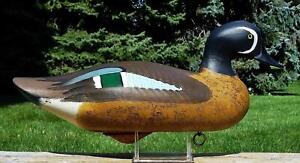
MINT RARE TEAL SUPERB 100% ORIG SIGN~DATED 1980 CAPT HARRY JOBES Wood Duck Decoy
SOLD $222.49 Sold: Oct 14, 2023 on eBayOriginal Listing Description
eBay MINT & VERY RARE AMAZING "SIGNED & DATED" 1980 by the LATE CAPTAIN HARRY R. JOBES SR. DRAKE BLUE-WINGED TEAL CARVED in MADISON MITCHELL'S SHOP ~100% ORIGINAL CONDITION SUPERB GUNNING DECOY & ORIG. LEAD BALLAST WEIGHT & STAPLE & RING LINE-TIE ~CARVED & LEARNED from GREAT MADISON MITCHELL ~INCREDIBLE PAINT & OUTSTANDING CARVING ALMOST IDENTICAL to MADISON MITCHELL'S BEST BLUE-WINGED TEAL ~NOT A NICK, CHIP, PAINT SMUDGE or FINGERPRINT on this MINT DECOY with a TINY PAINT FLAKE to WEIGHT & LINE-TIE ~INCREDIBLE 43 YEAR OLD "LIKE NEW BUT MELLOWED with AGE" PATINA ~HEAD & ALL RIGGING TIGHT AS IF JUST MADE ~BRIGHT GREEN & BLUE SPECULUMS with PERFECT PAINTED EYES ~MINT BECAUSE PROTECTED IN A CASE IN AN EAST COAST COLLECTION ~THE RIG-MATE HEN TO THIS DRAKE IS ALSO ON EBAY IF YOU ARE LOOKING FOR A PERFECTLY MATCHING RIG & CARVING MATE PAIR MADE at THE EXACT SAME TIME in MITCHELL'S CARVING SHOP SIX YEARS BEFORE HARRY OPENED HIS OWN SHOP ~DON'T MISS OUT ON ONE OF HAVRE DE GRACE' MOST LOVED CARVERS! MINT RARE TEAL SUPERB 100% ORIG SIGN~DATED 1980 CAPT HARRY JOBES Wood Duck Decoy MINT RARE TEAL SUPERB 100% ORIG SIGN~DATED 1980 CAPT HARRY JOBES Wood Duck Decoy Click images to enlarge Description AMERICAN CARVING LEGEND..... Captain Harry Jobes (above picture): 18 Year Old Harry Jobes Setting Out Canvasback Decoys on the Susquehanna Flats (above picture): Captain Harry Jobes (seated) and R. Madison Mitchell (shooting) Bushwhacking on the Susquehanna Flats (above picture): Harry Jobes in His 50's Finishing a Mallard (above picture): Harry Jobes in c2018 with His Son Bob in Front of the Harry Jobes Display at the Havre de Grace Decoy Museum HARRY R. JOBES SR. Birth Name: Harry Robert Jobes BORN: Nov. 19, 1936 ..... Havre de Grace, Maryland ? DIED: May 10, 2019 ..... Aberdeen, Maryland (Captain Harry Jobes Passed Away at the Age 82) Have de Grace is a city in Harford County, Maryland. It is situated at the mouth of the Susquehanna River and the head of Chesapeake Bay. It is named after the port city of Le Havre, France, which in full was once Le Havre de Grace; (French, "Harbor of Grace"). (above picture): Harry Jobes in 1980 with One of his Largest Projects, 20 Swans he Carved (above picture): Harry Jobes Receiving One of his Many Awards for Promoting Tourism along the Chesapeake (picture below): "HARRY JOBE'S" BELOVED HAVRE DE GRACE & The UPPER BAY! This is WHERE CAPTAIN HARRY JOBES SPENT His ENTIRE LIFE MAKING DECOYS, HUNTING, CHARTER-BOAT CAPTAIN, GUIDE, WORKING at ABERDEEN PROVING GROUNDS & ALL AROUND WATERMAN ........ EVENTUALLY BECOMING ONE of the MOST BELOVED FAMILY MEN and ENDEARING INDIVIDUALS to GRACE SUCH a BEAUTIFUL and HARD WORKING COMMUNITY! (Picture Below): HISTORIC c1980 PHOTO of "HARRY JOBES" with Some of The Men That Helped MADISON MITCHELL Over the Years; (left to right): "CAPTAIN HARRY JOBES", Paul Gibson, "Madison Mitchell", Clarence Bauer and Jim Pierce. (above picture): The Above Photo is Even More Special as It was the Same Year He Carved these ~Beautiful Blue-Winged Teal "Up For Auction" ....... and Even More Significant Because they were Likely Made in Mitchell's Shop ............ Because Harry Didn't Open His Own Shop Until 1985!! And as You Can See By the Pictures Below, Harry's Earlier Output was Close to Identical to Madison Mitchell's Decoys in Many Ways ....... ESPECIALLY "AWESOME BLUE-WINGED TEAL!! ___________________________ (Picture Below): 1978 "MADISON MITCHELL" BLUE-WINGED TEAL DECOYS: (Picture Below): These 1980 "HARRY JOBES" BLUE-WINGED TEAL DECOYS (up for auction): (Picture Below): 1978 "MADISON MITCHELL" BLUE-WINGED TEAL DECOYS: (Picture Below): These 1980 "HARRY JOBES" BLUE-WINGED TEAL DECOYS (up for auction): _________________________________________ (Below Photos): This MINT 100% ORIGINAL, ALMOST HALF A CENTURY OLD" -or- 43-YEAR OLD, "SIGNED & DATED" 1980 HARRY JOBES, "DRAKE" Blue-Winged Teal Decoy Up for Auction!! Mint 100% Original Condition without a Rub, Chip, Check, Crack, Dent, Paint Smudge or Fingerprint on this Spectacular & Scarce Solid Cedar Decoy! Typical Thick Tail and Bill is Carved & Sanded Thick on the End for a Clean, Surface & Shape ....... The Entire Body was Likely Mitchell's Lathe Made with an Outstanding, Undulating Form & Style ...... it Starts with a Beautifully Rounded Breast, then a Wide & Yet Thick Body that Culminates in a Beautiful, Slightly Upswept Tail!!! (Below Photos): This SCARCE, MINT, 100% ORIGINAL, SUPERB FINELY BRUSHED ON BACK FEATHERING, SPECULUMS & WING PRIMARY FEATHERS! Very "Mason-Like", Not Only Does it Have Swirling Back Feathers & Clean Green Speculums ......... it Also Has "DOUBLE BLUE" or "Twin" Blue Wing-Feather Groups ......... and Gorgeous Long "Sweeping Wing Primaries": _ (Below Photos): The Bottom of this Drake Blue-Winged Teal has a Perfect Bottom with No Defects ....... and Perfectly Tight "Like-New" & Perfectly Intact "Ring & Staple" Line-Tie & Lead Ballast Weight!! The Perfect Bottom on this Decoy has No Checks or Defects of Any Kind & Like the Sides it is a Bright Brown-Orange ...... there is a Tiny Paint Flake to the Line-Tie & Weight From Sitting on a Shelf; But Wonderfully Free of Any Chips, Nicks, Paint Smudges, Dents, Fingerprints, Checks or Cracks ......... AS IT WAS NEVER USED & ONLY SAW WATER WHEN it was "TUNED" by FLOATING it in a TANK to LOCATE WHERE the LEAD BALLAST NEEDED to GET NAILED ON!!!! The Bottom is Also Cleanly Signed & Dated By Harry Jobes with: "Capt Harry Jobes" -and- "1980" _ (Below Photos): The HEAD of this STURDY, WELL-ROUNDED & STUNNING DRAKE BLUE-WINGED TEAL DECOY'S HEAD & NECK from SEVERAL ANGLES; With PERFECTLY CARVED in HEAD/BILL SEPARATION & PAINTED-EYES ........... and ALL NAILS to ATTACH the HEAD to the BODY are PERFECTLY HIDDEN UNDER WHITE LEAD as if this DECOY was JUST MADE YESTERDAY!!!! INCREDIBLE MINT PAINT to the ENTIRE DECOY & YOU CAN SEE EVERY BRUSH MARK ............ with VERY NEAT WHITE, PERFECTLY PAINTED "CRESCENT MOON" on the FACE ........... and PERFECTLY LOCATED YELLOW & BLACK PAINTED EYES & BLACK BILL!!! The "BLUE-WINGED TEAL" HEAD & NECK FLOW SO PERFECTLY into the BREAST that if IT WEREN'T for the SHADOWS it WOULD BE HARD-TO-SEE the SEAM .......... it's JUST a GORGEOUSLY PAINTED & CARVED "RELAXED" HEAD for a DRAKE "BLUE-WINGED TEAL" ? _ (Below Photos): This MINT & "SIGNED & DATED", DRAKE BLUE-WINGED TEAL ....... Shown with the RARER & Just as AWESOME 100% ORIGINAL CONDITION HEN RIG-MATE Also on EBAY!! LIKE MOST CARVERS & ALL FACTORIES: Since Males by Nature are All Much More Vibrantly Colored, Drakes were Made in Much Greater Numbers Since they Were Much More Visible to Wild Ducks ....... which Makes the Hen also on ebay Much Rarer than this also Rare Rig-Mate Drake!! LOOK HOW SPECTACULAR they LOOK TOGETHER & COMPLEMENT EACH OTHER!! ? This Superb Pair Have Been Together Ever Since they Entered Their Collection -and- Have Been in the Same Hands and Collection Ever Since!! _ This STUNNING, R. MADISON MITCHELL, DRAKE BLUE-WINGED TEAL DECOY up for Auction: AWESOME 100% ORIGINAL; MINT, "SIGNED and DATED"; 1980 HARRY ROBERT JOBES SR.; ABSOLUTELY INCREDIBLE PATINA & PAINT; 43+ YEAR-OLD, DRAKE BLUE-WINGED; WOOD DUCK DECOY; HAVRE de GRACE, MARYLAND; SUSQUEHANNA FLATS (UPPER CHESAPEAKE BAY) This DRAKE GUNNING DECOY was CARVED LIFE-SIZED!! (This Size of His Decoys are His Most Sought After Work!!) ? OUTSTANDING ORIGINAL PAINT and CARVING on this VINTAGE GUNNING DECOY with AN INCREDIBLE, PERFECT PATINA!! EXCELLENT FORM on ONE of SCARCE, VINTAGE "DRAKE BLUE-WINGED TEAL" GUNNING DECOYS as this DECOY WAS MADE WHEN WOODEN DECOYS WERE STILL BEING USED by DISCRIMINATING HUNTERS ........ BUT this DECOY FOUND its WAY into a COLLECTION INSTEAD of the MIDDLE of a SMALL POTHOLE, or a SLOW-STRETCH of WOOD-LINED, RIVER WATER!! ? AWESOME STIPPLED, DAUBED, SWIRLED & STRAIGHT-LINE, BRUSH-STROKE "HARRY JOBES" PAINT -and- NICE, SEMI-RELAXED POSED HEAD & NECK TURNED SLIGHTLY to ITS RIGHT!! Vintage Hunting Decoy & His Very Best, Working Bird Style with his Nice, Long, Yet Wide at the Water Level, Body Style and Form!! ORIGINAL RIGGING is PERFECT -with- 100% ORIG. RIGGING: NAILED-ON LEAD BALLAST WEIGHT -and- COMMERCIAL STAPLE & RING, LINE-TIE!! ? ? This MINT, NEVER HUNTED OVER, DRAKE & the HEN also on Ebay LOOK & SHOW as a GREAT PAIR & HAVE an INCREDIBLE & VERY APPEALING, and a MINT, YET BEAUTIFULLY AGED PATINA! There is OBVIOUSLY NO GUNNING WEAR & NO SHOT MARKS; NO RUBS, NO PAINT SMUDGES, NOT a SINGLE FINGERPRINT, NO NICKS or CHIPS, NO CHECKS, NO DENTS or CRACKS, and there are ONLY TINY RUBS to the WEIGHT & LINE TIE!! ALTHOUGH VERY PROLIFIC: Early Gorgeous Blue-Winged Teal Like this Pair are Always a Nice Find!! ? ? __________________________________________ This is a Perfectly Symmetrically Carved & Painted Vintage Captain Harry Jobes Sr. Drake Blue-Winged Teal Decoy! The ONLY TIME that this Decoy "EVER SAW WATER" was Was in Mitchell's Shop When Mitchell's Shop "TUNED IT" By Adjusting Where the Ballast was Nailed on so It Swam with Perfection in a Hunting Rig!!! This Superb Drake Blue-Winged Teal and the Hen Rig & Carving-Mate also on ebay, Both Measure: ?13-1/2" long x 5" wide x 6-1/4" tall and Each Bird Weighs Exactly: 1-lb. 11-oz. ? BOTH of these DECOYS HAVE IDENTICAL SIZE, STYLE, FORM, CARVING, PAINT PATTERN & "BOTH MADE AT THE EXACT SAME TIME"!! BOTH DECOYS are also FROM the SAME COLLECTION & OWNER! This DRAKE & the HEN also on Ebay LOOK & SHOW as a GREAT PAIR TOGETHER & BOTH are FROM the SAME COLLECTOR & PURCHASER!! BOTH also have an OUTSTANDING PATINA FROM AGE & VERY CAREFUL HANDLING, OBVIOUSLY "NEVER" HUNTED OVER & VERY WELL TAKEN CARE OF WHILE in THEIR COLLECTION!! Awesome White Face Mask Curl, Green & "Double Blue" Speculums with Swizzled Back & Secondary Feathers & Long Sweeping Primaries ........... Along with Clean and Awesomely Stippled "Brown on Red-Orange" Paint to Lower Neck, Breast, Sides & Bottom ........... Crisp & Clean Gray-Blue Head & Neck Paint that all Perfectly Flows Together to Create a Realistic Drake Blue-Winged Teal in Full Winter Plumage! STRUCTURALLY PERFECT HEAD & NECK with ALL NAILS PERFECTLY INTACT and TIGHT AS IF MADE YESTERDAY WITHOUT a SINGLE SIGN of a TYPICAL NECK CHECK that YOU QUITE TYPICALLY FIND on DECOYS as it is INHERENT to the CONSTRUCTION METHOD of the UPPER BAY CARVERS!!! ? ? To Find Perfect Pairs, Carved From the Same Rig is Always Nice When Buying Pairs of Decoys! The HEN RIG-MATE to this DRAKE is ALSO on EBAY if YOU ARE LOOKING FOR A NICE MITCHELL BLUE-WINGED TEAL PAIR; They Were UNDOUBTEDLY CARVED OBVIOUSLY AT THE EXACT SAME TIME!! (Truly a Great pair to Own) ______________ (Below Photos): OTHER BLUE-WINGED TEAL by the LATE & GREAT, CAPTAIN HARRY JOBES: __________________________ This SENSATIONAL MADISON MITCHELL DRAKE BLUE-WINGED TEAL GUNNING DECOY up for auction: This AWESOME 100% ORIGINAL CONDITION DRAKE BLUE-WINGED TEAL "SIGNED & DATED" 1980 MADISON MITCHELL 43+ YEAR-OLD GUNNING DECOY with SUPERB 100% ORIG PAINT, CARVING, STYLE, PATINA & FORM!! ? _ CAPTAIN HARRY JOBES "LEARNED FROM" -and- "CARVED WITH and FOR".....The Late Decoy "CARVING LEGEND" R. MADISON MITCHELL!! _________________________ (Below Photo): HISTORIC c1980 PHOTO of MADISON MITCHELL with Many of The Men That Helped Him Over the Years along with a Contemporary, Paul Gibson; (picture below: Left to Right): CAPTAIN HARRY JOBES, Paul Gibson, MADISON MITCHELL, Clarence "Tit-Bird" Bauer and Jim Pierce. ? (below): This Decoy up for auction was Made in 1980 by: "CAPTAIN HARRY JOBES" at the TIME AGED 44: ? Likely Made in Madison Mitchell's Shop as He Opened his Own in 1985: ? MINT, 100% ORIGINAL PAINT; FULLY RIGGED; "43 YEAR-OLD" GUNNING BIRD; "SIGNED & DATED"; 1980 CAPTAIN HARRY JOBES; "DRAKE BLUE-WINGED TEAL"; WOOD DUCK DECOY; HAVRE DE GRACE, MARYLAND; SUSQUEHANNA FLATS (UPPER CHESAPEAKE BAY) Harry Began Making Decoys at the Age of 9 and Learned Originally from Working in Charles Barnard's Shop, But Really Learned Everything he Knew from Madison Mitchell. He worked in Mitchell’s Decoy Shop for over 25 years Before Opening a Shop of his Own in 1985 ....... 5 Years After He Made this Pair of Blue-Winged Teal in Madison Mitchell's Shop!!! Excellent & Classic, Beautifully Contoured Body Style with Super Bill and Great Sweeping Tail!! ? This is a TRADITIONAL "UPPER BAY" MADISON MITCHELL STYLED "HARRY JOBES" DRAKE BLUE-WINGED TEAL!! SUPERB DEEP, STUNNINGLY GORGEOUS, ORIGINAL PAINT on this 43-YEAR OLD, GUNNING DECOY with EXCELLENT OLD & DRY PATINA!! SUPERB FORM in the STYLE HE LEARNED from MADISON MITCHELL & PASSED on to his THREE VERY TALENTED SONS!! ? AWESOME DAUBED & STIPPLED HARRY JOBES PAINT & NICELY POSED, VERY-SLIGHTLY TURNED HEAD CARVING!! Awesome Slightly Turned Head, Drake Blue-Winged Teal Hunting Decoy ........... Almost Exactly the Same Carving and Panting Detail as His Mentor Madison Mitchell's Blue-Winged Teal!! ALTHOUGH NOWHERE NEAR as PROLIFIC as MADISON MITCHELL, And AFTER HAVING MADE MANY CANVASBACKS, BLUEBILLS & REDHEADS ........... BLUE-WINGED TEAL like these INCREDIBLE EXAMPLES are "EXTREMELY HARD to FIND from this EARLY 1980 TIME PERIOD" to COMPLETE a COLLECTION of HARRY JOBES or RARE UPPER BAY DECOYS!! ? This is a PERFECTLY CARVED & PAINTED VINTAGE PAIR of HARRY JOBES TEAL ........ and ACTUALLY the BEST PAIR of HARRY'S TEAL that MOST CLOSELY RESEMBLE MADISON MITCHELL'S that I HAVE EVER SEEN ...... PERIOD!!!! ? This 43-Year Old, Pair of the Late Harry Jobes Teal Were Made in Madison Mitchell's Shop & Both Measure: ?13-1/2" long x 5" wide x 6-1/4" tall and Each Bird Weighs Exactly: 1-lb. 11-oz. ? BOTH of these DECOYS HAVE IDENTICAL SIZE, STYLE, FORM, CARVING, PAINT PATTERN & BOTH of THESE RIG-MATES were OBVIOUSLY MADE AT THE EXACT SAME TIME!! BOTH DECOYS are also FROM the SAME COLLECTION & OWNER! These Dimensions & Weight are Perfect & Typical for a Small, Marsh & River & Woodland Duck, All Cedar Duck Decoy!!! This Pair of Decoys Clearly came from Climate Controlled, Direct Light-Free Collections that they Were Lucky to Be Added To as It They Have Been Kept in Mint Condition Over the Better Part of a Half-of-Century Since they LEFT MITCHELL'S WORKSHOP in HARRY'S HANDS!! IF YOU are a FAN of GREAT GUNNING DECOYS that WOULD HAVE DONE EXACTLY what they WERE MADE TO DO if GIVEN the CHANCE ...... This is a FANTASTIC PAIR to add to YOUR COLLECTION as DECOYS with THIS EARLY JOBES STYLE & PATINA and are NOT EASY at all TO COME BY, LET ALONE CATCH A GLIMPSE OF!! If You Like Important Decoys from the one of the More Important Middle to Later Period Upper Chesapeake Bay Region Decoy Carvers, that Are in Outstanding, 100% Original Condition ........... THIS IS A GREAT DECOY FOR "ANY" COLLECTION!! _________________________________________ IN THE NEXT FEW WEEKS I AM PUTTING ON EBAY MORE LAWRENCE BETHEL FISH DECOYS, A PAIR OF THE ONLY KNOWN PROTOTYPES MADE OF THE VERY FIRST PRE-PRODUCTION FIBRE DECOYS EVER MADE, A NEAR MINT 1927 HEDDON GIANT VAMPIRE FISHING LURE IN RARE SHAD, A PAIR of LATE PHASE DODGE MALLARDS, A RARE & NEAR MINT DR. MILES PIRNIE DRAKE BALDPATE WIIGEON, A VERY RARE VICTORS DRAKE BUFFLEHEAD, A RALPH MALPAGE PAIRT OF WOOD DUCKS, A VERY RARE c1893 100% ORIGINAL TRANSITION PERIOD MASON DRAKE BUFFLEHEAD, A NEAR MINT PAIR OF MASON GLASS EYE PINTAILS, A MINT c1905 HEDDON ARTISTIC MINNOW, A SCARCE RALPH MALPAGE ATLANTIC BRANT, A YELLOW WITH RED EYE BLUSH MOONLIGHT SINGLE-HOOK PIKAROON, A NIB CREEK CHUB MULLET COLOR STRIPER PIKIE IN CORRECT BOX, A PAIR of INCREDIBLE CHALLENGE & PREMIER GRADE MASON BLUE-WINGED TEAL, A NICE PAIR OF MASON GLASS EYE BLUEBILLS, AN AWESOME ERNIE NEUMANN SUCKER FISH DECOY, A RARE c1880 ST' CLAIR FLATS DRAKE REDHEAD, A VERY NICE ERNIE NEUMANN SUCKER, A RARE 12-1/2" CHET SAWYER MINNESOTA FISH DECOY, A NEAR MINT OSCAR PETERSON PERCH FISH DECOY, A MINT PAIR OF WRAGG & BURRELL WIGEON, AN OUTRAGEOUSLY HARD TO FIND PAIR OF CHARLIE POZZINI BLUEBILLS, AN AMAZING JOHN HOLLOWAY SLEEPING TURNED HEAD DRAKE PINTAIL, A VERY BIG & BULL-NECKED EARLY FERDINAND BACH DRAKE CANVASBACK FROM HIS PERSONAL RIG AND MORE!! ? Shipping Includes Insurance! I Don't Believe in Making a Profit on Shipping, You Pay What I Pay. If it's Less Than You Paid I Refund the Difference, If More I'll Pay For It. I COMBINE SHIPPING. I am also loading over 150 Duck Decoys, 150 Fish Decoys, 70 Scarce Fishing Lures, etc. so keep checking back. ________________ This OUTSTANDING, RARE, MINT, CAPTAIN HARRY ROBERT JOBES SR., DRAKE BLUE-WINGED TEAL up for auction: ITEM DESCRIPTION: This 43+ Year Old, Wonderfully Formed, Solid Cedar, Drake Blue-Winged Teal Using Madison Mitchell's Patterns and Made in Mitchell's Shop were Expertly Carved and Painted by the Late Captain Harry Robert Jones, Sr. of Havre de Grace, Maryland. (picture below): Harry Jobes c1990, Back in the Day, A Full (10) Ten Years After He Made this Spectacular & Very Rare Blue-Winged Teal up for auction: (picture below): Harry Jobes c2018 at the Havre de Grace Decoy Museum, Roughly a Year Before he Sadly Passed Away!!! ________________ ABOUT CAPTAIN HARRY JOBES LIFE ........ An AMBASSADOR and SPOKESPERSON for the RICH CARVING & HUNTING HERITAGE his WHOLE LIFE and RIGHT UP UNTIL the DAY HE SADLY PASSED AWAY on MAY 10th, 2019 at the AGE of 82: The Region's Rich History & Harry Jobes Involvement: Havre de Grace, known as the decoy capital of the world, has spawned an entire dynasty of decoys as well as decoy carvers. Decades ago, little did gunners know that the hundreds of decoys that they chopped at their workbenches in their spare time for hunting season would one day be considered a valuable art. Fortunately, many of the earliest carver’s works have been discovered in abandoned barns and cluttered attics and have been preserved for today’s appreciative collectors. And, like all true art, the skills involved in creating these counterfeit ducks have also been passed down from earlier generations to today’s carvers. One of these earlier gunning decoy carvers and then contemporary carvers was Captain Harry Jobes, a very unique individual. You could often spot him at a decoy show, decked out in his Panama hat, suspenders and duck pants, and one of his famous hand-knitted "Captain Jobes" sweaters. Mr. Jobes was born in Wilmington, Delaware, to Donald Keith Jobes and Lorelle Evangeline "nee Beauchamp" Jobes on November 19, 1936. Even his shop, which was located behind his home in Maryland, was not the typical decoy shop. Easy to spot because of the American and Maryland flags hanging in front of his house, a visit to his shop was quite a delight. At first glance, the shop reminded you of others – the smell of pine; a coating of sawdust on benches, windows, and patterns; the lathe, band-saw, sanding machine, spoke shaves, and draw-knives; the paint table, near the wood stove, with a variety of paint cans, thinners, and brushes, drying racks holding row after row of decoys; and bodies and heads in various stages of completion on the floor and in baskets throughout the shop. (picture below): At the Time, Captain Harry Jobes was 77 when He Carved & Painted this Awesome Swan Decoy! But that’s where the similarity to other shops ended. Hanging on the wall were pin-ups of "Elvira." His 13 year old granddaughter Monica was puttying ducks while her black Lab puppy chewed the head of a finished wood duck. However, Captain Jobes looked at the puppy, laughed and said, "He’s in the doghouse now!" And, anyone who knew Harry will tell you what a dry sense of humor he had. For instance, when he would be working in the shop and the phone rang, he might answer it with, "Nobody here but the chickens!" Or, when asked if he’s made any decoys, he replied, "They’re in the incubator." Harry’s interest in carving decoys went way back to his childhood days where he was born and raised in Havre de Grace. His carving career began in Charles Nelson Barnard’s decoy shop which was located two blocks up the street from his home. Harry once said, "I was about 8 or 10. I’d run in and out of the shop, sand duck heads, then run out and play football, kick the can, and wrassle, then run back in and sand another head." In fact, Harry grew up in the midst of several other famous Havre de Grace carvers, such as Bob McGaw and Jim Currier, and could tell you many stories about most of them. Harry Jobes once said, "I also used to run in and out of McGaw’s shop ...… but he was a little on the contrary side. You didn’t touch a tool in Bob’s shop – indeed you didn’t. He didn’t want no kids in there." (pictures below): 3 Photos of Havre de Grace Carving Legend R. Madison Mitchell, the Man that Taught Harry Jobes Everything He Knew About How to Construct and Paint a Perfect Upper Bay Style Duck Decoy. This Pair of Blue-Winged Teal Carved By Harry in Mitchell's Shop So How Exact Harry was in Following His Mentor's Patterns, Paint & Thus Inherited the Aura of Mitchell's Decoys: After working in Barnard’s shop for two or three years, young Harry decided to enter one of his decoys in an art show being held at the Havre de Grace High School. He once related it by saying that he laughed, "I was in the elementary school then, and it (his decoy) looked like a chicken had painted it with his feet. But I took it up to the show, and I thought it looked pretty good to me." When he got there, he met a lady by the name of Helen Mitchell, who had several decoys made by her husband, the very famous and late R. Madison Mitchell. When he saw Mitchell’s decoys he said, "Hell, I might as well take my decoys home." But Mrs. Mitchell was very friendly and started talking to him because she knew his grandfather. She even invited him to go to work for her husband; but since Harry was already working for Mr. Barnard, he refused the offer. And, he did win a ribbon in the art contest. "… a pink ribbon or a red ribbon or something," Harry once fondly remembered. (picture below): Harry Jobes in the Mid to Late 1980's Filling Orders in His Shop: However, a year later Barnard died, and Harry went down to Mitchell’s funeral home. When Mom Mitchell answered the door, she told him to go around back to Pop’s shop. "And I worked for Mitchell for 28 years," replied Harry. "I made twenty-five cents an hour after school. I spoke shaved decoys, ran the machines and I got so I could do just about anything …....... it didn’t make any difference if it was painting or making the heads. I did anything in the shop", Harry once recalled. Sometimes there were as many as five to six woodcarvers in the shop at one time. According to Harry, you could have Bailey Moltz, Bud McKinney, Cats Wilson, Jimmy Pierce, Bob Mathews and Titbird Bauer whittling heads while Ed Sampson did all the draw knifing. Harry said he sawed them out. He once recalled, "Bailey Moltz was the best head carver on the East Coast; he’s the one who really taught me how to whittle a head. But, the painting I learned off Mitchell. He has had the biggest influence on me as a decoy maker…no question about it." (picture below): Harry with his 3 Sons Later in Life: When he was once asked what it was like working for Mitchell, he stated, "We didn’t make a lot of money, but we left a lot of memories and had a lot of fun. The memories they can’t take away from us." Harry remembered a time back in the 1950’s when Madison Mitchell had 500 canvasback decoys in his north garage that they couldn’t sell because shooting canvasbacks had been outlawed. Eventually Harry contacted a boy up in Wilmington who bought 250 at seven dollars a piece, but they still had 250 left Harry recalled. Harry added, "We took the other 250 brand new decoys, freshly painted, and sawed the heads off them and threw the bodies in the dump where the A & P Store used to be in Havre de Grace". They took them down there and burned the bodies up. Ed Sampson draw knived the heads to look like black ducks, But you Couldn’t sell decoys in those days, you couldn’t give them away. You couldn’t gun diving ducks so nobody wanted them." (picture below): Harry Jobes and his Son Bob with Family & Friends in Front of the "Harry Jobes Exhibit" at the Havre de Grace Decoy Museum": Jobes once told another story about the time he and Brother (Mitchell’s son) were working at the shop one night, jack-planing the spots on the bodies where the heads go on. Brother took the plane apart and sharpened it. But when he put it back together, the blade was sideways instead of straight; and it took off more on one side than it did on the other. "We planed off 500 bodies with the side cut unevenly." About six o’clock the next morning Eddie Mauldin and Harry Jobes were eyeing ducks when Madison Mitchell walked in, picked up one of those decoys sideways, looked at it, and saw that it and all the others had been planed off crookedly. Harry Laughed, "He was a pistol, I got the blame for it. But when I explained what had happened, Madison Mitchell's one Brother got his ear bent when he came to work." When asked what they did with the decoys, he commented, "We just nailed the heads on and let them go. They were just a looking at you sideways a little bit. They were only gunning decoys. Of course, if you could find three or four now, they’d be worth something." While working with Madison Mitchell as his mentor for 28 years, Harry also spent much of his life working on the water running research vessels for the states of Maryland and Virginia, and working for the government at Aberdeen Proving Ground piloting a patrol boat. He also operated his own charter boat business – hence the moniker "Captain" Harry Jobes. But, somehow, like all others, decoy carving became an avocation, the long hours spent at night, weekends, and holidays, that sustained his spirit; so in 1985, Harry Jobes decided to retire, build his own decoy making shop and devote all of his time and energies to carving decoys. Unlike some of his colleagues, Captain Jobes made decoys all year ‘round and created a very demanding business. It soon was no longer a part-time occupation; and even though he spent endless hours in his shop, the demand for his decoys constantly exceeded his ability to produce them. He once commented, "Decoys have been damn good to me. I’ve worked at it ....... stayed at it". His wife and business partner, Helen Jobes, a very gracious lady who endured, with good humor, visitors at their home and shop at all hours of any day, once recalled, "I used to get a break when he went to work. Now that he’s retired he works three shifts – morning, afternoon, and evening. When there’s nobody here at night. I usually get the night shift." When asked by others what she does, she used to reply "sweep floors." However, Helen took care of the perpetual paperwork of the business – recording orders, packing decoys, sending them out, etc. – work that most collectors never dream about when purchasing a Harry Jobes decoy. Indeed, the Jobes’ decoy business had become a family tradition. Just as Harry learned from Mitchell, his three sons, Bobby, Charles, and Joey, also learned from their father. All three of his sons started carving in his shop when only children. "Bobby, the oldest, used to stand up on a fish box in order to reach the vise," recalled Harry. His stepson, Jeff, who also worked in the decoy shop, was then at the time the co-publisher of Decoy Magazine, which later was turned back over to Joe Engers as the sole owner and publisher. Harry Jobes once remembered the time that Madison Mitchell called him and wanted to know if he could recommend someone to replace Ed Sampson when he retired from draw-knifing heads. "Bobby can draw-knife," replied Harry, "so Bobby went to work for Mitchell and left me holding the bag!". Bobby was Harry Jobes 2nd eldest son. All of Harry’s sons now carve decoys as a full time profession. It was quite obvious that Harry was very proud of each of them. He once quipped, "I have raised three boys, and they can do anything to a decoy that needs to be done." Bobby specializes in miniatures, Charles in half-size, and Joey in full-size decoys. Harry added, "All three are good. They’re all better than I am,". And also said, "Let’s put it this way, there’s always somebody better than you are. It doesn’t make any difference what you do." (picture below): Harry's 3 Sons Harry Robert "Bob" Jobes Jr., Charles Keith Jobes and Joseph Allen Jobes!! However, Captain Jobes was a craftsman whose talent is reflected in his decoys which are so admired and sought after today its no coincidence because he learned from the best, Madison Mitchell, and carved a great many decoys that look just like Mitchell's decoys in many ways. And as a matter of fact, without those tiny clues for the trained eye, this pair of Blue-Winged Teal likely could have been attributed to either because in 1980 and still working in Mitchell's shop, making a Mitchell decoy was second nature for harry Jobes. His popularity in the Havre de Grace area has been demonstrated by the fact that he was chosen as the Honorary Chairman of the 1988 Havre de Grace Decoy Festival. When asked how he felt about being selected for this honor, he stated. "It’s good; I guess I was surprised." Then, his dry sense of humor surfaced once again as he smiled and said, "The day before the show I’m getting two splints put on my hands so I don’t have to sign all those ducks." Although Harry Jobes made both working and ornamental decoys in that famous Havre de Grace style, all of the decoys he donated for the 1988 show and auction were working decoys. A set of 25 full-size and miniature decoys include the following species: regular and high-headed canvasbacks, redheads, blackheads, mallards, buffleheads, baldplates, cinnamon teals, ringnecks, shovelers, old squaws, pintails, goldeneyes, black ducks, wood ducks, a white wing scoter, a coot, a Canada goose, a blue goose, a snow goose, a brant, and a swan. Captain Jobes explained, "There’s a whole different ballgame between gunning and ornamentals. A working decoy you can sit it on a shelf and listen to it talk for two hours. Ornamentals can’t do that. When we made decoys years ago, we made them to go gunnin’ with, not to sit on a shelf ..... when you look at gunnin’ decoys from the 1900’s to the 60’s, the only people who made ‘em were those who lived around the river shores. Now they make gunnin’ decoys in New York City. Two thirds don’t even touch the water anymore. You wonder where they went to. You’re like Babe Ruth – you played a good game and never got paid." When questioned about carving more miniatures, he exclaimed, "When these are done, there ain’t gonna be no more of them. I can make ten full-size heads while I make one of these miniatures." So collectors who desire a Captain Jobes miniature will find it quite difficult to purchase one. Harry continued, "The year Madison Mitchell 's wife died, I made a boxcar load of these miniatures. I had ‘em in the cellar by the bushel basket full, and you don’t hardly ever see one." If a collector were fortunate enough to discover one of those old miniatures, he would indeed have found a very valuable decoy, like this pair of Early Blue-Winged Teal up for auction. Another time Captain Jobes was recognized for his outstanding decoys was in 1986 when Continental Can requested that he do a magazine advertisement for Coca Cola’s 100th birthday celebration. Many hours were spent preparing for the production of the ad. The day the production crew arrived, make-up artists worked on Harry before the photographers could film. Harry laughed, "They even brought lunch, but they forgot the Coke for the ad and had to go up to 7-11 to buy them." The final full page color ad featured Harry, working in his shop, painting a pintail drake, while his young grandson Shannon looked on. This photograph appears on the cover of the 1988 Havre de Grace Decoy Festival booklet. The later and last decoys Harry Jobes made, he sold to collectors and businesses located all over the United States and in foreign countries. He recalled at the time, "I ship them all over the place. I’ve got good friends in Holland. I ship decoys they ship tulips, I trade ‘em decoys for Tulips," he said. However, not all of the people he sold to owned shops; many were hunters and sportsmen. "I got the president of Hardees Corporation that’s got gunning marshes down in the Carolinas. I made 100 for him – 50 pair of wood ducks – and he guns them." Laughing, he said, "Yeah, it was a couple days of painting." Although born and raised on the Susquehanna Flats, Captain Jobes did very little hunting the last years of his life. He recalled before his passing, "Back Then you could look up and see thousands of cans. Now you can’t see nothin’." He remembered a time when 10-12 blinds were built on the western shore of the Chesapeake Bay where bushwhackers used to hunt. "I was one on the last ones to gun on the western flats. I’ve seen the best of this old Chesapeake." In 1970, when Harry Jobes was questioned about anything unusual that he had made, he recounted a time about ten years ago (1980) when he made 50 swan at once time. He recalled, "Most swan ever built around here at one time. It took a barrel of time to make those bodies and several cords of wood." About 30 years ago, Harry made the DuPonts four stand-up wood ducks. "They were painted in pure oil colors – took two months to dry. I ain’t gonna make no more of them things – no way!" He also once made 50 stand-up geese for Billy DuPont. (picture below): Harry Jobes with 50 Swans He Carved in 1980; That was the Exact Same Year He Carved this Pair of Blue-Winged Teal up for auction; Both Made Right in Harry's Prime!! Asked if he had any hobbies, he once replied. "I used to piddle with model trains, but I don’t have time to anymore, I guess I got my hobby right here. As Mitchell used to say. "It’s a damn expensive one." According to Captain Harry Jobes around 1986, his plans for the future were, "Just gonna make more decoys." He paused and said in that drawl of his, "I would like to take one more time and put a bushwhacking rig together and relive some of the days I had years ago. But you’ll never see that again there’s no question about it." Although those days of bushwhacking reside mostly in memory, Captain Jobes has taken his place among a select group of craftsmen who have made the Upper Chesapeake Bay region the decoy capital of the world. Much More Information on Captain Harry Jobes and Some Information About His Growing Up and Eventual Involvement in Decoy Making, Hunting & as An Ambassador for the Region: Captain Harry Jobes passed away on Friday, May 10, 2019 After a Full Life Lived and Along with Many Others, Becoming One of the Legendary Decoy Makers and Watermen of the Upper Chesapeake Bay!! Harry Jobes is a legendary talent, a master of gunning birds made in the style of the area, "The Susquehanna Flats", Chesapeake Bay decoys. His carving career began in Charles Nelson Barnard’s decoy shop which was located two blocks up the street from his home at the age of 8 or 9 by sanding duck heads. After several years Mr. Barnard died and Harry began working for the legendary Madison Mitchell. "I made twenty-five cents an hour after school .... I spoke shaved decoys .... run the machines ..... I got so I could do just about anything ..... it didn’t make any difference it it was painting or making the heads. I did anything in the shop." (Captain Harry Jobes) Captain Harry Jobes worked for the famous R. Madison Mitchell for nearly 25 years before opening his own shop in 1985. He has been featured in books, museums and in private collections. During his life he has been a commercial waterman, a hunting guide, as well as a charter boat captain. Some old images are available. "Bailey Moltz was the best head carver on the East Coast; he’s the one who really taught me how to whittle a head. But, the painting I learned off Mitchell. He has had the biggest influence on me as a decoy maker ..... no question about it" (Captain Harry Jobes) Captain Harry Jobes had three sons that all learned from him and other great carvers in the local area and then followed him into the decoy business. Each of them is a talented carver and painter, working on his own line of decoys. Captain Bob Jobes is the oldest, then Charles Jobes and Joey Jobes. "I have raised three boys, and they can do anything to a decoy that needs to be done." Bobby specializes in miniatures, Charles in half-size, and Joey in full-size decoys. "All three are good. They’re all better than I am," once commented by Harry. "Let’s put it this way, there’s always somebody better than you are. It doesn’t make any difference what you do." (Captain Harry Jobes) Harry was Married July 22, 2006, to Virginia, a long-time school friend. Harry used to make decoys all year ‘round and had a very demanding business. The demand for his decoys constantly exceeded his ability to produce them. While Harry was in Great Demand as a Decoy Maker in his Later Years, Just like the Earlier Years using Mitchell's Shop or in his Own, he was never able to keep up with the intense demand for his "very special" and rare decoys that are finally selling at the prices his decoys have always demanded. but now significantly more as he was the last of the "Mitchell Shop Decoy Makers". From 2015 and after, Captain Harry Jobes had been having medical and physical issues and has not been able to produce decoys. Thus, this ended the decoy making days of the Great Captain Harry Jobes Sr. THE HISTORY of CAPTAIN HARRY ROBERT JOBES SR. Harry R. Jobes, Sr. was born on November 19, 1936 in Harford County, Maryland. He was a third generation Havre de Grace born member of a family originally rooted in Pennsylvania. His great grandfather Joseph Allen Jobes (1846-1931) moved his family to Havre de Grace from Bucks County, PA in the 1870’s. Harry’s great grandmother was Caroline E Rowe (1849-1929). Her family goes back to 17th century Germany. Caroline’s great grandfather Dr. Johann M Rauh (1728-1792) migrated from Germany to PA. Dr. Rauh’s son’s last name became Michael Rowe (1765-1816) after he was born in America. In 1860, teenager Joseph Jobes lived on a Bucks County, PA farm with a family named Wright. He was still in school. Twenty years later in 1880, Harry’s great grandfather Joe Jobes was 35 years old. He was married to 34 year old Carrie and they were living in Havre de Grace, MD. They already had four boys and a girl. The children ranged in age from one to eleven. Harry’s grandfather Harry A Jobes (1871-1951) was nine years old. Great Grandfather Joe Jobes made his living as a bridge carpenter. A Good (2) Two Decades Later in 1900, Grandfather Harry A Jobes still lived with his parents and siblings in Havre de Grace. He was 29 and both he and his brothers Edward and George were all employed as can makers. Ten years later in 1910, Harry was married to Alice Annette Dunston (1875-1955). The couple now owned a factory and grandfather Jobes was a machinist. In 1920, Harry and Alice lived at 408 St John Street in Havre de Grace. Harry’s grandfather worked as a clerk in a clothing store and he and his wife Alice were now blessed with two children. Donald Keith Jobes (b.1911) was 8 years old and attending school and he would go on to complete the eighth grade. Donald Keith Jobes (b. 1911) had a son named Harry R. Jobes, the very Harry Jobes that made these Blue-Winjged Teal and went on to become one of the later and last of the Olg Guard of Havr de Grace's gunning decoy carvers. The Jobes family lived at 721 Otsego Street in Havre de Grace according to the 1930 census. Harry’s grandfather owned the home valued at $3,000. The family did not yet have a radio in their house. Harry Jobe's Father Donald was 18 years old, still lived with his parents, was single and unemployed. (picture below): The Incredible Plaque Located Inside the Glass Enclosed Display Featuring & Celebrating Harry Jobes and His Life: By 1940, Donald Jobes was married to Bernadine Jobes (b.1915). The couple still lived with Don’s parents in their Havre de Grace home on Otsego Sreet and Harry Robert Jobes (b.1936) now lived with his parents and paternal grandparents in Havre de Grace. Harry’s Father Donald worked as an assistant store houseman for the United States government at the Aberdeen Proving Grounds. His annual income was $1,300. He worked 44 hours a week and so did his wife. Harry’s mom was a stenographer. She earned $800 that year. Harry’s grandfather made $950 that year and he worked 48 hours a week in a department store. (picture below): Captain Harry Jobes' Lathe During the Early Stages of Forming a Decoy Body! (picture below): Captain Harry Jobes' Lathe Following a Body Pattern!! When young Harry Jobes got a little older, he started running the streets of Havre de Grace. His first exposure to the art of decoy making was before he was even 10 years old. Decoy maker Charles Nelson Barnard lived in Havre de Grace at 418 North Stokes Street and it was so close to the Jobes house that Harry could walk there from his family’s home in 5 minutes. Harry Jobes recounted how as a boy, he periodically mixed his playtime with working on decoys in Mr. Barnard’s shop. Harry also recounted how much more accommodating to young boys Mr. Barnard was when compared to another neighborhood decoy maker, Bob McGaw. Bob McGaw’s shop was almost a 15-minute walk for young Harry Jobes from his house. The pre-teen future decoy maker preferred the temperament of the Barnard shop to what the young lad found when he visited with Mr. McGaw. As a young man, Harry Jobes was just as committed to living a full life as he was when he was an adult. Harry worked part-time as he continued learning the ins and outs of decoy making from Mr. Barnard until Charles Barnard ended his decoy career. During that time, Harry was now entering Havre de Grace High School. In addition to his part-time job making decoys and his studies, Harry was both a varsity baseball and football player while at Havre de Grace High. He was a member of the baseball team that won the Harford County High School Championship in 1953 and his athletic endeavors secured him a membership in the school’s varsity club. Harry made and painted a decoy when he was in elementary school. Then, he entered it in a contest at the high school. He got a ribbon of some sort and it was during that contest that Harry met Mrs. Helen Mitchell, Madison Mitchell's wife. She was actually the member of the Mitchell family who hired Harry Jobes to work in her husband R Madison Mitchell’s decoy shop after Mr. Barnard stopped making decoys and didn’t need Harry’s help any longer. Harry worked for the Mitchells making decoys in their shop on a part-time basis for more than 25 years. When he started, Madison Mitchell paid Harry 25 cents an hour for his efforts. Harry Jobes time spent in that shop exposed him to some of the most talented decoy crafters in the world. Harry learned from them all. Bailey Moltz’s, Titbird Bauer’s and Pop Sampson’s names do not have the same level of recognition today as Harry’s or Madison Mitchell’s. Those fellows and others are the lesser-known masters of Madison’s shop. Those men taught Harry Jobes and many other young area carvers how to make decoys. Harry took what he learned and then he raised the area’s decoy marketing to a new level and eventually produced decoys on a par with Mitchell's like this pair of Blue-Winged Teal up for auction. Harry Jobes married Alice Helen Salters (1938-1991) and together they lived in Aberdeen. The couple had three sons during the years between 1959 and 1968. Mr. Jobes introduced all three of his children to the craft of decoy making. Harry’s sons, Bobby (b.1959), Charles (b.1968) and Joey (b.1965) have enjoyed long and highly productive careers making decoys. They go about their work in much the same way as their dad and the old masters that Harry knew and learned from did. Harry’s second wife Helen M Baker (1929-2004) helped with the business end of Harry’s decoy enterprise in Havre de Grace. Until 1985, Harry made his primary living as a boat captain. Thus, he is widely known as “Captain” Harry R. Jobes. During his career, Mr. Jobes skippered research vessels for the states of Maryland and Virginia as well as a patrol boat off the federal proving grounds in Aberdeen, MD. Captain Harry also ran his own charter boat for many years. He was the epitome of a waterman. (picture below): Harry Jobes was Always Eager to Help with Causes Including the Halloween Festivities at the Havre de Grace Decoy Museum, as He Greeted the Kids & Parents Right in Front of His Permanent Exhibit within the Museum: Up until 1980 Harry Jobes helped out in Madison Mitchell's shop, and as he did with other carvers like Charlie Joiner, he made his shop available to them to make their own decoys if the shop would otherwise have been idle. This pair of Blue-Winged Teal decoys up for auction were made in 1980, 5 years before Harry retired from the Aberdeen Proving Grounds job and opened up his own shop in 1985. Captain Harry began making all of his decoys full time in his own new shop. But after a good 30 years of making decoys, around 2015 Harry Jobes began to curtail his carving efforts down to a trickle. In his later and last years you could still buy his decoys and he occasionally could be found in a Panama hat at decoy related events, many of which were with one or more of his sons. For countless years, Captain Harry and his family members generously contributed their time and energies to the Havre de Grace Decoy Museum, Ducks Unlimited and other similar historical and conservation charities. (picture below): Harry Jobes, Ever the Doting Father, in His Last Years Enjoying Time with One of his Grandchildren: Captain Harry’s decoy production is quite varied and he was certainly one of Havre de Grace's greatest carvers, and as time goes on the Demand for his Work, the Appreciation for his Outstanding Decoys and the Prices Being Realized for them Continues to grow at an Amazing Level. He has made both gunning decoys and ornamental decoys. His decoys are lathe turned and they all have the traits of the traditional Havre de Grace decoy. Harry has made just about every species of waterfowl in every pose you can conceive. Harry Jobes was a member of the Havre de Grace Elks Lodge, Duck’s Unlimited and the Havre de Grace Decoy Museum. He enjoyed traveling, hunting, fishing and crabbing. Collectors can find Harry’s decoys in every state in the nation and all around the world as well as appreciation and demand for them grows exponentially year after year after year. Harry passed away on May 10, 2019 and was one of the Last Havre de Grace carvers that carved during the golden years when almost all decoys were made of wood and ducks were still rafting up across the country in large migrating groups and piling into marshes looking for refuge, rest and food while on their journey. When Harry Jobes Sr. passed, he was predeceased by his first wife Alice Helen Jobes, second wife Helen Margaret Williams Jobes, and his siblings. He is and always will be missed. Captain Harry Jobes carved decoys for most of his life. The Captain has spent all of his life on the Chesapeake Bay and Susquehanna Flats as a commercial waterman, hunting guide and charter boat captain. This close association with nature has given him first hand insight into the waterfowl world. Captain Harry’s decoys have been featured in books and museums as well as numerous private collections across the country. All of this experience and knowledge Harry passed on to his 3 sons and from the photos above you can see that they were great listeners and learners as their decoys are also excellent, true to form and will carry on the Jobes' decoy making tradition for generations to come. _ This STUNNING, R. MADISON MITCHELL, DRAKE BLUE-WINGED TEAL DECOY up for Auction: This Mint and 100% Original, "Signed & Dated" 1980 Captain Harry Jobes Drake Blue-Winged Teal decoy up for auction is aesthetically and structurally as magnificent as the day that he carved it 43 years ago. It is perfectly symmetrical from both painting and carving standpoints including the location of the painted on eyes and the carved in head/bill delineation. This decoy is in Awesome 100% Original Condition, even considering it is a 43 year old gunning bird that is mint because it went straight from Harry's work bench and into a discriminating East Coast decoy collection! Very neat bill contours perfectly like a real Blue-Winged Teal in the Wild and the head and neck carving on this great decoy is phenomenal, especially the very neat semi-alert or relaxed and turned head. The base of the neck is beautiful as it flows flawlessly from the body and into the neck seat and down the nicely rounded breast and sides. The daubed and stippled paint on this decoy is also incredible, as it really creates a life-like feathered appearance to the entire decoy, especially the daubed and swizzled back feathers and speculums, as well as long sweeping primary feather and "double blue' wing patches above the green speculums that are thinly bordered with white and black, straight-line paint! This decoy is absolutely perfect all original paint and the original rigging is perfectly intact and in superb condition. Great color on the paint job with a perfect and deftly applied "daubed" paint job in the tradition of the Havre de Grace style almost exactly like that of Madison Mitchell's decoys as he likely even carved it in Mitchell's shop and was still working part time for Mitchell as he still had other full-time job obligations. But in addition to the Havre-style daubed paint, the stippling to the paint on the back is concise and precise. This Truly Exceptional Drake Blue-Winged Teal and the Hen Rig-Mate also on ebay Both Measure a Perfect, Life-Sized 13-1/2" long x 5" wide x a very stately 6-1/4" tall and weigh a very manageable 1-lb. 11-oz. THAT IS FANTASTIC & Makes for a PERFECT BLUE-WINGED TEAL DECOY! This decoy is just in excellent condition and it clearly went straight from Mitchell's Shop and right into a light and temperature controlled collection of vintage Upper Chesapeake Bay decoys on the East Coast. A great addition to your collection of classic wood decoys and shorebirds from a man that learned from the best and now carves with the best. If you have any questions or would like any close-up pics of an area feel free to email me. Thanks for looking. The first photo in the Beginning of this Listing is of this Great Harry Jobes Drake Blue-Winged Teal up for auction. The Next 3 Photos are of Captain Harry at Different Points of Time in His Life. The Next 6 photos are of this Drake and the Hen also on ebay together so you can see how Awesome this Pair if Rig-Mates Look & Complement Each Other. The Next Photo is of Another Pair from a Book. The Last 13 Photos are again of this Beautiful Drake Blue-Winged Teal Again by Itself!! (I encourage you to use the zoom feature in this listing to get close-up looks at anywhere on this decoy as it can zoom in on the smallest of spots from the many different directions afford you to see the decoys entire surface.) ? __ (pictures below): Other Pairs of Harry Jobes Great Gunning Decoys. Some Also Show Harry's Ultra Rare Miniatures: __ Below is an ARTICLE About R. "MADISON MITCHELL", Captain "HARRY JOBES" MENTOR: BELOW are PICTURES of a VARIETY of MADISON MITCHELL'S DECOYS or OTHER ITEMS: (picture below): A PAIR of MADISON MITCHELL BLUE-WINGED TEAL with VERY CLOSE FORM & PAINT to CAPTAIN HARRY JOBES BLUE-WINGED TEAL DECOYS: (picture below): SOME MADISON MITCHELL GOOSE SPECIES and SWAN DECOYS! __________ (picture below): A FEW PHOTOS OF OTHER SPECIES OF MADISON MITCHELL GUNNING DECOYS!! (picture below): A FEW PHOTOS of MADISON MITCHELL CANVASBACK DECOYS & VARIATIONS: (picture below): MORE PHOTOS OF OTHER SPECIES OF MADISON MITCHELL GUNNING DECOYS!! (pictures below): MORE PICTURES OF OTHER GREAT MADISON MITCHELL CANVASBACK DECOYS AND RELATED REDHEAD ITEMS! (The 2nd Photo is Mitchell with a Room Full of Canvasbacks and Canada Geese Decoys He Made!) __________ (Article Below): VERY IMPORTANT, CONCISE & INFORMATIONAL ARTICLE WRITTEN BY MR. JIM TRIMBLE FOR DECOY MAGAZINE. HE SENT ME THIS EMAIL OF THE ARTICLE AS I COULDN'T FIND MY COPY AND I HAVE READ IT HUNDREDS OF TIME. BUT IF YOU ARE ABLE TO GET A BACK ISSUE OF THIS PARTICULAR ISSUE OR SUBSCRIBE TO DECOY MAGAZINE IT IS MONEY EXTREMELY WELL SPENT!! By James L. Trimble R. Madison Mitchell The Chesapeake’s Dominant Decoy Maker Reprinted with permission from the Jan/Feb 2007 issue of Decoy Magazine. When asked the distinguishing characteristics of his decoy by a reporter many decades ago, Mitchell responded, “Ninety percent of the gunners from Columbia, Pennsylvania to Richmond, Virginia can tell you whether the decoy they are holding is a Mitchell decoy…or not!” Mitchell, the Chesapeake’s predominant decoy maker, made that comment with a chuckle and a twinkle in his eye, a comment that might seem vain if it wasn’t also true. It was still a time when Madison Mitchell dominated wooden decoy production in his part of the world, a craft that eventually headed toward its twilight years, as did Mitchell, as wooden decoy rigs gave way to plastic. The Chesapeake Bay is the largest of the 130 estuaries located in the United States, stretching 200 miles long and up to 35 miles wide, encompassing 11,684 miles of shoreline, including the tidal tributaries of Maryland and Virginia, a distance longer than the entire west coast of the United States. Many rivers feed it, but the majority of the Chesapeake’s water is derived from the saline Atlantic Ocean to the south and the Susquehanna River to the north, which pours in fresh water at the head of the bay. A major resting and feeding habitat along the Atlantic Flyway for migratory ducks and geese, its open waters with wild sego and celery grasses are home to 29 species of waterfowl. The watermen who populated the bayside communities throughout the region harvested a great variety of seafood from its waters. The late fall arrival of ducks and geese represented another source for both sustenance and income. According to the writings in early sporting books and magazines, millions of birds arrived on the Susquehanna Flats each fall, with their numbers greatly depleted by winter’s end. It was prime gunning habitat for the market hunter of yesterday, who sold their harvest for shipping by rail to the nearby accessible markets of Philadelphia, Baltimore, Washington and Richmond. Due to this abundance of waterfowl population, this vast Chesapeake Bay region supported more decoy makers, who produced more decoys, than any other area in the world. The identities of many of the early decoy makers from many regions have been lost to time and history, however the pioneers of Upper Chesapeake Bay decoys, men such as Holly, Graham and Dye, have been identified, with fine examples of their work surviving. Robert Madison Mitchell was born in 1901 in Oakington, Maryland, near Harford County’s Swan Creek, just south of Havre de Grace, and he grew up in this waterman’s community at the top of the bay. It was a time when waterfowl conservation was non-existent and years before the U.S. Migratory Bird Treaty Act of 1918 became law. Mitchell was the son of a farmer and market hunter, who worked the land on Spesutie Island at the southern end of the Susquehanna Flats. Interviewed in George Reiger’s 1980 book, “Wings of Dawn,” Mitchell relates, “We had men here, my father for example, who farmed on Spesutie Island. He got $14 a month salary and five acres of ground to do with as he pleased, as well as the fishing and hunting rights to the lower farm. If he hadn’t gunned for the market, we would have been hard pressed to make ends meet. Money from waterfowl was one of my father’s biggest sources of income.” While Mitchell was an infant, the family’s farming activities moved from Spesutie Island to the rolling hills of Mount Felix on the Heights, which overlooked Havre de Grace and the bay. His grandfather’s stroke precipitated the move, as they had to take over the family dairy and look out for his care. Mount Felix, a 7700 square foot brick manor house with unparalleled views of the bay, was built in the 1830s by Mitchell’s great grandfather canner and agriculturalist John Mitchell. This is where Mitchell spent his formative years. The 1910 Harford County census lists Robert H. Mitchell as Head of Household with his occupation as a farmer, working on “our farm.” Occupants include his wife, three daughters and 9-year-old Robert M. Mitchell. The younger Mitchell often told of life on the farm, including delivering milk by horse and buggy, all before morning classes. He learned to fish and hunt upland game at this father’s side. Although he lived in a waterfowling community, it was not a pursuit in which he would partake until he was a young man. A favorite uncle, E. Madison Mitchell, had a great impact on the younger Mitchell, so much so that he dropped his given name Robert and went by his middle name Madison, or the now proper name of R. Madison Mitchell, which he kept for life. Years later Mitchell decided to choose his favorite uncle’s profession, that of an undertaker, and he quite school at age 16 or 17, moving 30 miles south to Baltimore, where he lived in an apartment over his uncle’s funeral home. While there he “helped out,” which included “night removals” from Baltimore homes. He also attended classes at the Baltimore Business College. A year or so later, an older sister visiting Havre de Grace surprised the family with an early birth. Mitchell accompanied his sister and child on their return train trip to Michigan. While there, he took a job working at a General Motors assembly line in Pontiac for $6.00 a day, a decent wage for the time. It is quite possible that Mitchell may have run across the nearby Mason decoy factory while living there, thus noting the use of lathes and assembly line processes in producing decoys. He may also have been exposed to the wealth of Michigan’s forests, a source he turned to later in life. While Mitchell was spreading his wings elsewhere, Havre de Grace was coping with the new federal migratory laws, which forced many watermen to convert from market hunting to providing guide services for city sports, who now poured in by rail each gunning season. The small town of Havre de Grace quickly became the gunning Mecca of the East Coast. Mitchell returned home in April 1920, and according to Charles Lee Robbins 1987 book, “R. Madison Mitchell – His Life and Decoys,” Mitchell and his father hunted ducks on the Susquehanna Flats from a sinkbox that fall, something they repeated each ensuing season. Their rig was reported at 450 decoys, and they shot mostly divers, with Mitchell using a 12-gauge Winchester Pump Model 98, full-choke with a 32-inch barrel, a gun used by four generations of Mitchells. Although raised in a waterfowling community of market hunters, this was purportedly his first attempt at hunting ducks. As Mitchell is quoted in Rieger’s previously referenced book: “The market (market hunting) had stopped before I actually took up gunning.” In 1922, Mitchell received his embalmers license and opened for business shortly thereafter. Sam Barnes, a prolific decoy maker, helped paint the funeral home. Barnes was Mitchell’s mother’s cousin and a contemporary of his father, and in 1924 Mitchell started helping Barnes with his decoy production, a job completely done by hand, using a saw, a hatchet, a drawknife and spoke shave. “He was one of those old gentlemen who never stopped; he just kept on working,” Mitchell is quoted as saying in David and Joan Hagan’s 1990 book, “Upper Chesapeake Bay Decoys and Their Makers.” Purportedly when Mitchell was asked what he knew about making decoys at the time, he responded, “The same thing you did when you started.” It is interesting to note that this was the same year that a pair of Sam Barnes canvasbacks was awarded “Best in Show” at the Second Annual Exhibition of Wildfowl Decoys in New York City, based on practical (functional) use and maintenance. At the time, Barnes sold his decoys for $1.25 each. According to Madeline Shanks, Mitchell’s daughter, her father augmented his income, as did many in town, by picking up racetrack fans at the train station and taking them to the now-defunct Havre de Grace Racetrack. Champion horses of the day, including Seabiscuit, Citation and Man’O War, all raced there. The Havre de Grace destination was so popular the railroads operated special “racing trains” from New York, Philadelphia and Baltimore, using the same railroad tracks that brought in the city sports each gunning season. It is not known how long he provided this service or whether he ever used his hearse for pick-ups. Mitchell had been working on a steady basis with Barnes for about two years when Barnes died of pneumonia in 1926. Mitchell handled the funeral, and it was the first to utilize a brand new hearse he had just purchased. At the time, his business on Washington Street was handling about 20 funerals a year. Barnes left behind substantial orders for decoys - about 1400 birds in all - that needed to be filled before the next hunting season. That same year his daughter Florence, who had painted his decoys, married and left town. Recognizing the opportunity, Mitchell established his own shop, implementing power tools, including a belt sander built by a local machinist, and later a lathe to turn his decoy bodies. The shop was located behind his funeral business on Washington Street, just a few blocks from Barnes’ Washington Street home. Now on his own, Mitchell sought guidance from other area makers, particularly concerning the application of paint patterns. Capt. Billie Moore, owner of the gunning yacht Reckless and father-in-law of well-known decoy maker Bob McGaw, both Washington Street neighbors, came to Mitchell’s aid, teaching him how to mix and blend colors, applying the same feathered wing pattern used when helping his son-in-law fill decoy orders. With Moore’s help, the 1400 newly finished decoys were completed in time for gunning season. McGaw’s signature “dog bone” weight is also found on some early Mitchell decoys, which could indicate a Moore influence as well. (Locals report that McGaw was upset that his father-in-law would help this new upstart, who would eventually prove to be a formidable competitor for area decoy business.) According to the Hagen’s book, the average order was for 50 to 100 decoys and they sold for $1.50 each. For Mitchell, 1926 carried added significance, as he married local Helen Maslin, a union that lasted until her death in 1973. It should be noted that his father, Robert H. Mitchell; his cousin and mentor, Samuel T. Barnes; and the man who taught him how to paint decoys, Capt. William E. Moore; were all members of the “Ducking Police,” created by an 1872 State of Maryland statute to regulate shooting on the legal boundary limits of the Susquehanna Flats. There is no doubt that their stories about those “early days” had an impact on Mitchell. A December 5, 1926 article in the Baltimore Sun, “Ducking Days Along Susquehanna,” mentions the “hundreds of sinboxes that dot the water,” and details some of the gunning accidents that occurred there, including accidentally shooting holes in the watertight box, hunters accidentally shooting themselves and one particular case of two brothers who froze to death in their sinkbox. It would be interesting to know if Mitchell, with his new hearse, collected the bodies. The 1930 census for the City of Havre de Grace lists the 29-year-old Mitchell as living on Washington Street with his wife and two-year-old daughter. Under the Head of Household column, his given name is listed as R. Madison Mitchell and his occupation as embalmer undertaker He is not listed in the 1920 Maryland census, as he was likely residing in Pontiac, Michigan. With time, the Barnes body design was modified to clean sharp lines for easy and fast lathe production, perhaps with a Holly influence. Mitchell used lead ballast weights and replaced the traditional leather anchor straps with a small ring and staple. The first time he tried rings and staples on his father’s decoys he left the leather straps in place, commenting years later that he didn’t want “any backfire” from his father. His initial decoy production was limited to canvasbacks, blackheads (bluebills) and redheads, as he claimed they were the only ducks he could paint. With increased demand, Mitchell rebuilt and enlarged his shop in 1932. In 1934 the state of Maryland outlawed the use of a sinkbox, a lethal floating water-level platform used by Chesapeake gunners to kill diving ducks. Once eliminated, hunters no longer needed huge rigs of 400-500 decoys. That same year a severe drought in the Midwest and Canada dried up nesting potholes crucial to the survival of migrating ducks, and few came to the Chesapeake. Mitchell did not sell a decoy that year, but fortunately the ducks returned, as did the gunners and the demand for his decoys, and his business continued to grow. By the mid-1930s, most of the legendary 19th century decoy makers from the Upper Chesapeake Bay were gone, or in their twilight years with limited production. McGaw and Jim Currier were still producing decoys commerci
Note: This item has been sold and is no longer available. This page serves as a historical price reference for Duck Decoy collectors and appraisers.
Original Listing Description
eBay MINT & VERY RARE AMAZING "SIGNED & DATED" 1980 by the LATE CAPTAIN HARRY R. JOBES SR. DRAKE BLUE-WINGED TEAL CARVED in MADISON MITCHELL'S SHOP ~100% ORIGINAL CONDITION SUPERB GUNNING DECOY & ORIG. LEAD BALLAST WEIGHT & STAPLE & RING LINE-TIE ~CARVED & LEARNED from GREAT MADISON MITCHELL ~INCREDIBLE PAINT & OUTSTANDING CARVING ALMOST IDENTICAL to MADISON MITCHELL'S BEST BLUE-WINGED TEAL ~NOT A NICK, CHIP, PAINT SMUDGE or FINGERPRINT on this MINT DECOY with a TINY PAINT FLAKE to WEIGHT & LINE-TIE ~INCREDIBLE 43 YEAR OLD "LIKE NEW BUT MELLOWED with AGE" PATINA ~HEAD & ALL RIGGING TIGHT AS IF JUST MADE ~BRIGHT GREEN & BLUE SPECULUMS with PERFECT PAINTED EYES ~MINT BECAUSE PROTECTED IN A CASE IN AN EAST COAST COLLECTION ~THE RIG-MATE HEN TO THIS DRAKE IS ALSO ON EBAY IF YOU ARE LOOKING FOR A PERFECTLY MATCHING RIG & CARVING MATE PAIR MADE at THE EXACT SAME TIME in MITCHELL'S CARVING SHOP SIX YEARS BEFORE HARRY OPENED HIS OWN SHOP ~DON'T MISS OUT ON ONE OF HAVRE DE GRACE' MOST LOVED CARVERS! MINT RARE TEAL SUPERB 100% ORIG SIGN~DATED 1980 CAPT HARRY JOBES Wood Duck Decoy MINT RARE TEAL SUPERB 100% ORIG SIGN~DATED 1980 CAPT HARRY JOBES Wood Duck Decoy Click images to enlarge Description AMERICAN CARVING LEGEND..... Captain Harry Jobes (above picture): 18 Year Old Harry Jobes Setting Out Canvasback Decoys on the Susquehanna Flats (above picture): Captain Harry Jobes (seated) and R. Madison Mitchell (shooting) Bushwhacking on the Susquehanna Flats (above picture): Harry Jobes in His 50's Finishing a Mallard (above picture): Harry Jobes in c2018 with His Son Bob in Front of the Harry Jobes Display at the Havre de Grace Decoy Museum HARRY R. JOBES SR. Birth Name: Harry Robert Jobes BORN: Nov. 19, 1936 ..... Havre de Grace, Maryland ? DIED: May 10, 2019 ..... Aberdeen, Maryland (Captain Harry Jobes Passed Away at the Age 82) Have de Grace is a city in Harford County, Maryland. It is situated at the mouth of the Susquehanna River and the head of Chesapeake Bay. It is named after the port city of Le Havre, France, which in full was once Le Havre de Grace; (French, "Harbor of Grace"). (above picture): Harry Jobes in 1980 with One of his Largest Projects, 20 Swans he Carved (above picture): Harry Jobes Receiving One of his Many Awards for Promoting Tourism along the Chesapeake (picture below): "HARRY JOBE'S" BELOVED HAVRE DE GRACE & The UPPER BAY! This is WHERE CAPTAIN HARRY JOBES SPENT His ENTIRE LIFE MAKING DECOYS, HUNTING, CHARTER-BOAT CAPTAIN, GUIDE, WORKING at ABERDEEN PROVING GROUNDS & ALL AROUND WATERMAN ........ EVENTUALLY BECOMING ONE of the MOST BELOVED FAMILY MEN and ENDEARING INDIVIDUALS to GRACE SUCH a BEAUTIFUL and HARD WORKING COMMUNITY! (Picture Below): HISTORIC c1980 PHOTO of "HARRY JOBES" with Some of The Men That Helped MADISON MITCHELL Over the Years; (left to right): "CAPTAIN HARRY JOBES", Paul Gibson, "Madison Mitchell", Clarence Bauer and Jim Pierce. (above picture): The Above Photo is Even More Special as It was the Same Year He Carved these ~Beautiful Blue-Winged Teal "Up For Auction" ....... and Even More Significant Because they were Likely Made in Mitchell's Shop ............ Because Harry Didn't Open His Own Shop Until 1985!! And as You Can See By the Pictures Below, Harry's Earlier Output was Close to Identical to Madison Mitchell's Decoys in Many Ways ....... ESPECIALLY "AWESOME BLUE-WINGED TEAL!! ___________________________ (Picture Below): 1978 "MADISON MITCHELL" BLUE-WINGED TEAL DECOYS: (Picture Below): These 1980 "HARRY JOBES" BLUE-WINGED TEAL DECOYS (up for auction): (Picture Below): 1978 "MADISON MITCHELL" BLUE-WINGED TEAL DECOYS: (Picture Below): These 1980 "HARRY JOBES" BLUE-WINGED TEAL DECOYS (up for auction): _________________________________________ (Below Photos): This MINT 100% ORIGINAL, ALMOST HALF A CENTURY OLD" -or- 43-YEAR OLD, "SIGNED & DATED" 1980 HARRY JOBES, "DRAKE" Blue-Winged Teal Decoy Up for Auction!! Mint 100% Original Condition without a Rub, Chip, Check, Crack, Dent, Paint Smudge or Fingerprint on this Spectacular & Scarce Solid Cedar Decoy! Typical Thick Tail and Bill is Carved & Sanded Thick on the End for a Clean, Surface & Shape ....... The Entire Body was Likely Mitchell's Lathe Made with an Outstanding, Undulating Form & Style ...... it Starts with a Beautifully Rounded Breast, then a Wide & Yet Thick Body that Culminates in a Beautiful, Slightly Upswept Tail!!! (Below Photos): This SCARCE, MINT, 100% ORIGINAL, SUPERB FINELY BRUSHED ON BACK FEATHERING, SPECULUMS & WING PRIMARY FEATHERS! Very "Mason-Like", Not Only Does it Have Swirling Back Feathers & Clean Green Speculums ......... it Also Has "DOUBLE BLUE" or "Twin" Blue Wing-Feather Groups ......... and Gorgeous Long "Sweeping Wing Primaries": _ (Below Photos): The Bottom of this Drake Blue-Winged Teal has a Perfect Bottom with No Defects ....... and Perfectly Tight "Like-New" & Perfectly Intact "Ring & Staple" Line-Tie & Lead Ballast Weight!! The Perfect Bottom on this Decoy has No Checks or Defects of Any Kind & Like the Sides it is a Bright Brown-Orange ...... there is a Tiny Paint Flake to the Line-Tie & Weight From Sitting on a Shelf; But Wonderfully Free of Any Chips, Nicks, Paint Smudges, Dents, Fingerprints, Checks or Cracks ......... AS IT WAS NEVER USED & ONLY SAW WATER WHEN it was "TUNED" by FLOATING it in a TANK to LOCATE WHERE the LEAD BALLAST NEEDED to GET NAILED ON!!!! The Bottom is Also Cleanly Signed & Dated By Harry Jobes with: "Capt Harry Jobes" -and- "1980" _ (Below Photos): The HEAD of this STURDY, WELL-ROUNDED & STUNNING DRAKE BLUE-WINGED TEAL DECOY'S HEAD & NECK from SEVERAL ANGLES; With PERFECTLY CARVED in HEAD/BILL SEPARATION & PAINTED-EYES ........... and ALL NAILS to ATTACH the HEAD to the BODY are PERFECTLY HIDDEN UNDER WHITE LEAD as if this DECOY was JUST MADE YESTERDAY!!!! INCREDIBLE MINT PAINT to the ENTIRE DECOY & YOU CAN SEE EVERY BRUSH MARK ............ with VERY NEAT WHITE, PERFECTLY PAINTED "CRESCENT MOON" on the FACE ........... and PERFECTLY LOCATED YELLOW & BLACK PAINTED EYES & BLACK BILL!!! The "BLUE-WINGED TEAL" HEAD & NECK FLOW SO PERFECTLY into the BREAST that if IT WEREN'T for the SHADOWS it WOULD BE HARD-TO-SEE the SEAM .......... it's JUST a GORGEOUSLY PAINTED & CARVED "RELAXED" HEAD for a DRAKE "BLUE-WINGED TEAL" ? _ (Below Photos): This MINT & "SIGNED & DATED", DRAKE BLUE-WINGED TEAL ....... Shown with the RARER & Just as AWESOME 100% ORIGINAL CONDITION HEN RIG-MATE Also on EBAY!! LIKE MOST CARVERS & ALL FACTORIES: Since Males by Nature are All Much More Vibrantly Colored, Drakes were Made in Much Greater Numbers Since they Were Much More Visible to Wild Ducks ....... which Makes the Hen also on ebay Much Rarer than this also Rare Rig-Mate Drake!! LOOK HOW SPECTACULAR they LOOK TOGETHER & COMPLEMENT EACH OTHER!! ? This Superb Pair Have Been Together Ever Since they Entered Their Collection -and- Have Been in the Same Hands and Collection Ever Since!! _ This STUNNING, R. MADISON MITCHELL, DRAKE BLUE-WINGED TEAL DECOY up for Auction: AWESOME 100% ORIGINAL; MINT, "SIGNED and DATED"; 1980 HARRY ROBERT JOBES SR.; ABSOLUTELY INCREDIBLE PATINA & PAINT; 43+ YEAR-OLD, DRAKE BLUE-WINGED; WOOD DUCK DECOY; HAVRE de GRACE, MARYLAND; SUSQUEHANNA FLATS (UPPER CHESAPEAKE BAY) This DRAKE GUNNING DECOY was CARVED LIFE-SIZED!! (This Size of His Decoys are His Most Sought After Work!!) ? OUTSTANDING ORIGINAL PAINT and CARVING on this VINTAGE GUNNING DECOY with AN INCREDIBLE, PERFECT PATINA!! EXCELLENT FORM on ONE of SCARCE, VINTAGE "DRAKE BLUE-WINGED TEAL" GUNNING DECOYS as this DECOY WAS MADE WHEN WOODEN DECOYS WERE STILL BEING USED by DISCRIMINATING HUNTERS ........ BUT this DECOY FOUND its WAY into a COLLECTION INSTEAD of the MIDDLE of a SMALL POTHOLE, or a SLOW-STRETCH of WOOD-LINED, RIVER WATER!! ? AWESOME STIPPLED, DAUBED, SWIRLED & STRAIGHT-LINE, BRUSH-STROKE "HARRY JOBES" PAINT -and- NICE, SEMI-RELAXED POSED HEAD & NECK TURNED SLIGHTLY to ITS RIGHT!! Vintage Hunting Decoy & His Very Best, Working Bird Style with his Nice, Long, Yet Wide at the Water Level, Body Style and Form!! ORIGINAL RIGGING is PERFECT -with- 100% ORIG. RIGGING: NAILED-ON LEAD BALLAST WEIGHT -and- COMMERCIAL STAPLE & RING, LINE-TIE!! ? ? This MINT, NEVER HUNTED OVER, DRAKE & the HEN also on Ebay LOOK & SHOW as a GREAT PAIR & HAVE an INCREDIBLE & VERY APPEALING, and a MINT, YET BEAUTIFULLY AGED PATINA! There is OBVIOUSLY NO GUNNING WEAR & NO SHOT MARKS; NO RUBS, NO PAINT SMUDGES, NOT a SINGLE FINGERPRINT, NO NICKS or CHIPS, NO CHECKS, NO DENTS or CRACKS, and there are ONLY TINY RUBS to the WEIGHT & LINE TIE!! ALTHOUGH VERY PROLIFIC: Early Gorgeous Blue-Winged Teal Like this Pair are Always a Nice Find!! ? ? __________________________________________ This is a Perfectly Symmetrically Carved & Painted Vintage Captain Harry Jobes Sr. Drake Blue-Winged Teal Decoy! The ONLY TIME that this Decoy "EVER SAW WATER" was Was in Mitchell's Shop When Mitchell's Shop "TUNED IT" By Adjusting Where the Ballast was Nailed on so It Swam with Perfection in a Hunting Rig!!! This Superb Drake Blue-Winged Teal and the Hen Rig & Carving-Mate also on ebay, Both Measure: ?13-1/2" long x 5" wide x 6-1/4" tall and Each Bird Weighs Exactly: 1-lb. 11-oz. ? BOTH of these DECOYS HAVE IDENTICAL SIZE, STYLE, FORM, CARVING, PAINT PATTERN & "BOTH MADE AT THE EXACT SAME TIME"!! BOTH DECOYS are also FROM the SAME COLLECTION & OWNER! This DRAKE & the HEN also on Ebay LOOK & SHOW as a GREAT PAIR TOGETHER & BOTH are FROM the SAME COLLECTOR & PURCHASER!! BOTH also have an OUTSTANDING PATINA FROM AGE & VERY CAREFUL HANDLING, OBVIOUSLY "NEVER" HUNTED OVER & VERY WELL TAKEN CARE OF WHILE in THEIR COLLECTION!! Awesome White Face Mask Curl, Green & "Double Blue" Speculums with Swizzled Back & Secondary Feathers & Long Sweeping Primaries ........... Along with Clean and Awesomely Stippled "Brown on Red-Orange" Paint to Lower Neck, Breast, Sides & Bottom ........... Crisp & Clean Gray-Blue Head & Neck Paint that all Perfectly Flows Together to Create a Realistic Drake Blue-Winged Teal in Full Winter Plumage! STRUCTURALLY PERFECT HEAD & NECK with ALL NAILS PERFECTLY INTACT and TIGHT AS IF MADE YESTERDAY WITHOUT a SINGLE SIGN of a TYPICAL NECK CHECK that YOU QUITE TYPICALLY FIND on DECOYS as it is INHERENT to the CONSTRUCTION METHOD of the UPPER BAY CARVERS!!! ? ? To Find Perfect Pairs, Carved From the Same Rig is Always Nice When Buying Pairs of Decoys! The HEN RIG-MATE to this DRAKE is ALSO on EBAY if YOU ARE LOOKING FOR A NICE MITCHELL BLUE-WINGED TEAL PAIR; They Were UNDOUBTEDLY CARVED OBVIOUSLY AT THE EXACT SAME TIME!! (Truly a Great pair to Own) ______________ (Below Photos): OTHER BLUE-WINGED TEAL by the LATE & GREAT, CAPTAIN HARRY JOBES: __________________________ This SENSATIONAL MADISON MITCHELL DRAKE BLUE-WINGED TEAL GUNNING DECOY up for auction: This AWESOME 100% ORIGINAL CONDITION DRAKE BLUE-WINGED TEAL "SIGNED & DATED" 1980 MADISON MITCHELL 43+ YEAR-OLD GUNNING DECOY with SUPERB 100% ORIG PAINT, CARVING, STYLE, PATINA & FORM!! ? _ CAPTAIN HARRY JOBES "LEARNED FROM" -and- "CARVED WITH and FOR".....The Late Decoy "CARVING LEGEND" R. MADISON MITCHELL!! _________________________ (Below Photo): HISTORIC c1980 PHOTO of MADISON MITCHELL with Many of The Men That Helped Him Over the Years along with a Contemporary, Paul Gibson; (picture below: Left to Right): CAPTAIN HARRY JOBES, Paul Gibson, MADISON MITCHELL, Clarence "Tit-Bird" Bauer and Jim Pierce. ? (below): This Decoy up for auction was Made in 1980 by: "CAPTAIN HARRY JOBES" at the TIME AGED 44: ? Likely Made in Madison Mitchell's Shop as He Opened his Own in 1985: ? MINT, 100% ORIGINAL PAINT; FULLY RIGGED; "43 YEAR-OLD" GUNNING BIRD; "SIGNED & DATED"; 1980 CAPTAIN HARRY JOBES; "DRAKE BLUE-WINGED TEAL"; WOOD DUCK DECOY; HAVRE DE GRACE, MARYLAND; SUSQUEHANNA FLATS (UPPER CHESAPEAKE BAY) Harry Began Making Decoys at the Age of 9 and Learned Originally from Working in Charles Barnard's Shop, But Really Learned Everything he Knew from Madison Mitchell. He worked in Mitchell’s Decoy Shop for over 25 years Before Opening a Shop of his Own in 1985 ....... 5 Years After He Made this Pair of Blue-Winged Teal in Madison Mitchell's Shop!!! Excellent & Classic, Beautifully Contoured Body Style with Super Bill and Great Sweeping Tail!! ? This is a TRADITIONAL "UPPER BAY" MADISON MITCHELL STYLED "HARRY JOBES" DRAKE BLUE-WINGED TEAL!! SUPERB DEEP, STUNNINGLY GORGEOUS, ORIGINAL PAINT on this 43-YEAR OLD, GUNNING DECOY with EXCELLENT OLD & DRY PATINA!! SUPERB FORM in the STYLE HE LEARNED from MADISON MITCHELL & PASSED on to his THREE VERY TALENTED SONS!! ? AWESOME DAUBED & STIPPLED HARRY JOBES PAINT & NICELY POSED, VERY-SLIGHTLY TURNED HEAD CARVING!! Awesome Slightly Turned Head, Drake Blue-Winged Teal Hunting Decoy ........... Almost Exactly the Same Carving and Panting Detail as His Mentor Madison Mitchell's Blue-Winged Teal!! ALTHOUGH NOWHERE NEAR as PROLIFIC as MADISON MITCHELL, And AFTER HAVING MADE MANY CANVASBACKS, BLUEBILLS & REDHEADS ........... BLUE-WINGED TEAL like these INCREDIBLE EXAMPLES are "EXTREMELY HARD to FIND from this EARLY 1980 TIME PERIOD" to COMPLETE a COLLECTION of HARRY JOBES or RARE UPPER BAY DECOYS!! ? This is a PERFECTLY CARVED & PAINTED VINTAGE PAIR of HARRY JOBES TEAL ........ and ACTUALLY the BEST PAIR of HARRY'S TEAL that MOST CLOSELY RESEMBLE MADISON MITCHELL'S that I HAVE EVER SEEN ...... PERIOD!!!! ? This 43-Year Old, Pair of the Late Harry Jobes Teal Were Made in Madison Mitchell's Shop & Both Measure: ?13-1/2" long x 5" wide x 6-1/4" tall and Each Bird Weighs Exactly: 1-lb. 11-oz. ? BOTH of these DECOYS HAVE IDENTICAL SIZE, STYLE, FORM, CARVING, PAINT PATTERN & BOTH of THESE RIG-MATES were OBVIOUSLY MADE AT THE EXACT SAME TIME!! BOTH DECOYS are also FROM the SAME COLLECTION & OWNER! These Dimensions & Weight are Perfect & Typical for a Small, Marsh & River & Woodland Duck, All Cedar Duck Decoy!!! This Pair of Decoys Clearly came from Climate Controlled, Direct Light-Free Collections that they Were Lucky to Be Added To as It They Have Been Kept in Mint Condition Over the Better Part of a Half-of-Century Since they LEFT MITCHELL'S WORKSHOP in HARRY'S HANDS!! IF YOU are a FAN of GREAT GUNNING DECOYS that WOULD HAVE DONE EXACTLY what they WERE MADE TO DO if GIVEN the CHANCE ...... This is a FANTASTIC PAIR to add to YOUR COLLECTION as DECOYS with THIS EARLY JOBES STYLE & PATINA and are NOT EASY at all TO COME BY, LET ALONE CATCH A GLIMPSE OF!! If You Like Important Decoys from the one of the More Important Middle to Later Period Upper Chesapeake Bay Region Decoy Carvers, that Are in Outstanding, 100% Original Condition ........... THIS IS A GREAT DECOY FOR "ANY" COLLECTION!! _________________________________________ IN THE NEXT FEW WEEKS I AM PUTTING ON EBAY MORE LAWRENCE BETHEL FISH DECOYS, A PAIR OF THE ONLY KNOWN PROTOTYPES MADE OF THE VERY FIRST PRE-PRODUCTION FIBRE DECOYS EVER MADE, A NEAR MINT 1927 HEDDON GIANT VAMPIRE FISHING LURE IN RARE SHAD, A PAIR of LATE PHASE DODGE MALLARDS, A RARE & NEAR MINT DR. MILES PIRNIE DRAKE BALDPATE WIIGEON, A VERY RARE VICTORS DRAKE BUFFLEHEAD, A RALPH MALPAGE PAIRT OF WOOD DUCKS, A VERY RARE c1893 100% ORIGINAL TRANSITION PERIOD MASON DRAKE BUFFLEHEAD, A NEAR MINT PAIR OF MASON GLASS EYE PINTAILS, A MINT c1905 HEDDON ARTISTIC MINNOW, A SCARCE RALPH MALPAGE ATLANTIC BRANT, A YELLOW WITH RED EYE BLUSH MOONLIGHT SINGLE-HOOK PIKAROON, A NIB CREEK CHUB MULLET COLOR STRIPER PIKIE IN CORRECT BOX, A PAIR of INCREDIBLE CHALLENGE & PREMIER GRADE MASON BLUE-WINGED TEAL, A NICE PAIR OF MASON GLASS EYE BLUEBILLS, AN AWESOME ERNIE NEUMANN SUCKER FISH DECOY, A RARE c1880 ST' CLAIR FLATS DRAKE REDHEAD, A VERY NICE ERNIE NEUMANN SUCKER, A RARE 12-1/2" CHET SAWYER MINNESOTA FISH DECOY, A NEAR MINT OSCAR PETERSON PERCH FISH DECOY, A MINT PAIR OF WRAGG & BURRELL WIGEON, AN OUTRAGEOUSLY HARD TO FIND PAIR OF CHARLIE POZZINI BLUEBILLS, AN AMAZING JOHN HOLLOWAY SLEEPING TURNED HEAD DRAKE PINTAIL, A VERY BIG & BULL-NECKED EARLY FERDINAND BACH DRAKE CANVASBACK FROM HIS PERSONAL RIG AND MORE!! ? Shipping Includes Insurance! I Don't Believe in Making a Profit on Shipping, You Pay What I Pay. If it's Less Than You Paid I Refund the Difference, If More I'll Pay For It. I COMBINE SHIPPING. I am also loading over 150 Duck Decoys, 150 Fish Decoys, 70 Scarce Fishing Lures, etc. so keep checking back. ________________ This OUTSTANDING, RARE, MINT, CAPTAIN HARRY ROBERT JOBES SR., DRAKE BLUE-WINGED TEAL up for auction: ITEM DESCRIPTION: This 43+ Year Old, Wonderfully Formed, Solid Cedar, Drake Blue-Winged Teal Using Madison Mitchell's Patterns and Made in Mitchell's Shop were Expertly Carved and Painted by the Late Captain Harry Robert Jones, Sr. of Havre de Grace, Maryland. (picture below): Harry Jobes c1990, Back in the Day, A Full (10) Ten Years After He Made this Spectacular & Very Rare Blue-Winged Teal up for auction: (picture below): Harry Jobes c2018 at the Havre de Grace Decoy Museum, Roughly a Year Before he Sadly Passed Away!!! ________________ ABOUT CAPTAIN HARRY JOBES LIFE ........ An AMBASSADOR and SPOKESPERSON for the RICH CARVING & HUNTING HERITAGE his WHOLE LIFE and RIGHT UP UNTIL the DAY HE SADLY PASSED AWAY on MAY 10th, 2019 at the AGE of 82: The Region's Rich History & Harry Jobes Involvement: Havre de Grace, known as the decoy capital of the world, has spawned an entire dynasty of decoys as well as decoy carvers. Decades ago, little did gunners know that the hundreds of decoys that they chopped at their workbenches in their spare time for hunting season would one day be considered a valuable art. Fortunately, many of the earliest carver’s works have been discovered in abandoned barns and cluttered attics and have been preserved for today’s appreciative collectors. And, like all true art, the skills involved in creating these counterfeit ducks have also been passed down from earlier generations to today’s carvers. One of these earlier gunning decoy carvers and then contemporary carvers was Captain Harry Jobes, a very unique individual. You could often spot him at a decoy show, decked out in his Panama hat, suspenders and duck pants, and one of his famous hand-knitted "Captain Jobes" sweaters. Mr. Jobes was born in Wilmington, Delaware, to Donald Keith Jobes and Lorelle Evangeline "nee Beauchamp" Jobes on November 19, 1936. Even his shop, which was located behind his home in Maryland, was not the typical decoy shop. Easy to spot because of the American and Maryland flags hanging in front of his house, a visit to his shop was quite a delight. At first glance, the shop reminded you of others – the smell of pine; a coating of sawdust on benches, windows, and patterns; the lathe, band-saw, sanding machine, spoke shaves, and draw-knives; the paint table, near the wood stove, with a variety of paint cans, thinners, and brushes, drying racks holding row after row of decoys; and bodies and heads in various stages of completion on the floor and in baskets throughout the shop. (picture below): At the Time, Captain Harry Jobes was 77 when He Carved & Painted this Awesome Swan Decoy! But that’s where the similarity to other shops ended. Hanging on the wall were pin-ups of "Elvira." His 13 year old granddaughter Monica was puttying ducks while her black Lab puppy chewed the head of a finished wood duck. However, Captain Jobes looked at the puppy, laughed and said, "He’s in the doghouse now!" And, anyone who knew Harry will tell you what a dry sense of humor he had. For instance, when he would be working in the shop and the phone rang, he might answer it with, "Nobody here but the chickens!" Or, when asked if he’s made any decoys, he replied, "They’re in the incubator." Harry’s interest in carving decoys went way back to his childhood days where he was born and raised in Havre de Grace. His carving career began in Charles Nelson Barnard’s decoy shop which was located two blocks up the street from his home. Harry once said, "I was about 8 or 10. I’d run in and out of the shop, sand duck heads, then run out and play football, kick the can, and wrassle, then run back in and sand another head." In fact, Harry grew up in the midst of several other famous Havre de Grace carvers, such as Bob McGaw and Jim Currier, and could tell you many stories about most of them. Harry Jobes once said, "I also used to run in and out of McGaw’s shop ...… but he was a little on the contrary side. You didn’t touch a tool in Bob’s shop – indeed you didn’t. He didn’t want no kids in there." (pictures below): 3 Photos of Havre de Grace Carving Legend R. Madison Mitchell, the Man that Taught Harry Jobes Everything He Knew About How to Construct and Paint a Perfect Upper Bay Style Duck Decoy. This Pair of Blue-Winged Teal Carved By Harry in Mitchell's Shop So How Exact Harry was in Following His Mentor's Patterns, Paint & Thus Inherited the Aura of Mitchell's Decoys: After working in Barnard’s shop for two or three years, young Harry decided to enter one of his decoys in an art show being held at the Havre de Grace High School. He once related it by saying that he laughed, "I was in the elementary school then, and it (his decoy) looked like a chicken had painted it with his feet. But I took it up to the show, and I thought it looked pretty good to me." When he got there, he met a lady by the name of Helen Mitchell, who had several decoys made by her husband, the very famous and late R. Madison Mitchell. When he saw Mitchell’s decoys he said, "Hell, I might as well take my decoys home." But Mrs. Mitchell was very friendly and started talking to him because she knew his grandfather. She even invited him to go to work for her husband; but since Harry was already working for Mr. Barnard, he refused the offer. And, he did win a ribbon in the art contest. "… a pink ribbon or a red ribbon or something," Harry once fondly remembered. (picture below): Harry Jobes in the Mid to Late 1980's Filling Orders in His Shop: However, a year later Barnard died, and Harry went down to Mitchell’s funeral home. When Mom Mitchell answered the door, she told him to go around back to Pop’s shop. "And I worked for Mitchell for 28 years," replied Harry. "I made twenty-five cents an hour after school. I spoke shaved decoys, ran the machines and I got so I could do just about anything …....... it didn’t make any difference if it was painting or making the heads. I did anything in the shop", Harry once recalled. Sometimes there were as many as five to six woodcarvers in the shop at one time. According to Harry, you could have Bailey Moltz, Bud McKinney, Cats Wilson, Jimmy Pierce, Bob Mathews and Titbird Bauer whittling heads while Ed Sampson did all the draw knifing. Harry said he sawed them out. He once recalled, "Bailey Moltz was the best head carver on the East Coast; he’s the one who really taught me how to whittle a head. But, the painting I learned off Mitchell. He has had the biggest influence on me as a decoy maker…no question about it." (picture below): Harry with his 3 Sons Later in Life: When he was once asked what it was like working for Mitchell, he stated, "We didn’t make a lot of money, but we left a lot of memories and had a lot of fun. The memories they can’t take away from us." Harry remembered a time back in the 1950’s when Madison Mitchell had 500 canvasback decoys in his north garage that they couldn’t sell because shooting canvasbacks had been outlawed. Eventually Harry contacted a boy up in Wilmington who bought 250 at seven dollars a piece, but they still had 250 left Harry recalled. Harry added, "We took the other 250 brand new decoys, freshly painted, and sawed the heads off them and threw the bodies in the dump where the A & P Store used to be in Havre de Grace". They took them down there and burned the bodies up. Ed Sampson draw knived the heads to look like black ducks, But you Couldn’t sell decoys in those days, you couldn’t give them away. You couldn’t gun diving ducks so nobody wanted them." (picture below): Harry Jobes and his Son Bob with Family & Friends in Front of the "Harry Jobes Exhibit" at the Havre de Grace Decoy Museum": Jobes once told another story about the time he and Brother (Mitchell’s son) were working at the shop one night, jack-planing the spots on the bodies where the heads go on. Brother took the plane apart and sharpened it. But when he put it back together, the blade was sideways instead of straight; and it took off more on one side than it did on the other. "We planed off 500 bodies with the side cut unevenly." About six o’clock the next morning Eddie Mauldin and Harry Jobes were eyeing ducks when Madison Mitchell walked in, picked up one of those decoys sideways, looked at it, and saw that it and all the others had been planed off crookedly. Harry Laughed, "He was a pistol, I got the blame for it. But when I explained what had happened, Madison Mitchell's one Brother got his ear bent when he came to work." When asked what they did with the decoys, he commented, "We just nailed the heads on and let them go. They were just a looking at you sideways a little bit. They were only gunning decoys. Of course, if you could find three or four now, they’d be worth something." While working with Madison Mitchell as his mentor for 28 years, Harry also spent much of his life working on the water running research vessels for the states of Maryland and Virginia, and working for the government at Aberdeen Proving Ground piloting a patrol boat. He also operated his own charter boat business – hence the moniker "Captain" Harry Jobes. But, somehow, like all others, decoy carving became an avocation, the long hours spent at night, weekends, and holidays, that sustained his spirit; so in 1985, Harry Jobes decided to retire, build his own decoy making shop and devote all of his time and energies to carving decoys. Unlike some of his colleagues, Captain Jobes made decoys all year ‘round and created a very demanding business. It soon was no longer a part-time occupation; and even though he spent endless hours in his shop, the demand for his decoys constantly exceeded his ability to produce them. He once commented, "Decoys have been damn good to me. I’ve worked at it ....... stayed at it". His wife and business partner, Helen Jobes, a very gracious lady who endured, with good humor, visitors at their home and shop at all hours of any day, once recalled, "I used to get a break when he went to work. Now that he’s retired he works three shifts – morning, afternoon, and evening. When there’s nobody here at night. I usually get the night shift." When asked by others what she does, she used to reply "sweep floors." However, Helen took care of the perpetual paperwork of the business – recording orders, packing decoys, sending them out, etc. – work that most collectors never dream about when purchasing a Harry Jobes decoy. Indeed, the Jobes’ decoy business had become a family tradition. Just as Harry learned from Mitchell, his three sons, Bobby, Charles, and Joey, also learned from their father. All three of his sons started carving in his shop when only children. "Bobby, the oldest, used to stand up on a fish box in order to reach the vise," recalled Harry. His stepson, Jeff, who also worked in the decoy shop, was then at the time the co-publisher of Decoy Magazine, which later was turned back over to Joe Engers as the sole owner and publisher. Harry Jobes once remembered the time that Madison Mitchell called him and wanted to know if he could recommend someone to replace Ed Sampson when he retired from draw-knifing heads. "Bobby can draw-knife," replied Harry, "so Bobby went to work for Mitchell and left me holding the bag!". Bobby was Harry Jobes 2nd eldest son. All of Harry’s sons now carve decoys as a full time profession. It was quite obvious that Harry was very proud of each of them. He once quipped, "I have raised three boys, and they can do anything to a decoy that needs to be done." Bobby specializes in miniatures, Charles in half-size, and Joey in full-size decoys. Harry added, "All three are good. They’re all better than I am,". And also said, "Let’s put it this way, there’s always somebody better than you are. It doesn’t make any difference what you do." (picture below): Harry's 3 Sons Harry Robert "Bob" Jobes Jr., Charles Keith Jobes and Joseph Allen Jobes!! However, Captain Jobes was a craftsman whose talent is reflected in his decoys which are so admired and sought after today its no coincidence because he learned from the best, Madison Mitchell, and carved a great many decoys that look just like Mitchell's decoys in many ways. And as a matter of fact, without those tiny clues for the trained eye, this pair of Blue-Winged Teal likely could have been attributed to either because in 1980 and still working in Mitchell's shop, making a Mitchell decoy was second nature for harry Jobes. His popularity in the Havre de Grace area has been demonstrated by the fact that he was chosen as the Honorary Chairman of the 1988 Havre de Grace Decoy Festival. When asked how he felt about being selected for this honor, he stated. "It’s good; I guess I was surprised." Then, his dry sense of humor surfaced once again as he smiled and said, "The day before the show I’m getting two splints put on my hands so I don’t have to sign all those ducks." Although Harry Jobes made both working and ornamental decoys in that famous Havre de Grace style, all of the decoys he donated for the 1988 show and auction were working decoys. A set of 25 full-size and miniature decoys include the following species: regular and high-headed canvasbacks, redheads, blackheads, mallards, buffleheads, baldplates, cinnamon teals, ringnecks, shovelers, old squaws, pintails, goldeneyes, black ducks, wood ducks, a white wing scoter, a coot, a Canada goose, a blue goose, a snow goose, a brant, and a swan. Captain Jobes explained, "There’s a whole different ballgame between gunning and ornamentals. A working decoy you can sit it on a shelf and listen to it talk for two hours. Ornamentals can’t do that. When we made decoys years ago, we made them to go gunnin’ with, not to sit on a shelf ..... when you look at gunnin’ decoys from the 1900’s to the 60’s, the only people who made ‘em were those who lived around the river shores. Now they make gunnin’ decoys in New York City. Two thirds don’t even touch the water anymore. You wonder where they went to. You’re like Babe Ruth – you played a good game and never got paid." When questioned about carving more miniatures, he exclaimed, "When these are done, there ain’t gonna be no more of them. I can make ten full-size heads while I make one of these miniatures." So collectors who desire a Captain Jobes miniature will find it quite difficult to purchase one. Harry continued, "The year Madison Mitchell 's wife died, I made a boxcar load of these miniatures. I had ‘em in the cellar by the bushel basket full, and you don’t hardly ever see one." If a collector were fortunate enough to discover one of those old miniatures, he would indeed have found a very valuable decoy, like this pair of Early Blue-Winged Teal up for auction. Another time Captain Jobes was recognized for his outstanding decoys was in 1986 when Continental Can requested that he do a magazine advertisement for Coca Cola’s 100th birthday celebration. Many hours were spent preparing for the production of the ad. The day the production crew arrived, make-up artists worked on Harry before the photographers could film. Harry laughed, "They even brought lunch, but they forgot the Coke for the ad and had to go up to 7-11 to buy them." The final full page color ad featured Harry, working in his shop, painting a pintail drake, while his young grandson Shannon looked on. This photograph appears on the cover of the 1988 Havre de Grace Decoy Festival booklet. The later and last decoys Harry Jobes made, he sold to collectors and businesses located all over the United States and in foreign countries. He recalled at the time, "I ship them all over the place. I’ve got good friends in Holland. I ship decoys they ship tulips, I trade ‘em decoys for Tulips," he said. However, not all of the people he sold to owned shops; many were hunters and sportsmen. "I got the president of Hardees Corporation that’s got gunning marshes down in the Carolinas. I made 100 for him – 50 pair of wood ducks – and he guns them." Laughing, he said, "Yeah, it was a couple days of painting." Although born and raised on the Susquehanna Flats, Captain Jobes did very little hunting the last years of his life. He recalled before his passing, "Back Then you could look up and see thousands of cans. Now you can’t see nothin’." He remembered a time when 10-12 blinds were built on the western shore of the Chesapeake Bay where bushwhackers used to hunt. "I was one on the last ones to gun on the western flats. I’ve seen the best of this old Chesapeake." In 1970, when Harry Jobes was questioned about anything unusual that he had made, he recounted a time about ten years ago (1980) when he made 50 swan at once time. He recalled, "Most swan ever built around here at one time. It took a barrel of time to make those bodies and several cords of wood." About 30 years ago, Harry made the DuPonts four stand-up wood ducks. "They were painted in pure oil colors – took two months to dry. I ain’t gonna make no more of them things – no way!" He also once made 50 stand-up geese for Billy DuPont. (picture below): Harry Jobes with 50 Swans He Carved in 1980; That was the Exact Same Year He Carved this Pair of Blue-Winged Teal up for auction; Both Made Right in Harry's Prime!! Asked if he had any hobbies, he once replied. "I used to piddle with model trains, but I don’t have time to anymore, I guess I got my hobby right here. As Mitchell used to say. "It’s a damn expensive one." According to Captain Harry Jobes around 1986, his plans for the future were, "Just gonna make more decoys." He paused and said in that drawl of his, "I would like to take one more time and put a bushwhacking rig together and relive some of the days I had years ago. But you’ll never see that again there’s no question about it." Although those days of bushwhacking reside mostly in memory, Captain Jobes has taken his place among a select group of craftsmen who have made the Upper Chesapeake Bay region the decoy capital of the world. Much More Information on Captain Harry Jobes and Some Information About His Growing Up and Eventual Involvement in Decoy Making, Hunting & as An Ambassador for the Region: Captain Harry Jobes passed away on Friday, May 10, 2019 After a Full Life Lived and Along with Many Others, Becoming One of the Legendary Decoy Makers and Watermen of the Upper Chesapeake Bay!! Harry Jobes is a legendary talent, a master of gunning birds made in the style of the area, "The Susquehanna Flats", Chesapeake Bay decoys. His carving career began in Charles Nelson Barnard’s decoy shop which was located two blocks up the street from his home at the age of 8 or 9 by sanding duck heads. After several years Mr. Barnard died and Harry began working for the legendary Madison Mitchell. "I made twenty-five cents an hour after school .... I spoke shaved decoys .... run the machines ..... I got so I could do just about anything ..... it didn’t make any difference it it was painting or making the heads. I did anything in the shop." (Captain Harry Jobes) Captain Harry Jobes worked for the famous R. Madison Mitchell for nearly 25 years before opening his own shop in 1985. He has been featured in books, museums and in private collections. During his life he has been a commercial waterman, a hunting guide, as well as a charter boat captain. Some old images are available. "Bailey Moltz was the best head carver on the East Coast; he’s the one who really taught me how to whittle a head. But, the painting I learned off Mitchell. He has had the biggest influence on me as a decoy maker ..... no question about it" (Captain Harry Jobes) Captain Harry Jobes had three sons that all learned from him and other great carvers in the local area and then followed him into the decoy business. Each of them is a talented carver and painter, working on his own line of decoys. Captain Bob Jobes is the oldest, then Charles Jobes and Joey Jobes. "I have raised three boys, and they can do anything to a decoy that needs to be done." Bobby specializes in miniatures, Charles in half-size, and Joey in full-size decoys. "All three are good. They’re all better than I am," once commented by Harry. "Let’s put it this way, there’s always somebody better than you are. It doesn’t make any difference what you do." (Captain Harry Jobes) Harry was Married July 22, 2006, to Virginia, a long-time school friend. Harry used to make decoys all year ‘round and had a very demanding business. The demand for his decoys constantly exceeded his ability to produce them. While Harry was in Great Demand as a Decoy Maker in his Later Years, Just like the Earlier Years using Mitchell's Shop or in his Own, he was never able to keep up with the intense demand for his "very special" and rare decoys that are finally selling at the prices his decoys have always demanded. but now significantly more as he was the last of the "Mitchell Shop Decoy Makers". From 2015 and after, Captain Harry Jobes had been having medical and physical issues and has not been able to produce decoys. Thus, this ended the decoy making days of the Great Captain Harry Jobes Sr. THE HISTORY of CAPTAIN HARRY ROBERT JOBES SR. Harry R. Jobes, Sr. was born on November 19, 1936 in Harford County, Maryland. He was a third generation Havre de Grace born member of a family originally rooted in Pennsylvania. His great grandfather Joseph Allen Jobes (1846-1931) moved his family to Havre de Grace from Bucks County, PA in the 1870’s. Harry’s great grandmother was Caroline E Rowe (1849-1929). Her family goes back to 17th century Germany. Caroline’s great grandfather Dr. Johann M Rauh (1728-1792) migrated from Germany to PA. Dr. Rauh’s son’s last name became Michael Rowe (1765-1816) after he was born in America. In 1860, teenager Joseph Jobes lived on a Bucks County, PA farm with a family named Wright. He was still in school. Twenty years later in 1880, Harry’s great grandfather Joe Jobes was 35 years old. He was married to 34 year old Carrie and they were living in Havre de Grace, MD. They already had four boys and a girl. The children ranged in age from one to eleven. Harry’s grandfather Harry A Jobes (1871-1951) was nine years old. Great Grandfather Joe Jobes made his living as a bridge carpenter. A Good (2) Two Decades Later in 1900, Grandfather Harry A Jobes still lived with his parents and siblings in Havre de Grace. He was 29 and both he and his brothers Edward and George were all employed as can makers. Ten years later in 1910, Harry was married to Alice Annette Dunston (1875-1955). The couple now owned a factory and grandfather Jobes was a machinist. In 1920, Harry and Alice lived at 408 St John Street in Havre de Grace. Harry’s grandfather worked as a clerk in a clothing store and he and his wife Alice were now blessed with two children. Donald Keith Jobes (b.1911) was 8 years old and attending school and he would go on to complete the eighth grade. Donald Keith Jobes (b. 1911) had a son named Harry R. Jobes, the very Harry Jobes that made these Blue-Winjged Teal and went on to become one of the later and last of the Olg Guard of Havr de Grace's gunning decoy carvers. The Jobes family lived at 721 Otsego Street in Havre de Grace according to the 1930 census. Harry’s grandfather owned the home valued at $3,000. The family did not yet have a radio in their house. Harry Jobe's Father Donald was 18 years old, still lived with his parents, was single and unemployed. (picture below): The Incredible Plaque Located Inside the Glass Enclosed Display Featuring & Celebrating Harry Jobes and His Life: By 1940, Donald Jobes was married to Bernadine Jobes (b.1915). The couple still lived with Don’s parents in their Havre de Grace home on Otsego Sreet and Harry Robert Jobes (b.1936) now lived with his parents and paternal grandparents in Havre de Grace. Harry’s Father Donald worked as an assistant store houseman for the United States government at the Aberdeen Proving Grounds. His annual income was $1,300. He worked 44 hours a week and so did his wife. Harry’s mom was a stenographer. She earned $800 that year. Harry’s grandfather made $950 that year and he worked 48 hours a week in a department store. (picture below): Captain Harry Jobes' Lathe During the Early Stages of Forming a Decoy Body! (picture below): Captain Harry Jobes' Lathe Following a Body Pattern!! When young Harry Jobes got a little older, he started running the streets of Havre de Grace. His first exposure to the art of decoy making was before he was even 10 years old. Decoy maker Charles Nelson Barnard lived in Havre de Grace at 418 North Stokes Street and it was so close to the Jobes house that Harry could walk there from his family’s home in 5 minutes. Harry Jobes recounted how as a boy, he periodically mixed his playtime with working on decoys in Mr. Barnard’s shop. Harry also recounted how much more accommodating to young boys Mr. Barnard was when compared to another neighborhood decoy maker, Bob McGaw. Bob McGaw’s shop was almost a 15-minute walk for young Harry Jobes from his house. The pre-teen future decoy maker preferred the temperament of the Barnard shop to what the young lad found when he visited with Mr. McGaw. As a young man, Harry Jobes was just as committed to living a full life as he was when he was an adult. Harry worked part-time as he continued learning the ins and outs of decoy making from Mr. Barnard until Charles Barnard ended his decoy career. During that time, Harry was now entering Havre de Grace High School. In addition to his part-time job making decoys and his studies, Harry was both a varsity baseball and football player while at Havre de Grace High. He was a member of the baseball team that won the Harford County High School Championship in 1953 and his athletic endeavors secured him a membership in the school’s varsity club. Harry made and painted a decoy when he was in elementary school. Then, he entered it in a contest at the high school. He got a ribbon of some sort and it was during that contest that Harry met Mrs. Helen Mitchell, Madison Mitchell's wife. She was actually the member of the Mitchell family who hired Harry Jobes to work in her husband R Madison Mitchell’s decoy shop after Mr. Barnard stopped making decoys and didn’t need Harry’s help any longer. Harry worked for the Mitchells making decoys in their shop on a part-time basis for more than 25 years. When he started, Madison Mitchell paid Harry 25 cents an hour for his efforts. Harry Jobes time spent in that shop exposed him to some of the most talented decoy crafters in the world. Harry learned from them all. Bailey Moltz’s, Titbird Bauer’s and Pop Sampson’s names do not have the same level of recognition today as Harry’s or Madison Mitchell’s. Those fellows and others are the lesser-known masters of Madison’s shop. Those men taught Harry Jobes and many other young area carvers how to make decoys. Harry took what he learned and then he raised the area’s decoy marketing to a new level and eventually produced decoys on a par with Mitchell's like this pair of Blue-Winged Teal up for auction. Harry Jobes married Alice Helen Salters (1938-1991) and together they lived in Aberdeen. The couple had three sons during the years between 1959 and 1968. Mr. Jobes introduced all three of his children to the craft of decoy making. Harry’s sons, Bobby (b.1959), Charles (b.1968) and Joey (b.1965) have enjoyed long and highly productive careers making decoys. They go about their work in much the same way as their dad and the old masters that Harry knew and learned from did. Harry’s second wife Helen M Baker (1929-2004) helped with the business end of Harry’s decoy enterprise in Havre de Grace. Until 1985, Harry made his primary living as a boat captain. Thus, he is widely known as “Captain” Harry R. Jobes. During his career, Mr. Jobes skippered research vessels for the states of Maryland and Virginia as well as a patrol boat off the federal proving grounds in Aberdeen, MD. Captain Harry also ran his own charter boat for many years. He was the epitome of a waterman. (picture below): Harry Jobes was Always Eager to Help with Causes Including the Halloween Festivities at the Havre de Grace Decoy Museum, as He Greeted the Kids & Parents Right in Front of His Permanent Exhibit within the Museum: Up until 1980 Harry Jobes helped out in Madison Mitchell's shop, and as he did with other carvers like Charlie Joiner, he made his shop available to them to make their own decoys if the shop would otherwise have been idle. This pair of Blue-Winged Teal decoys up for auction were made in 1980, 5 years before Harry retired from the Aberdeen Proving Grounds job and opened up his own shop in 1985. Captain Harry began making all of his decoys full time in his own new shop. But after a good 30 years of making decoys, around 2015 Harry Jobes began to curtail his carving efforts down to a trickle. In his later and last years you could still buy his decoys and he occasionally could be found in a Panama hat at decoy related events, many of which were with one or more of his sons. For countless years, Captain Harry and his family members generously contributed their time and energies to the Havre de Grace Decoy Museum, Ducks Unlimited and other similar historical and conservation charities. (picture below): Harry Jobes, Ever the Doting Father, in His Last Years Enjoying Time with One of his Grandchildren: Captain Harry’s decoy production is quite varied and he was certainly one of Havre de Grace's greatest carvers, and as time goes on the Demand for his Work, the Appreciation for his Outstanding Decoys and the Prices Being Realized for them Continues to grow at an Amazing Level. He has made both gunning decoys and ornamental decoys. His decoys are lathe turned and they all have the traits of the traditional Havre de Grace decoy. Harry has made just about every species of waterfowl in every pose you can conceive. Harry Jobes was a member of the Havre de Grace Elks Lodge, Duck’s Unlimited and the Havre de Grace Decoy Museum. He enjoyed traveling, hunting, fishing and crabbing. Collectors can find Harry’s decoys in every state in the nation and all around the world as well as appreciation and demand for them grows exponentially year after year after year. Harry passed away on May 10, 2019 and was one of the Last Havre de Grace carvers that carved during the golden years when almost all decoys were made of wood and ducks were still rafting up across the country in large migrating groups and piling into marshes looking for refuge, rest and food while on their journey. When Harry Jobes Sr. passed, he was predeceased by his first wife Alice Helen Jobes, second wife Helen Margaret Williams Jobes, and his siblings. He is and always will be missed. Captain Harry Jobes carved decoys for most of his life. The Captain has spent all of his life on the Chesapeake Bay and Susquehanna Flats as a commercial waterman, hunting guide and charter boat captain. This close association with nature has given him first hand insight into the waterfowl world. Captain Harry’s decoys have been featured in books and museums as well as numerous private collections across the country. All of this experience and knowledge Harry passed on to his 3 sons and from the photos above you can see that they were great listeners and learners as their decoys are also excellent, true to form and will carry on the Jobes' decoy making tradition for generations to come. _ This STUNNING, R. MADISON MITCHELL, DRAKE BLUE-WINGED TEAL DECOY up for Auction: This Mint and 100% Original, "Signed & Dated" 1980 Captain Harry Jobes Drake Blue-Winged Teal decoy up for auction is aesthetically and structurally as magnificent as the day that he carved it 43 years ago. It is perfectly symmetrical from both painting and carving standpoints including the location of the painted on eyes and the carved in head/bill delineation. This decoy is in Awesome 100% Original Condition, even considering it is a 43 year old gunning bird that is mint because it went straight from Harry's work bench and into a discriminating East Coast decoy collection! Very neat bill contours perfectly like a real Blue-Winged Teal in the Wild and the head and neck carving on this great decoy is phenomenal, especially the very neat semi-alert or relaxed and turned head. The base of the neck is beautiful as it flows flawlessly from the body and into the neck seat and down the nicely rounded breast and sides. The daubed and stippled paint on this decoy is also incredible, as it really creates a life-like feathered appearance to the entire decoy, especially the daubed and swizzled back feathers and speculums, as well as long sweeping primary feather and "double blue' wing patches above the green speculums that are thinly bordered with white and black, straight-line paint! This decoy is absolutely perfect all original paint and the original rigging is perfectly intact and in superb condition. Great color on the paint job with a perfect and deftly applied "daubed" paint job in the tradition of the Havre de Grace style almost exactly like that of Madison Mitchell's decoys as he likely even carved it in Mitchell's shop and was still working part time for Mitchell as he still had other full-time job obligations. But in addition to the Havre-style daubed paint, the stippling to the paint on the back is concise and precise. This Truly Exceptional Drake Blue-Winged Teal and the Hen Rig-Mate also on ebay Both Measure a Perfect, Life-Sized 13-1/2" long x 5" wide x a very stately 6-1/4" tall and weigh a very manageable 1-lb. 11-oz. THAT IS FANTASTIC & Makes for a PERFECT BLUE-WINGED TEAL DECOY! This decoy is just in excellent condition and it clearly went straight from Mitchell's Shop and right into a light and temperature controlled collection of vintage Upper Chesapeake Bay decoys on the East Coast. A great addition to your collection of classic wood decoys and shorebirds from a man that learned from the best and now carves with the best. If you have any questions or would like any close-up pics of an area feel free to email me. Thanks for looking. The first photo in the Beginning of this Listing is of this Great Harry Jobes Drake Blue-Winged Teal up for auction. The Next 3 Photos are of Captain Harry at Different Points of Time in His Life. The Next 6 photos are of this Drake and the Hen also on ebay together so you can see how Awesome this Pair if Rig-Mates Look & Complement Each Other. The Next Photo is of Another Pair from a Book. The Last 13 Photos are again of this Beautiful Drake Blue-Winged Teal Again by Itself!! (I encourage you to use the zoom feature in this listing to get close-up looks at anywhere on this decoy as it can zoom in on the smallest of spots from the many different directions afford you to see the decoys entire surface.) ? __ (pictures below): Other Pairs of Harry Jobes Great Gunning Decoys. Some Also Show Harry's Ultra Rare Miniatures: __ Below is an ARTICLE About R. "MADISON MITCHELL", Captain "HARRY JOBES" MENTOR: BELOW are PICTURES of a VARIETY of MADISON MITCHELL'S DECOYS or OTHER ITEMS: (picture below): A PAIR of MADISON MITCHELL BLUE-WINGED TEAL with VERY CLOSE FORM & PAINT to CAPTAIN HARRY JOBES BLUE-WINGED TEAL DECOYS: (picture below): SOME MADISON MITCHELL GOOSE SPECIES and SWAN DECOYS! __________ (picture below): A FEW PHOTOS OF OTHER SPECIES OF MADISON MITCHELL GUNNING DECOYS!! (picture below): A FEW PHOTOS of MADISON MITCHELL CANVASBACK DECOYS & VARIATIONS: (picture below): MORE PHOTOS OF OTHER SPECIES OF MADISON MITCHELL GUNNING DECOYS!! (pictures below): MORE PICTURES OF OTHER GREAT MADISON MITCHELL CANVASBACK DECOYS AND RELATED REDHEAD ITEMS! (The 2nd Photo is Mitchell with a Room Full of Canvasbacks and Canada Geese Decoys He Made!) __________ (Article Below): VERY IMPORTANT, CONCISE & INFORMATIONAL ARTICLE WRITTEN BY MR. JIM TRIMBLE FOR DECOY MAGAZINE. HE SENT ME THIS EMAIL OF THE ARTICLE AS I COULDN'T FIND MY COPY AND I HAVE READ IT HUNDREDS OF TIME. BUT IF YOU ARE ABLE TO GET A BACK ISSUE OF THIS PARTICULAR ISSUE OR SUBSCRIBE TO DECOY MAGAZINE IT IS MONEY EXTREMELY WELL SPENT!! By James L. Trimble R. Madison Mitchell The Chesapeake’s Dominant Decoy Maker Reprinted with permission from the Jan/Feb 2007 issue of Decoy Magazine. When asked the distinguishing characteristics of his decoy by a reporter many decades ago, Mitchell responded, “Ninety percent of the gunners from Columbia, Pennsylvania to Richmond, Virginia can tell you whether the decoy they are holding is a Mitchell decoy…or not!” Mitchell, the Chesapeake’s predominant decoy maker, made that comment with a chuckle and a twinkle in his eye, a comment that might seem vain if it wasn’t also true. It was still a time when Madison Mitchell dominated wooden decoy production in his part of the world, a craft that eventually headed toward its twilight years, as did Mitchell, as wooden decoy rigs gave way to plastic. The Chesapeake Bay is the largest of the 130 estuaries located in the United States, stretching 200 miles long and up to 35 miles wide, encompassing 11,684 miles of shoreline, including the tidal tributaries of Maryland and Virginia, a distance longer than the entire west coast of the United States. Many rivers feed it, but the majority of the Chesapeake’s water is derived from the saline Atlantic Ocean to the south and the Susquehanna River to the north, which pours in fresh water at the head of the bay. A major resting and feeding habitat along the Atlantic Flyway for migratory ducks and geese, its open waters with wild sego and celery grasses are home to 29 species of waterfowl. The watermen who populated the bayside communities throughout the region harvested a great variety of seafood from its waters. The late fall arrival of ducks and geese represented another source for both sustenance and income. According to the writings in early sporting books and magazines, millions of birds arrived on the Susquehanna Flats each fall, with their numbers greatly depleted by winter’s end. It was prime gunning habitat for the market hunter of yesterday, who sold their harvest for shipping by rail to the nearby accessible markets of Philadelphia, Baltimore, Washington and Richmond. Due to this abundance of waterfowl population, this vast Chesapeake Bay region supported more decoy makers, who produced more decoys, than any other area in the world. The identities of many of the early decoy makers from many regions have been lost to time and history, however the pioneers of Upper Chesapeake Bay decoys, men such as Holly, Graham and Dye, have been identified, with fine examples of their work surviving. Robert Madison Mitchell was born in 1901 in Oakington, Maryland, near Harford County’s Swan Creek, just south of Havre de Grace, and he grew up in this waterman’s community at the top of the bay. It was a time when waterfowl conservation was non-existent and years before the U.S. Migratory Bird Treaty Act of 1918 became law. Mitchell was the son of a farmer and market hunter, who worked the land on Spesutie Island at the southern end of the Susquehanna Flats. Interviewed in George Reiger’s 1980 book, “Wings of Dawn,” Mitchell relates, “We had men here, my father for example, who farmed on Spesutie Island. He got $14 a month salary and five acres of ground to do with as he pleased, as well as the fishing and hunting rights to the lower farm. If he hadn’t gunned for the market, we would have been hard pressed to make ends meet. Money from waterfowl was one of my father’s biggest sources of income.” While Mitchell was an infant, the family’s farming activities moved from Spesutie Island to the rolling hills of Mount Felix on the Heights, which overlooked Havre de Grace and the bay. His grandfather’s stroke precipitated the move, as they had to take over the family dairy and look out for his care. Mount Felix, a 7700 square foot brick manor house with unparalleled views of the bay, was built in the 1830s by Mitchell’s great grandfather canner and agriculturalist John Mitchell. This is where Mitchell spent his formative years. The 1910 Harford County census lists Robert H. Mitchell as Head of Household with his occupation as a farmer, working on “our farm.” Occupants include his wife, three daughters and 9-year-old Robert M. Mitchell. The younger Mitchell often told of life on the farm, including delivering milk by horse and buggy, all before morning classes. He learned to fish and hunt upland game at this father’s side. Although he lived in a waterfowling community, it was not a pursuit in which he would partake until he was a young man. A favorite uncle, E. Madison Mitchell, had a great impact on the younger Mitchell, so much so that he dropped his given name Robert and went by his middle name Madison, or the now proper name of R. Madison Mitchell, which he kept for life. Years later Mitchell decided to choose his favorite uncle’s profession, that of an undertaker, and he quite school at age 16 or 17, moving 30 miles south to Baltimore, where he lived in an apartment over his uncle’s funeral home. While there he “helped out,” which included “night removals” from Baltimore homes. He also attended classes at the Baltimore Business College. A year or so later, an older sister visiting Havre de Grace surprised the family with an early birth. Mitchell accompanied his sister and child on their return train trip to Michigan. While there, he took a job working at a General Motors assembly line in Pontiac for $6.00 a day, a decent wage for the time. It is quite possible that Mitchell may have run across the nearby Mason decoy factory while living there, thus noting the use of lathes and assembly line processes in producing decoys. He may also have been exposed to the wealth of Michigan’s forests, a source he turned to later in life. While Mitchell was spreading his wings elsewhere, Havre de Grace was coping with the new federal migratory laws, which forced many watermen to convert from market hunting to providing guide services for city sports, who now poured in by rail each gunning season. The small town of Havre de Grace quickly became the gunning Mecca of the East Coast. Mitchell returned home in April 1920, and according to Charles Lee Robbins 1987 book, “R. Madison Mitchell – His Life and Decoys,” Mitchell and his father hunted ducks on the Susquehanna Flats from a sinkbox that fall, something they repeated each ensuing season. Their rig was reported at 450 decoys, and they shot mostly divers, with Mitchell using a 12-gauge Winchester Pump Model 98, full-choke with a 32-inch barrel, a gun used by four generations of Mitchells. Although raised in a waterfowling community of market hunters, this was purportedly his first attempt at hunting ducks. As Mitchell is quoted in Rieger’s previously referenced book: “The market (market hunting) had stopped before I actually took up gunning.” In 1922, Mitchell received his embalmers license and opened for business shortly thereafter. Sam Barnes, a prolific decoy maker, helped paint the funeral home. Barnes was Mitchell’s mother’s cousin and a contemporary of his father, and in 1924 Mitchell started helping Barnes with his decoy production, a job completely done by hand, using a saw, a hatchet, a drawknife and spoke shave. “He was one of those old gentlemen who never stopped; he just kept on working,” Mitchell is quoted as saying in David and Joan Hagan’s 1990 book, “Upper Chesapeake Bay Decoys and Their Makers.” Purportedly when Mitchell was asked what he knew about making decoys at the time, he responded, “The same thing you did when you started.” It is interesting to note that this was the same year that a pair of Sam Barnes canvasbacks was awarded “Best in Show” at the Second Annual Exhibition of Wildfowl Decoys in New York City, based on practical (functional) use and maintenance. At the time, Barnes sold his decoys for $1.25 each. According to Madeline Shanks, Mitchell’s daughter, her father augmented his income, as did many in town, by picking up racetrack fans at the train station and taking them to the now-defunct Havre de Grace Racetrack. Champion horses of the day, including Seabiscuit, Citation and Man’O War, all raced there. The Havre de Grace destination was so popular the railroads operated special “racing trains” from New York, Philadelphia and Baltimore, using the same railroad tracks that brought in the city sports each gunning season. It is not known how long he provided this service or whether he ever used his hearse for pick-ups. Mitchell had been working on a steady basis with Barnes for about two years when Barnes died of pneumonia in 1926. Mitchell handled the funeral, and it was the first to utilize a brand new hearse he had just purchased. At the time, his business on Washington Street was handling about 20 funerals a year. Barnes left behind substantial orders for decoys - about 1400 birds in all - that needed to be filled before the next hunting season. That same year his daughter Florence, who had painted his decoys, married and left town. Recognizing the opportunity, Mitchell established his own shop, implementing power tools, including a belt sander built by a local machinist, and later a lathe to turn his decoy bodies. The shop was located behind his funeral business on Washington Street, just a few blocks from Barnes’ Washington Street home. Now on his own, Mitchell sought guidance from other area makers, particularly concerning the application of paint patterns. Capt. Billie Moore, owner of the gunning yacht Reckless and father-in-law of well-known decoy maker Bob McGaw, both Washington Street neighbors, came to Mitchell’s aid, teaching him how to mix and blend colors, applying the same feathered wing pattern used when helping his son-in-law fill decoy orders. With Moore’s help, the 1400 newly finished decoys were completed in time for gunning season. McGaw’s signature “dog bone” weight is also found on some early Mitchell decoys, which could indicate a Moore influence as well. (Locals report that McGaw was upset that his father-in-law would help this new upstart, who would eventually prove to be a formidable competitor for area decoy business.) According to the Hagen’s book, the average order was for 50 to 100 decoys and they sold for $1.50 each. For Mitchell, 1926 carried added significance, as he married local Helen Maslin, a union that lasted until her death in 1973. It should be noted that his father, Robert H. Mitchell; his cousin and mentor, Samuel T. Barnes; and the man who taught him how to paint decoys, Capt. William E. Moore; were all members of the “Ducking Police,” created by an 1872 State of Maryland statute to regulate shooting on the legal boundary limits of the Susquehanna Flats. There is no doubt that their stories about those “early days” had an impact on Mitchell. A December 5, 1926 article in the Baltimore Sun, “Ducking Days Along Susquehanna,” mentions the “hundreds of sinboxes that dot the water,” and details some of the gunning accidents that occurred there, including accidentally shooting holes in the watertight box, hunters accidentally shooting themselves and one particular case of two brothers who froze to death in their sinkbox. It would be interesting to know if Mitchell, with his new hearse, collected the bodies. The 1930 census for the City of Havre de Grace lists the 29-year-old Mitchell as living on Washington Street with his wife and two-year-old daughter. Under the Head of Household column, his given name is listed as R. Madison Mitchell and his occupation as embalmer undertaker He is not listed in the 1920 Maryland census, as he was likely residing in Pontiac, Michigan. With time, the Barnes body design was modified to clean sharp lines for easy and fast lathe production, perhaps with a Holly influence. Mitchell used lead ballast weights and replaced the traditional leather anchor straps with a small ring and staple. The first time he tried rings and staples on his father’s decoys he left the leather straps in place, commenting years later that he didn’t want “any backfire” from his father. His initial decoy production was limited to canvasbacks, blackheads (bluebills) and redheads, as he claimed they were the only ducks he could paint. With increased demand, Mitchell rebuilt and enlarged his shop in 1932. In 1934 the state of Maryland outlawed the use of a sinkbox, a lethal floating water-level platform used by Chesapeake gunners to kill diving ducks. Once eliminated, hunters no longer needed huge rigs of 400-500 decoys. That same year a severe drought in the Midwest and Canada dried up nesting potholes crucial to the survival of migrating ducks, and few came to the Chesapeake. Mitchell did not sell a decoy that year, but fortunately the ducks returned, as did the gunners and the demand for his decoys, and his business continued to grow. By the mid-1930s, most of the legendary 19th century decoy makers from the Upper Chesapeake Bay were gone, or in their twilight years with limited production. McGaw and Jim Currier were still producing decoys commerci
Note: This item has been sold and is no longer available. This page serves as a historical price reference for Duck Decoy collectors and appraisers.